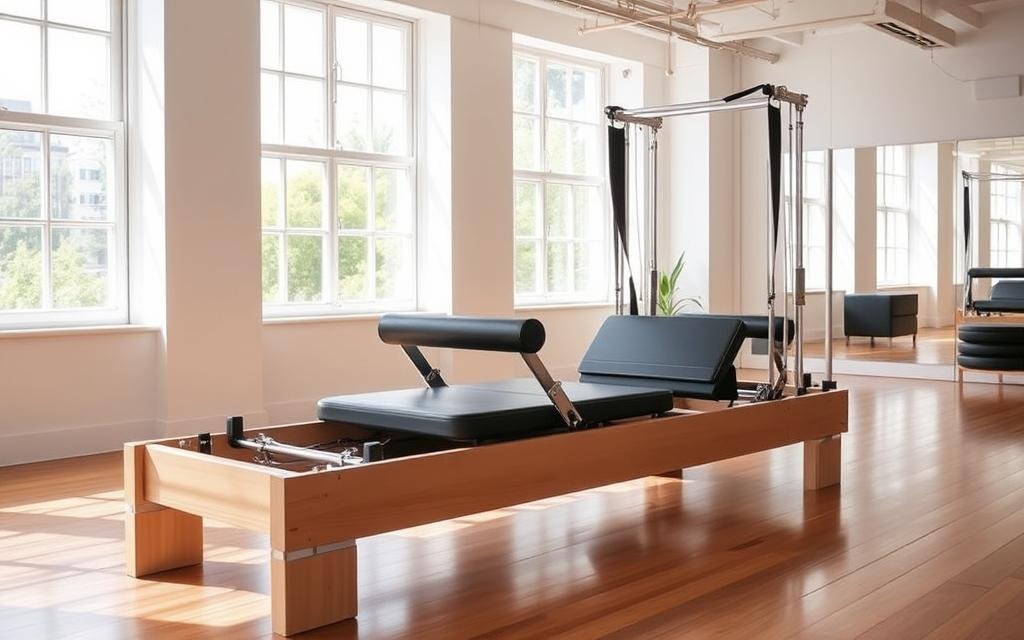
Pilates machines, like reformers, can seem intimidating if you’re new to them. They have a moving carriage, shoulder blocks, a footbar, springs, and straps. Learning how to use a Pilates machine is what unlocks a genuinely great workout for your whole body, and this guide walks through the parts, the setup, and the safety basics.
Key Takeaways
- Pilates reformers use color-coded springs to change the resistance.
- Breathing right and controlling your movement matters most during the slow phase of each exercise.
- Pilates targets small, deep muscles with small, controlled movements.
- Learning to use the reformer strengthens your core and improves flexibility.
- The added resistance on a reformer can build strength faster than mat Pilates alone.
Introduction to Pilates Machines
Pilates machines, like the famous reformer, are central to the practice Joseph Pilates created nearly a century ago. They offer a distinct way to experience the method’s benefits. Whether you’re brand new or already experienced, learning how to use a Pilates machine can improve your strength, flexibility, and overall well-being.
What is a Pilates Machine?
A Pilates machine, like the reformer, supports Pilates-inspired movements with a sliding carriage, adjustable springs, straps, a footbar, and a front platform. These parts let you work specific muscles, challenge your balance, and deepen your Pilates practice beyond what’s possible on a mat alone.
Benefits of Using a Pilates Machine
- Improved muscle recovery and rejuvenation
- Enhanced core strength and stability
- Reduced stress and improved mindfulness
- Ability to target and strengthen deep muscle groups
- Increased intensity and challenge compared to mat work alone
Using a Pilates machine can genuinely change your fitness routine. Its adjustable resistance and versatile movements fit nearly every skill level.
Types of Pilates Machines
Pilates, created by Joseph Pilates, reshaped how people think about core strength, flexibility, and body alignment. Specialized machines are at the heart of the method, each offering its own blend of resistance and support. Here’s a look at the main types you’ll encounter.
Reformer Machines
The reformer is the most well-known Pilates machine, built around a sliding carriage, springs, and various attachments. It lets you perform a wide range of exercises, from leg presses to arm work, all with adjustable resistance and support. The reformer anchors most Pilates studios and is the machine this guide focuses on most.
Cadillac Machines
The Cadillac, or trapeze table, is bigger and more complex than a reformer. It has a sturdy frame, adjustable springs, and several attachments, making it great for exercises that test strength, flexibility, and balance together. This machine works well for learning new movements and advanced techniques alike.
Chair Machines
The Pilates chair, or Wunda chair, is small and versatile, with a spring-loaded pedal and a padded seat. It works the core, arms, and legs, and its compact size suits home studios or smaller spaces.
Barrel Machines
The barrel, or ladder barrel, specializes in improving spinal flexibility and core strength. Its curved surface and adjustable height support you during exercises that target the back, hips, and abs, adding welcome variety to a Pilates routine.
Each machine has its own benefits and can be adjusted to fit your fitness level and goals. If you want more background on the reformer specifically, this guide on what a reformer machine is and how it works covers the basics in more depth.
Getting Started with Your Pilates Machine
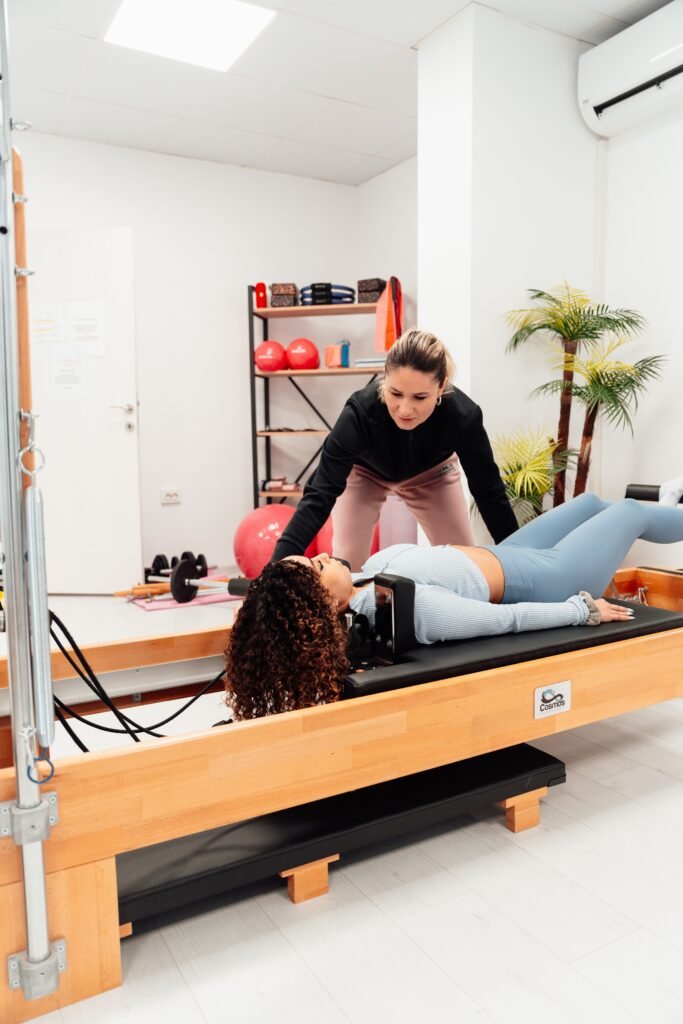
Once you understand how to use a Pilates machine at a basic level, getting started is exciting. Wear comfortable, fitted clothing that won’t catch on the straps or springs, and wear grip socks or go barefoot to stay stable on the carriage.
Setting Up the Equipment
Setting up your Pilates machine correctly is crucial. Follow your instructor’s guidance or the manufacturer’s manual, and take time to get familiar with each part: the sliding carriage, springs, straps, footbar, and front platform.
Cleveland Clinic lead yoga therapist Judi Bar recommends starting slow no matter your fitness background. She advises easing into a Pilates practice rather than rushing it, and working with a qualified instructor while you learn correct alignment on a reformer.
Key Safety Tips
- Step onto the platform carefully, maintaining good balance and control.
- Understand the resistance level of the springs and how to adjust them to suit your needs.
- Learn how to properly adjust the straps and loops to support your movements.
- Pay attention to your body’s signals and don’t push beyond your comfort level.
- Since Pilates instructors aren’t required to hold a specific license, look for certification through a recognized body like the Pilates Method Alliance before booking sessions.
By setting up your Pilates machine correctly and following these safety tips, you’re on your way to a great start. Always listen to your body and work within your limits as you get stronger and more flexible.
Basic Exercises for Beginners
Pilates works well for everyone, even complete beginners. Learning the basics builds a strong foundation before you move on to more challenging reformer exercises.
Footwork Series
The Footwork Series focuses on your leg muscles. Start by adjusting the footbar to fit your height, then place your feet in different positions, such as Pilates V, parallel, and heels.
Keep your core tight and your spine neutral. Move your legs slowly, feeling the muscles work through the full range of motion. Do about 10 reps for each foot position and add more as you get stronger.
The Hundred
The Hundred is a classic Pilates exercise for your core. Lie on your back with your legs extended and arms by your sides, then engage your core and lift your head, neck, and shoulders off the mat.
Pump your arms up and down in small movements while breathing in short, controlled breaths. Work up to 100 total counts, keeping your form steady throughout.
Start slow, listen to your body, and focus on controlled movement rather than speed. Regular practice will improve your strength, flexibility, and overall well-being.
Understanding the Resistance Settings
Pilates machines, like the reformer, use color-coded springs to set different resistance levels. Learning to adjust these springs is a key part of how to use a Pilates machine in a way that actually fits your needs and fitness level.
How to Adjust Resistance
The reformer’s resistance comes from the springs in use. Here’s a quick guide:
- Red springs are typically heavier and offer more resistance; blue or green springs are lighter and less resistant.
- More springs attached means more resistance, and fewer springs mean less.
- Check with your instructor or the machine’s manual for the right spring setup for each exercise.
- Change springs carefully and slowly to avoid injury.
This guide to adjusting resistance on a reformer walks through spring setup in more detail if you want a deeper dive.
Importance of the Right Resistance
Choosing the right resistance matters for working the right muscles at the right intensity. Keep these points in mind:
- Lighter resistance doesn’t automatically mean an easier exercise. The right resistance challenges your muscles and helps build strength and flexibility.
- Too little resistance won’t stimulate your muscles enough, while too much can cause strain or poor form.
- Your instructor’s advice on spring settings for each exercise is valuable. It helps you get the most from every session.
| Exercise | Recommended Spring Settings | Approximate Resistance |
|---|---|---|
| Reformer Footwork | 3-4 springs | 173 lb (36″ inseam), 118 lb (21″ inseam) |
| Long Stretch | 2 springs | 88 lb (6’1″ exerciser) |
| Short Spine Massage | Increased spring tension | Deeper stretch for tighter backs |
Getting the resistance right is key to targeting the right muscles at the right intensity. Always follow your instructor’s advice on spring settings for each exercise so every session works as intended.
Proper Body Alignment
Proper alignment is central to how to use a Pilates machine correctly, whether that’s a reformer or any other apparatus. Good alignment works the right muscles, lowers your injury risk, and makes every session more effective.
Importance of Alignment
Good alignment means your spine is neutral, your core is engaged, and your shoulders are relaxed. That setup lets you perform Pilates movements correctly, using the right muscles while keeping your posture in check.
Cleveland Clinic’s Judi Bar notes that lower back pain often improves with Pilates because, beyond tight muscles, back pain frequently stems from misalignment and a weak core, both of which reformer work is well suited to address.
Techniques to Ensure Good Form
- Keep your spine in a neutral position, avoiding arching or rounding your back.
- Engage your core muscles to support your spine and maintain stability.
- Align your shoulders over your hips, with your chest open and shoulder blades drawn together.
- Position your feet hip-width apart, with your weight evenly distributed.
- Pay attention to visual cues and instructor feedback to refine your form over time.
Focusing on proper alignment helps you get the most from every exercise while lowering injury risk and improving posture and body awareness. For more posture-focused moves, see this guide on improving posture with reformer exercises.
| Proper Alignment | Improper Alignment |
|---|---|
| Neutral spine position | Arched or rounded back |
| Engaged core muscles | Weak core engagement |
| Shoulders relaxed, blades drawn together | Tense, elevated shoulders |
| Feet hip-width apart, weight evenly distributed | Feet too close or too wide, uneven weight distribution |
Advanced Techniques for Experienced Users
As you get more comfortable, you can try more challenging techniques, mix exercises, or make your workouts harder. This helps you keep progressing in your practice.
Combining Exercises
Experienced users often mix different movements, like combining footwork with arm exercises or adding rowing patterns on the reformer. These combinations work many muscles at once and build strength and agility faster than isolated moves.
Increasing Intensity
To make your workouts tougher, try moving with more control at a slightly faster pace, or use additional resistance. The short box series and more complex reformer sequences challenge balance and endurance. Always keep proper form the priority so you avoid injury while chasing more benefit.
As you improve, keep listening to your body and progress carefully. Pilates is a journey, so embrace the challenge while keeping safety and form front of mind.
| Exercise | Benefits |
|---|---|
| Rowing Series | Targets the back, shoulders, and core, improving upper body strength and posture |
| Short Box Series | Challenges balance, stability, and control, engaging the entire body |
| Leg Circles | Enhances flexibility in the hips and inner and outer thighs |
Common Mistakes to Avoid
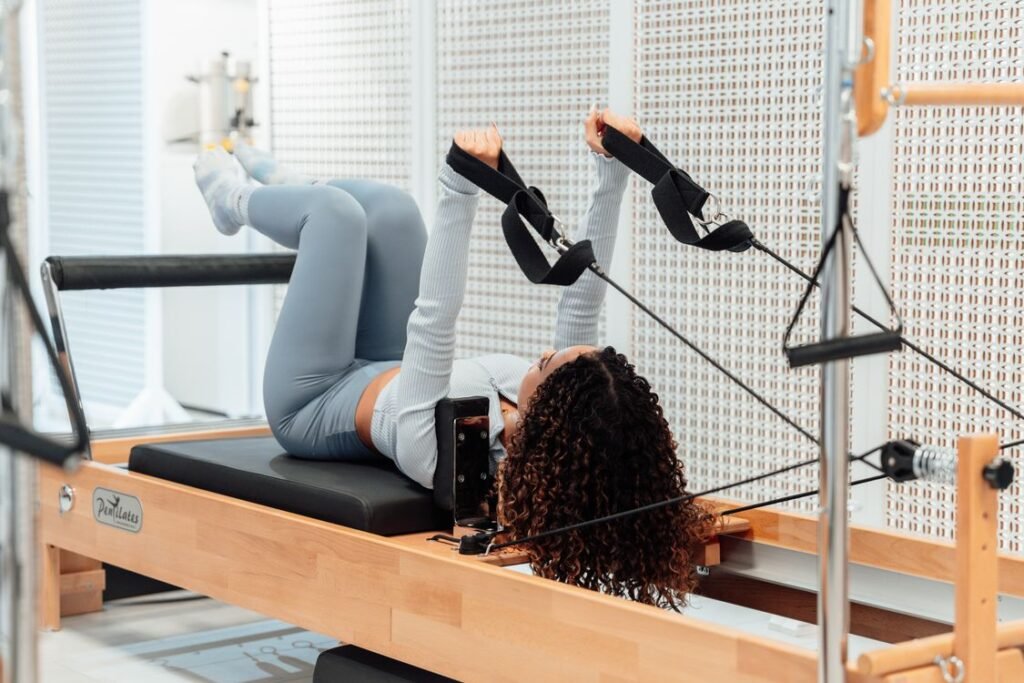
Knowing how to use a Pilates machine also means knowing what not to do. Even people who have practiced Pilates for years can slip into these habits, so it’s worth checking your own routine against them.
Poor Form
One common mistake is rushing through exercises to fit more into a session. Pilates is built around slow, controlled movements that work your core and stabilizers. Skipping proper form means you won’t get the most from your workout, and you risk injury. Always keep your body aligned and use the right muscles for each move.
Skipping Warm-up and Cool-down
Warming up and cooling down matter, but people often skip them. Skipping these steps can lead to muscle strain, joint pain, and a less effective workout overall. Do a short, dynamic warm-up before your session, and this guide to warming up before reformer workouts has specific moves to try. Finish with gentle stretches and slow breathing to help your body recover.
Avoiding these common mistakes helps you get the most out of every Pilates machine session and keeps you progressing safely over time.
| Common Pilates Machine Mistakes | Recommended Solutions |
|---|---|
| Sacrificing form for speed or range of motion | Focus on controlled, deliberate movements |
| Skipping warm-up and cool-down routines | Incorporate dynamic warm-ups and gentle stretches |
| Overarching the back or using momentum instead of muscle control | Maintain proper alignment and engage the core throughout exercises |
Final Thoughts and Motivation
Starting out is exciting, but the real benefit comes from staying consistent. Set small goals and celebrate progress as you go, even if it feels slow at first.
Staying Committed
Pilates rewards patience and dedication. You might not notice big changes right away, but with regular practice you’ll see real gains in strength, flexibility, and overall health. Enjoy the process and the connection it builds between your mind and body.
Finding a Pilates Community
Look for a Pilates community, whether that’s a local studio or an online group. Sharing your progress with others is motivating, and you’ll pick up tips and support from people just as invested in the practice as you are.
Conclusion
Now that you know how to use a Pilates machine, from setting it up correctly to adjusting resistance and keeping proper alignment, you have everything you need to start with confidence. The reformer and its relatives reward patience: focus on form over speed, work with a qualified instructor when you can, and let your strength and flexibility build session by session.
Whether you’re drawn to the reformer, the Cadillac, the chair, or the barrel, the same core principles apply. Start slow, listen to your body, and give the process a few consistent weeks. A stronger core, better posture, and a workout you actually look forward to tend to follow.

Hi, I’m Mamon, the content creator behind this blog. I share my experience in blogging, WordPress, SEO, and affiliate marketing through honest product reviews, in-depth buying guides, and practical how-to articles. Every piece of content is thoroughly researched and written to help readers make informed decisions.
Leave a Reply