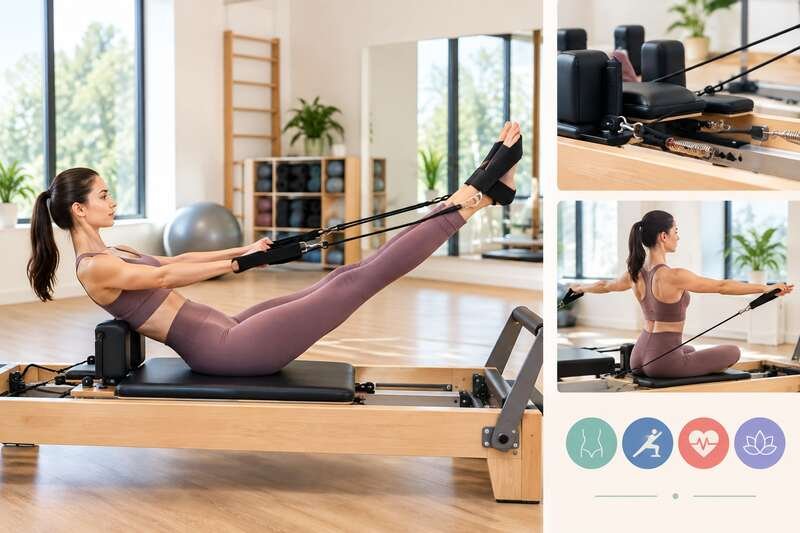
If you’ve ever walked past a Pilates studio and seen a bed-like frame with sliding parts and springs, you’ve probably asked yourself what is a reformer machine. In short, it’s the signature piece of equipment in the Pilates method, built around a sliding carriage, adjustable springs, ropes, and pulleys. Joseph Pilates created the original design nearly a century ago, and it’s still the centerpiece of most Pilates studios today.
This design lets you do a huge range of exercises that build strength, flexibility, and balance. It’s a great fit whether you want to get fit, recover from an injury, or sharpen athletic performance. You can adjust the resistance to fit any fitness level.
Key Takeaways
- The Pilates reformer is a versatile exercise machine that offers a full-body workout
- Joseph Pilates invented it using rudimentary materials, including bed springs
- The reformer works for people at every fitness level
- The reformer helps lengthen the spine, joints, and muscles, supporting better flexibility, strength, and posture
Understanding the Basics: What Is a Reformer Machine?
To answer what is a reformer machine in more detail, picture a bed-like frame with a moving carriage, a favorite in Pilates studios for its challenging, endlessly adjustable workouts. Here’s a closer look at its main parts.
What It Looks Like
The reformer looks like a low bed with a sliding carriage that has shoulder blocks for support and straps with handles. The frame is typically wood or metal, depending on the model. The table later in this guide breaks down what each part does.
How It Works
The Pilates reformer uses resistance and your own body weight to challenge your muscles. As you move the carriage, the springs create varying resistance that targets specific muscle groups, improving strength, flexibility, and control.
The adjustable footbar and straps add even more versatility, tailoring exercises to your fitness level and goals while sharpening balance, coordination, and body awareness.

The History of the Reformer Machine
The Pilates reformer has a rich history. It started with Joseph Pilates, the creator of the Pilates method. During World War I, he built the first reformer from hospital bed springs to help patients who couldn’t move regain strength.
Joseph Pilates and His Vision
Pilates moved to New York City in the 1920s, where he refined his invention into what he called the “universal reformer.” The machine supported his larger goal: a mind-body fitness system blending yoga and Zen meditation.
Evolution of the Reformer in Fitness
The reformer evolved over time thanks to Joseph’s wife, Clara, and generations of Pilates teachers who followed. Today it’s a staple in studios, gyms, and home workout spaces alike.
The design still helps build flexibility and strength today, working the muscles of the Pilates “powerhouse” core while improving balance and stability.
Joseph Pilates died in New York City in 1967 at age 83. His method lived on as instructors trained by his students carried the practice across the U.S.
Benefits of Using a Reformer Machine
Pilates has been around for nearly a century, focusing on strengthening and toning the body with low-impact, controlled movements. The reformer adds resistance training via springs and ropes, making it especially good for core strength, flexibility, balance, and breathing.
Reformer Pilates suits nearly anyone, regardless of age or injury history, since exercises can be adjusted for each person. Many instructors recommend two to three sessions a week for noticeable results, though even one session weekly can help.
Improved Flexibility
Reformer work combines resistance with controlled stretching, which tends to build flexibility more effectively than static stretching alone, supporting better balance, mobility, and a more natural walking gait.
A 2024 research review found that Pilates may positively affect posture-related issues such as forward head posture, rounded shoulders, and thoracic kyphosis, which points to real flexibility and alignment benefits beyond the studio.
Increased Strength
Reformer Pilates is more dynamic than mat-based Pilates. The springs add resistance that builds strength without adding bulk, and a single exercise often works multiple muscle groups at once.
A 2025 study of 47 women found significant increases in muscle strength and endurance after eight weeks of reformer Pilates performed three times a week. A 2018 review also found Pilates effective for easing pain and disability linked to low back pain, chronic neck pain, and several other conditions.
Better Posture
Pilates strengthens and realigns key stabilizing muscles, improving circulation and helping older adults maintain balance and avoid falls. Consistent practice also reinforces good postural habits that carry over into everyday standing, sitting, and walking. For more posture-specific moves, see this guide on how to improve posture with reformer exercises.
Enhanced Rehabilitative Effects
The low-impact nature of reformer workouts makes it a popular option for rehab and injury prevention. Movement in general is also known to release endorphins that ease stress and lift mood.
A 2021 review found moderate to large improvements in depression symptoms, quality of life, fear of falling, pain, and sleep quality among adults over 55 who practiced Pilates regularly. If you’re managing ongoing discomfort, it also helps to understand what causes lower back pain in the first place.

How to Use a Reformer Machine Safely
Using a Pilates reformer machine safely is key to getting the most out of your workout while avoiding injury. That starts with proper setup and knowing which common mistakes to avoid.
Proper Setup and Adjustments
Before you start your Pilates routine, adjust the machine to fit you. Set the right spring tension, adjust the footbar and headrest to your height, and make sure the straps are the correct length. Getting this alignment right protects your body and makes every exercise more effective. New to the equipment? This beginner’s guide to using a Pilates machine walks through the basics.
Common Mistakes to Avoid
- Rushing through movements: Take your time and focus on maintaining control throughout each exercise.
- Overarching the back: Maintain a neutral spine to protect your lower back.
- Neglecting proper form: Pay attention to your body’s positioning and engage your core throughout the workout.
Start with beginner exercises and progress gradually, and consider working with a certified instructor to learn proper technique from the start.
| Reformer Part | Description |
|---|---|
| Carriage | The moving platform where you perform exercises. |
| Footbar | Adjustable bar at the front of the reformer to support your feet or hands. |
| Pulleys | Mechanisms that allow the resistance straps to glide smoothly. |
| Springs | Provide variable resistance levels to challenge your muscles. |
| Standing Platform | The sturdy, wooden base of the reformer machine. |
Different Types of Reformer Machines
Once you understand what is a reformer machine at its core, it’s easier to compare the types available, from classic designs to modern, feature-rich models.
Classic vs. Contemporary Reformers
Classic reformers have a wooden frame and fit well in old-school Pilates studios. Contemporary reformers use newer materials and extra features for a sleeker, more versatile design.
Variations for Home Use
- Home Pilates reformers are compact and easy to move, making them a good fit for smaller spaces.
- Many fold up for easy storage. This guide to choosing the best home reformer model compares popular options.
Professional Studio Reformers
Professional studio reformers are built for intense Pilates workouts, with sturdier frames and extra attachments for a wider range of exercises. Balanced Body, STOTT PILATES, and Merrithew are popular studio brands.

Pilates Reformers and Their Workouts
The Pilates reformer has changed the fitness world since Joseph and Clara Pilates created it, offering a full-body workout that engages many muscles at once.
Popular Reformer Exercises
A few reformer exercises come up again and again:
- Footwork Series: Works the legs and core through different foot positions.
- Hundred: Strengthens the core with controlled breathing.
- Long Spine Massage: Keeps the spine flexible and mobile.
- Reformer Planks: Builds upper-body, core, and stabilizer strength.
Tailoring Workouts for Different Levels
The Pilates reformer works well for everyone, from complete beginners to seasoned instructors, since instructors can adjust spring tension and use props to tailor each session.
Beginners start with basic movements and proper form, then shift toward specific muscle groups or a full-body challenge as they build strength. The short video below walks through the reformer’s main parts and what a first session looks like.
Whether you’re chasing a fitness goal, recovering from an injury, or just want to feel better day to day, the reformer is worth a try. It can help you get stronger, more flexible, and better postured.
Where to Find Reformer Classes
Now that you know what is a reformer machine and how it works, Pilates reformer classes are easy to find across the U.S. Check local Pilates studios, fitness centers, and some gyms for classes at every level.
Local Pilates Studios
Local studios offer expert guidance from certified instructors who can teach proper reformer technique from day one. Search directories like the Pilates Method Alliance, or look up “Pilates reformer studio” plus your city.
Online Pilates Programs
Online programs are a great option for working out at home. Sites like Pilatesology and Pilates Anytime offer virtual classes you can follow at your own pace.
Either way, the reformer can help you get stronger and feel better overall.
Choosing the Right Reformer Machine for You
Now that you know what is a reformer machine at a basic level, buying one comes down to a few key factors. Think about available space, budget, and what you want out of the machine.
Factors to Consider
- Available space: Measure your space and pick a model that fits comfortably, even in a small room.
- Budget: Reformers range from a few hundred to several thousand dollars.
- Intended use: Home models are usually smaller and easier to move than studio versions.
- Adjustability: Look for adjustable parts so users of different sizes can share the same machine.
- Durability: A well-built reformer holds up to regular use and pays off long term.
Recommended Brands
Popular reformer brands include:
- Balanced Body: Versatile, high-quality reformers for home and studio use.
- STOTT PILATES: Known for smooth movement and thoughtful engineering.
- Peak Pilates: A trusted name for durability and performance.
Trying a few different reformers at a local studio is a smart way to find the right fit before you buy.
Maintenance Tips for Your Reformer Machine
Keeping your Pilates reformer machine clean and well-inspected helps it last longer and stay safe to use.
Routine Cleaning
Wipe down the reformer after each use with a mild cleaner on the carriage, footbar, and straps, and clean the wheels and pulleys regularly to keep everything running smoothly.
Regular Inspections
- Check spring tension against the manufacturer’s specs.
- Make sure all bolts and nuts stay tight.
- Look for wear on the ropes and straps, and replace them when needed.
- Lubricate wheels and bearings every few months, or as the manufacturer suggests.
- Swap out springs every two to three years on heavily used machines.
Keeping up with this routine helps your reformer last longer and stay safe to use.
| Maintenance Task | Recommended Frequency |
|---|---|
| Cleaning the frame, carriage, and footbar | After each use |
| Lubricating pivot points and moving parts | As per manufacturer’s guidelines |
| Inspecting bolts and nuts for tightness | Periodically |
| Storing the reformer in a dry environment | Always |
| Covering the reformer for long-term storage | As needed |
| Replacing worn or damaged springs | Every 2-3 years (for heavy use) |
| Scheduling professional maintenance checks | As recommended by the manufacturer |
Incorporating the Reformer in Your Fitness Routine
By now the answer to what is a reformer machine should be clear, but adding one to your routine still pays off. Many instructors suggest using it two to three times a week, which still leaves room for cardio or strength training on other days.
Creating a Balanced Schedule
Pair your reformer sessions with cardio or strength training for a well-rounded routine that challenges muscles other exercises might miss.
Combining with Other Equipment
The reformer works well beyond solo sessions, too. Many studios pair it with equipment like the Cadillac, Chair, or Barrel for a broader range of benefits.
Together, the research above points to real gains: more strength and endurance, better posture, less back and neck pain, and improved mood and sleep.
The Future of Reformer Training
The Pilates world keeps evolving. Reformer training is increasingly blended with styles like barre and yoga. New models are also arriving with sensors, tracking tools, and adjustable resistance to help users monitor progress and fine-tune form.
There’s also a growing push toward eco-friendly materials, smaller home-friendly designs, and early experiments with virtual and augmented reality for real-time feedback.
If joint pain or a recent injury has you easing back into exercise, our guide on low-impact Aeropilates reformer workouts shows how to get the same benefits with less strain.
Conclusion
So, what is a reformer machine? It’s a spring-loaded, sliding-carriage piece of equipment that Joseph Pilates originally built from hospital bed parts. It’s since grown into one of the most effective full-body workout tools available. It builds strength without bulk, improves flexibility and posture, and adapts to nearly any fitness level or goal.
Whether you’re just starting out, working around an injury, or looking to deepen an existing practice, the reformer offers a workout you can grow into. Start with a beginner class at a local studio or a guided online session, focus on proper form, and give the process a few consistent weeks. The results, from a stronger core to better everyday posture, tend to follow.

Hi, I’m Mamon, the content creator behind this blog. I share my experience in blogging, WordPress, SEO, and affiliate marketing through honest product reviews, in-depth buying guides, and practical how-to articles. Every piece of content is thoroughly researched and written to help readers make informed decisions.
Leave a Reply