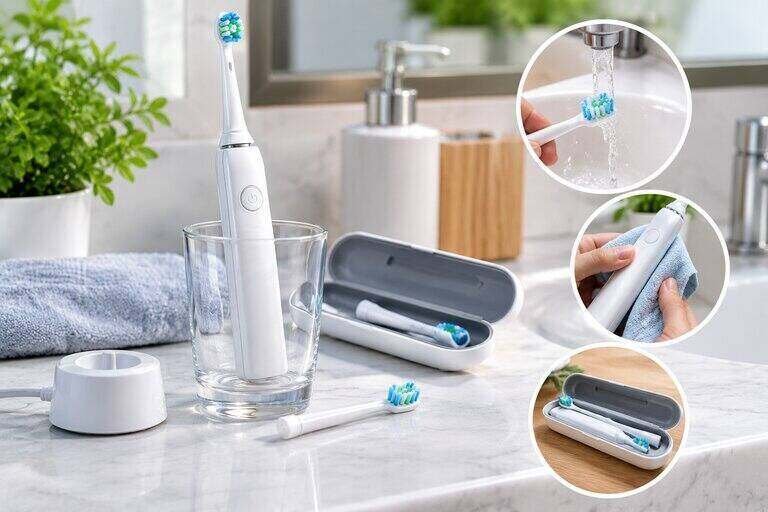
Imagine you’re in your bathroom, ready to brush your teeth, and you notice your electric toothbrush looks grimy. Knowing how to keep electric toothbrush clean is something a lot of people never think about until that moment. It’s not just about looks; a dirty brush head can affect your mouth every time you use it.
Keeping your electric toothbrush clean is part of good oral hygiene, not separate from it. Bacteria can build up quickly on a toothbrush that isn’t cared for properly. A neglected brush can turn a tool meant to protect your teeth and gums into something that works against them.
Electric toothbrushes are effective tools. A Cochrane systematic review found that, with consistent use over several months, powered brushing removes meaningfully more plaque than manual brushing. But that advantage only holds up if the brush itself is clean and the head is replaced on schedule.
Key Takeaways
- Rinse your electric toothbrush thoroughly after every use
- Store it upright and let it air dry between uses
- Replace brush heads every 3-4 months for the best results
- Avoid the microwave or dishwasher, both can damage the brush
- Deep clean the handle and charging base on a regular schedule
Why Regular Electric Toothbrush Cleaning Is Essential
Your electric toothbrush is central to your daily oral care, but it can also harbor bacteria if it isn’t cleaned properly. Understanding why knowing how to keep electric toothbrush clean matters helps make the habit easier to stick with, rather than something you only think about after the fact.
Understanding Bacterial Growth and Risks
Bacteria thrive in moist places, and a toothbrush left damp between uses is exactly that. A Quinnipiac University study presented at the American Society for Microbiology’s annual meeting found that roughly 60% of toothbrushes tested in communal bathrooms carried fecal coliform bacteria. Researchers estimated an 80% chance that the contamination came from someone else using the same bathroom, rather than from the brush’s own owner.
That particular study focused on shared, communal bathroom settings, like dorms and shared apartments, rather than private homes. Even so, the underlying lesson still applies at home:
- Bacteria can multiply quickly on a damp brush head
- An uncleaned brush can reintroduce germs into your mouth
- Storing a toothbrush close to a toilet increases exposure to airborne particles
Impact on Oral Health and Hygiene
Cleaning your toothbrush regularly helps limit bacterial spread and keeps your mouth healthier overall. Electric toothbrushes can remove more plaque than manual ones over time, but that benefit depends on the brush head staying clean and in good condition.
Signs Your Electric Toothbrush Needs Cleaning
Watch for these signs that it’s time for a more thorough clean:
- Visible buildup or discoloration on the brush head
- An unpleasant smell coming from the bristles or handle
- Worn, splayed, or discolored bristles
- Brushing that feels less effective than usual
Staying on top of these signs, alongside a regular cleaning routine, keeps both your toothbrush and your mouth in better shape.
How to Keep Electric Toothbrush Clean: Daily Maintenance Methods
Daily habits do most of the work when it comes to keeping an electric toothbrush clean. A few consistent steps go a long way toward preventing bacterial buildup.

The ADA’s own guidance keeps daily care simple:
- Rinse thoroughly with water after each use
- Remove any leftover toothpaste residue
- Shake off excess water before storing
- Store the brush upright, uncovered, so it can air dry fully
The ADA specifically notes that storing a moist toothbrush in a closed container encourages bacterial growth. That’s more than leaving it exposed to open air would. So resist the urge to cap the brush head or tuck it into a travel case right after brushing.
For most people, this simple routine, rinse, dry, store upright, is enough day to day. Deeper cleaning rounds out the rest of a good maintenance routine, and so does replacing the head on schedule. Our guide on how often to change your electric toothbrush head covers exactly when and why that matters.
Advanced Cleaning and Sanitization Techniques
Beyond daily rinsing, a periodic deeper clean can help keep buildup in check. This matters especially around the base of the bristles, where a quick rinse doesn’t always reach.

UV Sanitizer Methods and Benefits
UV sanitizers are a popular add-on for people who want extra reassurance beyond rinsing and air-drying. The ADA doesn’t require a sanitizing device as part of routine care. It does suggest looking for one cleared by the FDA if you decide to use one. Manufacturers typically market these devices as killing the large majority of bacteria on a brush head within a few minutes. Independent, brush-specific data is limited, though, so it’s worth treating marketing figures as a general guide rather than a guarantee.
Antibacterial Solutions and Soaking Tips
Soaking a brush head occasionally in a diluted antibacterial mouthwash, hydrogen peroxide solution, or white vinegar can help cut down on bacteria between deeper cleanings. The ADA acknowledges these methods can reduce bacterial load. Even so, it stops short of formally recommending any one soak as necessary.
What the ADA does explicitly advise against is high heat. Microwaving or running a toothbrush through the dishwasher isn’t recommended, since the heat can warp bristles and damage the brush’s housing over time.
Deep Cleaning the Base and Handle
Good electric toothbrush care goes beyond the brush head. The handle and charging base benefit from occasional attention too:
| Area | Cleaning Method | Frequency |
|---|---|---|
| Handle | Wipe down with a damp cloth or disinfectant wipe | Weekly |
| Charging Base | Wipe with a cloth lightly dampened with rubbing alcohol | Every 1-2 weeks |
| Connection Points | Clean with a cotton swab and rubbing alcohol | Monthly |
Consistent maintenance like this, paired with replacing the brush head every three to four months, keeps the whole device working the way it’s designed to. See our guide on how an electric toothbrush works for more on why the internal mechanism benefits from this kind of care.
Common Cleaning Mistakes to Avoid
Even people who know how to keep electric toothbrush clean in theory sometimes fall into a few habits that undo an otherwise good routine:
- Microwaving or dishwashing the brush head: the ADA specifically warns against this, since high heat can warp or damage the bristles and housing
- Storing it in a closed travel case while still damp: trapping moisture encourages the same bacterial growth you’re trying to prevent
- Sharing a brush head or handle with someone else: even briefly, this can transfer bacteria between users
- Skipping brush head replacement because it still looks fine: bristles wear down mechanically before that becomes visually obvious
Avoiding these habits, more than any single sanitizing product, is what keeps an electric toothbrush genuinely clean over time.
How to Keep Electric Toothbrush Clean While Traveling
Travel is where most people’s cleaning routines fall apart. A toothbrush gets rinsed, packed still damp, and sealed inside a bag for hours, which is close to the worst-case scenario for bacterial growth.
A few adjustments make a real difference:
- Let the brush head air dry for a few minutes before packing it, even if that means brushing a little earlier than you’d otherwise plan to
- Choose a ventilated travel case with small air holes over a fully sealed cap
- Pack the toothbrush separately from other toiletries, rather than pressed against a wet washcloth or sponge
- Give it a normal rinse and air-dry cycle as soon as you’re able to, rather than leaving it sealed for the full trip
None of this requires special equipment. It’s really the same rinse-and-dry principle that works at home, adapted for a situation where air drying isn’t immediately possible.
Proper Storage and Maintenance Guidelines

Taking care of your electric toothbrush helps it last. With reasonable care, most electric toothbrushes hold up well for three to five years, even though the brush head itself needs replacing far more often.
Storage matters as much as cleaning for stopping bacterial growth. Standing the brush upright to dry completely, rather than laying it flat or capping it, helps avoid the moisture that bacteria and mold both need to grow.
Essential Storage Guidelines
- Keep the toothbrush in a well-ventilated spot
- Avoid enclosed, humid storage, including most travel cases for everyday use
- Use a dedicated toothbrush holder, away from other brushes
- Let it air dry completely after each use before it’s put away
Replacement and Maintenance Recommendations
- Replace brush heads every 3-4 months
- Rinse the brush head thoroughly after each use
- Do a deeper clean of the handle and base weekly
- Check bristle condition regularly rather than waiting for visible damage
When you do travel, a ventilated toothbrush case, one with small air holes rather than a fully sealed cap, is a better choice than sealing a damp brush head in an airtight container. If you’re shopping for a new electric toothbrush with travel-friendly features, our electric toothbrush reviews and buyer’s guide is a useful starting point.
How you charge the toothbrush matters too. Following the manufacturer’s charging instructions, rather than leaving it on the charger indefinitely, is generally better for long-term battery health, even if the exact impact varies by model and battery type.
FAQs:
Q1: How to keep electric toothbrush clean between deep cleans?
A: Rinse it thoroughly with water after every use, shake off the excess, and store it upright so it can air dry completely. That simple routine, recommended by the ADA, handles most day-to-day buildup on its own.
Q2: Is it safe to put an electric toothbrush head in the dishwasher?
A: No. The ADA specifically advises against microwaving or dishwashing a toothbrush, since the high heat involved can damage the bristles and housing.
Q3: Do I need a UV sanitizer for my electric toothbrush?
A: Not necessarily. The ADA’s core recommendation is simple rinsing and air-drying. A UV sanitizer can be a helpful extra step for people who want it, ideally one cleared by the FDA, but it isn’t required for a clean, well-maintained brush.
Q4: How often should I deep clean the handle and charging base?
A: A weekly wipe-down of the handle and an occasional cleaning of the charging base and connection points is generally enough to prevent buildup in areas a quick rinse doesn’t reach.
Q5: Can I share my electric toothbrush handle with a family member?
A: It’s best to avoid it, or at minimum use separate brush heads. Sharing bristles, even briefly, can transfer bacteria between users.
Q6: Why does my toothbrush smell bad even though I rinse it?
A: A lingering smell usually means bacteria or trapped debris have built up at the base of the bristles or in the handle seams, which a quick rinse alone won’t fully reach. A deeper clean, or a new brush head if it’s due, usually resolves it.
Conclusion
Keeping your electric toothbrush clean is a small habit with a meaningful payoff for your oral health. The core routine is simple: rinse thoroughly after every use, store the brush upright so it can air dry, and avoid sealing a damp brush head inside a closed case or travel container.
Research on toothbrushes in shared, communal bathrooms found a substantial share carrying bacteria that almost certainly came from other people in the same space, a good reminder that where and how you store your brush matters, not just how often you clean it. At home, the same basic principles, rinse, dry, store upright, replace the head every three to four months, are enough to keep bacterial buildup in check.
Looking after your electric toothbrush this way is good for your teeth and gums, and it protects the investment you made in a device built to clean better than a manual brush. Just a few extra seconds of care after each use, plus a weekly wipe-down of the handle, keeps your toothbrush working the way it’s meant to.
Start with the basics today: rinse, dry, store upright. Once that routine is second nature, the rest of how to keep electric toothbrush clean, weekly wipe-downs, occasional deeper cleans, and timely head replacement, falls into place without much extra effort. A clean electric toothbrush isn’t just more pleasant to use, it’s a healthier part of your daily routine.

Hi, I’m Mamon, the content creator behind this blog. I share my experience in blogging, WordPress, SEO, and affiliate marketing through honest product reviews, in-depth buying guides, and practical how-to articles. Every piece of content is thoroughly researched and written to help readers make informed decisions.
Leave a Reply