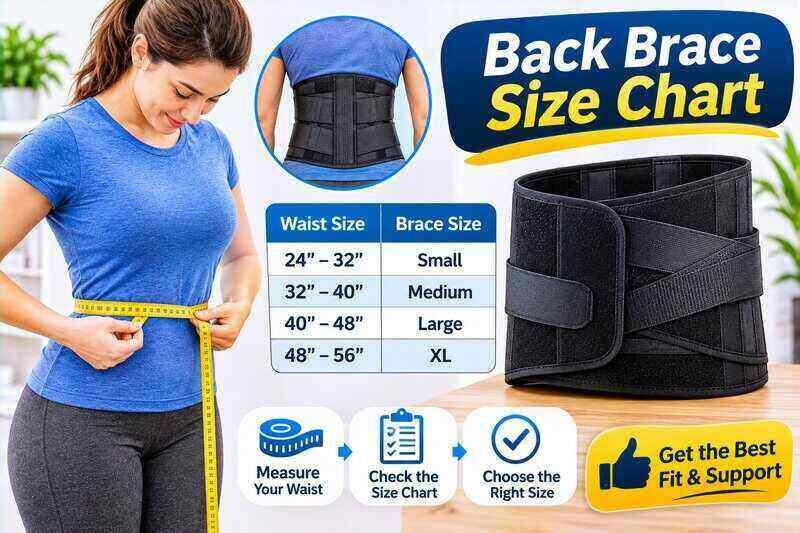
A back brace size chart is the key to a brace that actually works. A brace that is too small digs in, rolls over, and can restrict your breathing. One that is too big slides around and gives almost no support. The catch is that every brand sizes differently, and most do not use your pants size at all.
This guide shows you exactly how to measure for a back brace, compares real size charts from popular brands, explains what to do if you are between sizes or need an XL, XXL, or XXXL, and covers the fit checks to do once your brace arrives. If you are still choosing a brace, our guide to the best lumbar support belt compares 10 popular models.
Why Back Brace Sizing Is So Confusing
Most people order a back brace by guessing from their clothing size. That is the main reason so many braces get returned. Here is why it goes wrong:
- Pants size is not your waist size. Many people wear pants below their natural waist, so their pants size can be several inches smaller than where a brace sits.
- Brands measure in different places. Some measure at the belly button, some just above the hip bones, and some at the widest part of the stomach.
- Size labels are not standard. One brand’s Large can be another brand’s XL.
- Your body changes. Weight changes, pregnancy, and aging all change your belly measurement, even if your pants still fit.
The fix is simple: measure your body, then compare that number to the size chart for the exact brace you plan to buy.
How to Measure for a Back Brace: Step by Step
All you need is a soft cloth tape measure. If you do not have one, wrap a piece of string around yourself, mark it, and measure the string against a ruler.
- Stand up straight and relax your stomach. Do not suck in.
- Find the right spot. For most back braces, wrap the tape around your body at the level of your belly button. Check your brand’s instructions, because some ask for a different spot.
- Keep the tape level. It should be horizontal all the way around, not dipping down at the back.
- Make it snug, not tight. The tape should touch your skin without pressing in.
- Breathe out normally and read the number at the end of a relaxed breath.
- Measure twice. Take the measurement again to confirm. Write it down in inches.
These steps match the method the CDC recommends for measuring waist circumference: keep the tape horizontal, snug but not compressing the skin, and measure just after you breathe out. The main difference is location. The CDC measures just above the hip bones for health screening, while most brace makers ask for the belly button, because that is where the brace sits.
Measure Over Thin Clothing or Bare Skin
Measure over a thin T-shirt or bare skin, not over a sweater or jeans. If you plan to wear the brace over clothing, add about half an inch.
Get Help If You Can
It is easier to keep the tape level if someone else holds it. If you measure alone, use a mirror to check that the tape is straight across your back.
Back Brace Size Charts From Popular Brands
Here are size charts for several popular back braces, based on their product listings. Always double-check the current chart on the listing before you buy, because brands sometimes update sizes.
Aspen QuikDraw PRO (Measured at the Belly Button)
| Size | Belly measurement |
|---|---|
| XS | 21 to 27 in |
| S | 26 to 32 in |
| M | 31 to 37 in |
| L | 36 to 42 in |
| XL | 41 to 47 in |
| XXL | 46 to 57 in |
Aspen’s fitting instructions also show how to add an extension panel for a larger fit.
Ottobock The S.P.I.N.E. (Waist Circumference)
| Size | Waist measurement |
|---|---|
| XS | 20 to 25 in |
| S | 25 to 30 in |
| M | 30 to 35 in |
| L | 35 to 40 in |
| XL | 40 to 45 in |
| XXL | 45 to 50 in |
| XXXL | 50 to 55 in |
Timtakbo LSO Back Brace (Belly Button Level)
| Size | Belly measurement |
|---|---|
| S/M | 23.5 to 33.75 in |
| L/XL | 33.75 to 47 in |
| 2XL/3XL | 47 to 59 in |
Old Bones Therapy Lower Back Brace 2.0
| Size | Waist measurement |
|---|---|
| S/M | 27 to 34 in |
| L/XL | 34 to 43 in |
| XXL | 43 to 50 in |
One-Size Back Braces
Some braces come in a single adjustable size, which removes the guesswork:
| Brace | Fits waists |
|---|---|
| BraceAbility Lower Back & Spine Pain Brace | 28 to 60 in |
| MUELLER Adjustable Back Brace | 22 to 50 in |
| MUELLER Green Back & Abdominal Support | 28 to 50 in |
| ACE Deluxe Back Stabilizer | 32 to 48 in |
Notice how much these charts overlap and differ. A 36-inch belly is a Medium in the Aspen but a Large in the Ottobock. That is why you should never assume your size carries over from one brand to another.
What If You Are Between Sizes?
It is common to land right on the line between two sizes. Use these rules of thumb:
- Check the brand’s advice first. Some listings, such as Aspen’s lumbar support, warn that sizes run small and suggest sizing up.
- Size up for comfort. If you will wear it for long periods or while sitting, the larger size is usually more comfortable.
- Size down for firm support. If you need maximum support for lifting and the brace has lots of overlap, the smaller size may hold tighter.
- Read reviews. Look for comments from people with a similar build who say whether the brace runs large or small.
- Choose an adjustable design. Pulley braces and one-size braces cover wider ranges, so being between sizes matters less.
Plus-Size Back Braces: XL, XXL and XXXL
If you need an XL, XXL, or XXXL back brace, look closely at the top of the size range rather than the label. Here is how high some popular braces go:
| Brace | Largest size or fit |
|---|---|
| Aspen Horizon 627 Lumbar (with extension panels) | Up to 70 in |
| BraceAbility LSO Back Brace (4XL) | Up to 65 in |
| BraceAbility Lower Back & Spine Pain Brace | Up to 60 in |
| Timtakbo LSO (2XL/3XL) | Up to 59 in |
| Aspen QuikDraw PRO (XXL) | Up to 57 in |
| Ottobock S.P.I.N.E. (XXXL) | Up to 55 in |
Tips for a better fit at larger sizes:
- Measure at the widest part of your belly if the brand allows, since a brace that is too tight across the stomach is uncomfortable
- Choose a taller back panel so the brace covers more of the lower back
- Look for extension panels, which let you add length to the belt
- Pick breathable mesh, since wider braces trap more heat
How Sizing Differs by Type of Back Support
Not every back support is sized the same way. Before you measure, check which kind of support you are buying.
Lumbar Back Braces and Belts
These are sized by waist or belly measurement, usually at the belly button. This includes elastic belts, pulley braces, and rigid LSO braces. If you are buying a brace for a disc problem, our guide to back support for a herniated disc explains which type to choose.
Posture Braces and Correctors
Posture braces wrap the shoulders and upper back, so most are sized by chest measurement instead. Measure around your chest just under your armpits. A posture brace sized by waist will not fit properly. Our article on whether posture braces work explains how to use one well.
Sacroiliac (SI) and Hip Belts
SI belts sit lower, around the hips, so they are sized by hip measurement. Wrap the tape around the widest part of your hips, over the bony points at the sides. Our hip support brace guide covers several styles.
Maternity Support Belts
Maternity belts are usually sized by pre-pregnancy pants size or by belly measurement under the bump. Because your body changes quickly, choose an adjustable belt with plenty of range.
Weightlifting Belts
Lifting belts are sized by waist measurement at the level where you wear the belt, which is usually around the belly button. They are much stiffer than back braces, so a precise fit matters more.
| Support type | Where to measure |
|---|---|
| Lumbar back brace | Around the belly button |
| Posture corrector | Around the chest, under the armpits |
| SI or hip belt | Around the widest part of the hips |
| Maternity belt | Under the bump or by pre-pregnancy size |
| Weightlifting belt | Where you wear the belt, usually the belly button |
How to Check the Fit When Your Brace Arrives
Once your brace arrives, try it on before removing tags. A good fit looks like this:
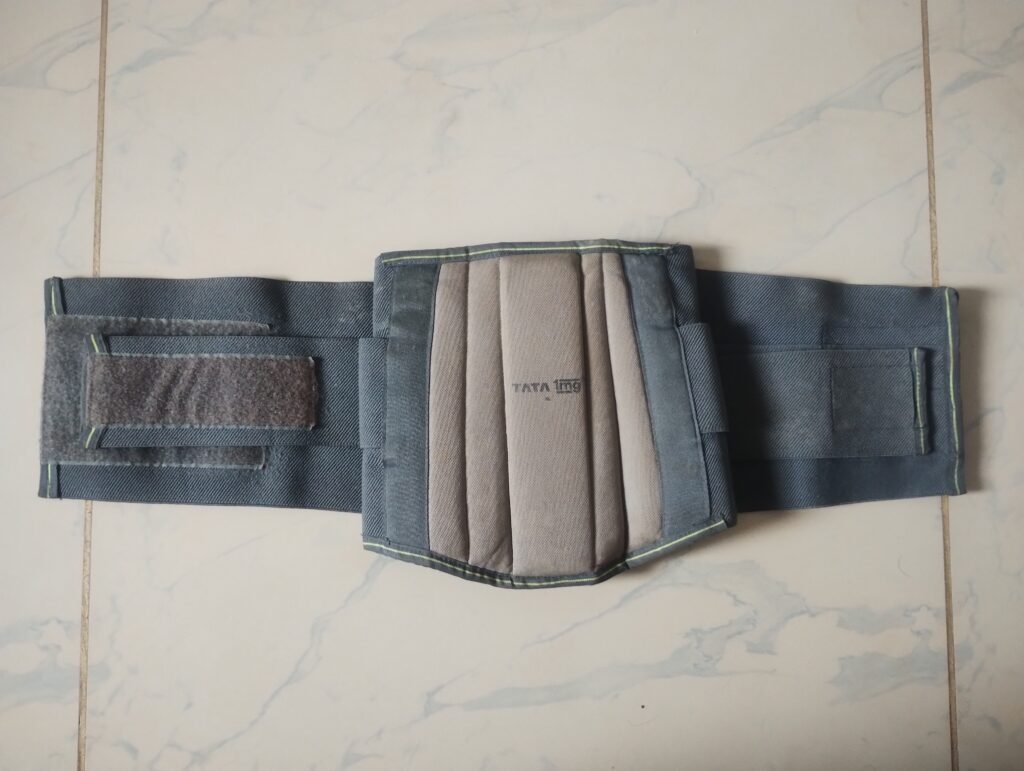
Photo: Gpkp, CC BY-SA 4.0, via Wikimedia Commons
- The ends overlap. The front closure should overlap by a few inches, with room to tighten.
- It sits low. The back panel should cover the lower curve of your spine, with the bottom edge near the top of your buttocks.
- It stays put. Walk, bend gently, and sit down. The brace should not ride up toward your ribs or roll at the edges.
- You can breathe. Take a deep breath. You should be able to breathe fully.
- The flat-hand test. You should be able to slide a flat hand between the brace and your body.
- No numbness or pinching. If your legs tingle or the brace pinches your hips when sitting, it is too tight or the wrong shape.
Our step-by-step guide on how to properly wear a back brace shows exactly where it should sit.
In the video below, BraceAbility shows how to measure and choose the right size for a lower back brace.
Signs Your Back Brace Is the Wrong Size
If you notice any of these problems, try loosening the brace first. If they continue, you likely need a different size or style.
| Problem | Likely cause |
|---|---|
| Velcro will not overlap or keeps popping open | Too small |
| Brace slides down or twists around | Too big |
| Rolls over at the top or bottom edge | Too tall for your torso, or too small |
| Red marks that do not fade after 20 minutes | Too tight |
| Tingling in legs or groin | Too tight or sitting too low |
| Digs into hips when you sit | Back panel too tall |
Back Brace Sizing Tips for Specific Groups
Seniors
Older adults often find their belly measurement has changed even if their pants size has not. Measure fresh, and consider a one-size or pulley brace that is easier to adjust. Our guide to the best back braces for seniors lists sizes for each pick.
Short Torsos
If you have a short torso, a tall brace can push into your ribs and hips at the same time. Look for a back panel height of about 8 inches or less, and avoid very wide belts.
Women
Women often have a larger difference between waist and hip measurements. A contoured brace that is narrower at the front can be more comfortable. During pregnancy, choose a maternity support belt designed to grow with your bump rather than a standard back brace.
Athletes and Lifters
If you will wear a brace during workouts, check that it allows you to bend at the hips. A shorter elastic belt usually works better than a tall, rigid brace.
Frequently Asked Questions
How do I read a back brace size chart?
Measure around your body where the brand says, usually at the belly button, then find the size range that includes your number. Ignore your pants size, since it often does not match where a brace sits.
Where do you measure for a back brace?
Most brands ask you to measure around your belly button with your stomach relaxed. Some ask for just above the hip bones or the widest part of the stomach. Always follow the instructions for your specific brace.
Should a back brace be tight or loose?
It should be snug but not tight. You should be able to take a deep breath and slide a flat hand under the edge.
What if I am between back brace sizes?
Check the brand’s advice, read reviews, and size up if you will wear it for long periods or while sitting. Adjustable pulley and one-size braces are good choices if you are between sizes.
Do back braces come in XXXL?
Yes. Several brands make XXXL or larger sizes, with some braces fitting waists up to 60 inches or more, and some up to 70 inches with extension panels.
Can I use my pants size for a back brace?
No. Pants are often worn below the natural waist, so your pants size can be several inches smaller than your belly measurement.
The Bottom Line
A back brace size chart only works if you measure correctly. Use a soft tape measure at the level of your belly button, keep it level and snug, read it after breathing out, and compare that number to the chart for the exact brace you plan to buy. Never rely on your pants size, and never assume a size carries over between brands.
If you are between sizes or need an XL, XXL, or XXXL, choose an adjustable pulley or one-size brace with a wide range. For more help choosing, see our main guide to the best back braces, and read our article on whether back braces really work to set realistic expectations.
Size ranges in this article come from product listings at the time of writing and may change. Always check the current size chart before buying.

Hi, I’m Mamon, the content creator behind this blog. I share my experience in blogging, WordPress, SEO, and affiliate marketing through honest product reviews, in-depth buying guides, and practical how-to articles. Every piece of content is thoroughly researched and written to help readers make informed decisions.
Leave a Reply