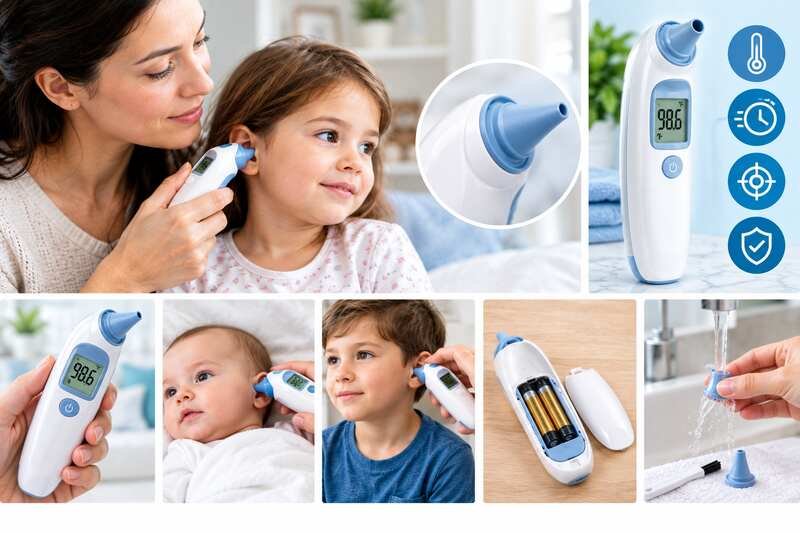
Choosing the wrong ear thermometer can turn a simple fever check into a frustrating guessing game. Slow readings, inconsistent results, or a device that will not sit still in a squirming child’s ear canal can leave parents unsure whether a number is even real. But with the best ear thermometer for your household, checking a temperature becomes a one-to-three-second task instead of a struggle.
Below, we review five real ear thermometers worth considering for a U.S. household in 2026. Each entry covers who the device fits best, along with the pros and cons that matter once the box is open. Don’t wait until 2 a.m. with a feverish toddler to figure out which device you trust. Explore these picks now, so you already know which button to press when it counts.
1. Braun ThermoScan 5 Ear Thermometer (IRT6500)
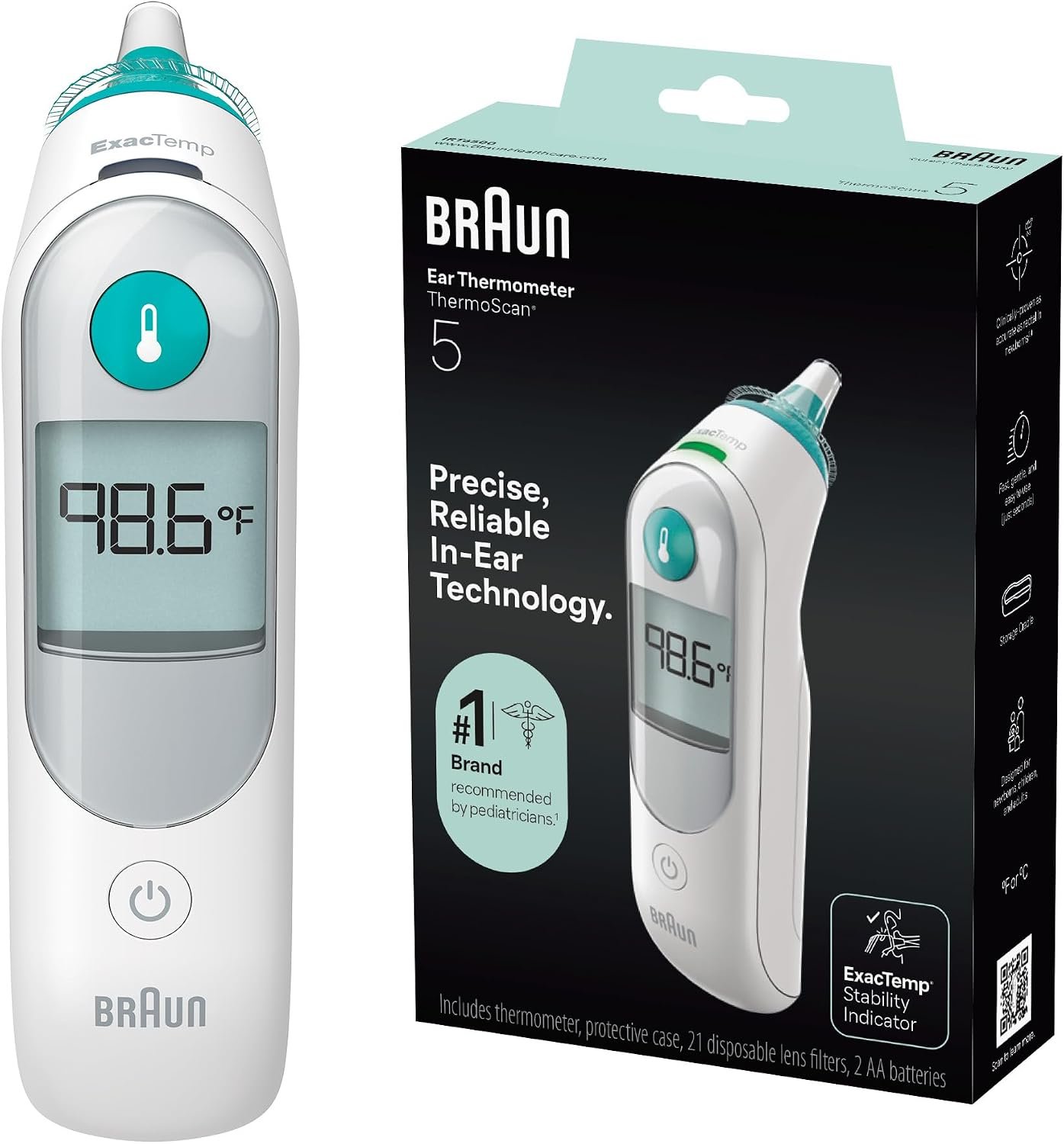
Photo: Amazon
The Braun ThermoScan 5 is one of the most widely recommended ear thermometers among U.S. pediatric offices. That makes it a solid default pick for parents, caregivers, and anyone who wants the best ear thermometer without a lot of extra research. It is well suited to households with infants over six months through adults. It is also gentle enough to use on a sleeping child without waking them.
Pros:
- ExacTemp positioning system confirms with a light and beep that the tip is correctly seated before it takes a reading
- Pre-warmed tip helps prevent the cooling effect that can pull cheaper thermometers’ readings artificially low
- Trusted by pediatricians, which matters when you want a second opinion on a device, not just a fever
- Disposable lens filters and memory recall make it easy and hygienic to share across the family
Cons:
- The display is not backlit, which can make 2 a.m. readings harder to see
- Costs more than a basic oral digital thermometer
This thermometer’s ExacTemp positioning system is the feature that sets it apart from cheaper competitors. Rather than hoping the tip landed correctly, a light and a beep confirm it before the reading locks in. That matters most with a wriggling toddler, where a mis-seated tip is the single most common reason an ear reading comes back wrong. The pre-warmed tip works alongside this by neutralizing the ear canal’s natural cooling response to contact. That is part of why clinical staff reach for this model so often.
Beyond accuracy, the ThermoScan 5 stores recent readings in memory and uses disposable lens filters. Multiple people in the same household can use it safely during the same cold and flu season without cross-contaminating results. It is not the flashiest device on this list, but its combination of pediatrician trust and consistent accuracy is exactly why it tops many people’s search for the best ear thermometer. Add in a soft, adjustable tip and it becomes an easy device to keep on the nightstand for the whole cold and flu season.
2. Braun ThermoScan 7 Ear Thermometer with Age Precision (IRT6520)
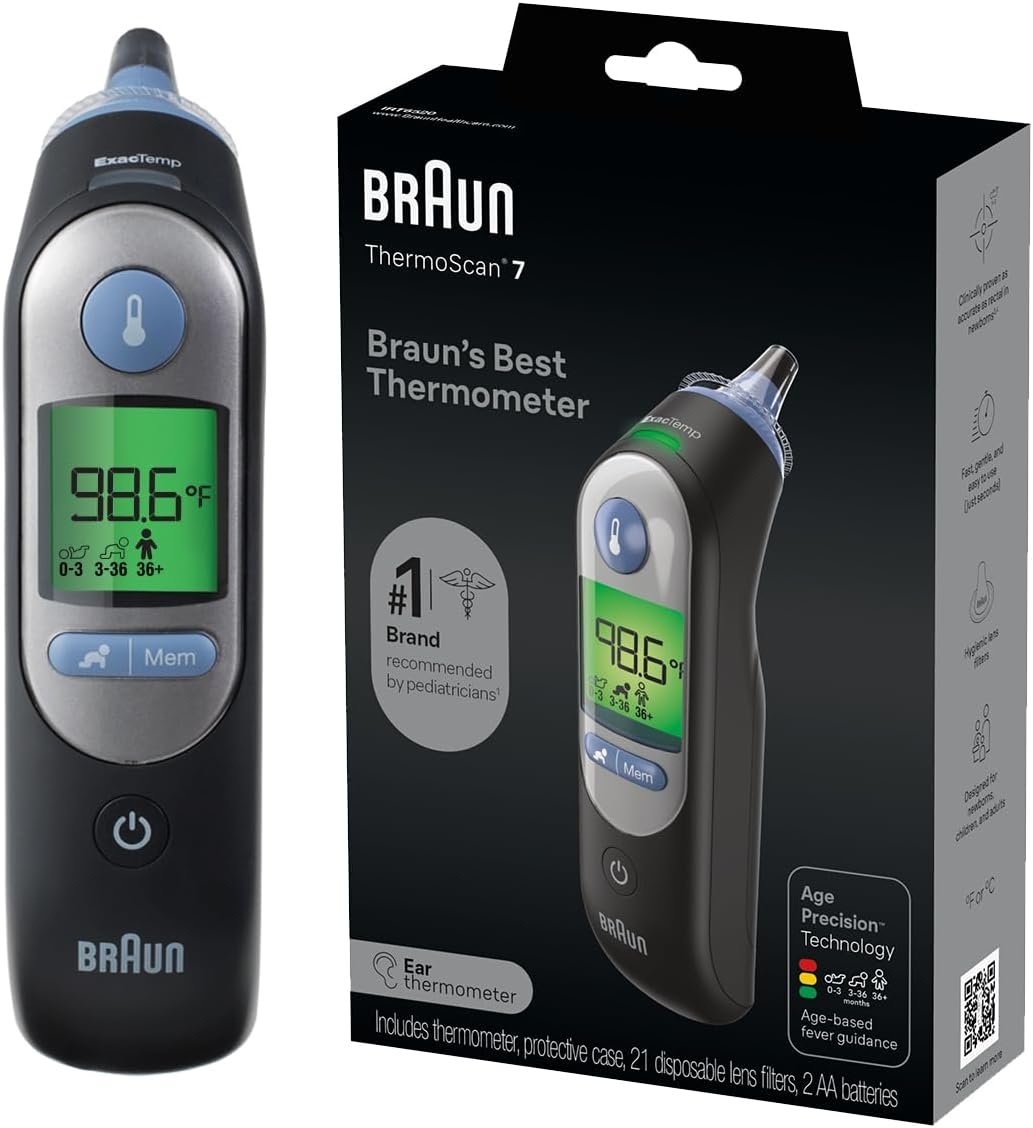
Photo: Amazon
The Braun ThermoScan 7 is ideal for households that want everything the ThermoScan 5 offers. It adds a bit more polish for nighttime use and for tracking a fever across several family members of different ages. It suits parents who check temperatures often enough that a backlit screen and age-adjusted guidance genuinely save time.
Pros:
- Age Precision technology color-codes the fever alert based on the person’s age group instead of one generic cutoff
- Backlit display makes nighttime readings far easier than on the ThermoScan 5
- Keeps the same pre-warmed tip and adds a nine-reading memory
Cons:
- Costs noticeably more than the ThermoScan 5 for features some households may not need
What makes the ThermoScan 7 worth the upgrade for some families is the Age Precision feature. A fever threshold that is appropriate for a newborn is not the same one that matters for a teenager. This model adjusts its color-coded alert accordingly, instead of leaving that interpretation to a tired parent at midnight. Paired with the backlit display, it is easier to read a number correctly in a dark bedroom without fumbling for a lamp.
The nine-reading memory is enough to track a fever’s progress through a rough night or two without writing anything down. That trend is useful information to relay to a pediatrician over the phone. For households with kids spanning a wide age range, the extra cost buys real convenience rather than a marketing gimmick.
3. iProven DMT-489 Ear and Forehead Thermometer
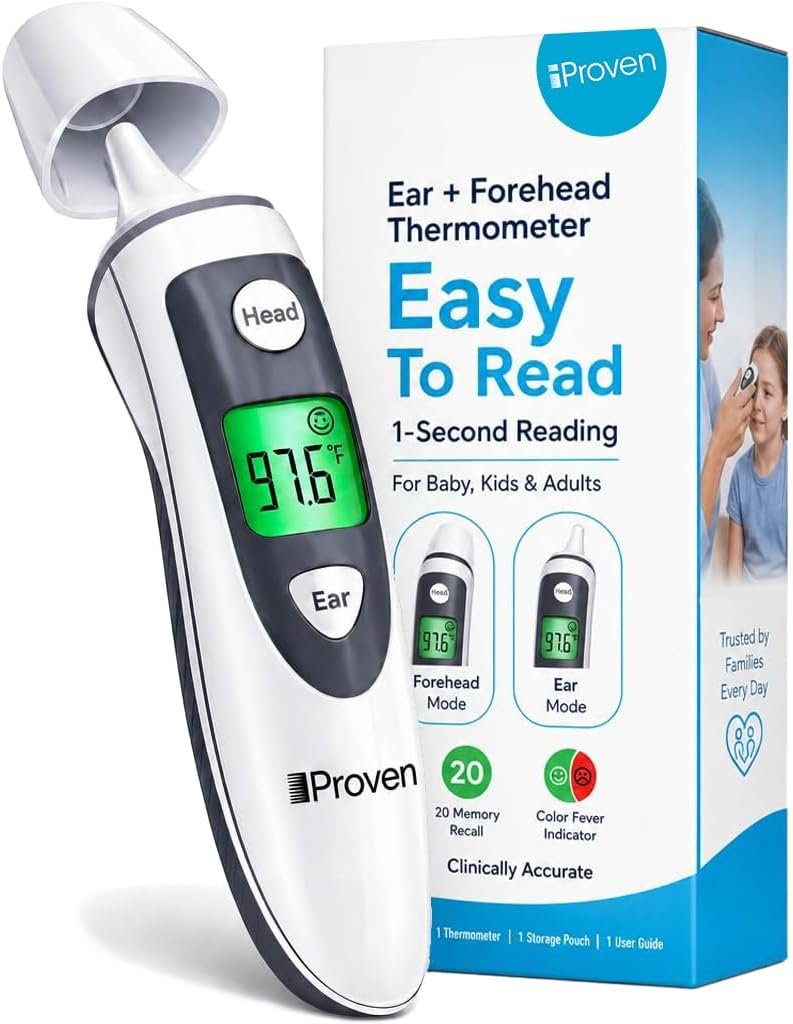
Photo: Amazon
The iProven DMT-489 is ideal for a family with both a newborn and older children, since it switches between ear and forehead modes with a removable sensor cap. That flexibility matters because ear readings are not recommended for infants under six months. A single device that also covers forehead mode saves a household from buying two separate thermometers.
Pros:
- Genuinely useful dual mode covers both ear and forehead (temporal) readings with one device
- FDA-cleared and delivers a reading in about one second
- 20-reading memory with a color-coded fever alert
Cons:
- Switching between the two sensor caps is an extra step compared with single-mode devices
The DMT-489’s dual-mode design is its main selling point. A removable cap swaps the device between ear and forehead sensing, so it grows with a child instead of becoming obsolete once a baby passes six months old. Its one-second reading speed matters in practice, too. The faster a reading finishes, the less chance a squirming child has to pull away mid-measurement and force a do-over.
With FDA clearance and a 20-reading memory that flags results with a simple color code, it takes some of the guesswork out of deciding whether a number is worth a call to the pediatrician. For a family that wants one thermometer to cover a wide age range, without compromising much on speed or accuracy, this is a practical middle-ground pick. It is also small enough to toss in a diaper bag alongside the usual essentials.
4. HoMedics Dual-Use Ear and Forehead Thermometer
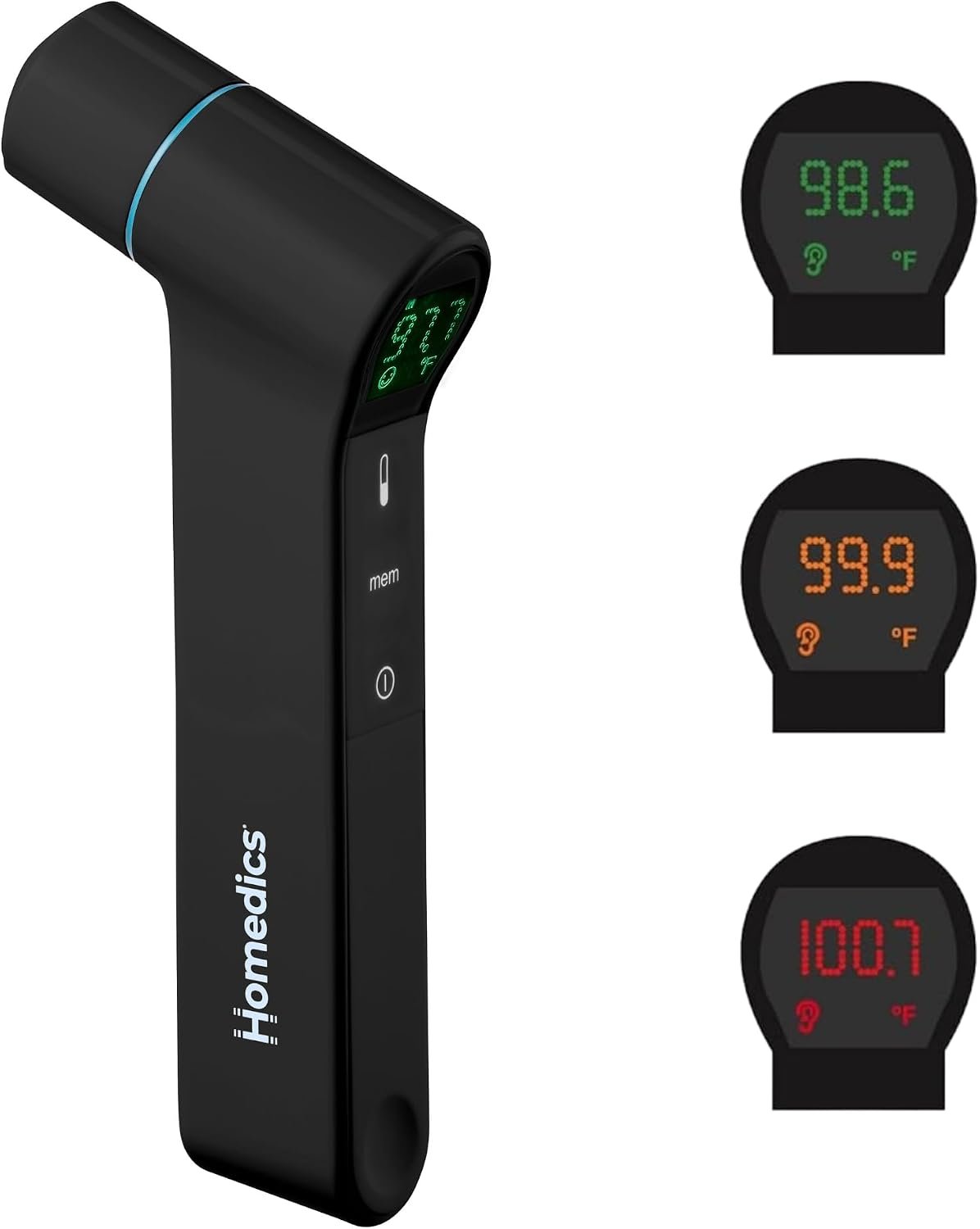
Photo: Amazon
The HoMedics Dual-Use Ear and Forehead Thermometer is ideal for a household that wants dual ear-and-forehead flexibility. It skips premium extras like positioning confirmation or age-adjusted alerts to keep the price down. It suits budget-conscious parents who still want a device from an established brand rather than an unregulated import.
Pros:
- Budget-friendly price point well below the two Braun models above
- Dual mode, with a removable cap that switches between in-ear readings and no-contact forehead scanning
- Color-coded backlit display flags a fever automatically, and stores up to 9 past readings
Cons:
- Fewer refinements, such as positioning confirmation and age-adjusted alerts, than the pricier Braun models
This thermometer earns its spot on the list by doing the fundamentals well at a lower price. Dual-mode sensing and a color-coded fever display cover most of what a typical household actually needs day to day. It will not hold your hand through positioning the way the Braun ThermoScan 5’s ExacTemp system does. A little extra care with placement goes a long way toward getting a reliable number here.
For a first thermometer, a backup device, or a household simply trying to avoid overspending on features it will rarely use, this HoMedics thermometer is a reasonable starting point. It comes from an established brand with a strong track record, which is not always true of the cheapest imported models sold online.
5. Frida Baby 3-in-1 Infrared Thermometer
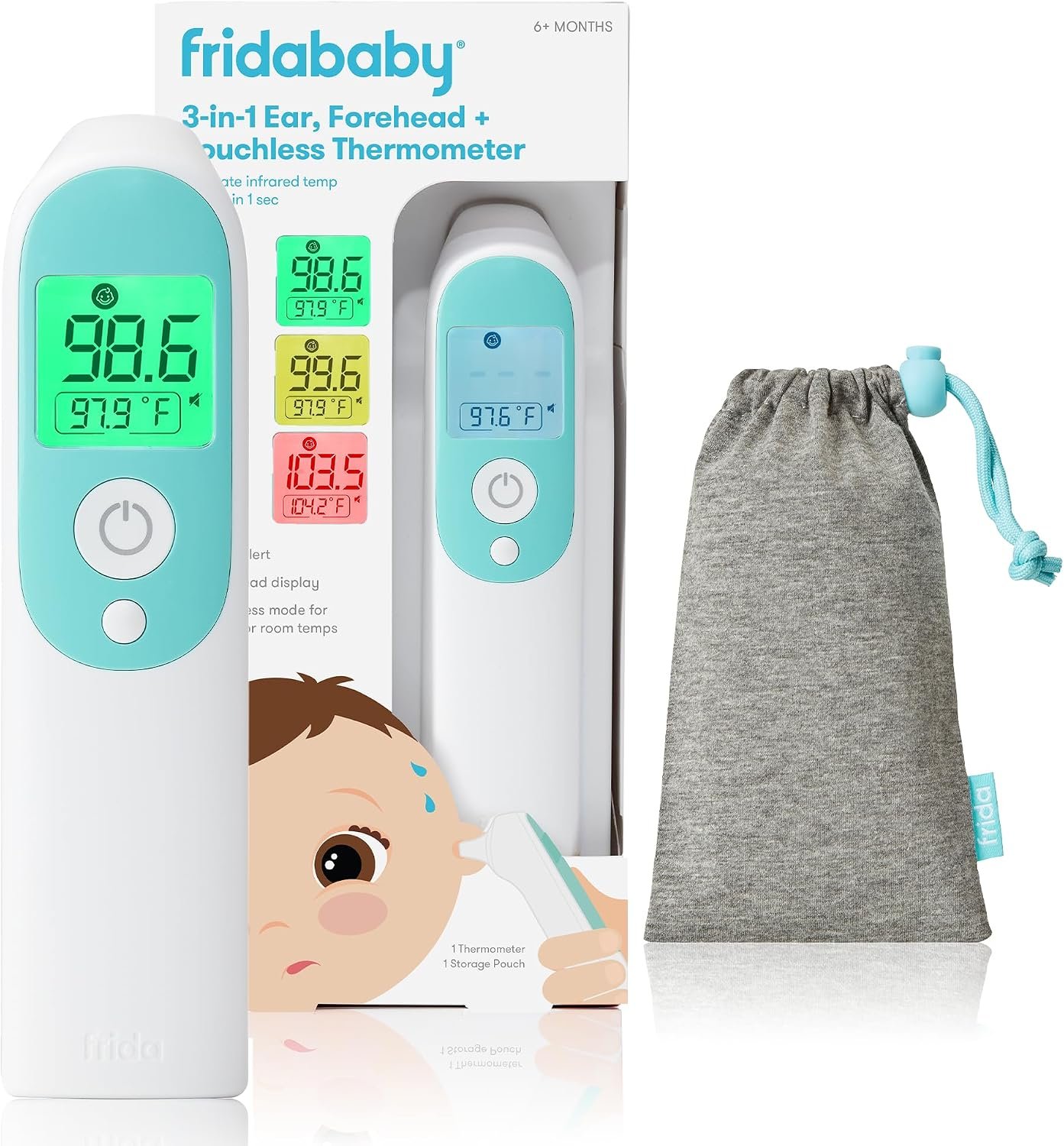
Photo: Amazon
The Frida Baby 3-in-1 Infrared Thermometer is ideal for parents of a squirmy or ear-sensitive child who resists having anything placed inside the ear canal itself. Beyond standard ear-canal readings, it also offers a touchless forehead mode. That lets a caregiver take a stealthy reading from a sleeping or resistant child without going anywhere near the ear canal.
Pros:
- Touchless forehead mode as a gentle alternative to an in-canal reading
- 40-reading memory to track a fever’s progress over time
- Familiar, trusted baby-care brand, with an Amazon’s Choice badge and thousands of ratings
Cons:
- As with most touchless forehead readings, results can run slightly warmer or cooler than a true in-ear reading, so ear mode remains the more precise setting
The touchless forehead mode is a genuine point of difference for a child who fights every attempt to get a thermometer tip near the ear canal. It sidesteps the struggle entirely while still using the same general infrared principle as the device’s in-canal mode. The same unit also doubles as a touchless thermometer for checking a bottle or room temperature, which is a practical extra for parents of infants.
Because a forehead or touchless reading comes from a different location than a true tympanic reading, it is worth comparing an unexpected result against a second method or the device’s own ear mode. Do not treat any single reading as gospel. That is good practice with any thermometer, but especially one offering more than one measurement mode.
What to Look For in the Best Ear Thermometer
A few features consistently separate a genuinely useful ear thermometer from one that ends up back in a drawer. A pre-warmed tip prevents the ear canal from cooling on contact, which otherwise pulls a reading down. Positioning confirmation, a light or beep that signals correct placement, helps first-time users avoid the most common source of an inaccurate result. Memory recall makes it easier to track whether a fever is climbing, holding steady, or breaking. That trend is useful information to share with a pediatrician over the phone. Disposable or reusable lens covers reduce cross-contamination when the same device gets used on multiple family members during the same cold or flu season. A dual ear-and-forehead mode adds flexibility for infants under six months, since ear readings are not recommended at that age.
How to Get an Accurate Reading
Technique matters as much as the device itself. Before using an ear thermometer, gently pull the outer ear back and slightly up for an adult or older child, or straight back for an infant. This step helps straighten the ear canal so the sensor has a clear path to the eardrum. According to Mayo Clinic, ear thermometers are not recommended for infants younger than six months. Accuracy can also drop if the ear canal is blocked with earwax, or if the device is aimed incorrectly. If you or your child just came in from extreme heat or cold, wait about 15 minutes before taking a reading. The ear canal needs that time to return to a stable temperature.
Frequently Asked Questions
What Is the Most Accurate Ear Thermometer for Kids?
The Braun ThermoScan 5 and ThermoScan 7 are both widely trusted by U.S. pediatric offices for their ExacTemp positioning confirmation and pre-warmed tips, which reduce the most common sources of an inaccurate reading.
Can I Use an Ear Thermometer on a Newborn?
No. Ear thermometers are not recommended for infants younger than six months. Their ear canals are too narrow and sensitive for a reliable reading at that age. A dual-mode device like the iProven DMT-489 or HoMedics thermometer can switch to forehead mode instead for that age range.
How Fast Do Ear Thermometers Give a Reading?
Most models on this list, including the iProven DMT-489, deliver a reading in about one second. The Braun models typically take one to three seconds once the tip is correctly positioned.
Do Ear Thermometers Have Fever Alerts?
Yes. The iProven DMT-489 and HoMedics thermometer both include color-coded fever alarms. The Braun ThermoScan 7 goes a step further with age-adjusted fever color guidance.
Is an Ear Thermometer as Accurate as a Rectal Thermometer?
For most children over six months, a properly used ear thermometer gives a reliable estimate. Pediatricians still consider a rectal reading the most precise method for infants under three months, though.
Conclusion
Choosing the best ear thermometer comes down to how it fits your household. Brand name matters less than the household detail. The Braun ThermoScan 5 is a dependable, pediatrician-trusted default. The ThermoScan 7 adds age-adjusted guidance and a backlit screen for households that want the extra polish. The iProven DMT-489 and HoMedics thermometer both offer practical dual ear-and-forehead flexibility at two different price points. The Frida Baby 3-in-1 is worth a look for a gentler touchless forehead reading.
Whichever model you choose, proper technique and a clean ear canal matter more than any single feature on the box. Take a moment to review the options above. Think about who in your household will actually be using the device most often. If a fever persists, climbs quickly, or comes with other worrying symptoms, treat the reading as one data point. It is not the whole picture. Call your pediatrician instead of relying on the number alone.
Related Review Article:

Hi, I’m Mamon, the content creator behind this blog. I share my experience in blogging, WordPress, SEO, and affiliate marketing through honest product reviews, in-depth buying guides, and practical how-to articles. Every piece of content is thoroughly researched and written to help readers make informed decisions.
Leave a Reply