Wearing an elbow brace can help with elbow pain or discomfort, but it only works as well as it fits. Knowing how to wear an elbow brace correctly is what separates real pain relief from a brace that just sits there doing very little. This guide walks through fitting, placement, and the small adjustments that make the biggest difference.
Choosing the right elbow brace can be confusing with so many options on the market, but knowing how to wear an elbow brace once you’ve picked one is what actually delivers relief from tennis elbow, golfer’s elbow, and other common injuries.
Many elbow braces are sold as one-size-fits-all, but measuring your arm before buying is still the better approach. When picking a brace, comfort, durability, and washability all matter.
Key Takeaways
- Proper fit and placement matter more than the specific brand or price of the brace
- Measuring your arm is worth doing even with a one-size-fits-all design
- A counterforce strap is typically worn about two finger-widths below the elbow crease, centered over the back of the forearm
- Research shows counterforce bracing reduces pain about as effectively as kinesiology tape or a corticosteroid injection, without improving grip strength
- Numbness, tingling, or skin discoloration are signs the brace needs to be loosened or resized
Understanding Elbow Braces and Their Purpose
Elbow braces support and stabilize the joint, and different designs work in different ways. A compression sleeve applies even pressure across a larger area of the arm. A counterforce strap targets a narrow band of the forearm just below the elbow. A rigid or hinged brace limits how far the joint can move.
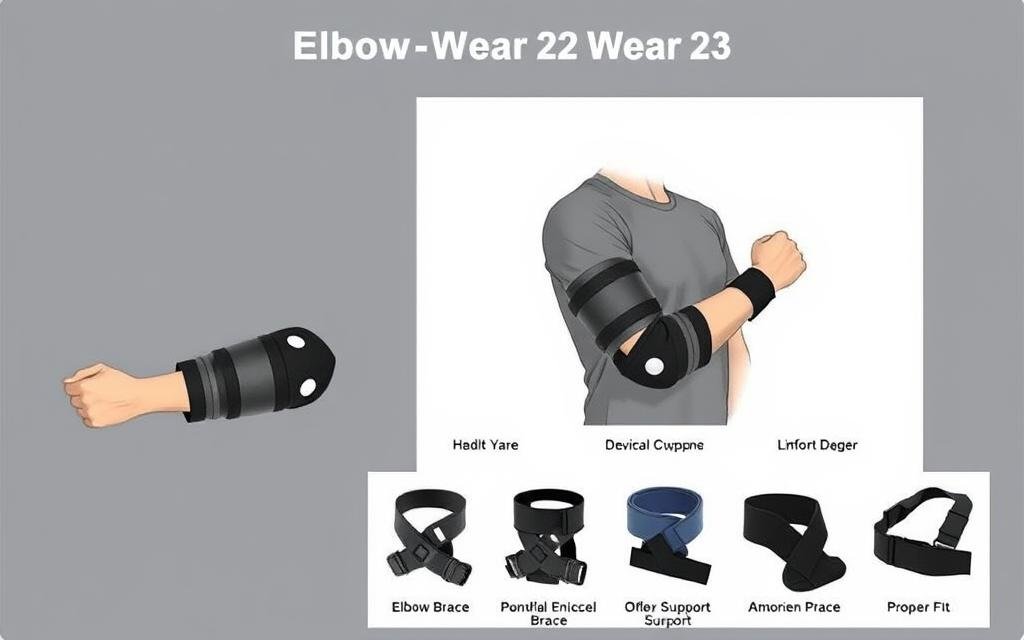
To put on a compression-style elbow sleeve, undo any straps first, then pull the opposite sides of the brace apart before sliding it up the forearm. Getting this first step right makes the rest of the fitting process much easier.
Wearing the right brace can support recovery from golfer’s elbow, tennis elbow, and tendonitis. According to the American Academy of Orthopaedic Surgeons’ OrthoInfo resource on tennis elbow, roughly 80 to 95 percent of patients see improvement from nonsurgical treatment such as bracing, rest, and physical therapy.
Some common types of elbow braces include:
- Compression sleeves, which cover the lower and upper forearm and apply even pressure across a larger area
- Adjustable range-of-motion braces, which allow controlled movement during rehabilitation after surgery or a significant injury
- Counterforce straps, one of the simplest and most affordable options for managing tendon-related pain like tennis or golfer’s elbow
Knowing the difference between these designs makes it much easier to pick the right one, and to know how to wear an elbow brace of that specific type correctly once you have it.
A well-fitted brace can help with mild to moderate arthritis pain and swelling in the joint. For more serious injuries, like a UCL tear or an elbow fracture, a rigid brace that limits joint movement is usually the better choice while the injury heals.
| Type of Elbow Brace | Benefits |
|---|---|
| Compression Sleeve | Even support and warmth across the joint, worn easily under clothing |
| Counterforce Strap | Targeted relief for tendon pain from tennis or golfer’s elbow |
| Rigid or Hinged Brace | Limits movement to protect the joint during serious injury recovery |
Choosing the Right Elbow Brace for Your Needs
Choosing an elbow brace comes down to the type of injury, how much support you need, and personal comfort. For tennis elbow or golfer’s elbow, look for a strap or sleeve that offers targeted compression right at the tendon, since that is where the research shows the benefit comes from.
Think about support level, material, and strap adjustability. The brace should feel comfortable and breathable without limiting your range of motion. Compression sleeves are a popular choice because they are lightweight and easy to wear under a long sleeve.
- Consider the specific injury or condition you are trying to manage
- Decide how much support you need, from mild to maximum
- Look for a compression design that targets the tendon area if tennis or golfer’s elbow is the issue
- Choose breathable, moisture-wicking material if you plan to wear the brace during exercise
Working through these factors helps you find a brace that actually fits. Our buying guide to the best elbow compression sleeves compares specific models if you want a closer look at what is available. If it turns out your pain is actually higher up near the shoulder rather than the elbow, our shoulder compression brace guide covers that area instead, since the two joints need different support.
How to Wear an Elbow Brace Properly
To wear an elbow brace correctly, start by making sure your arm is clean and dry. This one small step helps avoid irritation and gives you a snugger, more accurate fit. For a counterforce strap specifically, place it about two finger-widths below the bend of the elbow, centered over the back of the forearm. That placement matches the positioning described in AAOS guidance for tennis elbow bracing.
Here are a few tips to keep in mind when putting one on:
- Measure your arm before buying to get an accurate size, since braces vary by brand
- Choose a breathable, durable, washable material for daily comfort
- Adjust the straps and fasteners until the brace feels secure without being painfully tight
Following these steps gives you a comfortable, secure fit that lets you get through your day without the brace becoming a distraction. A 2025 randomized controlled trial published in PLOS ONE compared a counterforce brace against kinesiology tape and a corticosteroid injection for tennis elbow. All three reduced pain by a similar amount over four weeks, and the brace group also showed measurable improvement in arm function. None of the three treatments improved grip strength on their own, which is a useful reminder that a brace manages symptoms rather than rebuilding strength by itself.
| Elbow Brace Type | Typical Benefit |
|---|---|
| Counterforce Brace | Targeted relief during gripping and wrist extension motions |
| Neoprene Compression Brace | General compression and warmth for the whole joint |
Adjusting Your Elbow Brace for Maximum Comfort
Getting the most out of an elbow brace means adjusting it throughout the day, not just putting it on once and forgetting about it.
A properly worn elbow sleeve or strap should feel secure without being too tight or too loose. You should still be able to make a fist or hold onto something without the brace getting in the way. If you can do that comfortably, the fit is probably right. It is also worth adjusting the brace through the day, since your arm can swell or change size with activity.

Finding the Right Tension Level
Finding the right tension takes a little trial and error. Too tight, and the brace can cut off circulation and cause more discomfort than it solves. Too loose, and it will not provide enough support to matter. Start with the straps loose, then tighten gradually until you feel real support without any numbness or tingling.
Making Adjustments Throughout the Day
Checking and adjusting your brace throughout the day keeps it comfortable and effective. As you move and go about normal activities, your arm can swell slightly or shift position inside the brace. Small readjustments as needed keep you comfortable and help you avoid the aches that come from a brace that has loosened or dug in over several hours.
| Elbow Brace Type | Recommended Use |
|---|---|
| Compression Sleeve | Mild to moderate elbow pain, swelling, and mild instability |
| Rigid or Hinged Restrictor | Severe or chronic instability, significant pain, and post-surgical recovery |
| Counterforce Strap | Mild to moderate elbow pain, nerve irritation, and tendonitis |
Common Mistakes to Avoid When Wearing Your Brace
Learning how to wear an elbow brace the right way means avoiding a few common mistakes that trip up most first-time users, though nearly all of them are easy to fix. Wearing the brace too tight can lead to numbness or tingling in the hand, while wearing it too loose makes it far less effective since it won’t stay in place during movement.
To avoid these issues and stay comfortable, keep these tips in mind:
- Adjust the straps and fasteners for a snug fit that is not painfully tight
- Watch your hand and forearm for numbness or tingling, and loosen the brace right away if either shows up
- Wear the brace consistently but not around the clock, so normal circulation and movement are not restricted for too long at a stretch
Avoiding these mistakes makes wearing an elbow brace a much more positive experience day to day. If you’re unsure which type matches your injury, a healthcare provider can help you decide.

| Common Mistake | Consequence | Fix |
|---|---|---|
| Wearing the brace too tight | Numbness or tingling in the hand | Loosen the straps immediately |
| Wearing the brace too loose | Reduced support and effectiveness | Retighten the straps and fasteners |
| Wearing it around the clock | Restricted circulation and movement over time | Remove the brace for periods of rest each day |
Caring for Your Elbow Brace
Keeping an elbow brace clean extends its life and keeps it comfortable against the skin. Cleaning it regularly also helps avoid bacteria buildup and odor, which matters more the more often you are wearing it.
Cleaning Instructions
- Hand wash with mild soap and water rather than a washing machine, unless the manufacturer specifically says otherwise
- Avoid harsh chemicals, bleach, or rough scrubbing that can damage the material
- Let the brace air dry fully before wearing it again to prevent moisture buildup
Storage Recommendations
Store the brace in a cool, dry place out of direct sunlight, since heat and UV exposure can break down elastic material over time.

When to Replace Your Brace
Watch for visible cracks, fraying straps, or fabric that has lost its stretch. Any of these are a sign it is time for a replacement, since a worn-out brace will not apply the support it is supposed to. If you are comparing a compression-style option against other designs, our guide to what are compression arm sleeves used for covers how that broader category works beyond just the elbow.
Signs Your Elbow Brace Isn’t Fitting Correctly
Knowing how to wear an elbow brace also means knowing when something is off. A poor fit can cause discomfort, added pain, and less support rather than more. Numbness, tingling, or a visible change in skin color are all signs the fit needs attention.
Other signs of a poor fit include restricted movement, skin irritation, or a sleeve that feels uncomfortably tight no matter how you adjust it. The brace should always feel snug, never painfully constrictive. When in doubt, check the manufacturer’s sizing guide or ask a doctor.
Physical Signs of a Poor Fit
- Numbness or tingling in the arm or hand
- Skin discoloration or irritation where the brace sits
- Restricted movement or noticeable stiffness
When to Resize or Replace
If any of these symptoms show up, it is time to adjust the fit or size up or down to a different brace. The right fit is what actually delivers the pain relief and support a brace is meant to provide.
Frequently Asked Questions
Q: How tight should an elbow brace be?
It should feel snug and supportive without any numbness, tingling, or visible skin discoloration. If you cannot comfortably make a fist while wearing it, it is too tight.
Q: How do you know exactly where to place a tennis elbow strap?
Position it about two finger-widths below the crease of the elbow, centered over the back of the forearm. That placement is what most orthopedic guidance on tennis elbow bracing recommends.
Q: Can you wear an elbow brace all day?
You can wear one for most of the day, but it is worth taking breaks so normal circulation and movement are not restricted for too long at a time.
Q: Does an elbow brace actually help you get stronger, or just reduce pain?
Mostly the latter. Research comparing bracing to other tennis elbow treatments has found real pain relief but no meaningful strength improvement, so a brace works best as symptom management, not a strengthening tool.
Q: How do you know if you need a different type of elbow brace?
If your current brace does not relieve symptoms after a few weeks of correct use, or if your pain is severe, involves a possible fracture, or comes with significant instability, it is worth talking to a doctor about a different brace type or further treatment.
Conclusion
Learning how to wear an elbow brace correctly is what makes the difference between a brace that genuinely helps and one that just sits on your arm doing very little. A good brace, placed and adjusted correctly, can meaningfully ease pain from tennis elbow, golfer’s elbow, and several other conditions.
If you stay active or do repetitive arm work, a properly fitted brace can support your recovery and keep you comfortable through the day. Pay attention to fit, adjust as your arm changes, and replace the brace once it shows real wear. Managing an elbow injury takes patience, and working with a doctor or physical therapist alongside a well-fitted brace gives you the best chance of a full recovery.

Hi, I’m Mamon, the content creator behind this blog. I share my experience in blogging, WordPress, SEO, and affiliate marketing through honest product reviews, in-depth buying guides, and practical how-to articles. Every piece of content is thoroughly researched and written to help readers make informed decisions.
Leave a Reply