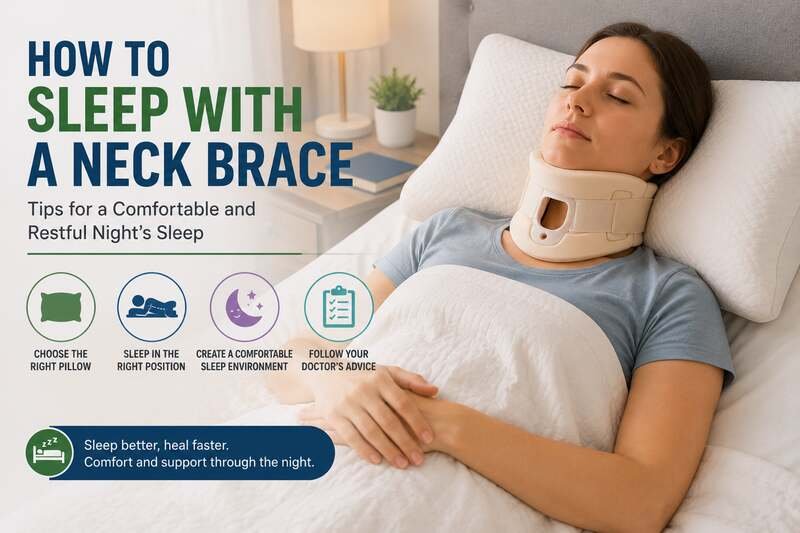
If you’re wondering how to sleep with a neck brace without tossing and turning all night, you’re not alone. A cervical collar limits how far you can turn your head. That alone can make falling asleep, staying asleep, and getting out of bed feel awkward at first.
The good news: a few simple adjustments make a real difference. This guide covers how to sleep with a neck brace safely. It walks through prepping your bed, picking the right sleep position, choosing pillows, and knowing when it’s time to stop wearing the collar at night.
Always follow your doctor’s specific instructions first. The tips below fill in the practical, night-to-night details your doctor may not have time to cover.
Key Takeaways
- Sleep on your back first. It’s the easiest position to keep your spine neutral while wearing a neck brace.
- Use the log-roll technique to get in and out of bed without twisting your neck.
- One supportive pillow works better than several stacked pillows, which can push your neck out of alignment.
- Soft collars should only be worn short-term. Long-term wear can weaken your neck muscles, according to the American Academy of Orthopaedic Surgeons.
- Call your doctor if you notice new numbness, worsening pain, or skin irritation under the brace.
What Is a Neck Brace (Cervical Collar)?
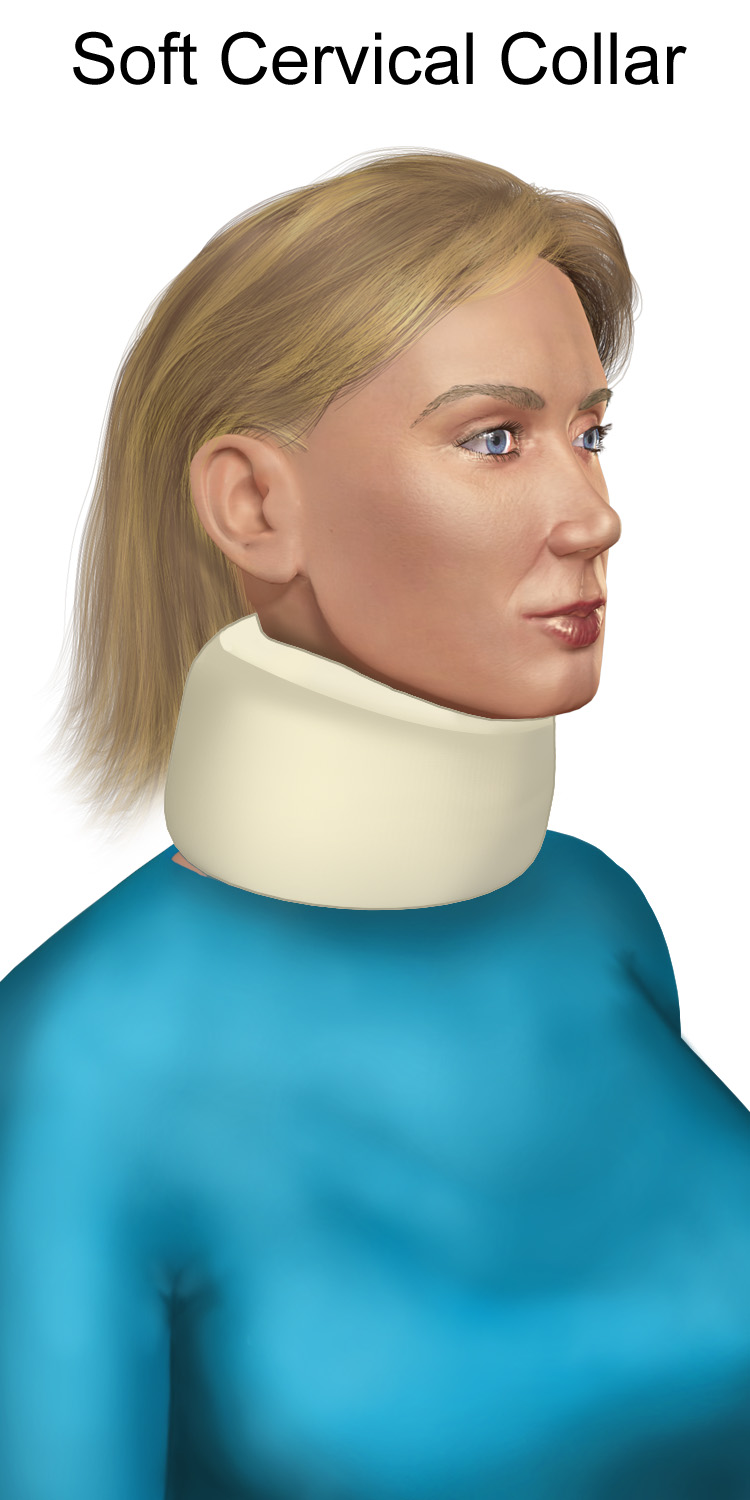
Doctors also call a neck brace a cervical collar, or simply a C-collar. It supports your head and takes pressure off your spinal cord. Physicians prescribe collars after neck surgery, whiplash, a pinched nerve, or other neck injuries.
Not every collar works the same way. Soft collars use foam and fit loosely. They suit mild strain and moderate pain. Hard collars use rigid plastic panels. Doctors reserve them for fractures, spinal instability, and recovery after surgery. Some patients also use a three-piece halo brace or a cervical-thoracic brace for more complex injuries.
Your doctor picks the collar type based on your specific injury. Never swap collar types on your own, even if a different one looks more comfortable.
Recovery timelines vary widely. A mild strain might need a soft collar for just a few days. A cervical fusion or fracture can require a rigid collar for six to twelve weeks. Your surgeon or physical therapist sets the actual timeline based on your imaging and how your neck heals.
In the U.S., you’ll commonly see brand names like Aspen, Miami J, and Philadelphia collars in hospitals and DME suppliers. Each brand makes both soft and rigid versions, and your prescription will usually specify the exact model your doctor wants you to use. Insurance coverage and fit can vary by brand, so ask your provider or physical therapist which one they recommend before you buy a replacement collar yourself.
Choosing a Neck Brace Built for Better Sleep
Not all collars feel the same lying down. A bulky or stiff collar can dig into your shoulders or jaw once you’re on a pillow, even if it feels fine standing up. Look for a collar with breathable padding and a low profile at the back, since that’s the part that presses into your pillow all night.
If your doctor allows some flexibility in brand or style, our neck brace for sleeping reviews compares options built specifically for overnight comfort. For a broader look at daytime and nighttime support options side by side, check our neck support brace comparison. Always confirm any change with your doctor before switching collars mid-treatment.
Step-by-Step: How to Sleep With a Neck Brace
Getting into bed takes a bit of technique when you’re wearing a collar. Follow these steps each night:
- Sit on the edge of the mattress first. Keep your back straight and your neck in line with your spine.
- Lean onto your forearm or elbow. Lower yourself slowly into a side-lying position.
- Lift your legs onto the bed as you roll. Move your whole body together, like a single unit, instead of twisting at the neck.
- Settle into your chosen sleep position. Adjust your pillow before you get too comfortable to move again.
This method is called log rolling, and it’s the safest way to get into bed with a neck or spine injury. Ask your physical therapist to walk you through it in person if you’re not confident doing it alone.
Best Sleeping Positions With a Neck Brace

Sleeping on your back is usually the easiest position for learning how to sleep with a neck brace. It puts the least pressure on your spine and keeps your head, neck, and shoulders lined up (Cleveland Clinic). Pick a pillow height that keeps your head level, not tipped forward or back.
Side sleeping can also work once you get used to the collar. Keep your head facing forward instead of tucking your chin toward your chest. A pillow that’s too thin will let your head droop. A pillow that’s too thick will push your neck out of alignment.
Skip stomach sleeping entirely while you’re wearing a collar. It forces your neck into an awkward, twisted position for hours at a time. The collar also makes it harder to breathe comfortably in that position.
Pillow and Mattress Tips
Your mattress and pillow matter as much as your sleep position. A mattress that’s too soft lets your body sink and pulls your spine out of alignment. Choose a firmer mattress that keeps your neck properly supported.
Stick to one pillow behind your head, not several. Too many pillows push your chin toward your chest and strain the very muscles your collar is supposed to rest. If you need extra support, tuck a small pillow under your knees or arms instead of stacking pillows behind your neck. A rolled towel under the base of your neck can also add support without bulk. This works especially well if you’re in a semi-reclined position.
Not sure which pillow actually helps? Our guide on common pillow buying mistakes covers what to look for beyond just softness.
A wedge pillow is worth trying if flat sleeping still feels uncomfortable. It raises your upper body slightly and can ease pressure on your neck and lower back at the same time. Test it during the day first, since a new incline can feel strange before it feels supportive.
Sleeping in a Recliner or Armchair

A reclining armchair offers another option, especially in the first few nights after an injury or surgery. Look for one with plush cushions and a reclining function that supports your neck and shoulders.
An armchair won’t feel as comfortable as a bed for a full night’s sleep. Still, it limits tossing and turning, which matters more than comfort in the early recovery period. Many people use a recliner for the first week or two. They move back to a bed once they feel steadier with the collar.
The video below walks through practical tips for wearing, cleaning, and sleeping in a cervical collar. It also covers how to adjust the collar comfortably before bed.
Getting Out of Bed Safely
Getting up uses the same log-roll principle in reverse. Roll your whole body gently onto one side first. Swing your legs off the bed toward the floor. Push yourself up using your arms and forearms, not your neck or abs.
Avoid jerking upright from a flat position. That single motion puts more strain on a healing neck than almost anything else you’ll do all day.
Managing Discomfort During Recovery
Some soreness is normal while your body adjusts to a collar, especially in the first week. Ice packs, prescribed pain medication, and gentle shoulder rolls (only if your doctor approves them) can all help you settle in for sleep. Keep your bedroom cool and dark, since basic sleep hygiene still matters just as much during recovery.
A short wind-down routine helps too. Dim the lights an hour before bed, avoid caffeine in the afternoon, and give yourself extra time to get positioned comfortably instead of rushing into bed. None of this replaces medical treatment, but it does make the physical process of learning how to sleep with a neck brace feel less stressful night after night.
Once your doctor clears you to stop wearing the collar, some lingering stiffness is common. Our step-by-step guide to using an inversion table for neck pain covers one option people explore after the collar comes off, with your doctor’s approval.
How Long Should You Wear a Neck Brace at Night?
Many doctors now limit how long patients wear a collar, including at night. The American Academy of Orthopaedic Surgeons notes that a soft collar should only be worn for a short period. Long-term wear can weaken the muscles in your neck, which works against your recovery instead of supporting it.
That said, some injuries genuinely require overnight wear for weeks or months, especially after fractures or spinal surgery. If your doctor has told you to keep the collar on around the clock, follow that instruction. It may feel inconvenient at bedtime, but ask at your next appointment exactly when you can expect to stop wearing it at night.
Common Mistakes to Avoid
A few habits make sleeping with a neck brace harder than it needs to be. Avoid these when you’re figuring out how to sleep with a neck brace comfortably:
- Sleeping without the collar on, “just for one night.” Skipping it undoes the support your neck needs while healing.
- Fastening the collar too tight. A snug fit is correct; a tight one restricts breathing and blood flow.
- Twisting to check your phone or alarm clock. Turn your whole body instead of just your head and neck.
- Ignoring skin irritation. Check the skin under the collar daily and tell your doctor about redness or sores early.
Quick Checklist Before Bed
Run through this short list each night until the routine feels automatic:
- Collar fastened snugly, not tight
- One supportive pillow in place, height checked
- Phone, water, and any medication within easy reach so you don’t twist to grab them later
- Clear path to the bathroom in case you need to get up during the night
- Bedroom cool, dark, and quiet
A minute of setup now saves you a much harder, more painful adjustment at 3 a.m.
When to Call Your Doctor
Most discomfort with a new neck brace improves within the first few nights. Call your doctor sooner if you notice:
- New or worsening numbness, tingling, or weakness in your arms or hands
- Pain that gets worse despite following your sleep and positioning instructions
- Redness, sores, or broken skin under the collar
- Trouble breathing or swallowing while wearing the brace
- A collar that no longer fits snugly, which can happen as swelling goes down
Related reading: curious about the underlying cause behind a wider or tense neck outside of an injury? Our guide on what causes a thick neck covers common causes and treatment options.
Frequently Asked Questions
What is the best way to sleep with a neck brace?
Back sleeping works best for most people. It keeps your spine neutral and takes pressure off your neck. Use one supportive pillow, and get in and out of bed with the log-roll technique to avoid twisting.
Can I sleep on my side with a neck brace?
Yes, once you’re used to the collar. Keep your head facing forward. Choose a pillow that keeps your head level with your spine, not tilted up or down.
How long do I need to wear my neck brace while sleeping?
It depends on your injury. Some people wear a soft collar for only a few days. Others, especially after surgery or a fracture, need it around the clock for weeks. Follow your doctor’s specific timeline.
Is it normal to have trouble sleeping with a neck brace at first?
Yes. Most people find the first few nights the hardest. Sleep usually improves as you get used to the collar and settle on a comfortable position and pillow setup.
Can I sleep in a recliner instead of a bed with a neck brace?
Yes, and many people prefer it early in recovery. A recliner limits tossing and turning, which can help while you’re still adjusting to the collar.
Should I remove my neck brace to shower or sleep?
Only if your doctor says it’s safe to. Some collars come off briefly for hygiene, while others need to stay on around the clock. Never remove a prescribed collar for sleep without checking first.
What’s the fastest way to get comfortable with a neck brace at night?
Practice getting in and out of bed during the day, before you actually need to sleep. Rehearsing the log-roll technique while you’re alert makes it much easier once you’re tired at night.
Bottom Line
Now you know how to sleep with a neck brace without dreading bedtime. Sleep on your back when you can, and use one supportive pillow. Rely on the log-roll technique to move in and out of bed safely, and reserve a recliner for the toughest early nights.
Keep following your doctor’s instructions on collar type and how long to wear it at night. Quality sleep genuinely speeds up healing. It’s worth the extra few minutes of setup each night to get it right.

Hi, I’m Mamon, the content creator behind this blog. I share my experience in blogging, WordPress, SEO, and affiliate marketing through honest product reviews, in-depth buying guides, and practical how-to articles. Every piece of content is thoroughly researched and written to help readers make informed decisions.
Leave a Reply