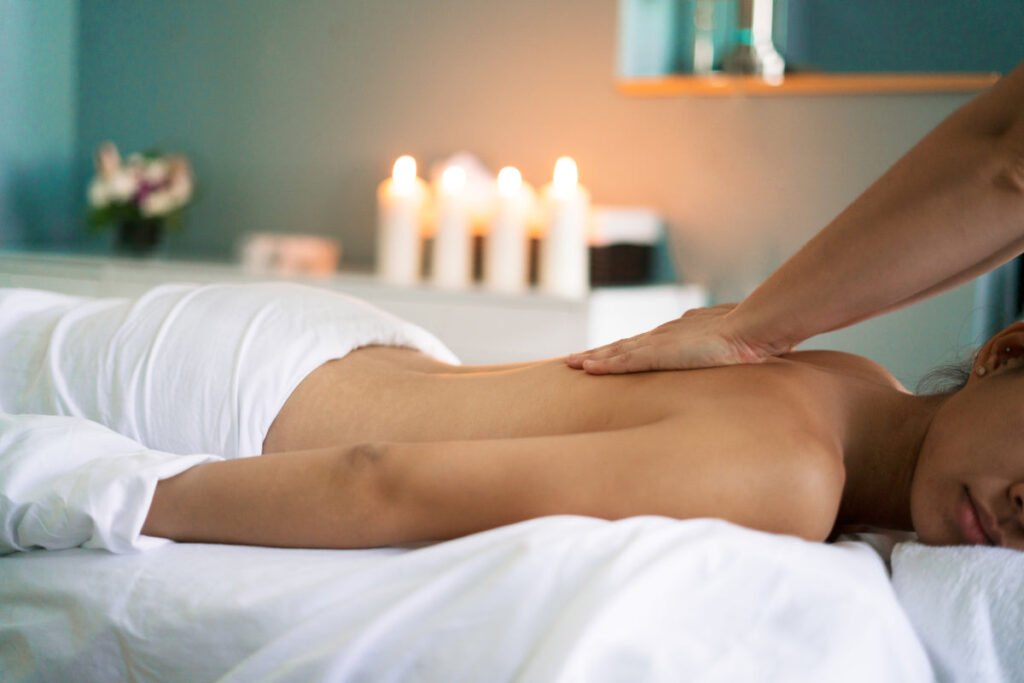
Photo: Shopify Burst
This step-by-step guide covers how to prepare, the core strokes, a full back-to-feet routine, how to protect your own hands and back, and the massage tips and techniques that make the biggest difference. It is written for U.S. beginners and backed by research on home massage.
Key Takeaways
- You can learn to give a safe, relaxing massage at home with a handful of simple strokes.
- In a U.S. trial of 97 patient and caregiver pairs, caregivers who learned basic massage cut patients’ symptoms by 29% to 44%, compared with 12% to 28% in a reading group.
- Start with gliding strokes, then add kneading, thumb circles, and palm compression.
- Use your body weight, not your thumbs, to apply pressure.
- Avoid the spine, the front of the neck, bruises, and injured areas, and ask about health conditions first.
Can Beginners Really Give a Helpful Massage?
Yes. A randomized trial in Supportive Care in Cancer tested a home video and manual that taught family caregivers simple touch and massage methods. Ninety-seven patient and caregiver pairs took part. For four weeks, half the caregivers practiced massage at least three times a week. The other half read aloud to their loved one instead.
| Group | Reduction in patient symptoms |
|---|---|
| Caregivers who gave massage | 29% to 44% |
| Caregivers who read aloud | 12% to 28% |
The massage caregivers also reported more confidence and comfort using touch. The takeaway: simple techniques, learned at home, can make a real difference.
Before You Start: Setup Checklist
- Ask about health: Check for injuries, recent surgery, pregnancy, blood clots, skin problems, or medications like blood thinners.
- Choose a surface: A firm bed or a padded mat on the floor is best. Soft mattresses make it hard to apply even pressure.
- Warm the room: People cool down quickly when lying still.
- Gather supplies: Massage oil or lotion, two towels, and two pillows.
- Prepare your hands: Wash them, remove rings and watches, and trim your nails.
- Set the mood: Dim lights, silence phones, and consider soft music.
Choosing an Oil or Lotion
| Option | Pros | Notes |
|---|---|---|
| Sunflower or grapeseed oil | Light, smooth glide | Good all-purpose choice |
| Jojoba oil | Absorbs well, rarely irritates | Often used on sensitive skin |
| Coconut oil | Smooth, pleasant feel | Solid when cool; warm it first |
| Unscented lotion | Absorbs quickly, less mess | Reapply more often |
| Sweet almond oil | Classic massage oil | Avoid for anyone with nut allergies |
Always warm oil in your hands before touching the skin.
The 5 Basic Strokes Every Beginner Should Know
- Gliding (effleurage): Long, smooth strokes with flat palms. Use them to start, connect areas, and finish.
- Kneading (petrissage): Lift, squeeze, and release the muscle like dough. Great for shoulders and calves.
- Thumb circles: Small, slow circles with the pads of your thumbs on tight spots.
- Palm compression: Lean in with flat palms, hold briefly, then release.
- Light tapping: Gentle, rhythmic tapping with relaxed fingers on fleshy areas. Use it sparingly.
How to Give a Back Massage, Step by Step
Have your partner lie face down with a pillow under their ankles and a towel over their lower body.
- Step 1: Connect. Rest your warm palms on the upper back for a few breaths before moving.
- Step 2: Spread the oil. Use long gliding strokes from the lower back up to the shoulders and back down, on both sides of the spine.
- Step 3: Warm up the muscles. Continue gliding for 2 to 3 minutes, slowly increasing pressure.
- Step 4: Knead the shoulders. Squeeze and release the tops of the shoulders gently.
- Step 5: Work beside the spine. Make slow thumb circles in the muscles about an inch from the spine, moving from the low back upward. Never press on the spine itself.
- Step 6: Use palm compression. Lean into the large muscles of the back with flat palms.
- Step 7: Finish the back. Return to slow gliding strokes, then end with a still hold.
How to Massage the Neck and Shoulders
The neck is delicate, so use extra care.
- Work only the back and sides of the neck, never the front.
- Use light fingertip circles at the base of the skull.
- Squeeze the tops of the shoulders with your whole hand, not just your fingertips.
- Glide your thumbs outward from the base of the neck toward the shoulder tips.
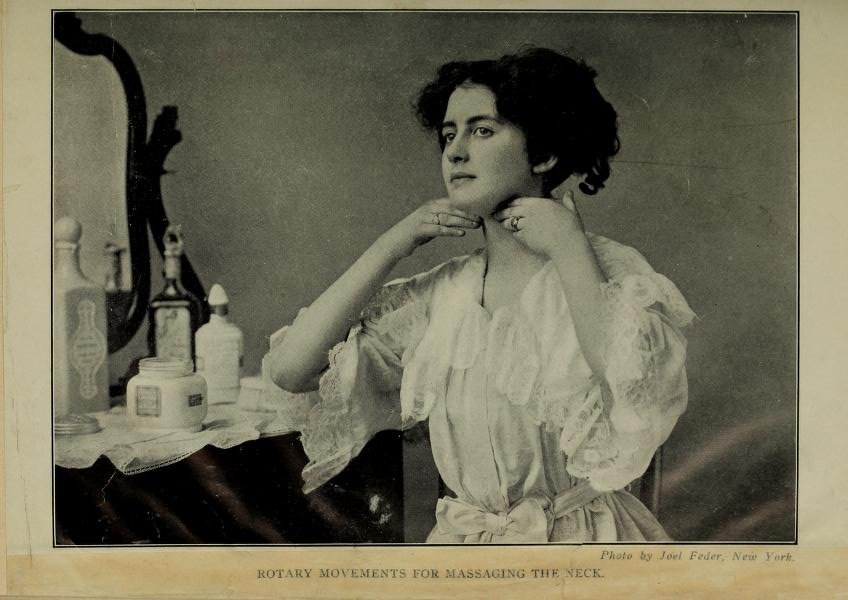
Photo: Margaret Mixter / Wikimedia Commons (public domain)
How to Massage the Legs and Feet
Legs
- Glide from the ankle up toward the hip, using both hands.
- Knead the calves gently. They are often tight.
- Avoid pressing on the back of the knee and on varicose veins.
Feet
- Hold the foot firmly to avoid tickling.
- Press slow thumb circles into the sole, heel, and arch.
- Gently pull and rotate each toe.
- Finish with a few strokes from the toes to the ankle.
How to Give a Hand Massage
- Hold your partner’s hand palm up and press slow thumb circles across the palm.
- Squeeze the soft area between the thumb and index finger.
- Slide gently along each finger from base to tip.
- Turn the hand over and glide from the knuckles toward the wrist.
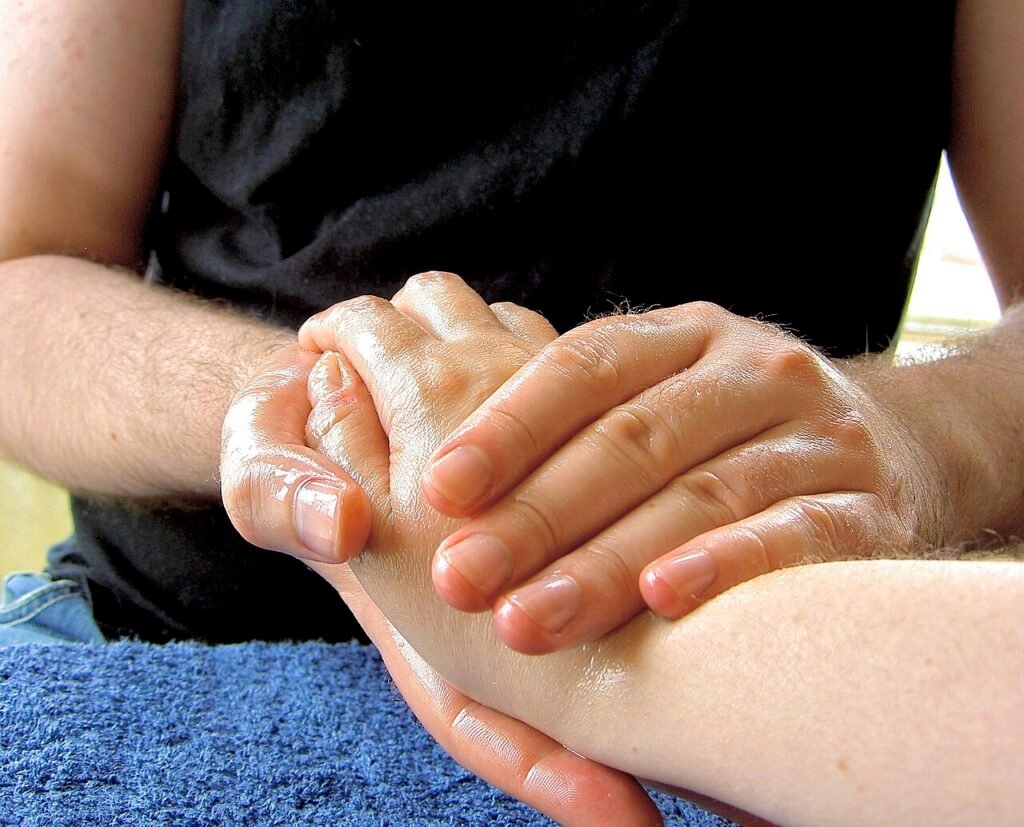
Photo: Lubyanka / Wikimedia Commons (CC BY-SA 3.0)
How to Give a Massage to Someone Sitting in a Chair
No bed or mat? A seated massage works well for the neck, shoulders, upper back, and arms, and it can be done over clothing.
- Step 1: Set up. Have your partner sit backward on a sturdy chair, or sit at a table and rest their forehead on folded arms or a pillow.
- Step 2: Warm up. Rest your hands on their shoulders and take a few breaths together.
- Step 3: Squeeze the shoulders. Use your whole hand to gently knead the tops of the shoulders for 1 to 2 minutes.
- Step 4: Work the upper back. Make slow palm circles between the shoulder blades, staying off the spine.
- Step 5: Ease the neck. Use light fingertip circles at the back of the neck and base of the skull.
- Step 6: Massage the arms. Squeeze down each arm from shoulder to wrist.
- Step 7: Finish. Glide your palms from the neck out to the shoulders, then rest your hands there for a few seconds.
A 10-minute seated session is a great quick fix after a long day at the desk.
How to Give a Massage Without Oil
Massage oil is nice but not required. Over clothing, skip gliding strokes and focus on kneading, palm compression, and gentle squeezing. These techniques grip the fabric and muscle together, so they work well without slipping. On bare skin without oil, use small circles rather than long strokes to avoid pulling the skin.
How to Give a Massage to an Older Adult
- Use lighter pressure, since skin and bones may be more fragile.
- Keep the room extra warm and offer a blanket.
- Choose a comfortable position, such as seated or side-lying.
- Avoid deep pressure on the legs, especially with varicose veins or a history of clots.
- Focus on hands, feet, and shoulders, which many older adults find most soothing.
- Ask about medications and health conditions before you start.
Watch: Easy Back Massage Techniques for Beginners
This video walks beginners through simple back massage techniques you can use at home:
Massage Tips and Techniques That Make the Biggest Difference
- Use your body weight: Lean in from your hips instead of pushing with your arms or thumbs. This gives steadier pressure and saves your hands.
- Go slow: Slow strokes feel more relaxing than fast ones.
- Keep contact: Try to keep at least one hand on the body at all times.
- Be consistent: Repeat each stroke several times before moving on.
- Check pressure early: Ask, “More, less, or just right?” in the first few minutes.
- Watch for signs: Tensing, flinching, or holding breath means the pressure is too strong.
- Work toward the heart: On the arms and legs, glide upward toward the body.
- Finish gently: End with light strokes and a calm hold rather than stopping suddenly.
A Simple 30-Minute Full Massage Plan
Once you know the basics, use this plan to put it all together:
| Time | Area | Main strokes |
|---|---|---|
| 0 to 2 min | Upper back | Still hold, slow gliding |
| 2 to 12 min | Full back | Gliding, kneading, thumb circles, palm compression |
| 12 to 16 min | Neck and shoulders | Kneading, fingertip circles |
| 16 to 22 min | Legs | Gliding toward the hips, calf kneading |
| 22 to 27 min | Feet | Firm grip, thumb circles, toe pulls |
| 27 to 30 min | Hands | Palm circles, finger slides |
Knowing how to give a massage in a set order helps you stay relaxed and confident, which your partner will feel too.
Protect Your Own Body While Giving a Massage
- Keep your back straight: Bend at the hips and knees, not your waist.
- Change positions: Kneel, sit, or stand to stay comfortable.
- Use different tools: Switch between palms, fingers, knuckles, and forearms to avoid tired thumbs.
- Relax your hands: Tense hands feel stiff to the receiver and tire faster.
- Take breaks: Shake out your hands between areas.
Safety: Areas and Situations to Avoid
The National Center for Complementary and Integrative Health (NCCIH) notes that massage is generally low risk, but rare serious problems have been linked mostly to vigorous techniques or people at higher risk. At home, keep it gentle and avoid:
- The spine itself, the front of the neck, and the eyes
- The back of the knee, the armpit, and the inner elbow
- Bruises, cuts, rashes, burns, and swollen areas
- Varicose veins and any area that may have a blood clot
- Fresh injuries, such as a sprain in the last few days
Ask the person to check with a doctor first if they are pregnant, take blood thinners, have a history of blood clots, have osteoporosis, or are being treated for cancer.
Common Beginner Mistakes
| Mistake | Better approach |
|---|---|
| Pressing too hard | Start light and build slowly |
| Using only the thumbs | Use palms, forearms, and body weight |
| Rushing | Slow down and repeat strokes |
| Cold hands or oil | Warm both first |
| Pressing on bones | Stay on soft muscle |
| Talking the whole time | Check in early, then let them relax |
| Ending suddenly | Finish with gliding strokes and a gentle hold |
How Long Should a Home Massage Last?
| Session | Length | What to cover |
|---|---|---|
| Quick shoulder rub | 5 to 10 minutes | Neck and shoulders |
| Back massage | 15 to 20 minutes | Full back and shoulders |
| Full body | 45 to 60 minutes | Back, legs, feet, arms, hands |
For most beginners, 15 to 30 minutes is plenty. Longer sessions can tire your hands.
When You Want a Break: Massage Tools That Help
Giving a massage takes effort. Tools can help you or your partner get relief on busy days:
- Massage gun on low: Useful for tight legs and shoulders. See our best massage gun guide.
- Handheld massager: A long-handled device reaches the back easily. Compare picks in our best handheld back massager review.
- Massage chair: Full-body relief with no effort from either of you. See our best massage chair under $1,000 roundup.
- Foot massager: A great alternative to hands-on foot rubs. Read our review of the best foot massagers.
For device tips, see our guide on how to use a personal massager.
Frequently Asked Questions
How do you give a good massage for beginners?
Start with slow gliding strokes, use oil, ask about pressure early, and use your body weight instead of your thumbs. Keep it simple and relaxing.
What are the best massage tips and techniques for a partner?
Go slow, keep one hand in contact, work toward the heart on arms and legs, stay off the spine, and finish gently.
Should I use oil or lotion?
Either works. Oil gives a smoother glide for longer strokes. Lotion absorbs faster and is less messy.
How hard should I press?
Start light and ask for feedback. Firm pressure is fine if it feels good, but it should never cause sharp pain.
Can I massage someone who is pregnant?
Ask them to check with their doctor first. Use a side-lying position, gentle pressure, and avoid the belly and deep pressure on the legs.
How often can I give a massage?
Gentle massage can be given several times a week. In the caregiver study, people practiced at least three times a week.
How do I give a massage without hurting my hands?
Use your palms, forearms, and body weight instead of your thumbs. Keep your wrists straight, take short breaks, and shake out your hands between areas.
Conclusion
Learning how to give a massage is easier than most people think. Prepare a warm, quiet space, use a little oil, and build your session from five simple strokes: gliding, kneading, thumb circles, palm compression, and light tapping. Research shows that even family caregivers with no formal training can ease pain and distress with basic massage.
Follow the massage tips and techniques above, protect your own hands and back, and avoid sensitive areas. With a little practice, you can give a massage that helps someone you care about truly relax.
Health note: This article is for general information only and is not medical advice. Ask a doctor before massaging someone with a health condition, injury, or pregnancy.

Hi, I’m Mamon, the content creator behind this blog. I share my experience in blogging, WordPress, SEO, and affiliate marketing through honest product reviews, in-depth buying guides, and practical how-to articles. Every piece of content is thoroughly researched and written to help readers make informed decisions.
Leave a Reply