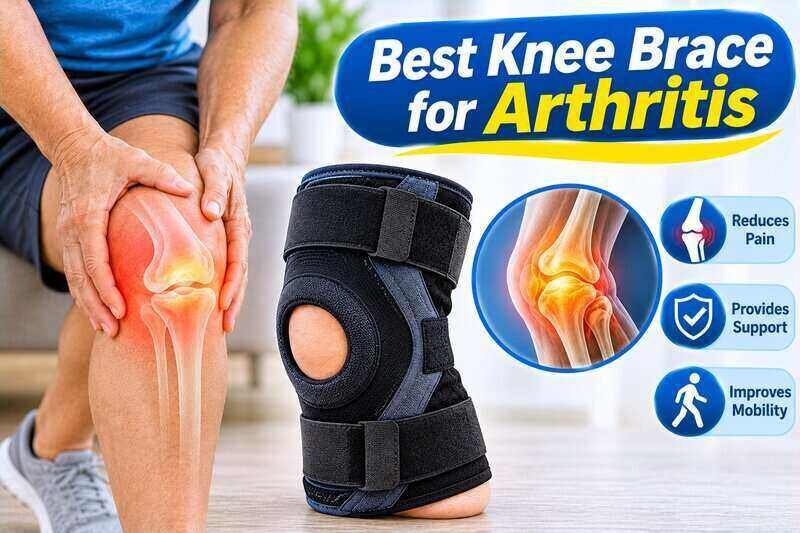
Finding the best knee brace for arthritis can make everyday life easier, and knee arthritis is one of the most common reasons Americans reach for a brace. According to the CDC, osteoarthritis affects over 32.5 million U.S. adults, and the knee is one of the joints it hits most often. The right brace can take the edge off pain, calm swelling, and make walking, stairs, and standing at work feel more manageable.
The problem is that “knee brace” covers everything from a thin compression sleeve to a hinged unloader with a dial that shifts weight off the worn side of the joint. The best knee brace for arthritis depends on where your arthritis is, how severe it is, and what you want to do while wearing it.
We compared 8 braces built for arthritic knees, from soft sleeves for mild morning stiffness to off-the-shelf unloaders for bone-on-bone pain on one side of the knee. None of these models are repeated from our main best knee braces guide, so you get a fresh set of options focused on arthritis.
Key Takeaways
- For mild arthritis and swelling, a medical-grade compression sleeve such as the Bauerfeind GenuTrain is usually the best place to start.
- For pain on one side of the knee (most often the inner side), an unloader brace like the Ovation Medical Game Changer can shift load away from the worn compartment.
- For arthritis behind the kneecap, a patella-focused brace such as the DonJoy Reaction Web is a better fit than a plain sleeve.
- The 2019 American College of Rheumatology and Arthritis Foundation guideline strongly recommends tibiofemoral knee braces for knee osteoarthritis and conditionally recommends patellofemoral braces.
Best Knee Brace for Arthritis: Picks at a Glance
- Best overall for mild to moderate arthritis: Bauerfeind GenuTrain Knee Support
- Best unloader brace: Ovation Medical Game Changer Unloader Knee Brace
- Best unloader for larger thighs: BraceAbility Osteoarthritis Unloader Knee Brace
- Best for kneecap (patellofemoral) arthritis: DonJoy Reaction Web Knee Brace
- Best for swelling: Incrediwear Knee Sleeve
- Best medical-grade compression sleeve: OrthoSleeve KS7 Compression Knee Sleeve
- Best hinged brace for unstable arthritic knees: DonJoy Performance Bionic Knee Brace
- Best budget pick: CAMBIVO Knee Compression Sleeve
Knee Brace for Arthritis Comparison Table
| Brace | Type | Best for | Price tier |
|---|---|---|---|
| Bauerfeind GenuTrain | Knit compression sleeve with pad | Mild to moderate OA, swelling | $$$ |
| Ovation Game Changer | Unloader, single hinge | Medial or lateral OA | $$$$ |
| BraceAbility OA Unloader | Unloader with ROM hinge | One-sided OA, larger thighs | $$$$ |
| DonJoy Reaction Web | Web brace with undersleeve | Kneecap arthritis, anterior pain | $$$ |
| Incrediwear Knee Sleeve | Infrared fabric sleeve | Swelling, stiffness | $$ |
| OrthoSleeve KS7 | 20 mmHg compression sleeve | Daily compression | $$ |
| DonJoy Performance Bionic | Hinged wraparound | Arthritis plus instability | $$$ |
| CAMBIVO Sleeve | Compression sleeve | Budget everyday support | $ |
Price tiers: $ under $25, $$ $25 to $60, $$$ $60 to $150, $$$$ over $150. Ratings change often, so check the latest on Amazon.
How We Chose the Best Knee Brace for Arthritis
We looked for braces that match how arthritis actually behaves in the knee rather than braces built only for sport injuries. Our criteria:
- Match to arthritis type: we covered all three main patterns: general compression for mild OA, unloaders for one-sided (unicompartmental) OA, and patella braces for kneecap arthritis.
- Evidence behind the design: we gave weight to brace types supported by clinical guidelines, especially the 2019 American College of Rheumatology and Arthritis Foundation guideline.
- Buyer feedback: we read listing data and reviews, including the negative ones, to find common problems with sizing, slipping, and comfort.
- Comfort for long wear: arthritis is a daily condition, so breathable fabric and low weight mattered.
- Ease of use: buckles, straps, and pull-on designs that work for people with stiff hands or limited bending.
- No repeats: we skipped every brace already covered in our main knee brace guide.
1. Bauerfeind GenuTrain Knee Support

Photo Amazon
Ideal for: people with mild to moderate knee osteoarthritis who want all-day pain and swelling relief without a bulky frame.
It is a German-made knit sleeve with gradient medical-grade compression that aims to improve circulation and reduce pain, swelling, and fatigue. A viscoelastic Omega pad surrounds the kneecap, and small gel nubs gently massage the soft tissue around the joint as you move.
The sizing system goes beyond small, medium, and large. Bauerfeind uses several measurements, and if you fall between sizes the company suggests going by your thigh. It pulls on with a thumb guide, is machine washable, and is thin enough to wear under work pants.
Pros:
- Medical-grade gradient compression
- Omega pad cushions and centers the kneecap
- Breathable knit is comfortable for long days
- Machine washable and very durable
- Endorsed by the Arthritis Foundation, according to the listing
Cons:
- Premium price
- Sizing can be confusing if your calf and thigh fall in different sizes
- Snug fit takes some effort to pull on with stiff hands
- Does not unload one side of the knee
2. Ovation Medical Game Changer Unloader Knee Brace
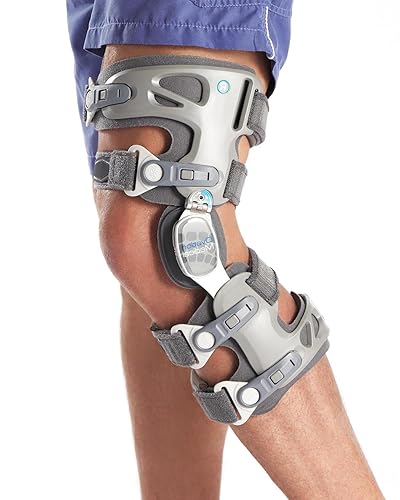
Photo Amazon
Ideal for: people with arthritis mainly on the inner (medial) or outer (lateral) side of the knee who want an off-the-shelf unloader.
An unloader brace uses three points of pressure to gently push the knee away from the worn side of the joint, which can reduce bone-on-bone pain. The Game Changer is a low-profile version that weighs about 0.68 kg (1.5 lb) and fits under loose pants.
A dial lets you adjust how much offloading you get, for medial or lateral pain. A single upright hinge on the outside means nothing rubs the inner knee, so you can wear braces on both legs. Push-button release buckles are a thoughtful touch for anyone with arthritis in their hands. It is made in the USA and sold in left and right versions.
Pros:
- Adjustable offloading dial for medial or lateral OA
- Lightweight, low-profile design
- Push-button buckles are easy for stiff hands
- Single hinge allows wearing on both knees
Cons:
- Expensive compared with sleeves
- One-size design; some users with slim legs trim straps
- Needs time to tune for comfort
- Reviewers say it helps walking more than deep bending
3. BraceAbility Osteoarthritis Unloader Knee Brace

Photo Amazon
Ideal for: people with one-sided knee OA who need an unloader that fits larger thighs or who also want range-of-motion control.
The BraceAbility unloader targets medial or lateral compartment arthritis and adds range-of-motion (ROM) inserts that limit hyperextension and excessive bending. That makes it a useful option if your knee also feels unstable or you are recovering from a procedure. Straps fit thighs up to about 30 inches, which suits many people who struggle to find an unloader that fits. Quick-release buckles and padded straps help with daily use.
Reviews are limited and mixed. A few buyers reported Velcro that did not grip well or straps that were too long on slimmer legs, so it is better suited to fuller thighs.
Pros:
- Unloads medial or lateral compartment
- ROM inserts limit hyperextension and bending
- Fits thighs up to about 30 inches
- Replaceable snap hardware
Cons:
- Fewer reviews than other picks
- Straps can be too long for slim legs
- Some buyers found the straps scratchy
- Bulkier than a sleeve
4. DonJoy Reaction Web Knee Brace

Photo Amazon
Ideal for: arthritis behind or around the kneecap (patellofemoral OA) and pain on stairs, squatting, or getting up from a chair.
The Reaction Web is unlike any sleeve. An elastomeric web wraps the front of the knee to absorb shock and stabilize the kneecap, and it comes with a compression undersleeve. It weighs only about half a pound and fits either leg. DonJoy even makes an OA version of this design, which shows how often it is used for arthritic knees.
Some users found it too tight with the undersleeve or felt it limited bending for cycling. If your pain is mostly at the front of the knee, though, it targets the problem better than a plain sleeve.
Pros:
- Web design supports and cushions the kneecap
- Very light at about 0.5 lb
- Universal fit for left or right knee
- Includes a compression undersleeve
Cons:
- Mixed reviews on comfort
- Must be strapped snugly to work
- Can limit partial bending for cycling
- Pricey for its size
5. Incrediwear Knee Sleeve

Photo Amazon
Ideal for: swollen, stiff arthritic knees and people who want a very light sleeve to wear all day or overnight.
Incrediwear uses fabric embedded with semiconductor elements that the company says increase blood flow and reduce swelling. It weighs only about half an ounce, so it feels more like a sock than a brace.
The research behind the fabric is limited and largely company-sponsored, so think of it as a comfortable, light compression sleeve first. Some reviewers say it runs small, so measure carefully.
Pros:
- Extremely light and comfortable
- Strong reviews for swelling and stiffness
- Stays in place without rolling, per many users
- Made in the USA, machine washable
Cons:
- Little mechanical support
- Runs small for some users
- Evidence for the fabric technology is limited
- Returns for wrong sizes can be difficult
6. OrthoSleeve KS7 Compression Knee Sleeve

Photo Amazon
Ideal for: people who want measured, medical-grade compression under clothing for work or walking.
The KS7 delivers 20 mmHg graduated compression, with a firmer stabilizing zone around the knee and a pressure-relief zone behind it so the back of the knee does not dig in when you sit. A non-slip gel dot system helps it stay up. It is thin and low profile, which suits office wear and long shifts on your feet.
The most common complaint is that it runs small, so measure your thigh four inches above the middle of the kneecap and size up if you are between sizes. The maker suggests wearing it for up to 8 hours, then taking at least 2 hours off.
Pros:
- Clear 20 mmHg compression level
- Pressure-relief zone behind the knee
- Thin enough for dress pants
- Non-slip gel dots
Cons:
- Runs small
- Calf band can feel tight after hours of wear
- Hand wash only
- Light support only
7. DonJoy Performance Bionic Knee Brace

Photo Amazon
Ideal for: arthritic knees that also feel wobbly or give way, especially for active people who walk, hike, or play golf.
Arthritis often weakens the muscles and ligaments around the knee, which can make the joint feel unstable. The Bionic adds bilateral polycentric hinges and hyperextension stops to a perforated neoprene wraparound. You can put it on without removing your shoes, which helps if bending is painful.
It weighs about 16 ounces and some runners found it heavy or warm. Several reviewers said it runs small, so measure around the knee before ordering.
Pros:
- Dual hinges add side-to-side stability
- Hyperextension stops
- Wraparound design, easy to put on
- Anti-migration design to reduce slipping
Cons:
- Heavier and warmer than sleeves
- Runs small for some users
- Hand wash only
- Not an unloader
8. CAMBIVO Knee Compression Sleeve
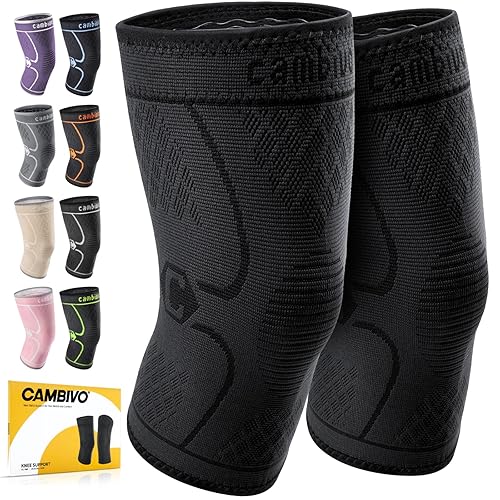
Photo Amazon
Ideal for: anyone who wants to test whether compression helps their arthritic knee before spending more.
CAMBIVO is one of the best-selling budget knee sleeves on Amazon. It offers moderate compression with a simple pull-on design and is light enough for daily walking and light exercise. The brand’s size chart is straightforward: small fits a thigh of 14.5 to 17 inches, medium 17 to 19.5 inches, and large 19.5 to 21.5 inches.
It will not unload the knee or stabilize the kneecap, but for mild arthritis it is a low-risk way to see whether compression eases your pain.
Pros:
- Very affordable
- Simple, clear sizing chart
- Light and breathable for daily wear
- Good entry point for trying compression
Cons:
- Basic support only
- Not designed for moderate or severe OA
- May wear out faster than premium sleeves
- No kneecap pad
Types of Knee Braces for Arthritis
Knowing which type of brace suits your arthritis matters more than any single brand. Our guide to the types of knee braces goes deeper, but here are the main options.
| Brace type | How it helps | Best for | Downsides |
|---|---|---|---|
| Compression sleeve | Warmth, compression, better joint awareness | Mild OA, swelling, stiffness | Little mechanical support |
| Patellofemoral brace | Supports and guides the kneecap | Kneecap arthritis, pain on stairs | Less useful for inner-knee pain |
| Hinged brace | Side-to-side stability | Arthritis with instability | Heavier, warmer |
| Unloader (offloader) brace | Shifts load away from the worn side | Medial or lateral compartment OA | Costly, bulkier, needs tuning |
| Custom unloader | Molded to your leg | Severe one-sided OA, hard-to-fit legs | Expensive, needs a prescription |
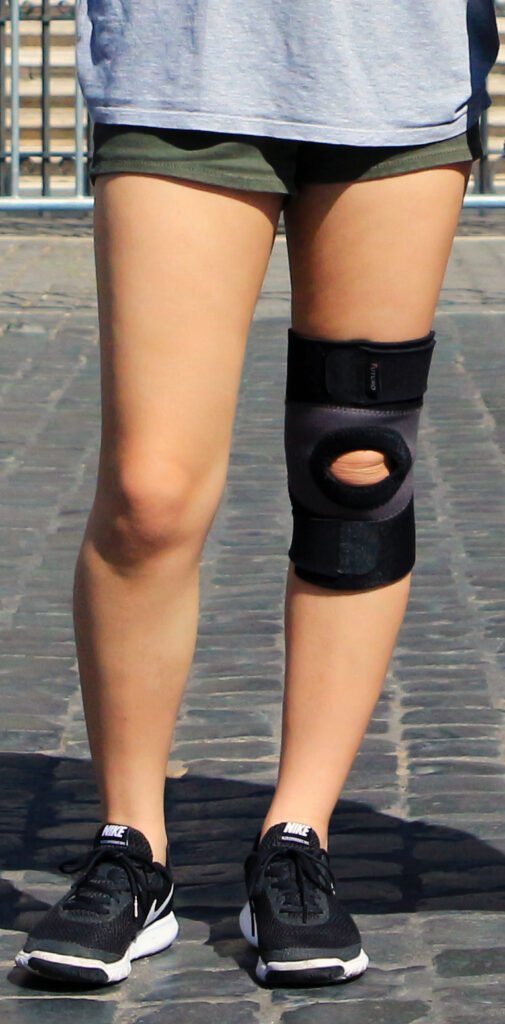
Image: grace.jun719, CC BY 2.0, via Wikimedia Commons
Compression Sleeves
Sleeves are the simplest option. They keep the knee warm, reduce swelling, and improve your sense of where the joint is, which can make you feel steadier. Our guide to compression sleeves for knee pain explains what they can and cannot do.
Unloader Braces
Osteoarthritis often wears down one side of the knee more than the other, most commonly the inner (medial) side. An unloader uses three points of pressure to gently bend the knee away from the damaged side, reducing pressure there. Learn more in our guide to the unloader knee brace.
Patellofemoral Braces
If your arthritis is mainly behind the kneecap, a brace that supports and guides the kneecap can ease pain on stairs and when rising from a chair.
What the Research and Guidelines Say
The 2019 American College of Rheumatology and Arthritis Foundation guideline is the main U.S. guidance for osteoarthritis care. It made a strong recommendation for tibiofemoral knee bracing in tibiofemoral knee OA and a conditional recommendation for patellofemoral bracing in patellofemoral knee OA. The strong recommendation applies to people whose knee OA has a large enough impact on walking, stability, or pain to warrant an assistive device, and who can tolerate the inconvenience of wearing a brace.
The same guideline strongly recommends exercise and, for people who are overweight, weight loss. In other words, a brace works best as part of a plan, not on its own. Our article do knee braces work reviews the research in more detail.
Watch: 4 Types of Braces for Knee Arthritis Compared
In this video, a physical therapist compares four types of braces for arthritic knee pain and explains who each one suits.
How to Choose the Best Knee Brace for Arthritis
Find Where Your Arthritis Is
- Pain on the inner side of the knee: often medial compartment OA, which suits an unloader
- Pain on the outer side: lateral compartment OA, which also suits an unloader set for lateral offloading
- Pain at the front or behind the kneecap: patellofemoral OA, which suits a patella brace such as the Reaction Web
- General aching, stiffness, or swelling: a compression sleeve is a good first step
Your X-ray report or doctor can tell you which compartment is worst.
Match Support to Severity
| Arthritis severity | Typical choice |
|---|---|
| Mild, occasional aches | Compression sleeve |
| Moderate, daily pain or swelling | Premium sleeve or patella brace |
| Moderate to severe, one-sided | Off-the-shelf unloader |
| Severe, one-sided, hard fit | Custom unloader from an orthotist |
| Any severity with giving way | Hinged brace |
Think About Daily Life
- Desk work and driving: thin sleeves such as the OrthoSleeve KS7 fit under pants
- Long walks and hiking: an unloader or hinged brace gives more support
- Stiff hands: look for pull tabs, push-button buckles, or wraparound designs
- Hot weather: knit and mesh designs stay cooler than neoprene
Get the Size Right
Most brace problems come from poor sizing. Measure around your thigh and calf at the distances the brand lists, usually with the knee slightly bent. See our knee brace size chart guide for step-by-step measuring tips.
How to Wear a Knee Brace for Arthritis
- Put it on in the morning before swelling builds
- Center any kneecap opening or pad over the kneecap
- Fasten straps from the bottom up, snug but not tight
- Check for numbness, tingling, or skin marks after an hour
- Wear it during activities that cause pain, and give your skin breaks
- Take it off at night unless your doctor advises otherwise
If your brace keeps sliding, read our tips on how to keep a knee brace from slipping down, and see our guide on how to wear a knee brace for timing and wear tips.
Other Ways to Ease Knee Arthritis Pain
A brace is one part of a broader plan. The ACR guideline strongly recommends:
- Exercise: strengthening the thigh and hip muscles takes load off the knee
- Weight loss: for people who are overweight, even modest weight loss reduces knee load
- Tai chi: gentle movement that improves balance and strength
- Cane use: a cane in the hand opposite the painful knee reduces load; see how to use a walking stick correctly
- Self-management programs: learning to pace activity and manage flares
Other options include topical anti-inflammatory gels, heat or ice, and injections from your doctor. For more ideas, see our guide to knee pain treatment and our article on how to save your knees during exercise. If walking is hard, our comparison of a rollator vs walker can help.
When You Need More: Custom Unloader Braces
Off-the-shelf unloaders fit most people, but a custom brace may be worth it if:
- Your arthritis is severe and mostly on one side of the knee
- Your leg shape makes standard braces slide or pinch
- You are very active and need a rigid, durable frame
- You want to delay knee replacement surgery and your surgeon agrees bracing is reasonable
Custom unloaders are made from a cast or 3D scan of your leg by a certified orthotist. They usually need a prescription and cost far more than off-the-shelf braces, but insurance may cover part of the cost when the brace is medically necessary. Ask your orthopedic surgeon or physical therapist for a referral.
Common Mistakes When Bracing an Arthritic Knee
- Choosing the wrong type: a sleeve will not unload bone-on-bone pain on one side, and an unloader is overkill for mild stiffness
- Buying by shoe size or guesswork: measure your thigh and calf as each brand instructs
- Wearing it too tight: tightness can increase swelling below the brace and cause numbness
- Wearing it 24 hours a day: give your skin and muscles breaks, and take it off to sleep unless told otherwise
- Skipping exercise: a brace supports the knee, but strong thigh and hip muscles protect it long term
- Ignoring skin problems: redness, blisters, or rashes mean the fit or material needs to change
- Not adjusting an unloader: most unloaders need small tweaks over the first week to feel right
Simple Exercises to Pair With Your Knee Brace
The ACR guideline strongly recommends exercise for knee osteoarthritis, and stronger muscles make any brace work better. Try these three to four times a week, stopping if pain becomes sharp:
| Exercise | How to do it | Sets and reps |
|---|---|---|
| Quad sets | Sit with your leg straight and tighten the thigh muscle for 5 seconds | 2 sets of 10 |
| Straight leg raises | Lie on your back, tighten the thigh, and lift the straight leg about a foot | 2 sets of 10 |
| Sit-to-stand | Stand up from a sturdy chair without using your hands, then sit slowly | 2 sets of 8 to 10 |
| Side-lying leg lifts | Lie on your side and lift the top leg to work the hip muscles | 2 sets of 10 |
| Stationary cycling | Pedal with light resistance | 10 to 20 minutes |
Our guide to physical therapy exercises for knee pain explains how to progress safely. Wear your brace during walking and cycling if it makes them more comfortable.
Best Shoes and Insoles to Pair With a Knee Brace
Your shoes affect how much load reaches your knee. Look for:
- Cushioned midsoles that absorb impact on hard floors
- A stable heel that does not tip in or out
- A removable insole if you use orthotics
- Low heels, since high heels increase pressure inside the knee
Some people with inner-knee arthritis are offered lateral wedge insoles, but the evidence for them is mixed, so ask your clinician before trying them.
When to See a Doctor
- Your knee is hot, red, and very swollen
- You cannot bear weight
- Your knee locks, catches, or gives way often
- Pain wakes you at night or keeps getting worse
- You are considering an unloader, which works best when fitted and checked by a professional
Frequently Asked Questions
What is the best knee brace for arthritis?
For mild to moderate arthritis, the Bauerfeind GenuTrain is our top pick because it combines medical-grade compression with a kneecap pad. For arthritis on one side of the knee, an unloader such as the Ovation Medical Game Changer is usually more effective.
Do knee braces help arthritis?
Yes, for many people. The 2019 ACR/Arthritis Foundation guideline strongly recommends tibiofemoral knee braces for people whose knee OA affects walking, stability, or pain enough to need an assistive device. Braces work best alongside exercise and weight management.
Should I wear a knee brace all day for arthritis?
Wear it during activities that trigger pain, such as walking, standing at work, or climbing stairs. Light sleeves can be worn for longer, but give your skin and muscles regular breaks.
What is the best knee brace for bone-on-bone arthritis?
For bone-on-bone arthritis on one side of the knee, an unloader brace is usually the best option because it shifts load away from the worn compartment. Severe cases may need a custom unloader fitted by an orthotist.
Is a knee sleeve or a brace better for arthritis?
A sleeve suits mild arthritis, swelling, and stiffness. A brace with hinges or an unloader mechanism suits moderate to severe arthritis, instability, or pain focused on one side.
Can a knee brace make arthritis worse?
A brace that is too tight can cause swelling, numbness, or skin irritation. Relying on a brace without exercising can also lead to weaker muscles. Choose the right size and pair the brace with strengthening work.
Are unloader knee braces covered by insurance?
Medicare and many private insurers may cover a medically necessary knee brace with a prescription, especially custom or off-the-shelf unloaders. Check your plan and ask your doctor about coverage before buying.
Do copper or magnetic knee braces help arthritis?
There is little reliable evidence that copper or magnets ease arthritis. Any benefit is most likely from the compression the sleeve provides.
What is the best knee brace for arthritis for seniors?
Seniors often do best with easy-on designs, such as a pull-on sleeve with a thumb guide or a brace with push-button buckles. Comfort and ease of use matter as much as support.
Can I wear a knee brace while sleeping?
Most people do not need to. Arthritis braces are meant for activity. A light sleeve may be fine at night if it eases pain and causes no numbness or skin marks, but check with your doctor first.
How long does a knee brace for arthritis last?
Sleeves usually last 6 to 12 months of regular use before they lose compression. Hinged braces and unloaders last longer, but straps and liners may need replacing.
Conclusion
The best knee brace for arthritis is the one that matches your type of arthritis. Start with a quality compression sleeve like the Bauerfeind GenuTrain for mild pain and swelling. Choose an unloader such as the Ovation Medical Game Changer or BraceAbility unloader if your arthritis is mostly on one side. Pick the DonJoy Reaction Web for kneecap arthritis, and the DonJoy Bionic if your knee also feels unstable. Pair any brace with exercise, and check with your doctor if pain is severe or getting worse.
This article is for general information and is not medical advice. Talk to your doctor or physical therapist before choosing a brace for arthritis.
Related Review Articles
- Best Knee Braces Comparison and Reviews
- Best Ankle Brace for Arthritis
- Best Back Braces Comparison and Reviews
- Best TENS Machine for Body Pain Relief

Hi, I’m Mamon, the content creator behind this blog. I share my experience in blogging, WordPress, SEO, and affiliate marketing through honest product reviews, in-depth buying guides, and practical how-to articles. Every piece of content is thoroughly researched and written to help readers make informed decisions.
Leave a Reply