Ankle arthritis is less common than knee or hip arthritis, but it can be just as limiting. A stiff, aching ankle makes stairs, uneven sidewalks, and long walks feel like a chore. The good news is that the best ankle brace for arthritis can ease pain by limiting the painful motion in the joint, adding gentle compression and warmth, and making you feel steadier on your feet.
This guide compares 7 ankle braces for arthritis sold on Amazon in the U.S., from soft compression sleeves for mild stiffness to hinged and rigid braces for painful, worn joints. It also explains when a custom brace such as the Arizona brace makes more sense, what the research says, and how to choose by arthritis stage. If you want general sports and everyday ankle braces, see our main guide to the best ankle braces. None of the models below are repeated from that guide or from our guide to the best ankle brace for a sprained ankle.
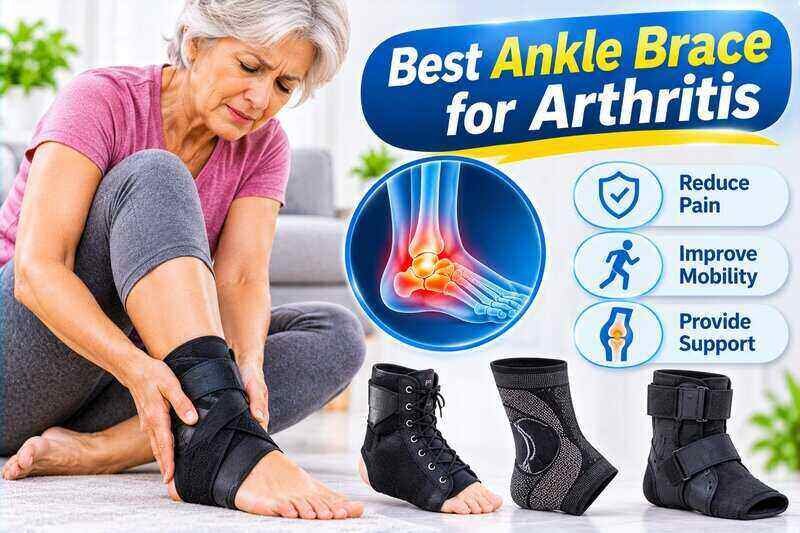
Best Ankle Brace for Arthritis: Picks at a Glance
- Best overall for arthritic swelling: Bauerfeind MalleoTrain, a medical-grade knit with massage pads, listed for osteoarthritis and rheumatoid arthritis swelling
- Best for painful, worn joints: Ultra CTS, a hinged-cuff brace designed to offload the joint, with a detachable upright
- Best for active older adults and work boots: Ultra High-5, a rigid bilateral shell that fits inside boots
- Best for swelling without tight compression: Incrediwear Ankle Sleeve
- Best compression sleeve: Neo-G Ankle Support, a Class 1 medical device
- Best budget strapped brace: MUELLER Soft Ankle Brace with Straps, listed for arthritic ankle conditions
- Best for arthritis with a falling arch: Aircast AirLift PTTD, with an adjustable air cell under the arch
Ankle Brace for Arthritis Comparison Table
| Model | Brace type | Key feature | Best arthritis stage |
|---|---|---|---|
| Bauerfeind MalleoTrain | Knit compression | Viscoelastic massage pads | Mild to moderate, swelling |
| Ultra CTS | Hinged cuff + removable upright | Offloads weight-bearing pain | Moderate to severe |
| Ultra High-5 | Rigid bilateral shell, hinged | Fits work and hiking boots | Moderate, with instability |
| Incrediwear Ankle Sleeve | Pull-on sleeve | Low-compression, infrared fabric (brand claim) | Mild, swelling and stiffness |
| Neo-G Ankle Support | Compression sleeve | Multi-zone compression | Mild |
| MUELLER Soft Ankle Brace with Straps | Soft brace with straps | Criss-cross stirrup straps | Mild to moderate |
| Aircast AirLift PTTD | Semi-rigid with air cell | Adjustable arch support | Arthritis with flat foot or PTTD |
Ratings come from retail listing data and change often, so check the current listing before you buy.
How We Chose the Best Ankle Brace for Arthritis
We did not run hands-on lab tests. Instead, we compared each brace using the factors that matter most for arthritic ankles:
- Listed uses, giving priority to braces whose makers name arthritis, joint pain, swelling, or chronic instability
- Support level, from soft compression for mild stiffness to hinged and rigid designs for painful, worn joints
- Ease of use, such as pull-on designs, single straps, and step-in braces for people with stiff hands
- Research and guidelines, including the 2026 AAOS ankle osteoarthritis guideline and studies on custom bracing
We left out every brace already reviewed in our main ankle brace guide and our sprained ankle roundup, so each pick here is new. Prices and ratings change often, so check the current listing before you buy.
1. Bauerfeind MalleoTrain Ankle Support

Photo Amazon
The Bauerfeind MalleoTrain is our top pick for arthritic ankles that swell and ache. It is a medical-grade compression knit shaped to the natural contour of the ankle, with viscoelastic massage pads on the inner and outer ankle. As you move, the pads massage the soft tissue around the ankle bones, which the brand says helps reduce pain and swelling.
The listing names osteoarthritis and rheumatoid arthritis swelling among its uses, along with mild ligament weakness, tendon problems, and swelling after injury or surgery. It is slim enough to wear inside shoes, machine washable on a cold, delicate cycle, and made in Germany. The MalleoTrain is left- and right-specific, and sizes are based on ankle circumference, so measure before you order.
Note that our sprained ankle guide covers the MalleoTrain Plus, which adds a figure-8 strap. The standard MalleoTrain here is a softer option for daily arthritis pain.
Pros:
- Listed for osteoarthritis and rheumatoid arthritis swelling
- Massage pads around the ankle bones
- Breathable, moisture-wicking knit for all-day wear
- Low profile fits most shoes
- Machine washable
Cons:
- Premium price
- Left- and right-specific versions
- Limited rating data on the U.S. listing
- Not enough support for severe arthritis or deformity
2. Ultra CTS Ankle Brace

Photo Amazon
The Ultra CTS is built for people whose ankle hurts when they put weight on it. The brand says it relieves pain from ankle injuries and arthritis by offloading the joint. It uses an orthopedic-grade hinged cuff that lets the ankle move naturally up and down, plus a taller cuff that controls side-to-side twisting.
Its standout feature is a detachable PerformaFit upright. With the upright in, it gives maximum stability. Take it out, and it becomes a lower-profile brace for daily activity. It is FSA/HSA eligible. The brand says it needs a break-in period of 2 to 3 days to mold to your foot and ankle, and that it should be worn with low-top sneakers, not tall boots or sandals.
Pros:
- Designed to offload weight-bearing arthritis pain
- Hinge allows natural walking motion
- Removable upright for two support levels
- Fits either ankle, sized by ankle circumference
- FSA/HSA eligible
Cons:
- Needs a 2 to 3 day break-in period
- Best with low-top sneakers only
- Can feel tall on small or narrow ankles
3. Ultra High-5 Ankle Brace

Photo Amazon
The Ultra High-5 is a lighter, lower-profile cousin of the Ultra CTS. It has a rigid bilateral shell with a hinged cuff, cushioned padding, and a single hook-and-loop strap for quick application. The brand recommends it for chronic ankle instability and recurring joint pain, which often go hand in hand with post-traumatic ankle arthritis.
Its slim, boot-ready profile fits inside work boots, hiking boots, and sneakers, which makes it a good fit for active older adults and people who work on their feet. It fits either ankle, is sized by ankle circumference rather than shoe size, weighs about 0.4 pounds, and comes with a one-year manufacturer warranty.
Pros:
- Rigid shell for stability with natural up-and-down motion
- Fits inside work and hiking boots
- Quick single-strap closure
- Lightweight and fits either ankle
- FSA/HSA eligible with a one-year warranty
Cons:
- Less support than the Ultra CTS with its upright
- Some buyers find the plastic parts too thin
- Must measure ankle circumference carefully
4. Incrediwear Ankle Sleeve

Photo Amazon
The Incrediwear Ankle Sleeve takes a different approach. Instead of tight compression, the brand says its fabric is infused with semiconductor elements that release infrared energy when warmed by the body, increasing circulation to reduce pain, stiffness, and swelling. It lists arthritis, sprains, tendonitis, plantar fasciitis, and ankle surgery among its uses.
We could not find independent research confirming the brand’s circulation and pain-relief claims, so treat those as marketing claims. It is very light, pulls on easily, and is a good choice if tight compression sleeves feel uncomfortable on swollen ankles.
Pros:
- Gentle, low-compression fit for swollen ankles
- Lightweight and easy to pull on
- Thin enough to wear under socks and shoes
Cons:
- Infrared and circulation claims are not independently proven
- No side support for unstable ankles
- Higher price than basic sleeves
5. Neo-G Ankle Support

Photo Amazon
The Neo-G Ankle Support is a lightweight compression sleeve with multi-zone compression. The brand says it helps support weak, injured, or arthritic ankles, as well as strains and sprains, during sports and work. It is registered as a Class 1 medical device and fits either ankle.
The fabric is breathable and moisture-wicking, and the sleeve weighs only about 0.05 kilograms (under 2 ounces). Sizes are based on ankle circumference; for example, the Medium fits about 7.9 to 9.1 inches.
Pros:
- Multi-zone compression for mild arthritis pain
- Very light and breathable
- Class 1 medical device
- Fits either ankle
Cons:
- Compression only, with no side support
- Must measure ankle circumference for the right size
- May feel tight on very swollen ankles
6. MUELLER Soft Ankle Brace with Straps

Photo Amazon
The MUELLER Soft Ankle Brace with Straps is a budget-friendly brace that adds tape-like support without taping. Criss-cross stirrup and stabilizing straps tighten to your comfort level, and the brand says it combines support and comfort for sprains, strains, and arthritic ankle conditions.
It slides on easily, stays in place during activity, fits either foot, and is slim enough for most shoes. Sizing is by shoe size; for example, the Medium fits men’s 9 to 11 and women’s 10 to 12.
Pros:
- Affordable
- Criss-cross straps for adjustable support
- Fits either foot
- Slim design fits most shoes
- Listed for arthritic ankle conditions
Cons:
- Fewer ratings than other picks
- Less support than hinged or rigid braces
- Straps take a little practice to adjust
7. Aircast AirLift PTTD Ankle Support Brace

Photo Amazon
The Aircast AirLift PTTD is a specialty pick for people whose ankle pain comes with a collapsing arch. It is designed for posterior tibial tendon dysfunction (PTTD) and early adult-acquired flat foot, conditions that often develop alongside arthritis in the ankle and hindfoot as the arch gradually falls.
It has an air cell under the arch that you adjust with an included hand bulb pump, so you can raise or lower arch support. Semi-rigid shells stabilize the ankle, and a rear-entry, step-in design with two hook-and-loop straps means there are no laces. The brand says the air cell is pressure-tested to 2,000 pounds. Because it is a bit bulky, it works best with athletic or walking shoes that have some extra room.
Pros:
- Adjustable air cell supports a falling arch
- Step-in design with no laces, helpful for stiff hands
- Semi-rigid shells for ankle stability
- Latex-free materials
Cons:
- Bulky, so it needs roomier shoes
- Left- and right-specific
- Built for PTTD and flat foot, not every type of ankle arthritis
When You Need More: Custom Braces Like the Arizona Brace
For moderate to severe ankle arthritis, especially with deformity or after a bad fracture, an over-the-counter brace may not be enough. Foot and ankle specialists often prescribe custom ankle-foot orthoses (AFOs), such as the Arizona brace or the Richie brace. These are molded to your leg and foot, usually laced, and designed to limit painful motion in the ankle and the joints just below it.
Custom braces can work well, but they are not for everyone. In a study of patients prescribed an Arizona brace for non-surgical foot and ankle care, published in Foot & Ankle Orthopaedics, 62.7% said they no longer used the brace at follow-up, and about half described it as difficult to wear. If you get a custom brace, ask about break-in time, shoe fit, and follow-up adjustments.
Types of Arthritis That Affect the Ankle
Knowing what kind of arthritis you have helps you choose the right brace.
- Post-traumatic osteoarthritis is the most common type in the ankle. In a study of 639 arthritic ankles, 70% were post-traumatic, 12% were caused by rheumatoid disease, and 7% were primary osteoarthritis. Most post-traumatic cases followed rotational ankle fractures.
- Rheumatoid arthritis and other inflammatory types can cause swelling, warmth, and pain in both ankles. Soft compression supports often feel best during flares.
- Arthritis from chronic instability develops after years of repeated sprains. A hinged or strapped brace that controls rolling can help.
- Arthritis with flat foot often involves the joints below the ankle and the posterior tibial tendon. A brace with arch support, like the AirLift PTTD, may help.
Ankle Brace vs. Walking Boot vs. Custom AFO
| Option | Support | Best for | Drawbacks |
|---|---|---|---|
| Compression sleeve | Light | Mild pain, swelling, stiffness | Little control of motion |
| Strapped or hinged brace | Moderate | Instability and moderate pain | Needs roomier shoes |
| Walking boot | Firm, short term | Painful flares, after injury or surgery | Heavy, not for long-term daily wear |
| Custom AFO (Arizona, Richie) | Firm, long term | Severe arthritis, deformity | Costly, needs fitting, can be hard to wear |
Many people with arthritis do best with two options: a soft support for good days and a firmer brace for long walks or flare-ups.
Common Mistakes When Bracing an Arthritic Ankle
- Choosing a brace that is too stiff for daily wear. You may stop wearing it. Start with the least support that helps.
- Ignoring swelling changes. Ankles often swell by afternoon. Re-adjust straps during the day.
- Wearing the wrong shoes. Narrow shoes squeeze the brace and the ankle. Choose a wider shoe with a removable insole.
- Skipping exercise. A brace eases pain, but strength and motion keep the joint working.
- Waiting too long to see a specialist. If an off-the-shelf brace stops helping, a custom brace or other treatment may be needed.
Simple Exercises for Arthritic Ankles
With your doctor or physical therapist’s approval, these gentle moves can keep the ankle flexible and strong:
- Ankle pumps: Point and flex your foot slowly, 10 to 15 times, to ease morning stiffness.
- Ankle circles: Draw slow circles with your foot in both directions, 10 times each way.
- Seated heel raises: Sitting in a chair, lift your heels and lower them slowly, 10 to 15 times.
- Towel scrunches: Use your toes to pull a towel toward you, which strengthens the foot.
- Supported balance: Stand near a counter and shift your weight from foot to foot for a minute.
The AAOS guideline notes that home exercise programs and skilled physical therapy may improve outcomes for mild to moderate ankle arthritis in people who want to avoid surgery.
How to Choose the Best Ankle Brace for Arthritis
Understand Ankle Arthritis
Ankle arthritis is different from knee and hip arthritis. A review in EFORT Open Reviews estimates that ankle osteoarthritis affects about 1% of the world’s population, and that roughly 80% of cases are post-traumatic, mainly after ankle fractures or untreated chronic instability. Only 7% to 9% of cases are idiopathic, meaning they have no known cause.
That means many people with ankle arthritis are younger and still working, with a history of ankle injury. The type of brace that helps depends on how worn the joint is and whether the ankle also feels unstable.
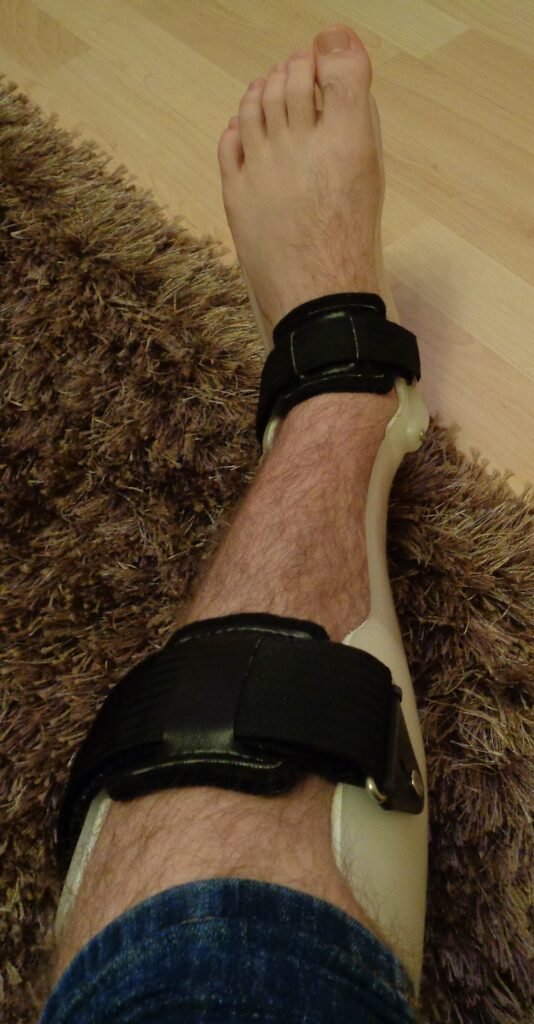
Photo: Pagemaker787, CC BY-SA 4.0, via Wikimedia Commons
Match the Brace to Your Symptoms
| Your main symptom | Brace type to look for | Picks from this list |
|---|---|---|
| Morning stiffness and mild aching | Compression sleeve | Neo-G, Incrediwear |
| Swelling after activity | Knit compression with pads | Bauerfeind MalleoTrain |
| Ankle gives way or feels wobbly | Hinged or strapped brace | Ultra High-5, MUELLER Soft Brace |
| Pain when bearing weight | Hinged brace with upright | Ultra CTS |
| Severe pain or deformity | Custom AFO | Arizona or Richie brace, by prescription |
Consider Your Shoes
Rigid and hinged braces need roomier shoes. The Ultra CTS works best with low-top sneakers, while the Ultra High-5 fits inside boots. Soft sleeves fit almost any shoe. Our guides on how to wear an ankle brace with shoes and the best shoes for ankle support can help.
Think About Ease of Use
Arthritis in the hands often goes with arthritis in the feet. If you have trouble with laces or small straps, choose a pull-on sleeve or a brace with one large hook-and-loop strap.
Check Sizing Carefully
Most arthritis braces are sized by ankle circumference, not shoe size. Measure around the narrowest part of your ankle, ideally in the morning before swelling builds.
Best Shoes to Pair With an Ankle Brace for Arthritis
The right shoe can make a brace far more comfortable and effective:
- Rocker-bottom soles curve from heel to toe, so your foot rolls forward without bending the ankle as much. Many foot and ankle specialists recommend them for ankle arthritis.
- A wide toe box and removable insole leave room for a brace and any custom orthotic.
- Firm heel counters keep the heel steady inside the shoe.
- Low heels reduce strain on the front of the ankle.
- Lace-up or adjustable closures let you loosen the shoe when your ankle swells.
For hinged braces such as the Ultra CTS, low-top athletic shoes usually work best. For rigid shells like the Ultra High-5, a supportive work or hiking boot with loosened laces can be a good fit.
Ankle Brace for Arthritis Sizing Tips
| Brace | Sized by | Fits |
|---|---|---|
| Bauerfeind MalleoTrain | Ankle circumference | Left or right specific |
| Ultra CTS | Ankle circumference | Either ankle |
| Ultra High-5 | Ankle circumference | Either ankle |
| Incrediwear Ankle Sleeve | Size chart (S to XL) | Either ankle |
| Neo-G Ankle Support | Ankle circumference | Either ankle |
| MUELLER Soft Ankle Brace | Shoe size | Either ankle |
| Aircast AirLift PTTD | Shoe size | Left or right specific |
Measure around the narrowest part of the ankle, just above the ankle bones. If you fall between sizes in a compression support, the larger size usually feels gentler and the smaller size firmer.
What the Research and Guidelines Say
In 2026, the American Academy of Orthopaedic Surgeons released its first clinical practice guideline for ankle osteoarthritis. Because research is limited, it includes only two formal recommendations, both against certain injections. Its option statements, which are based on limited evidence and expert opinion, say that skilled physical therapy, home exercise programs, durable medical equipment, and weight reduction may improve patient-reported outcomes.
In plain terms, there is no high-quality trial proving that one brace beats another for ankle arthritis. But braces and other supportive equipment are a reasonable, low-risk part of non-surgical care, especially when combined with exercise and good footwear. A study funded by the U.S. Department of Veterans Affairs is also testing whether rocker-bottom shoes and ankle-foot orthoses reduce pain and improve mobility for people with ankle osteoarthritis.
Watch: Treating Ankle Arthritis Without Surgery
In the video below, a podiatrist explains non-surgical options for ankle arthritis, including bracing.
How to Wear an Ankle Brace for Arthritis
- Put it on in the morning, before swelling builds.
- Wear a thin, seamless sock under rigid braces to prevent rubbing.
- Tighten until supportive, not painful. Your toes should stay warm and pink.
- Wear it for walking, standing, and chores, when your ankle works hardest.
- Take it off when resting and do gentle ankle movements to keep the joint flexible.
- Check your skin daily, especially if you have diabetes or poor circulation.
Other Ways to Ease Ankle Arthritis Pain
A brace works best as part of a bigger plan:
- Stay active with low-impact exercise such as cycling, swimming, or water walking.
- Do range-of-motion and strengthening exercises prescribed by a physical therapist.
- Choose supportive shoes, including rocker-bottom soles, which can reduce ankle motion.
- Manage your weight, since every extra pound adds load to the ankle.
- Use a cane on the opposite side for longer walks. Our guide on how to use a walking stick correctly explains the technique.
- Try heat before activity and ice after, if it helps your symptoms.
- Ask about medicine. The AAOS guideline says anti-inflammatory medicines and acetaminophen may be used for initial relief when safe for you, and that prescription opioids should not be used.
When to See a Doctor
See a doctor or foot and ankle specialist if:
- Ankle pain lasts more than a few weeks or keeps getting worse
- Your ankle is hot, red, and swollen, especially with fever
- The ankle looks deformed or keeps giving way
- Pain wakes you at night
- A brace and home care are no longer helping
- You have diabetes and notice skin changes, numbness, or sores
A doctor can confirm the type of arthritis with an exam and X-rays, and discuss options such as physical therapy, custom bracing, injections, or surgery.
Frequently Asked Questions
What is the best ankle brace for arthritis?
It depends on your symptoms. For mild pain and swelling, a compression support like the Bauerfeind MalleoTrain or Neo-G Ankle Support works well. For painful, worn joints, a hinged brace like the Ultra CTS may help more. Severe arthritis often needs a custom brace.
Do ankle braces help arthritis pain?
Many people find that braces ease pain by limiting painful motion, adding compression, and improving stability. Research on specific braces is limited, but the 2026 AAOS guideline says durable medical equipment may improve patient-reported outcomes.
Should I wear an ankle brace all day for arthritis?
Most people wear a brace during walking and standing, and take it off when resting. Ask your doctor or physical therapist how long to wear it each day.
Is compression good for ankle arthritis?
Gentle compression can help with swelling and stiffness. If your ankle swells a lot by evening, choose a sleeve that is not too tight, or a low-compression option.
What is an Arizona brace?
The Arizona brace is a custom-molded, laced ankle-foot orthosis that limits painful motion in the ankle and hindfoot. It is usually prescribed by a foot and ankle specialist for severe arthritis, tendon problems, or deformity.
Can an ankle brace slow down arthritis?
There is no strong evidence that a brace slows arthritis. Its main role is to reduce pain and help you stay active.
Can I wear an ankle brace with arthritis in both ankles?
Yes. Many braces fit either ankle, but some, like the Bauerfeind MalleoTrain and Aircast AirLift PTTD, are side-specific, so you would need a left and a right. Compression sleeves are often the easiest choice for both ankles.
Are ankle braces for arthritis covered by insurance?
Off-the-shelf braces are often FSA/HSA eligible. Custom braces such as the Arizona brace may be partly covered by insurance or Medicare when prescribed, so check with your plan.
Should I use a brace or a walking boot for an arthritis flare?
A walking boot can rest a very painful ankle for a short time, but it is heavy and not meant for long-term daily wear. For most people, a supportive brace is a better everyday choice. Ask your doctor before using a boot.
What is the best ankle brace for arthritis for seniors?
Older adults often do best with braces that are easy to put on and take off. Pull-on sleeves like the Neo-G or Incrediwear, the single-strap Ultra High-5, and the step-in Aircast AirLift PTTD are good options for stiff or arthritic hands. Pair any brace with sturdy shoes and, if needed, a cane for better balance.
Do copper or magnetic ankle braces help arthritis?
There is little reliable evidence that copper or magnets ease arthritis pain. A randomized trial in rheumatoid arthritis found copper bracelets and magnetic wrist straps worked no better than placebo. Choose a brace for its fit, compression, and support rather than its materials.
Conclusion
The best ankle brace for arthritis depends on how worn your joint is and what you want to do. For mild aching and swelling, the Bauerfeind MalleoTrain, Neo-G, and Incrediwear sleeves offer comfortable support. For painful or unstable ankles, the Ultra High-5 and Ultra CTS add hinged stability, while the MUELLER Soft Ankle Brace is a budget-friendly strapped option. Severe arthritis often calls for a custom brace from a specialist.
Whichever you choose, pair it with exercise, supportive shoes, and medical advice. For more options, see our main guide to the best ankle braces.
This article is for general information and is not medical advice. See a doctor for ongoing ankle pain or swelling.
Related Review Articles
- Best Ankle Braces Comparison and Reviews
- Best Ankle Brace for Sprained Ankle
- Best Shoes for Ankle Support
- Best Back Braces for Seniors

Hi, I’m Mamon, the content creator behind this blog. I share my experience in blogging, WordPress, SEO, and affiliate marketing through honest product reviews, in-depth buying guides, and practical how-to articles. Every piece of content is thoroughly researched and written to help readers make informed decisions.
Leave a Reply