A torn ankle ligament is more than a twisted ankle. Whether the ligament is partly or fully torn, the ankle can feel loose, swollen, and painful to walk on. The right ankle brace for a torn ligament protects the healing tissue, limits the rolling motion that caused the injury, and helps you move again sooner. The wrong brace, or none at all, can leave you with an ankle that keeps giving way.
This guide explains how ankle ligament tears are graded, which type of brace suits each grade, what the research says about bracing versus a cast, how long to wear a brace, and when a torn ligament needs a doctor or surgery. If you are shopping for a specific product, see our roundup of the best ankle brace for a sprained ankle.
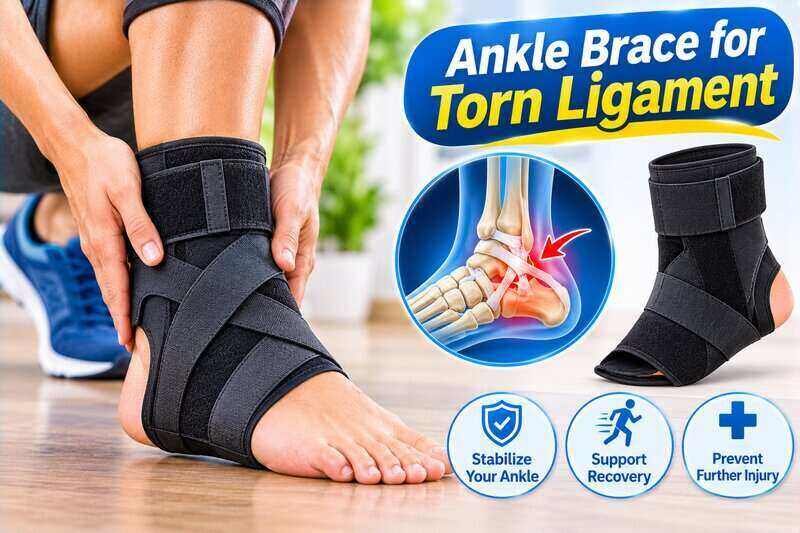
Key Takeaways
- Most torn ankle ligaments are on the outer ankle, and most heal without surgery.
- Grade 2 (partial) tears usually do well in a lace-up, strapped, or semi-rigid brace. Grade 3 (complete) tears often need a firmer brace or a short time in a boot first.
- Research favors early, protected movement in a brace over long periods in a cast for most ankle ligament injuries.
- A brace protects the ligament, but rehab exercises rebuild strength and balance.
What Is a Torn Ankle Ligament?
Ligaments are tough bands of tissue that connect bone to bone. They hold the ankle joint together and stop it from rolling too far. When you roll your ankle, these ligaments can stretch or tear. Doctors call this an ankle sprain, even when the ligament is badly torn.
Most ankle ligament tears happen on the outside of the ankle, where three ligaments work together:
- Anterior talofibular ligament (ATFL): the most commonly injured ligament, at the front of the outer ankle
- Calcaneofibular ligament (CFL): runs from the ankle bone down to the heel
- Posterior talofibular ligament (PTFL): at the back of the outer ankle, rarely torn
Less often, people tear the deltoid ligament on the inner ankle or the high ankle ligaments that connect the two leg bones (a high ankle sprain). Our guide to ankle ligaments explains each ligament in more detail.
Ankle Ligament Tear Grades
According to the American Academy of Orthopaedic Surgeons (OrthoInfo), doctors grade ankle sprains by how much damage the ligament has:
| Grade | Ligament damage | Typical symptoms | Usual brace |
|---|---|---|---|
| Grade 1 | Stretching and microscopic tearing | Mild tenderness, swelling, no pain bearing weight, no instability | Compression sleeve or light brace |
| Grade 2 | Partial tear | Moderate swelling and bruising, mild pain bearing weight, slight looseness | Lace-up, strapped, or semi-rigid brace |
| Grade 3 | Complete tear | Severe pain bearing weight, marked swelling, a lot of instability | Firm semi-rigid brace or boot, guided by a doctor |
So when people search for an ankle brace for a torn ligament, they usually have a Grade 2 or Grade 3 injury. These need more support than a simple compression sleeve.
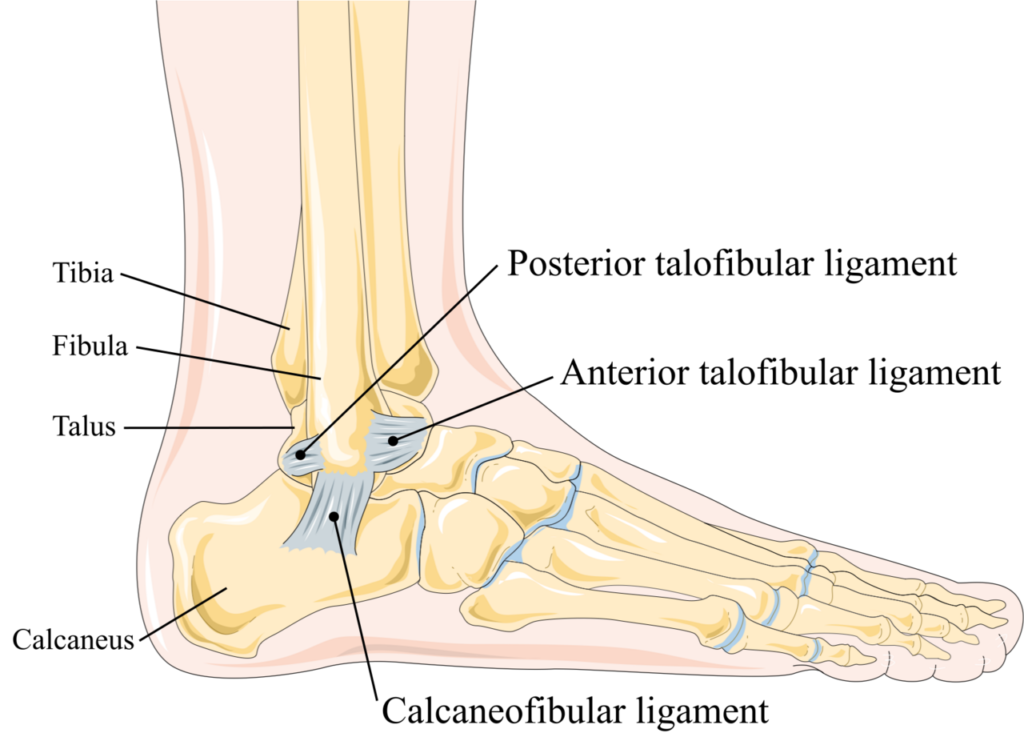
Image: Laboratoires Servier, CC BY-SA 3.0, via Wikimedia Commons
Does an Ankle Brace Help a Torn Ligament Heal?
Yes, for most people. A brace does not stitch a ligament back together, but it creates the right conditions for healing:
- It limits rolling. Side stays, shells, or straps stop the ankle from tipping inward and re-tearing the ligament.
- It allows safe movement. Most braces still let the ankle move up and down, which helps blood flow and healing.
- It controls swelling. Gentle compression helps manage fluid around the joint.
- It builds confidence. Many people walk more normally when the ankle feels secure.
What the Research Says
A Cochrane systematic review of immobilization versus functional treatment for acute lateral ankle ligament injuries found that early functional treatment, such as a brace or tape with early movement, did better than immobilization on several outcomes. People returned to sports and work sooner and had less persistent swelling. In all of the analyses, no results significantly favored immobilization. The authors concluded that functional treatment appears to be the favorable strategy for treating acute ankle sprains.
In plain terms, for most torn ankle ligaments, a supportive brace plus early, protected movement works better than keeping the ankle locked in a cast for weeks. Some severe Grade 3 tears may still need a short period in a boot or cast, which your doctor will decide.
Best Type of Ankle Brace for a Torn Ligament
| Brace type | Support level | Best for | Examples of features |
|---|---|---|---|
| Compression sleeve | Light | Grade 1 sprains, swelling | Knit or neoprene, no stays |
| Lace-up brace with straps | Moderate | Grade 2 tears, return to activity | Laces plus figure-8 straps |
| Strapped stabilizer | Moderate | Grade 2 tears, daily wear | Side stays, hook-and-loop straps |
| Semi-rigid stirrup brace | Firm | Grade 2 to 3 tears, early healing | Plastic shells, air or gel cells |
| Hinged brace | Firm | Grade 2 to 3 tears, return to sports | Rigid sides with a hinge |
| Walking boot | Very firm | Severe Grade 3 tears, as advised | Rigid boot, removable |
For a Partial Tear (Grade 2)
A lace-up brace with figure-8 straps or a strapped stabilizer is often enough. These give tape-like support and fit in most sneakers. In the first days, when swelling is high, a semi-rigid stirrup brace can feel more protective.
For a Complete Tear (Grade 3)
A firm semi-rigid stirrup or hinged brace is usually the starting point, and some doctors use a walking boot for a short time first. Once you can walk normally, many people switch to a lace-up or hinged brace for activity.
Our guide on how ankle braces work explains how each design controls ankle motion.
Bracing for Inner Ankle and High Ankle Ligament Tears
Not every torn ankle ligament is on the outside of the ankle.
Deltoid (Inner Ankle) Ligament Tears
The deltoid ligament is a strong, fan-shaped ligament on the inside of the ankle. It tears less often, usually when the foot rolls outward or with an ankle fracture. Because it is often injured together with a broken bone, a deltoid tear should always be checked by a doctor. Bracing usually needs firm support on both sides of the ankle, such as a semi-rigid stirrup or hinged brace. Our guide to medial ankle pain explains other causes of inner ankle pain.
High Ankle Sprains
A high ankle sprain tears the ligaments that hold the two lower leg bones together just above the ankle. It often happens when the foot twists outward, such as in football or skiing. High ankle sprains usually take longer to heal than typical outer ankle sprains. Doctors often start with a walking boot, then move to a firm brace that limits twisting.
Features to Look For in a Torn Ligament Brace
- Side support: stays, shells, or a hinge that block rolling
- Adjustable straps: figure-8 or stirrup straps that mimic athletic tape
- Low profile: a design that fits in your everyday shoes
- Breathable lining: important if you will wear it for weeks
- Right sizing: check whether it is sized by shoe size or ankle circumference
- Left/right design: some braces fit either foot, others are side-specific
Common Mistakes After a Torn Ankle Ligament
- Using only a sleeve for a Grade 2 or 3 tear. Compression alone does little to stop the ankle from rolling.
- Stopping the brace as soon as pain eases. The ligament is still weak and can re-tear.
- Skipping balance training. Poor balance is a key reason sprains keep coming back.
- Returning to sports too early. Wait until you can hop, cut, and land without pain, and keep the brace on.
- Ignoring repeat sprains. Frequent sprains can lead to chronic instability and later joint problems. A Cochrane review on chronic ankle instability notes that it occurs in 10% to 20% of people after an acute ankle sprain.
How Long to Wear an Ankle Brace for a Torn Ligament
Healing time depends on the grade and on how well you follow your rehab. These are common ranges, not fixed rules:
| Grade | Typical brace use for daily activity | Brace for sports |
|---|---|---|
| Grade 1 | About 1 to 2 weeks | Optional, often a few weeks |
| Grade 2 | About 3 to 6 weeks | Often the rest of the season |
| Grade 3 | About 6 to 12 weeks, sometimes after a boot | Often several months or longer |
Ligaments keep remodeling and getting stronger for months after the pain goes away. That is why many athletic trainers recommend wearing a brace for sports for at least the rest of the season after a moderate or severe tear.
How to Wear the Brace Correctly
- Wear a thin sock under the brace to protect your skin.
- Line up the stays or shells with the bony bumps on each side of the ankle.
- Tighten laces from the bottom up, then fasten straps in the order the maker recommends.
- Check circulation. Toes should stay warm and pink, with no numbness or tingling.
- Loosen your shoe laces fully before slipping your foot in.
- Re-check the fit after you walk for 15 to 20 minutes, since swelling changes during the day.
Our guide on how to wear an ankle brace with shoes has more fitting tips.
Rehab: The Other Half of Healing
A brace protects the ligament, but it cannot restore balance, strength, or the ankle’s sense of position. That comes from rehab. In the video below, a physiotherapist explains how lateral ankle sprains happen and how to plan rehab.
A typical rehab plan moves through three phases:
- Phase 1 (first days): Protect, elevate, and use gentle ankle pumps and alphabet tracing within pain limits.
- Phase 2 (weeks 1 to 4): Add resistance band exercises, calf raises, and balance on one leg.
- Phase 3 (return to activity): Add hopping, side-to-side drills, and sport-specific movements while wearing the brace.
Our step-by-step guide to ankle rehabilitation exercises covers each phase in detail.
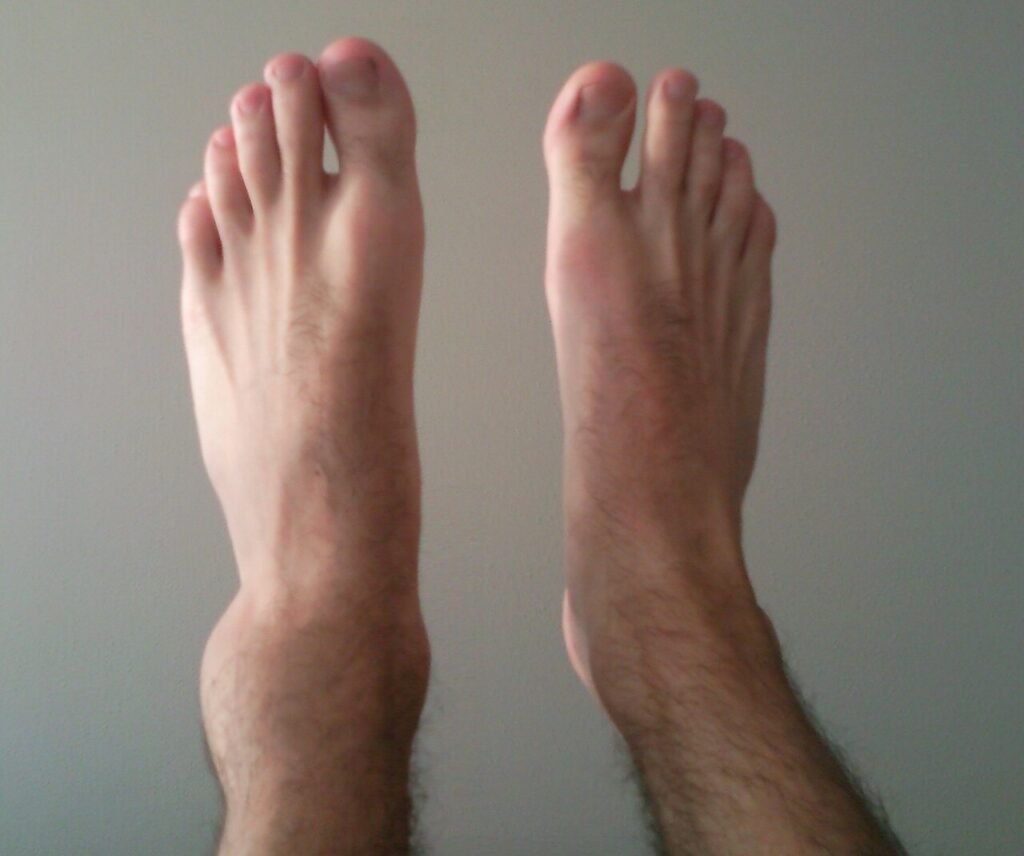
Photo: OdraciRRicardo, public domain, via Wikimedia Commons
Brace, Wrap, or Tape?
Elastic wraps are fine for early swelling, but they do little to stop rolling and loosen quickly. Athletic tape gives firm support at first but loosens during activity and must be reapplied each time. A reusable brace is the most practical choice for most people with a torn ligament. See our comparison of an ankle wrap vs. brace for a full breakdown.
When a Torn Ankle Ligament Needs Surgery
Most torn ankle ligaments heal well with a brace and rehab. Surgery is usually considered only when:
- The ankle stays unstable and keeps giving way after months of good rehab
- There is a related injury, such as a fracture, cartilage damage, or tendon tear
- You are a high-level athlete with severe instability, after discussion with your surgeon
After surgery, a boot or brace is used during recovery, followed by a brace for sports.
When to See a Doctor
See a doctor or urgent care if you:
- Cannot put weight on the foot or take four steps
- Have pain directly over the ankle bones or on the outer edge of the foot
- Notice deformity, numbness, or cold, pale toes
- Have severe swelling and bruising that keeps getting worse
- Still have pain or looseness after a few weeks
- Keep spraining the same ankle
These can be signs of a fracture, a complete tear, or chronic instability.
Frequently Asked Questions
What is the best ankle brace for a torn ligament?
For a partial tear, a lace-up brace with figure-8 straps or a strapped stabilizer usually works well. For a complete tear, a semi-rigid stirrup or hinged brace, or a boot first, is more common. Your doctor can help you choose based on the grade.
Can a torn ankle ligament heal on its own?
Most torn ankle ligaments heal without surgery when they are protected with a brace and followed by rehab. Healing can take weeks to months, and the ligament keeps getting stronger after pain fades.
Should I wear an ankle brace while sleeping with a torn ligament?
Most people do not need to, but some doctors suggest a stirrup brace at night in the first days to protect a severe tear. Follow your provider’s advice.
Can I walk with a torn ankle ligament?
Many people with partial tears can walk in a brace as pain allows. With a complete tear, walking may be very painful at first, and a boot or crutches may be needed.
How do I know if my ankle ligament is torn or just stretched?
A stretched ligament (Grade 1) causes mild pain and swelling without looseness. A torn ligament causes more swelling, bruising, pain with walking, and a feeling of instability. A doctor can confirm the grade.
Is a boot or a brace better for a torn ankle ligament?
For most partial tears, a brace is enough and lets you move more normally. A boot is more often used for severe complete tears, high ankle sprains, or when walking is very painful, usually for a short time before switching to a brace.
The Bottom Line
An ankle brace for a torn ligament is one of the most useful tools for recovery. Match the brace to the grade: a lace-up or strapped brace for most partial tears, and a firmer semi-rigid or hinged brace, sometimes after a boot, for complete tears. Research supports early, protected movement over long periods in a cast for most ankle ligament injuries.
Pair the brace with rehab exercises, wear it for sports until your ankle is fully strong, and see a doctor if the ankle stays loose or painful. For more product options, visit our main guide to the best ankle braces.
This article is for general information and is not medical advice. See a doctor for ankle injuries, especially if you cannot bear weight.

Hi, I’m Mamon, the content creator behind this blog. I share my experience in blogging, WordPress, SEO, and affiliate marketing through honest product reviews, in-depth buying guides, and practical how-to articles. Every piece of content is thoroughly researched and written to help readers make informed decisions.
Leave a Reply