

A back brace for working out can mean two very different things: a soft lumbar support belt that eases a sore back during exercise, or a stiff weightlifting belt that helps you brace during heavy squats and deadlifts. Choosing the wrong one, or using either the wrong way, can hold back your progress or even raise your risk of injury.
This guide explains the difference between a lifting belt and a back support brace, what the research says about each, when to wear one, when to skip it, and how to protect your back during workouts. If you mainly need support for back pain, our guide to the best lumbar support belt compares 10 options.
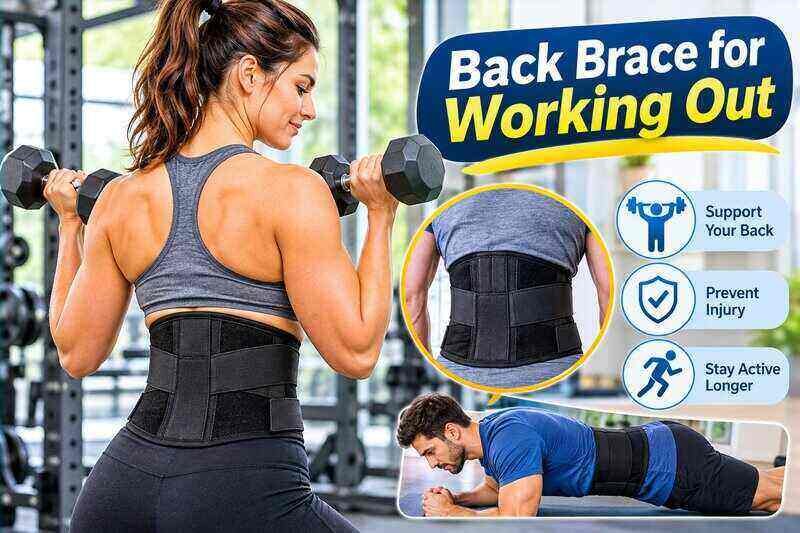

Lifting Belt vs. Back Support Brace: The Key Differences
At a glance, a weightlifting belt and a back support brace both wrap around your waist. But they are built for different jobs.
| Feature | Weightlifting belt | Back support brace |
|---|---|---|
| Main purpose | Help you brace during heavy lifts | Support and stabilize a sore lower back |
| Material | Thick leather or stiff nylon | Elastic, neoprene, or mesh with stays |
| Width | Usually 4 inches, often uniform | Often wider at the back, 6 to 10 inches |
| How long you wear it | A few heavy sets at a time | Hours during activity |
| Best for | Squats, deadlifts, heavy presses | Back pain, recovery, light activity |
| How it works | Gives your core something to push against | Compresses and limits painful movement |
In short, a lifting belt is a performance tool for healthy lifters. A back support brace is a comfort and recovery tool for people with back pain. Some lightweight elastic belts sit between the two and are marketed for both.
How a Weightlifting Belt Works
A lifting belt does not hold your spine up by itself. It works by helping you raise the pressure inside your abdomen.
When you take a big breath and brace your core, pressure builds inside your belly. This intra-abdominal pressure acts like an inflated balloon inside your trunk, stiffening it and helping to support the spine under load. A belt gives your abdominal muscles a firm wall to push against, so you can build even more pressure.
Research supports this. In a study published in the journal Ergonomics, six subjects lifted loads of about 160 to 200 pounds with and without a weightlifting belt. Every subject showed higher intra-abdominal pressure with the belt, which rose from an average of 99 mmHg without a belt to 120 mmHg with one. A separate 1989 study in Medicine and Science in Sports and Exercise found that pressure rose earlier and peaked higher when lifters wore a belt.
What Strength Experts Recommend
The National Strength and Conditioning Association (NSCA) says the decision to use a belt should depend on the exercise and the load. It lists two situations where a belt is most appropriate:
- During exercises that stress the lower back, such as back squats, front squats, and deadlifts
- During sets with near-maximal or maximal loads
The NSCA adds that a belt may reduce the risk of low back injury only when combined with correct technique and proper spotting.
Does a Lifting Belt Prevent Injury?
This is where opinions split. A belt can make you feel more stable and may help you lift a little more, but it is not a guarantee against injury.
The same Ergonomics study concluded that its muscle activity and pressure results made it difficult to justify prescribing abdominal belts to workers for short lifting tasks. The National Institute for Occupational Safety and Health has also found that back belts are unproven for preventing injuries in people who have never been injured. You can read more about that research in our article on whether back braces really work.
The key point is that technique matters more than gear. A belt cannot make up for rounding your back, jerking the weight, or lifting more than you can control.
When to Wear a Back Brace for Working Out
The right choice depends on whether your back is healthy or sore.
If Your Back Is Healthy
A lifting belt can make sense when:
- You are doing heavy squats, deadlifts, or overhead presses
- You are lifting at or near your maximum, roughly 80% of your one-rep max or more
- You already know how to brace your core without a belt
- You want a little extra stability for competition or max-effort sets
Skip the belt for:
- Warm-up sets and light weights
- Exercises that do not load the spine, such as curls, lunges with light dumbbells, or machine work
- Cardio, yoga, and bodyweight workouts
If Your Back Is Sore or Recovering
A soft back support brace may help when:
- You are returning to light exercise after a back strain
- You want support during walking, light cardio, or easy strength work
- Your doctor or physical therapist has cleared you for exercise but suggested extra support
In this case, lower the weights, focus on form, and treat the brace as a short-term aid while you rebuild strength.
When Not to Wear a Back Brace During Exercise
There are times when a brace or belt is a bad idea:
- If you have high blood pressure or heart problems. The NSCA notes that some people may have increased blood pressure from wearing a weight belt, which can cause dizziness, headaches, or fainting. Talk to your doctor first.
- For every set. Wearing a belt for all your training may stop your core from learning to brace on its own.
- To push through pain. If an exercise hurts your back, stop. A brace should not be used to mask pain.
- For twisting sports. Stiff belts limit the rotation you need for golf, tennis, and similar activities.
- During pregnancy, unless your doctor approves a specific maternity support.
How to Wear a Lifting Belt Correctly
If you use a lifting belt, wearing it properly makes a big difference.

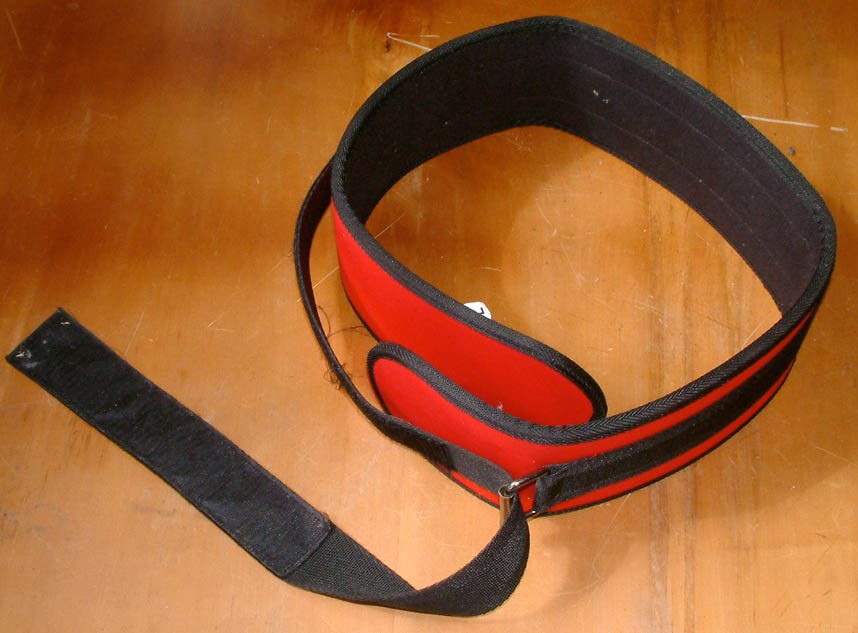
Photo: GeorgeStepanek, CC BY-SA 3.0, via Wikimedia Commons
- Place it around your belly button. Most lifters wear it over the lower ribs and belly, not low on the hips.
- Make it snug, not crushing. You should be able to fit one finger between the belt and your stomach.
- Breathe into the belt. Take a deep breath into your belly and push your abdomen out against the belt in all directions.
- Hold the brace through the lift. Keep that pressure during the hardest part of the rep, then breathe at the top.
- Loosen it between sets. Undo the belt or loosen it while you rest.
In the video below, strength coach Alan Thrall explains when, why, and how to wear a lifting belt.
How to Choose the Right Back Brace for Working Out
For Heavy Lifting
Choose a dedicated weightlifting belt. Leather belts are the most rigid and last for years, while nylon belts with Velcro are lighter and easier to adjust. A belt about 4 inches wide all the way around is standard for squats and deadlifts.
For Gym Workouts With a Sore Back
Choose a lightweight elastic back brace with flexible stays that lets you bend at the hips. Breathable mesh is important, since you will be sweating. Avoid tall, rigid braces that dig in when you squat or sit on a bench.
For Work That Involves Lifting
If your job involves lifting boxes, a back support belt with suspenders can keep the belt in place, but remember that it does not replace safe lifting technique. Our guide to the best lumbar support belt includes a pick for lifting at work.
Check the Fit
A belt or brace that does not fit will not help. Measure around your belly button and compare it to the size chart. Our back brace size chart guide shows how to measure.

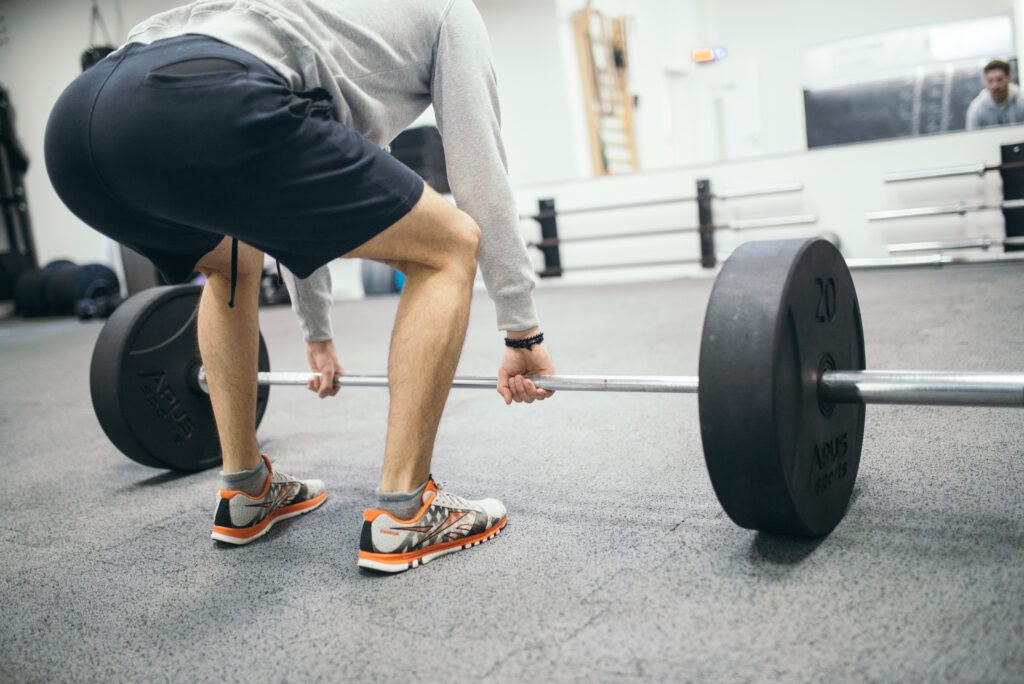
Photo: Nenad Stojkovic, CC BY 2.0, via Wikimedia Commons
Build Your Natural Belt: Core Exercises for a Stronger Back
Your deep core muscles form a natural belt around your spine. Training them reduces how much you rely on any external support. Try adding these to your routine:
Dead Bug
Lie on your back with your arms pointing to the ceiling and knees bent at 90 degrees. Slowly lower one arm and the opposite leg toward the floor while keeping your lower back pressed down. Return and switch sides. Do 10 per side.
Bird Dog
Start on your hands and knees. Reach one arm forward and the opposite leg back, keeping your hips level. Hold for three seconds, then switch. Do 10 per side.
Side Plank
Lie on your side and prop yourself up on your forearm. Lift your hips so your body forms a straight line. Hold for 20 to 30 seconds per side.
Glute Bridge
Lie on your back with knees bent. Squeeze your glutes and lift your hips until your body forms a line from shoulders to knees. Lower slowly. Do 12 to 15 reps.
Practice Bracing Without a Belt
On light sets, practice taking a deep belly breath and tightening your core as if someone were about to poke your stomach. This skill carries over to every lift and to daily tasks like lifting groceries.
For more on building a balanced fitness routine, see our guide to the components of physical fitness.
Back Support by Type of Workout
Different workouts put different demands on your back. Use this table as a quick guide:
| Workout | Lifting belt? | Back support brace? |
|---|---|---|
| Heavy squats and deadlifts | Yes, for near-max sets | No |
| Moderate weight training | Usually not needed | Only if recovering from back pain |
| Machines and isolation exercises | No | Rarely |
| Running and walking | No | Light elastic brace if your back is sore |
| Cycling and rowing | No | Usually not needed |
| Yoga and Pilates | No | No, it limits movement |
| Golf and tennis | No | Soft brace only if recovering, since rotation is needed |
| CrossFit and Olympic lifts | Yes, for heavy lifts | No |
If you are recovering from back pain, start with low-impact options such as walking, swimming, or stationary cycling, which are usually gentle on the lower back.
Recovering From a Workout Back Strain
If you tweak your back in the gym:
- Stop the exercise that caused it
- Use ice for the first day or two, then gentle heat
- Keep moving with easy walks rather than resting in bed
- Return to lifting gradually with lighter weights and strict form
- Consider soft tissue work, such as a massage gun on the muscles beside the spine, avoiding the spine itself
See a doctor if the pain is severe, spreads down your leg, or comes with numbness or weakness.
Frequently Asked Questions
Should I wear a back brace for working out?
If your back is healthy, a weightlifting belt can help during heavy squats and deadlifts near your maximum, but it is not needed for light sets or most exercises. If your back is sore, a soft back support brace may help during light, careful exercise.
Is a lifting belt the same as a back brace?
No. A lifting belt is thick and stiff and helps you brace during heavy lifts. A back brace is softer and designed to support a sore back during longer activity.
Does wearing a lifting belt weaken your core?
Using one for every set may reduce how much your core learns to brace on its own. Wearing it only for heavy sets and training your core without it helps avoid this.
Can I wear a back brace at the gym with lower back pain?
Yes, for light exercise if your doctor agrees. Lower the weight, avoid exercises that hurt, and focus on form. A brace should never be used to push through pain.
Who should not wear a weightlifting belt?
People with high blood pressure or heart conditions should check with a doctor first, since belts can raise blood pressure during lifts. Pregnant women should also avoid standard lifting belts.
How tight should a lifting belt be?
Snug enough to push your stomach against, with room for about one finger between the belt and your body. It should not stop you from taking a deep breath.
Can beginners use a weightlifting belt?
Beginners are usually better off learning to brace without a belt first. Focus on form and bracing with light and moderate weights for several months. Once you start lifting heavy loads near your maximum on squats and deadlifts, a belt becomes more useful. Ask a qualified coach to check your technique before you rely on any belt.
The Bottom Line
A back brace for working out should match your goal. If your back is healthy and you lift heavy, a weightlifting belt can help you brace harder during near-maximal squats and deadlifts, as the NSCA recommends. If your back is sore, a soft, breathable support brace can help you return to light exercise while you rebuild strength.
Either way, a belt or brace is no substitute for good technique, sensible loads, and a strong core. Use it for the sets that need it, train your natural belt the rest of the time, and see a doctor if back pain is severe or not improving. For more on choosing support, see our main guide to the best back braces.
This article is for general information and is not medical advice. Talk to a doctor before exercising with back pain or a heart condition.


Hi, I’m Mamon, the content creator behind this blog. I share my experience in blogging, WordPress, SEO, and affiliate marketing through honest product reviews, in-depth buying guides, and practical how-to articles. Every piece of content is thoroughly researched and written to help readers make informed decisions.