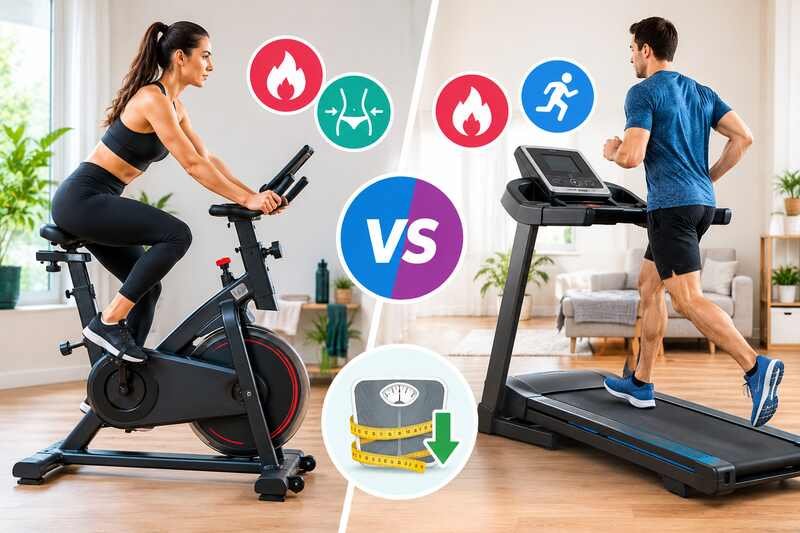
Which is better, exercise bike or treadmill, for weight loss and burning calories? The short answer: a treadmill burns slightly more calories per minute. An exercise bike is easier on your joints, though, and just as effective for weight loss if you use it consistently.
Both machines are staples of home gyms and commercial fitness centers. Each delivers a real cardio workout, strengthens your heart and lungs, and helps you burn calories when paired with a sensible diet. The right choice depends on your fitness level, your joints, your goals, and which machine you’ll actually use week after week.
The Physical Activity Guidelines for Americans recommend at least 150 minutes of moderate cardio per week, or about 30 minutes on 5 to 6 days. Whichever machine you choose, hitting that weekly target matters more than the equipment itself.
Below, we compare treadmills and exercise bikes using sourced calorie data. We also look at what a major indoor-exercise-machine study found, and help you decide which machine fits your routine, your budget, and your body.
Key Takeaways
- A treadmill typically burns 10-20% more calories than an exercise bike at a similar effort level, largely because running is a weight-bearing exercise.
- An exercise bike is lower impact, which makes it a smarter pick if you have knee, hip, or back pain.
- Interval training (alternating hard and easy efforts) boosts calorie burn on either machine.
- Your consistency matters more than which machine you pick. The best cardio machine is the one you’ll actually use.
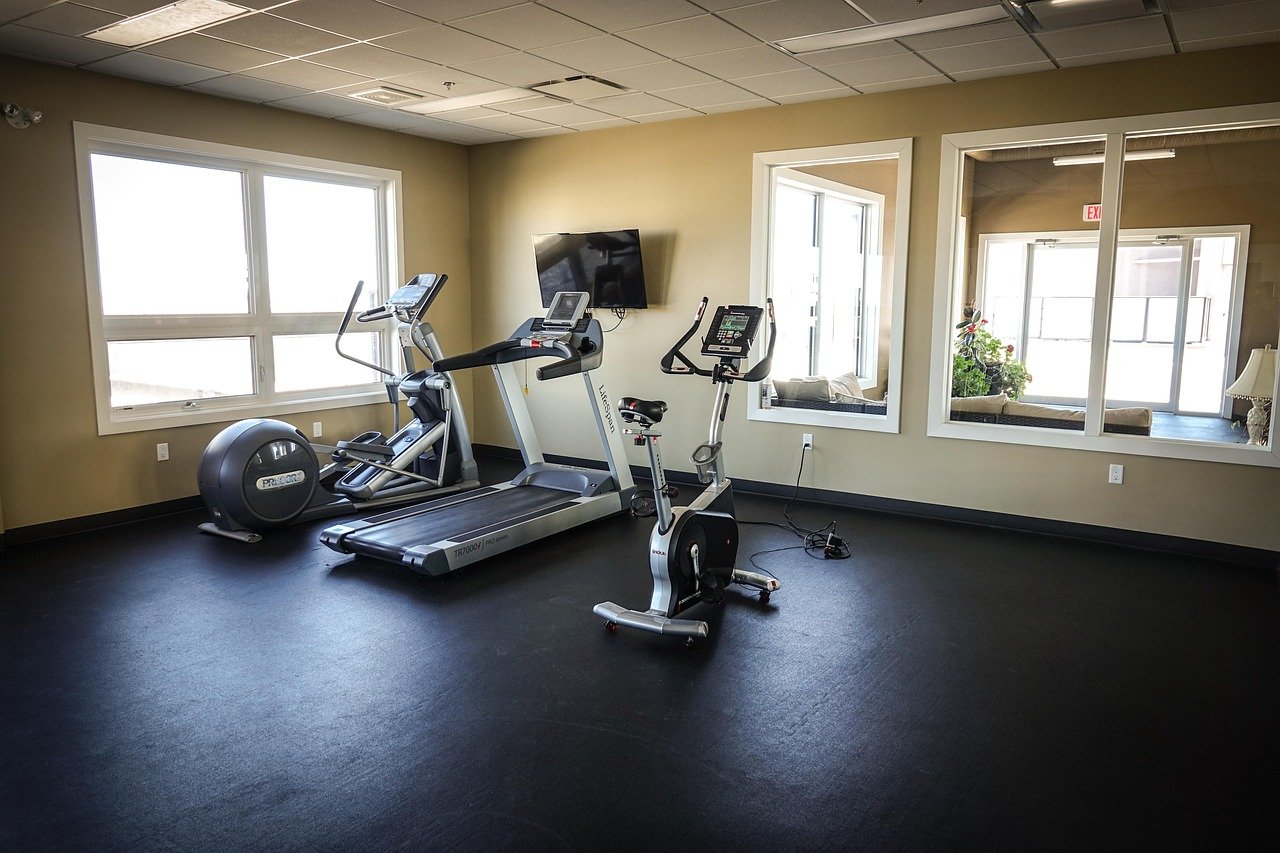
Treadmill vs. Exercise Bike: Calorie Burn Compared
Calorie burn depends on your body weight, effort level, and workout duration. The table below uses data from Harvard Health Publishing for 30 minutes of steady exercise at three common body weights.
| Activity (30 minutes) | 125 lbs | 155 lbs | 185 lbs |
| Walking, 3.5 mph | 107 | 133 | 159 |
| Stationary bike, moderate | 210 | 252 | 294 |
| Running, 5 mph (12 min/mile) | 240 | 288 | 336 |
| Running, 6 mph (10 min/mile) | 300 | 360 | 420 |
| Stationary bike, vigorous | 315 | 378 | 441 |
| Running, 7.5 mph (8 min/mile) | 375 | 450 | 525 |
At a matched, moderate effort, a treadmill session generally out-burns a stationary bike session. Push the intensity on either machine, though, and the gap narrows quickly. A hard 30-minute bike interval session can beat an easy 30-minute jog.
Source: Harvard Health Publishing, calorie chart by body weight.
What a Major Study Found About 10 Exercise Machines
The clearest independent answer comes from an ACE-sponsored study conducted by researchers at the University of Wisconsin-La Crosse. Sixteen healthy adults exercised on 10 different indoor machines at three effort levels while researchers measured their oxygen consumption and heart rate.
Researchers tested three effort levels, rated 11, 13, and 15 on the standard perceived-exertion scale used in exercise science. At a “somewhat hard” effort (RPE 13), the treadmill and the stepmill burned the most calories of all 10 machines tested, at roughly 260-266 calories in 30 minutes. Recumbent bikes and recumbent steppers came in lowest among the leg-focused machines, burning up to 50% less.
The researchers also found something important. Upright, weight-bearing machines like the treadmill push your heart rate higher than seated machines like the exercise bike, even at the same perceived effort. Heart rates varied by as much as 46 beats per minute across the 10 machines tested. That’s one reason running feels harder than cycling even when your legs feel just as tired.
Read the full write-up here: ACE-sponsored research on 10 indoor exercise machines.
Treadmill: Pros and Cons
A treadmill is a motorized belt for walking, jogging, or running in place. Most models include a digital display for distance, speed, calories, and heart rate. Here’s how it stacks up.
Treadmill Pros
- Burns more calories per minute than a stationary bike at a matched effort
- Builds bone density because it’s a weight-bearing exercise
- Adjustable incline and speed let you customize intensity easily
- Flat, predictable surface reduces the risk of tripping compared to outdoor running
- Works well for both steady cardio and interval training
Treadmill Cons
- Higher impact, which can aggravate knee, hip, or lower back issues
- Running form matters, and poor form raises injury risk
- Belts and motors need regular maintenance
- Can feel repetitive without incline changes or interval variety
If you want a deeper look at treadmill-specific weight loss strategies, see our guide on how to lose weight on a treadmill in a month. If knee pain is a concern, our article on how to save your knees during exercise covers the research in detail.
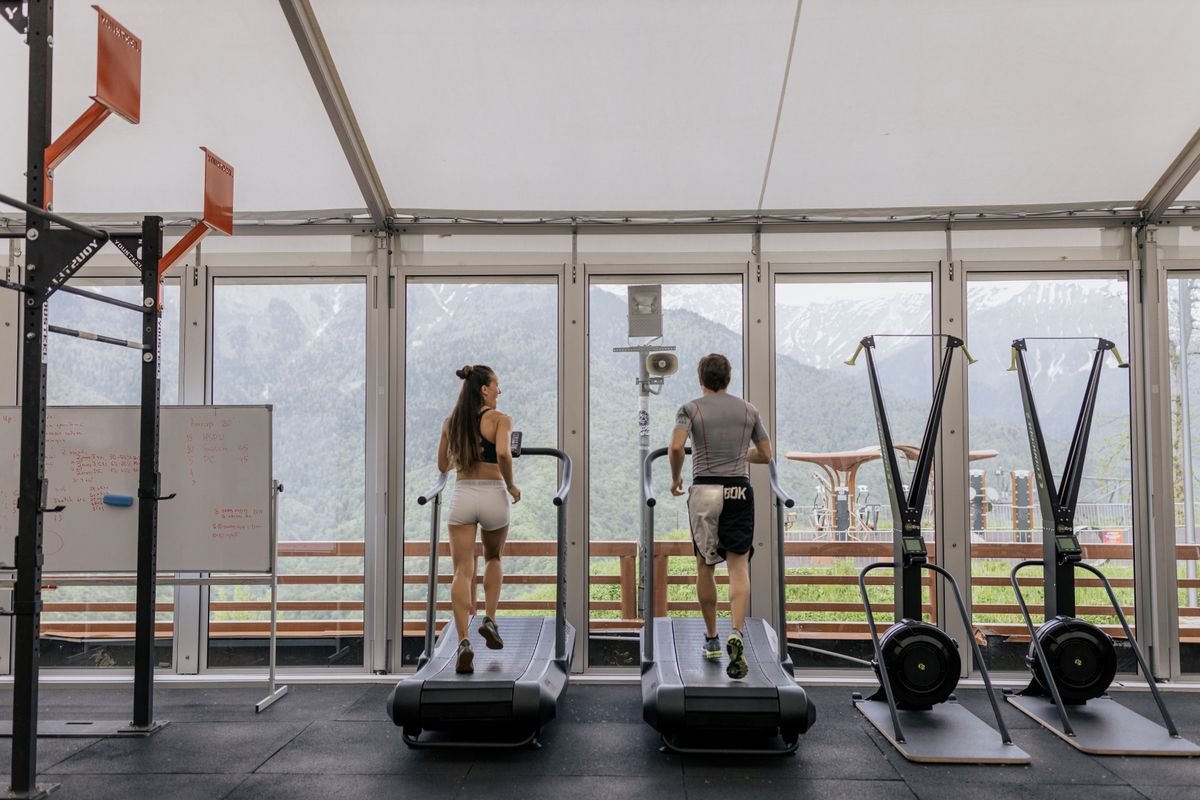
Exercise Bike: Pros and Cons
An exercise bike is a stationary cycling machine that raises your heart rate through smooth, low-impact pedaling. It comes in upright, recumbent, and dual-action styles, so you can pick the format that suits your body and goals.
Exercise Bike Pros
- Low impact, which is easier on your knees, hips, and lower back
- Strengthens quads, hamstrings, glutes, and calves without jarring your joints
- Adjustable resistance mimics hill climbs and interval training
- A recumbent frame offers back support for beginners or older adults
- Easy to learn, since there’s no balance or coordination curve
Exercise Bike Cons
- Burns somewhat fewer calories than a treadmill at the same perceived effort
- Doesn’t build bone density the way weight-bearing cardio does
- Works mainly the lower body, with little upper-body engagement
- Seat comfort can be an issue during longer sessions
For a full breakdown of bike-specific numbers, read how many calories an exercise bike burns. If you’re building a bike-based weight loss plan, our guide on how to lose weight on an exercise bike walks through a full routine.

So Which Is Better: Exercise Bike or Treadmill?
The honest answer depends on three things: your joints, your goals, and your consistency.
If You Care Most About Injury Risk
Choose the exercise bike. Because you’re seated and the pedaling motion is smooth, a stationary bike puts far less stress on your knees, hips, and lower back than running does. This makes it the safer choice if you have joint pain, are returning from an injury, or are new to structured exercise. Our guide on how to protect your knees during exercise has more tips that apply to any cardio machine.
If You Care Most About Calories Burned Per Minute
Choose the treadmill. Running and jogging are weight-bearing activities, so you burn roughly 10-20% more calories than cycling at a matched effort. If your top priority is maximizing calorie burn in a limited time window, the treadmill has the edge.
If You Want the Best of Both
Alternate between the two. Many trainers recommend rotating machines across the week: treadmill intervals on higher-energy days, bike sessions on recovery days when your joints need a break. This approach lowers your injury risk while still keeping your total weekly calorie burn high.
Factors to Consider Before You Choose
Beyond calories and injury risk, a few practical factors should shape your decision.
Workout Variability
Both machines offer adjustable intensity. Treadmills let you change speed and incline, while exercise bikes let you change resistance and cadence. If you want built-in interval programs, check the console features before you buy. Our guide on what to look for in an exercise bike before buying covers the console features worth paying for.
Durability and Maintenance
Treadmills have more moving parts, including a motor, belt, and incline mechanism, so they need more upkeep over time. Exercise bikes are mechanically simpler and tend to need less maintenance.
Space and Noise
Treadmills are larger and louder, which matters if you live in an apartment or share walls with neighbors. Exercise bikes take up less floor space and run quieter, making them a better fit for small homes.
Ease of Use
An exercise bike has almost no learning curve. You sit down and pedal. A treadmill requires a bit more comfort with the moving belt, especially at higher speeds, so beginners sometimes prefer starting on a bike.
Cost and Home Gym Space
Entry-level exercise bikes are often cheaper than entry-level treadmills, and they take up a smaller footprint. If you’re working with a tight budget or a small apartment, that difference can decide the question for you. Our treadmill buying guide breaks down pricing and features if you do have the space.
Treadmill or Exercise Bike: Which Fits Your Specific Goal?
The “which is better” question changes depending on what you’re actually training for. Here’s how the two machines compare across common fitness goals.
Goal: Losing Weight
Either machine works, since weight loss ultimately comes down to burning more calories than you eat. The treadmill has a slight edge in calories burned per minute, but only if you can sustain the workout without pain or burnout. An exercise bike that you use consistently for 30 minutes, 5-6 days a week, will often outperform a treadmill routine you keep quitting because your knees hurt.
Goal: Building Endurance
A treadmill more closely mimics real-world walking and running, so it’s the better training tool if your goal is a 5K, a half-marathon, or general running endurance. Cyclists training for events should lean toward the bike for the same reason: specificity matters.
Goal: Recovering From Injury or Protecting Your Joints
The exercise bike wins here. Its seated, low-impact motion lets you keep your cardiovascular fitness up while your joints recover from high-impact activity. That’s why physical therapists frequently recommend stationary cycling during rehab programs.
Goal: Toning Your Lower Body
Cycling places continuous resistance on your quads, hamstrings, and glutes throughout each pedal stroke. Some people find that steady resistance more effective for lower-body toning than the more natural gait of treadmill walking or running.
How to Burn More Calories on Either Machine
Regardless of which machine you choose, these strategies increase your calorie burn:
- Add short, high-intensity intervals instead of one steady pace
- Increase incline (treadmill) or resistance (bike) rather than only speed
- Aim for 5-6 sessions per week, matching the Physical Activity Guidelines for Americans
- Track your heart rate to stay in a productive training zone
- Pair your workouts with a modest calorie deficit for actual weight loss
Here’s a short video that walks through the practical differences between the two machines:
Frequently Asked Questions
Calorie Burn and Weight Loss
Does a treadmill burn more calories than an exercise bike?
At a matched effort, yes. Running is weight-bearing, so it typically burns 10-20% more calories per minute than cycling.
Is an exercise bike enough for weight loss on its own?
Yes, if you’re consistent and pair it with a modest calorie deficit. Weight loss comes from your overall calorie balance, not the specific machine.
Can either machine help me lose belly fat specifically?
Neither machine spot-reduces fat. Both help you burn calories overall, and fat loss happens across your whole body as your total calorie balance goes negative.
Choosing and Using the Right Machine
Which is safer if I have bad knees?
The exercise bike, especially a recumbent model, puts far less stress on your knees than running on a treadmill.
How long should I use a treadmill or exercise bike each session?
Aim for 20-30 minutes per session, 5-6 days a week, which lines up with U.S. physical activity guidelines for healthy adults.
Which machine is better for beginners?
Most beginners find the exercise bike easier to start with since it has a lower learning curve and lower injury risk while they build a consistent habit.
Which machine is cheaper for a home gym?
Entry-level exercise bikes are generally less expensive than entry-level treadmills and take up less floor space, which makes them a common first purchase for home gyms.
Conclusion
There’s no single right answer to whether an exercise bike or a treadmill is better. A treadmill burns more calories per minute and builds bone density, but it carries a higher injury risk. An exercise bike is gentler on your joints and just as effective for weight loss when you use it consistently.
If you’re still deciding, our guide on the best exercise machine for weight loss compares even more equipment types. Whichever machine you pick, the real driver of results is showing up consistently, week after week.

Hi, I’m Mamon, the content creator behind this blog. I share my experience in blogging, WordPress, SEO, and affiliate marketing through honest product reviews, in-depth buying guides, and practical how-to articles. Every piece of content is thoroughly researched and written to help readers make informed decisions.
Leave a Reply