You have probably seen athletes with bright strips of tape running across their ankles, knees, and shoulders. That is kinesiology tape, a thin, stretchy tape that sticks to the skin without stopping you from moving. Many people use kinesiology tape for ankle support after a sprain or when an ankle feels weak. But how well does it work, how do you apply it, and when is a brace a better choice?
This guide explains what kinesiology tape is, what the research really says, how to tape your ankle step by step, how long to wear it, and how it compares with athletic tape and ankle braces. If you need firmer support, see our main guide to the best ankle braces.
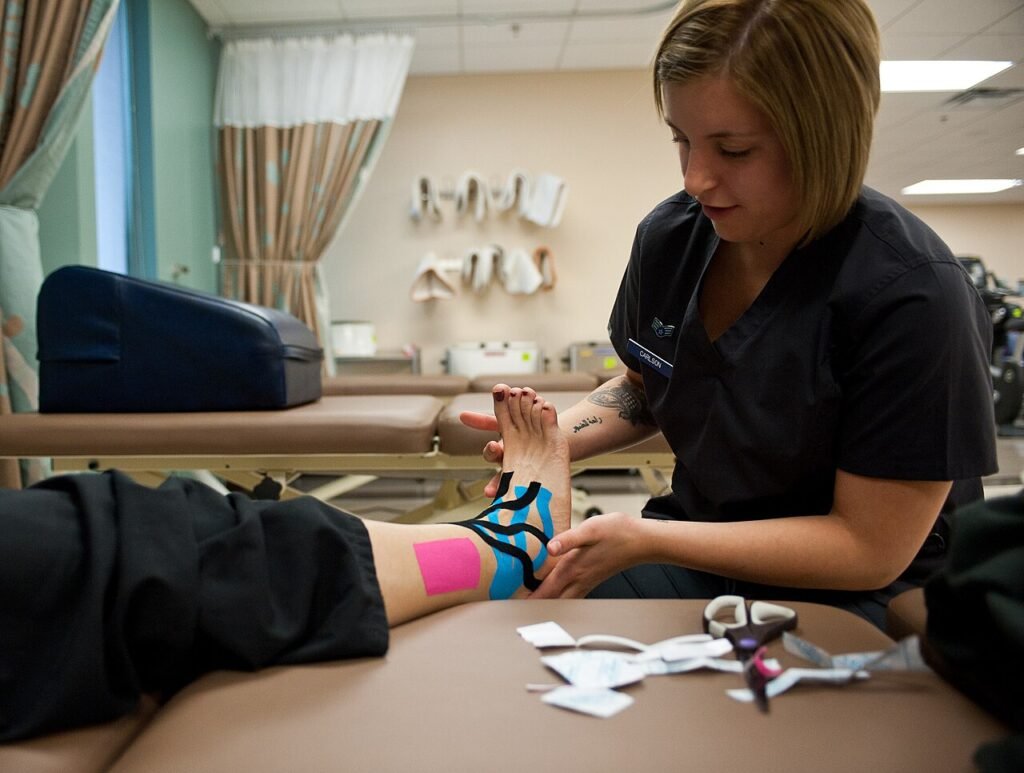
Photo: U.S. Air Force, Airman 1st Class Alystria Maurer, public domain
Key Takeaways
- Kinesiology tape is elastic and allows full movement, so it gives a light reminder rather than firm support.
- Large research reviews have found little evidence that kinesiology tape improves ankle function or balance more than placebo.
- It may still help some people feel more confident and comfortable, especially during mild sprains or light activity.
- For moderate sprains, torn ligaments, or chronic instability, a lace-up or semi-rigid brace gives far more protection.
What Is Kinesiology Tape?
Kinesiology tape, often called KT tape or Kinesio tape, is a thin, cotton-based elastic tape with an acrylic adhesive. It was invented in the 1970s and became widely known after athletes wore it in major competitions. Unlike traditional white athletic tape, it stretches with your skin, so it does not lock the ankle in place.
According to Cleveland Clinic, KT tape is thin, stretchy, and applied directly over a joint, and because it does not limit movement the way traditional sports tape does, athletes can keep wearing it while they practice and compete.
How Is It Supposed to Work?
Supporters say kinesiology tape:
- Gently lifts the skin, which may ease pressure on tissues and help reduce swelling
- Stimulates skin sensors, giving the brain more feedback about ankle position
- Reminds you to move carefully, since you can feel the tape when the ankle tips
- Supports muscles without restricting the joint
These ideas are popular, but the research has not consistently confirmed them.
What the Research Says About Kinesiology Tape for Ankle Support
The evidence for kinesiology tape on the ankle is weak. A large systematic review and meta-analysis published in Clinical Rehabilitation screened 5,572 studies and included 84 that evaluated 2,684 people. Of 58 meta-analyses, 51 found kinesio taping ineffective for outcomes such as balance, jump performance, range of motion, and muscle strength, including in people with chronic ankle instability. The authors concluded that the evidence does not support using kinesio taping on the ankle to improve functional performance, regardless of the population.
Cleveland Clinic also notes that there is no conclusive scientific evidence that Kinesio tape reduces disability in people with chronic pain.
So Why Do People Still Use It?
- Comfort and confidence. Many people say the ankle feels more secure with tape on.
- Freedom of movement. It does not restrict running, jumping, or cutting.
- Low risk. For most people, the main side effect is skin irritation.
- Swelling management. Some therapists use special patterns to help with bruising and swelling, though evidence is limited.
The honest takeaway: kinesiology tape is a reasonable add-on if you like how it feels, but it should not replace a brace or rehab for a real ankle injury.
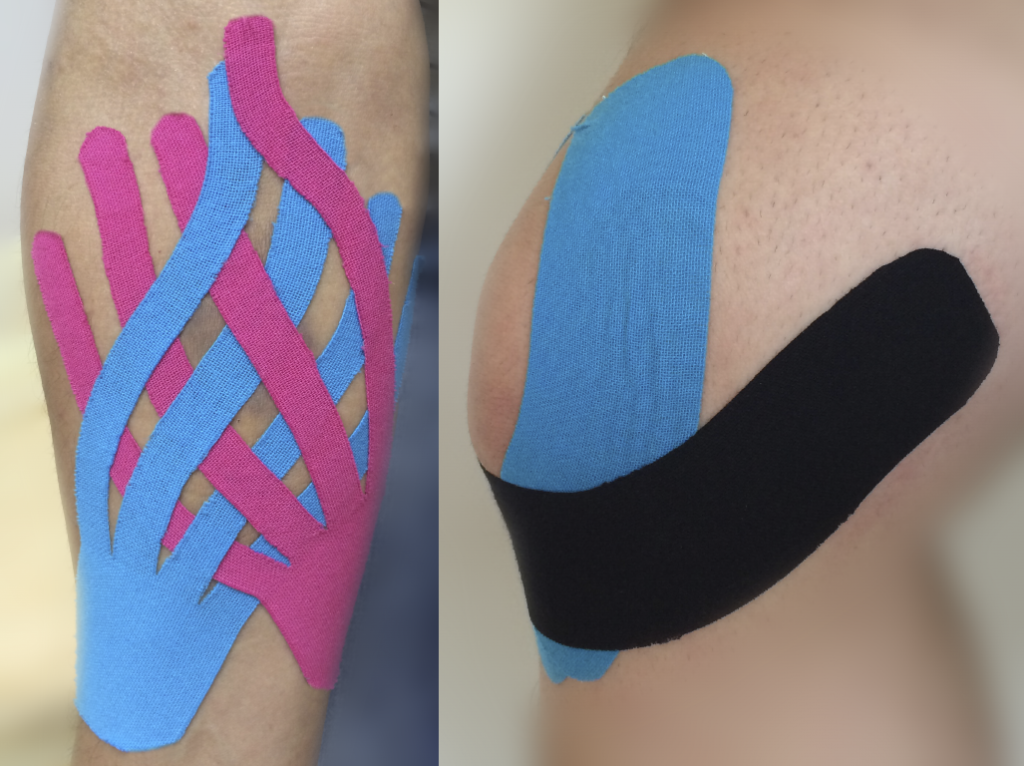
Image: Xlsergval, CC BY-SA 4.0, via Wikimedia Commons
Kinesiology Tape vs. Athletic Tape vs. Ankle Brace
| Option | Support level | Movement | Reusable | Best for |
|---|---|---|---|---|
| Kinesiology tape | Light | Full | No | Mild sprains, light activity, comfort |
| Rigid athletic tape | Firm at first | Limited | No | Sports, usually applied by a trainer |
| Lace-up or strapped brace | Moderate | Most motion allowed | Yes | Moderate sprains, return to sports |
| Semi-rigid or hinged brace | Firm | Up and down only | Yes | Torn ligaments, chronic instability |
Rigid athletic tape gives real support at first, but it loosens during activity and usually needs a trained person to apply it. A reusable brace is often more practical. Our guide on how ankle braces work explains why braces control rolling better than tape over a full practice or game.
When Kinesiology Tape for Ankle Support Makes Sense
- A mild (Grade 1) sprain where you want a light reminder
- Light jogging or gym work after a sprain has mostly healed
- Sports where a bulky brace is not allowed or feels awkward
- Mild swelling, if a therapist shows you a swelling pattern
- Wearing under a brace for extra comfort, if your therapist suggests it
When to Choose a Brace Instead
- Moderate or severe sprains with partial or complete ligament tears
- Repeated sprains or an ankle that keeps giving way
- High-risk sports such as basketball and volleyball
- When you cannot apply tape correctly by yourself
See our guides to an ankle brace for a torn ligament and the best ankle brace for a sprained ankle.
How to Apply Kinesiology Tape for Ankle Support
In the video below, the KT Tape team shows a step-by-step ankle stability application.
What You Need
- A roll or pre-cut strips of kinesiology tape
- Scissors with rounded tips
- Clean, dry skin with no lotion
Step-by-Step Ankle Stability Taping
- Prepare your skin. Wash and dry the ankle. Trim long hair if needed. Avoid lotions and oils.
- Round the corners. Cut the tape ends into curves so they peel less.
- Position your foot. Sit with your foot at a right angle to your leg.
- Apply the stirrup strip. Anchor the middle of a strip under your heel with light stretch, then run the ends up both sides of the ankle with no stretch on the last inch.
- Apply the outer support strip. Anchor a strip on the inner arch, wrap it under the foot, and pull it up the outside of the ankle with moderate stretch, finishing without stretch.
- Add a figure-8 or heel-lock strip if your tape guide calls for it.
- Rub the tape. Friction warms the adhesive and helps it stick.
- Wait before activity. Most brands suggest applying tape 30 to 60 minutes before exercise or showering.
The ends should always be applied without stretch. Too much tension can irritate or blister the skin.
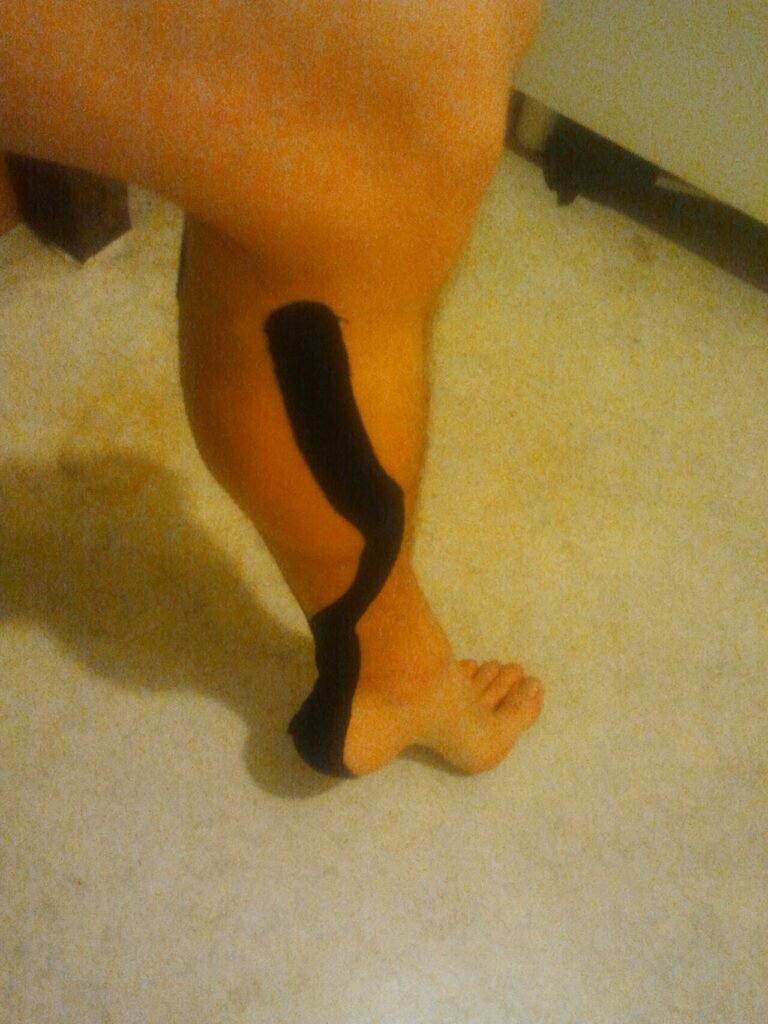
Photo: Lotusfleurie, CC BY-SA 3.0, via Wikimedia Commons
How Long Can You Wear Kinesiology Tape?
Wear time depends on the brand, your skin, and your activity. Many brands say tape can stay on for a few days. A patient leaflet from East Kent Hospitals in the U.K. advises not wearing tape for more than five days at a time without removing it to check your skin. You can shower and swim with it, though water may shorten wear time.
How to Remove It Safely
- Remove it slowly, in the direction of hair growth
- Hold your skin down as you peel the tape back
- Use baby oil or a little warm water to loosen stubborn adhesive
- Never rip it off quickly
Other Kinesiology Tape Patterns for the Ankle
The stability pattern above is the most common, but therapists use other patterns for different problems:
- Swelling (fan or lymphatic) pattern: The tape is cut into thin tails and spread over the swollen area with very little stretch. Some therapists use it for bruising after a sprain, though research support is limited.
- Achilles pattern: A strip runs from the bottom of the heel up the back of the calf to support the Achilles tendon. Our guide to back of ankle pain covers Achilles problems in more detail.
- Peroneal tendon pattern: A strip runs along the outer ankle and lower leg to support the tendons behind the outer ankle bone.
- Arch support pattern: Strips run across the bottom of the foot for people with flat feet or arch pain.
If you are unsure which pattern fits your injury, ask a physical therapist or athletic trainer to show you once. After that, most people can apply it themselves.
How to Choose a Kinesiology Tape
Not all tapes are equal. Look for:
- Strong, water-resistant adhesive that lasts through sweat and showers
- Pre-cut strips if you are new to taping
- Synthetic tape for heavy sweaters or swimmers, since it often sticks longer than cotton
- Hypoallergenic or latex-free labels if you have sensitive skin
- Wide rolls (2 inches) for most ankle applications
Test a small piece on your skin for a day before a full application if you have a history of skin reactions.
Common Kinesiology Taping Mistakes
- Stretching the ends. The first and last inch should always go on with no stretch, or the tape will peel and irritate the skin.
- Taping over lotion or sweat. Oily or damp skin keeps the tape from sticking.
- Using too much tension overall. More stretch does not mean more support. It usually means blisters.
- Relying on tape for a serious injury. Tape cannot hold a torn ligament stable.
- Leaving it on too long. Check your skin regularly and replace the tape every few days.
Using Kinesiology Tape During Ankle Rehab
Some physical therapists use tape during the middle stage of recovery, when the ankle is no longer acutely injured but still feels uncertain. In that setting, tape may help you focus on good movement during balance and strength drills. It works best as a short-term add-on while you rebuild strength. As balance and strength improve, most people can stop taping for daily life and use a brace only for sports.
Who Should Avoid Kinesiology Tape?
Skip or ask your doctor first if you have:
- Open wounds, cuts, or skin infections
- Fragile skin or a history of skin tearing
- Allergies to adhesives
- Diabetes with reduced feeling in your feet
- Poor circulation or blood clots in the leg
- Severe swelling or a possible fracture
Stop using the tape if you notice itching, redness, blisters, or a rash.
Tips to Get the Most From Kinesiology Tape
- Use it alongside balance and strength exercises, not instead of them
- Practice the taping pattern before a game or race
- Use good-quality tape that sticks well through sweat
- Combine it with supportive footwear. See our review of the best shoes for ankle support.
- If you also wear a brace, follow our tips on how to wear an ankle brace with shoes
Kinesiology Tape for Ankle Support in Different Sports
- Running: Tape is light and does not change your stride, so some runners use it after a mild sprain. For trail running or a history of repeat sprains, a low-profile brace offers more protection.
- Basketball and volleyball: These sports involve frequent jumping and landing on other players’ feet. A lace-up or hinged brace is usually the safer choice, with tape as an optional extra.
- Soccer: Tape fits easily under socks and shin guards. Players with unstable ankles often combine tape or a slim brace with balance training.
- Gym training: Tape can be a helpful reminder during lunges and agility drills, but it does not protect against heavy rolling forces.
Frequently Asked Questions
Does kinesiology tape work for ankle support?
Kinesiology tape gives light support and feedback but does not stop the ankle from rolling the way a brace does. Large research reviews have found little proof that it improves ankle function more than placebo, though some people find it comfortable and reassuring.
Is KT tape better than an ankle brace?
For most ankle injuries, no. A brace gives more stability and is reusable. KT tape may suit mild sprains or people who need full freedom of movement.
Can I wear kinesiology tape on a sprained ankle?
Yes, many people use it for mild sprains. For moderate or severe sprains, a brace is a better choice, and you may use tape only as an extra comfort layer.
Can I sleep with kinesiology tape on my ankle?
Yes. Kinesiology tape is designed to be worn for a few days, including overnight. Remove it if it itches, burns, or causes skin changes.
Does the color of KT tape matter?
No. Tape colors are for style. They do not change how the tape works.
Can kinesiology tape prevent ankle sprains?
There is little strong evidence that kinesiology tape prevents ankle sprains. Lace-up braces have stronger prevention research, especially in court sports such as basketball.
Can I use kinesiology tape and an ankle brace together?
Yes, some people wear a thin layer of tape under a brace for extra comfort or feedback. Make sure the tape does not wrinkle or rub under the brace, and check your skin often.
How much does kinesiology tape cost?
A standard roll or box of pre-cut strips usually costs less than a brace, but because tape is single use, the cost adds up if you tape every day. For long-term support, a reusable brace is often cheaper over time.
The Bottom Line
Kinesiology tape for ankle support is light, comfortable, and does not restrict movement, which is why it is popular with athletes. But large research reviews show it does little to improve ankle function or balance compared with placebo. Use it for mild sprains, light activity, or comfort if you like it, but choose a lace-up, strapped, or semi-rigid brace for moderate injuries and unstable ankles.
Whatever you use, pair it with rehab exercises. Our guide to ankle rehabilitation exercises shows you where to start.
This article is for general information and is not medical advice. See a doctor or physical therapist for ankle injuries.

Hi, I’m Mamon, the content creator behind this blog. I share my experience in blogging, WordPress, SEO, and affiliate marketing through honest product reviews, in-depth buying guides, and practical how-to articles. Every piece of content is thoroughly researched and written to help readers make informed decisions.
Leave a Reply