


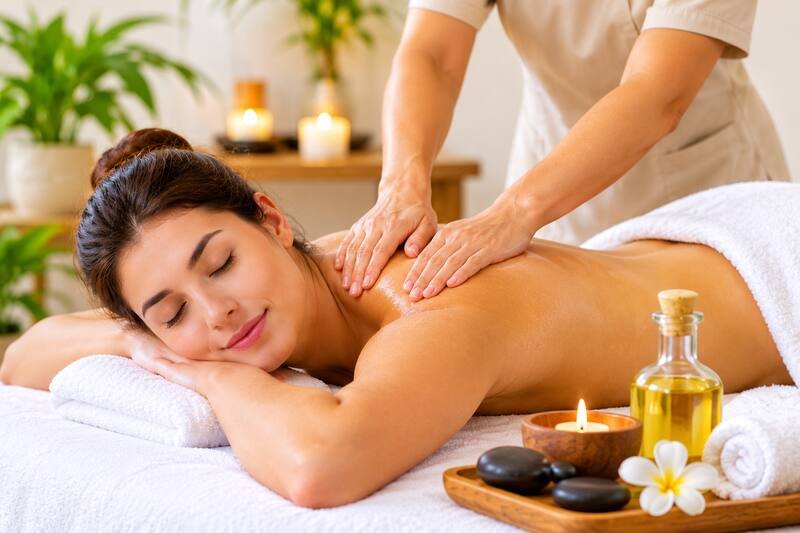
If you have ever booked a massage and been asked whether you want a “full body” session, you are not alone in wondering what that actually includes. A full body massage is a session where the therapist works on most major areas of the body, usually the back, neck, shoulders, arms, hands, legs, and feet, in one visit. It is a popular choice at U.S. spas and clinics, and for good reason. It treats the body as a whole instead of a single sore spot.
This guide explains what a full body massage is, what happens step by step, the main full body massage benefits backed by research, how it compares with other options, and how to get similar relief at home.
Key Takeaways
- A full body massage covers most major muscle groups in one session, usually lasting 60 to 90 minutes.
- Most full body sessions use Swedish massage strokes, though therapists can mix in deeper techniques.
- Research links massage to lower anxiety, blood pressure, and heart rate. In one U.S. trial, Swedish massage eased symptoms of generalized anxiety disorder.
- You control what is covered. You can ask the therapist to skip any area, and you stay draped with a sheet.
- People with blood clots, recent surgery, or some medical conditions should check with a doctor first.
What Is a Full Body Massage?
A full body massage is a hands-on session that works through the body from head to toe. The therapist uses a sequence of strokes to relax muscles, ease tension, and help you unwind. Most sessions follow a Swedish massage style, which uses long gliding strokes, kneading, and gentle circular movements.
Massage use is growing in the U.S. The National Center for Complementary and Integrative Health (NCCIH) reports that 10.9% of U.S. adults used massage therapy in 2022, up from 4.8% in 2002.
Areas Usually Included
| Body area | Commonly included? | Notes |
|---|---|---|
| Back | Yes | Often the longest part of the session |
| Neck and shoulders | Yes | Back and sides of the neck only |
| Arms and hands | Yes | Includes forearms, palms, and fingers |
| Legs | Yes | Back and front of the thighs and calves |
| Feet | Yes | Soles, heels, and toes |
| Scalp and face | Sometimes | Ask if you want it included |
| Glutes | Sometimes | Only with your consent, over or under the drape |
| Abdomen | Rarely | Only with your consent |
| Chest and breasts | No | Not part of a standard therapeutic massage |
You can always ask the therapist to skip any area or focus more on another.
What Happens During a Full Body Massage?
Before the Session
Your therapist will ask about your health history, any injuries, areas of pain, and pressure preference. This is the time to mention pregnancy, medications, recent surgery, or skin sensitivities.
Undressing and Draping
The therapist leaves the room while you undress to your comfort level and lie on the table under a sheet. Many people remove everything but underwear. Others prefer to keep more clothing on. Only the area being worked on is uncovered at any time.
The Typical Sequence
Sessions vary, but a common order looks like this:
- Step 1: Back. You start face down. The therapist warms up the back with long strokes, then kneads the muscles along the spine and shoulder blades.
- Step 2: Neck and shoulders. The therapist works the back of the neck and tops of the shoulders.
- Step 3: Backs of the legs. The therapist moves to the hamstrings and calves.
- Step 4: Turn over. You roll onto your back under the sheet.
- Step 5: Fronts of the legs and feet. The therapist works the thighs, shins, and feet.
- Step 6: Arms and hands. Each arm gets attention, from the shoulder down to the fingers.
- Step 7: Neck and scalp. Many sessions end with gentle neck and scalp work.

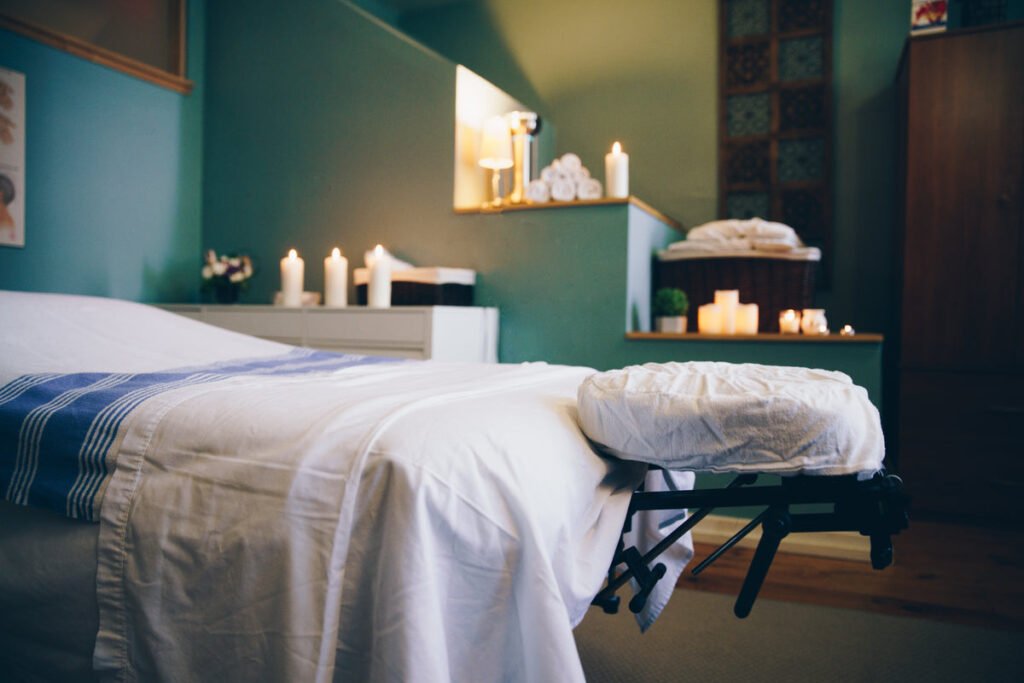
Photo: Shopify Burst
How Long Does It Last?
| Session length | What to expect |
|---|---|
| 30 minutes | Too short for a true full body massage; usually back and shoulders only |
| 60 minutes | Standard full body session with light focus on problem areas |
| 90 minutes | Full body plus extra time on tight areas |
| 120 minutes | Very thorough, often combined with other treatments |
After the Session
The therapist leaves so you can dress. Get up slowly, since some people feel light-headed after lying down for an hour. Drink water and give yourself a few minutes before driving.
Full Body Massage Benefits: What the Research Says
Lower Anxiety
In a randomized controlled trial at Emory University, adults with generalized anxiety disorder received Swedish massage or a light-touch control twice a week for six weeks. Anxiety scores dropped by 11.67 points with massage versus 8.41 points with light touch. The difference became significant by the end of week three.
Lower Blood Pressure and Heart Rate
A meta-analysis of 37 randomized studies found that a single massage session reduced state anxiety, blood pressure, and heart rate. A course of sessions reduced trait anxiety and depression.
Muscle Relaxation and Less Stiffness
Working through every major muscle group helps release tension you may not notice until it is gone. Many people find they can move more freely after a session.
Better Sleep
Many people feel drowsy and calm after a full body massage. Relaxation before bed may help you fall asleep more easily.
Short-Term Pain Relief
NCCIH notes that massage may help with back and neck pain, though the evidence for lasting effects is limited. A full body session can address several sore areas at once.
A Sense of Well-Being
Time away from screens, in a quiet room, with focused care, can be restorative on its own.
| Benefit | Strength of evidence |
|---|---|
| Lower short-term anxiety | Moderate |
| Lower blood pressure and heart rate after a session | Moderate |
| Relief of anxiety disorder symptoms | Early but promising |
| Short-term back and neck pain relief | Low to moderate |
| Better sleep | Limited, mostly self-reported |
| “Detox” or flushing toxins | No good evidence |
Watch: What to Expect From a Massage Session
This video from Associated Bodywork & Massage Professionals (ABMP), a U.S. massage association, walks through what happens during a professional massage:

Types of Massage Therapy for the Full Body
Most massage therapy for the full body uses one of these styles:
| Style | Pressure | Best for |
|---|---|---|
| Swedish massage | Light to moderate | Relaxation and first-timers |
| Deep tissue massage | Firm | Chronic tension and stiffness |
| Hot stone massage | Light to moderate, with heated stones | Deep relaxation |
| Aromatherapy massage | Light to moderate, with scented oils | Stress relief |
| Sports massage | Moderate to firm, with stretching | Active people |
| Thai massage | Varies, with assisted stretching | Flexibility (done clothed, on a mat) |
Ask your therapist to combine styles if you want relaxation overall but extra work on a sore back or legs.
Full Body Massage vs. Targeted Massage
| Factor | Full body massage | Targeted massage |
|---|---|---|
| Coverage | Most major muscle groups | One or two areas |
| Typical length | 60 to 90 minutes | 30 to 60 minutes |
| Main goal | Overall relaxation and balance | Fixing a specific problem |
| Best for | Stress relief and general tension | A stiff neck or sore lower back |
If one area really bothers you, you can ask for a full body session with extra time on that spot.
Who Should Be Cautious?
Full body massage is safe for most healthy adults. NCCIH notes that serious problems are rare and are mostly linked to vigorous massage or to people at higher risk. Talk to your doctor first if you:
- Have a history of blood clots or deep vein thrombosis
- Take blood thinners or bruise easily
- Are pregnant, and look for a therapist trained in prenatal massage
- Had recent surgery or have a recent fracture
- Have cancer or are in cancer treatment
- Have osteoporosis
- Have a fever, infection, or contagious skin condition

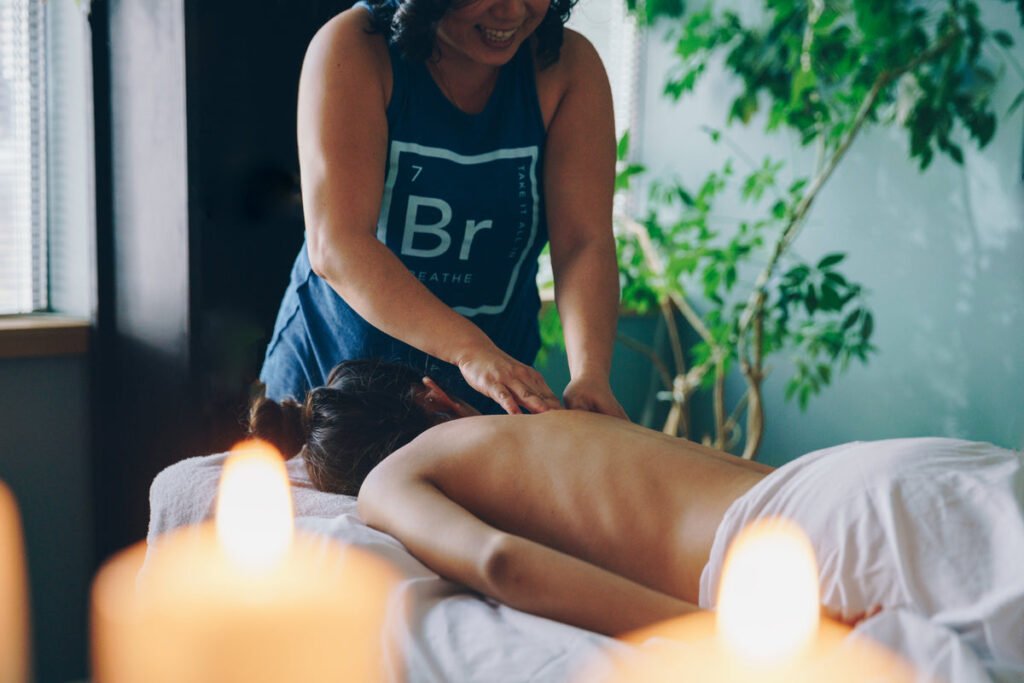
Photo: Shopify Burst
How to Prepare for a Full Body Massage
- Shower beforehand so you feel fresh and comfortable.
- Eat lightly an hour or two before.
- Arrive early to fill out forms and relax.
- Tell the therapist your goals, such as relaxation or relief for a sore back.
- Speak up about pressure at any time during the session.
- Mention any areas to avoid, including the feet, glutes, or face if you prefer.
Massage Etiquette Tips for U.S. Spas and Clinics
- Turn off your phone or set it to silent.
- It is fine to talk or stay quiet. Follow your own comfort.
- Tipping is common at U.S. spas. Many people tip around 15% to 20%, though medical or physical therapy settings may not expect tips.
- Cancel at least 24 hours ahead if you can, since many places charge late-cancellation fees.
Can You Get Full Body Massage Benefits at Home?
Not exactly, but you can come close. Home devices cannot match a therapist’s skill, but they can cover large areas regularly.
- Massage chair: The closest home option to a full body massage, with rollers for the back and airbags for arms, legs, and feet. See our best massage chair under $1,000 roundup.
- Gym massage chairs: Many gyms offer massage chairs. Our guide on how to use massage chairs at Planet Fitness explains settings and etiquette.
- Massage gun: Covers the legs, glutes, and shoulders quickly. Compare options in our best massage gun guide.
- Handheld massager: Long handles help you reach your own back. See the best handheld back massager picks.
For step-by-step device tips, read our guide on how to use a personal massager.
A 20-Minute Home Full Body Routine
- Minutes 1 to 5: Back and shoulders with a massage chair, pad, or handheld massager.
- Minutes 6 to 10: Thighs and glutes with a massage gun on low.
- Minutes 11 to 14: Calves and feet with a foot massager or massage ball.
- Minutes 15 to 18: Forearms and hands with your thumb or a small ball.
- Minutes 19 to 20: Gentle neck stretches and slow breathing.
Is Massage Therapy for Full Body Worth It?
Whether massage therapy for full body relief is worth it depends on your goals and budget. If you mainly want stress relief and a chance to reset, a full session gives you the most time to relax. If one area hurts, a shorter targeted session may give you more value.
Ways to make regular sessions more affordable:
- Membership plans: Many U.S. massage chains offer a lower rate for a monthly session.
- Massage school clinics: Supervised student therapists often charge less.
- HSA or FSA funds: Some plans cover massage with a doctor’s letter of medical necessity. Check with your plan.
- Package deals: Buying several sessions at once can lower the per-visit cost.
- Home tools: A massage chair or handheld massager can stretch the time between professional visits.
Common Myths About Full Body Massage
- Myth: You have to undress completely. You choose what to wear, and you stay draped the whole time.
- Myth: Massage should hurt to work. Relaxation-focused sessions should feel comfortable. Pain makes muscles tense up.
- Myth: Massage flushes toxins. There is no good evidence for this claim.
- Myth: Full body means every inch of the body. Sensitive areas are not part of a standard therapeutic session, and you can skip any area.
- Myth: One session fixes everything. Benefits for anxiety and pain usually build with regular sessions.
How Often Should You Get a Full Body Massage?
There is no fixed rule. Many people book one every two to four weeks for stress relief. The anxiety trial above used two sessions a week for six weeks. Let budget, schedule, and how your body feels guide you.
Frequently Asked Questions
What does a full body massage include?
It usually covers the back, neck, shoulders, arms, hands, legs, and feet. The scalp, face, glutes, and abdomen are optional.
Do you have to be naked for a full body massage?
No. You undress to your comfort level and stay covered by a sheet. Only the area being massaged is uncovered.
How long is a full body massage?
Most last 60 to 90 minutes. A 60-minute session is the most common.
What are the main full body massage benefits?
Lower anxiety, lower blood pressure and heart rate after a session, less muscle tension, and a general sense of calm.
Is a full body massage good for the first time?
Yes. A 60-minute Swedish full body massage is a great first session.
Can I fall asleep during a massage?
Yes. Many people do, and therapists are used to it.
Should I drink water after a massage?
It is a good habit for comfort, though there is no good evidence that massage releases toxins.
How much pressure should a full body massage use?
That is up to you. Most relaxation sessions use light to moderate pressure. If you want firmer work on your back or legs, ask for it at the start and tell your therapist if anything feels too strong.
What should I do if I feel uncomfortable during a massage?
Speak up right away. You can ask the therapist to change pressure, skip an area, adjust the room temperature, or end the session at any time. A professional therapist will respect your request.
Conclusion
A full body massage works through all of your major muscle groups in one relaxing session, usually 60 to 90 minutes long. Research supports real full body massage benefits, especially lower anxiety and a calmer heart rate and blood pressure. You stay in control the whole time, from pressure to which areas are covered.
Book a Swedish session for your first time, speak up about your preferences, and consider a massage chair or other home tools for upkeep between visits.
Health note: This article is for general information only and is not medical advice. Talk to your doctor before getting a massage if you have a health condition, injury, or are pregnant.


Hi, I’m Mamon, the content creator behind this blog. I share my experience in blogging, WordPress, SEO, and affiliate marketing through honest product reviews, in-depth buying guides, and practical how-to articles. Every piece of content is thoroughly researched and written to help readers make informed decisions.