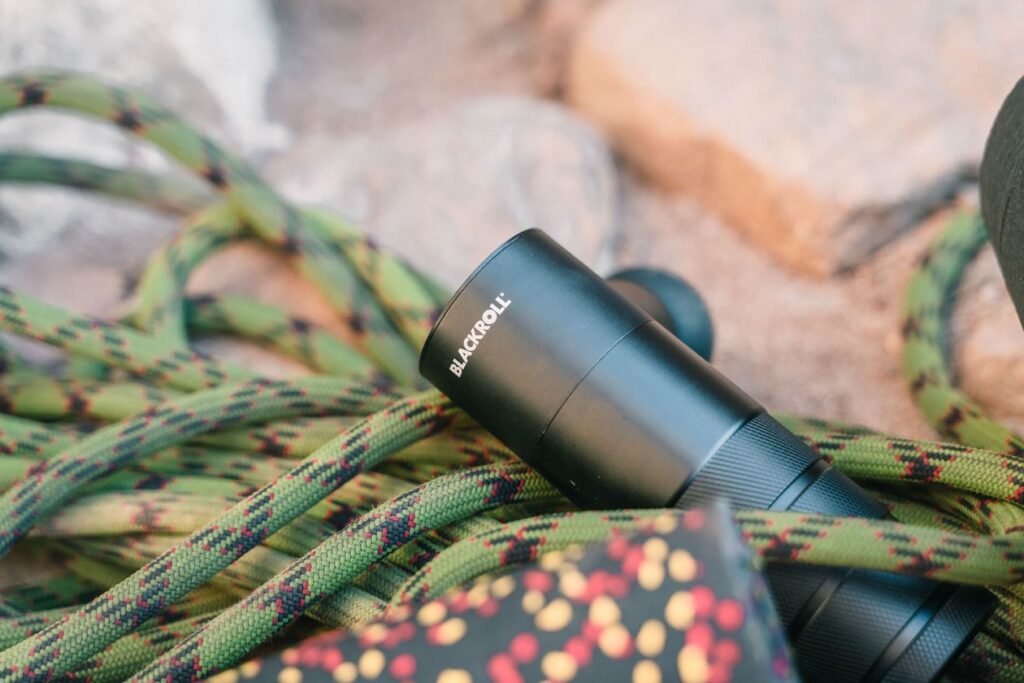
Have you seen people pressing a buzzing, drill-like gadget into their sore legs at the gym and wondered what it does? So, what is a percussion massager? It is a handheld device that taps your muscles with fast, short strokes to ease tightness and soreness. Most people simply call it a massage gun.
These devices have moved from pro locker rooms into millions of American homes. Yet the marketing can be confusing, with terms like amplitude, stall force, and percussions per minute. This guide explains how a percussion massager works, what the research really shows, and who should and should not use one.
Key Takeaways
- A percussion massager drives a head back and forth into the muscle, usually 1,800 to 3,200 times per minute.
- Popular models move the head 7 to 16 mm per stroke, which is deeper than a vibration massager.
- A 2023 review of 11 studies found short-term gains in flexibility and range of motion, but no boost in strength or power.
- In the U.S., the FDA classifies electric therapeutic massagers as Class I, its lowest-risk group.
- Keep sessions short, about 2 minutes per muscle, and avoid bones, the front of the neck, and injuries.
What Is a Percussion Massager?
A percussion massager is a motorized device that delivers rapid, repeated pulses into soft tissue. A motor inside drives a piston forward and back. At the end of the piston sits a removable head, often a foam ball, that strikes the muscle again and again.
This approach is called percussive therapy. It aims to mimic the tapping strokes a massage therapist uses, but at a much faster pace. Most devices are cordless, run on rechargeable batteries, and weigh between about 1 and 3 pounds.
You may also see these tools called massage guns, percussive therapy devices, or deep tissue massagers. The name “massage gun” comes from the pistol-like grip on many models. For a hands-on comparison of current models, see our guide to the best massage gun picks.
How Does a Percussion Massager Work?
Three specs decide how a percussion massager feels on your body: amplitude, speed, and stall force. Understanding them makes it much easier to compare devices.
Amplitude: How Deep Each Stroke Goes
Amplitude is how far the head travels with each stroke, measured in millimeters. A larger amplitude pushes deeper into the muscle. Among popular models we track, amplitude ranges from 7 mm to 16 mm. Compact guns like the Bob and Brad Q2 Mini sit at 7 mm, while full-size guns like the Theragun Prime and D6 Pro reach 16 mm.
Speed: How Fast It Taps
Speed is listed in revolutions per minute (RPM) or percussions per minute. Divide that number by 60 to get hertz (Hz), or taps per second. For example, 3,200 RPM equals about 53 Hz, and 2,400 RPM equals 40 Hz.
Those two values matter because they were the most common speeds used in clinical studies. In other words, you rarely need the top setting to get a benefit.
Stall Force: How Hard You Can Press
Stall force is the pressure you can apply before the motor stalls. Budget minis may stall around 35 lb, while heavy-duty guns reach 60 to 85 lb. More stall force only helps if you like to lean hard into large muscles such as the quads and glutes.
Attachments
Most guns ship with several heads. A round ball suits large muscles, a flat head covers broad areas, a bullet or thumb head targets knots, and a soft dampener protects tender spots. A fork head can straddle the spine or the Achilles tendon.
Here is a quick summary of the numbers you will see on listings:
| Spec | What it means | Typical range on popular models |
|---|---|---|
| Amplitude | How far the head travels per stroke | 7 to 16 mm |
| Speed | Taps per minute (divide by 60 for Hz) | About 1,800 to 3,200 RPM |
| Stall force | Pressure before the motor stops | About 35 to 85 lb |
| Weight | How heavy it feels in your hand | About 1 to 2.8 lb |
| Battery life | Run time per charge | About 2 to 3 hours |
Percussion Massager vs. Vibration Massager
People often mix up percussion and vibration massagers, but they work differently. A percussion massager moves its head in and out with real depth. A vibration massager shakes its surface quickly with very little travel, so it feels more like a buzz.
| Feature | Percussion massager | Vibration massager |
|---|---|---|
| Motion | Pushes in and out of the muscle | Shakes the surface rapidly |
| Depth | Deeper, millimeters of travel per stroke | Shallow, surface-level |
| Feel | Firm tapping, like fast knocking | Gentle buzzing |
| Best for | Large, tight muscles after exercise | Light relaxation and sensitive areas |
| Noise | Louder at high speed | Usually quieter |
Many wand-style and handheld back massagers use a blend of the two. If you want a gentler, wider tool for your back, compare options in our best handheld back massager review.
A Short History of Percussive Therapy
Hand-held percussion tools have been used by therapists for decades. The modern consumer boom, however, traces back to 2008. That year, Dr. Jason Wersland founded Theragun after a motorcycle accident left him in severe pain and he built a device to treat himself.
Pro athletes and trainers adopted the tool first. Prices then fell as dozens of brands entered the market. Today, budget models from brands like Bob and Brad and RENPHO have tens of thousands of Amazon ratings, which shows how mainstream the category has become.

What Does the Research Say?
The best summary so far is a 2023 systematic review on massage guns. Researchers screened 281 records and included 11 studies. Ten of those studies had a moderate risk of bias, so the evidence is still early.
Where Percussion Massagers Help
- Flexibility: Short-term gains in the hamstrings, hip flexors, calves, and the posterior chain.
- Range of motion: In one study, ankle dorsiflexion rose by 5.4 degrees (+18.4%) after treatment, while a passive-rest group barely changed.
- Recovery: Less muscle stiffness and better range of motion and strength after a fatigue protocol.
Where They Do Not Help
Used before activity, massage guns did not improve strength, balance, acceleration, agility, or explosive power. Some studies even showed a small drop in performance. The review also found no change in blood lactate or perceived effort.
How Studies Used Them
Treatment time ranged from 15 seconds to 5 minutes per muscle group, and 2 minutes was the most common. Whole sessions ran from 2 to 16 minutes, with 5 minutes the most frequent. A clinician survey cited in the review reported typical speeds of 17 to 40 Hz and treatment times of 30 to 180 seconds.
In short, a percussion massager is a mobility and recovery tool. It is not a shortcut to a stronger lift or a faster sprint.
Watch: The Science of Percussive Therapy
This short video breaks down how massage guns affect muscles and what the evidence supports:
Who Should Use a Percussion Massager?
A percussion massager can be useful for many people, not just athletes:
- Runners and gym-goers who want to loosen tight calves, hamstrings, and quads after training.
- Desk workers with stiff upper backs and shoulders from long hours of sitting.
- Weekend warriors who feel sore a day or two after yard work or pickup games.
- Older adults who prefer a gentle, low-speed device to ease everyday stiffness.
If you mainly want full-body relaxation rather than targeted work, a massage chair may suit you better. See our best massage chair under $1,000 roundup.
Is a Percussion Massager Safe?
For most healthy adults, yes, when used correctly. The FDA lists the electric therapeutic massager under 21 CFR 890.5660 as a Class I device. Its stated purpose is to relieve minor muscle aches and pains, and it is exempt from premarket notification.
Class I does not mean “no risk,” though. Avoid these areas:
- Bones and joints, including the spine, kneecaps, elbows, and the chest and ribs
- The front and sides of the neck, where major arteries and nerves run
- Bruises, cuts, swelling, recent injuries, or varicose veins
- Any area with a known or suspected blood clot
Talk to your doctor before use if you are pregnant, take blood thinners, have osteoporosis, diabetes with nerve damage, a pacemaker, or a recent surgery. Stop right away if you feel sharp pain, numbness, or tingling.
How to Use a Percussion Massager
Follow these simple steps for a safe, effective session:
- Choose the right head. Start with the round ball for large muscles or the dampener for tender areas.
- Start on the lowest speed. Turn the device on before it touches your skin.
- Float, don’t force. Rest the head on the muscle at a right angle and let the gun do the work.
- Keep it moving. Glide slowly along the muscle rather than staying on one spot.
- Limit your time. Spend about 2 minutes per muscle group, the most common time used in studies.
- Finish gently. Lower the speed, then turn the device off after lifting it away.
For more tips on handheld devices, read our guide on how to use a personal massager at home.
Where to Use a Percussion Massager: Body-Area Guide
Different muscles need different heads, speeds, and times. Use this table as a starting point and adjust to your comfort:
| Body area | Best head | Speed | Time |
|---|---|---|---|
| Calves | Round ball | Low to medium | 1 minute per leg |
| Hamstrings | Round ball or flat | Medium | 1 minute per leg |
| Quads | Flat or round ball | Medium to high | 1 minute per leg |
| Glutes | Round ball or bullet | Medium to high | 1 minute per side |
| Upper back and traps | Dampener or ball | Low to medium | 2 minutes |
| Forearms | Dampener | Low | 30 to 60 seconds per arm |
| Bottom of the feet | Dampener | Low | 30 to 60 seconds per foot |
Large muscles like the quads and glutes can handle higher speeds. Smaller or bonier areas, such as the forearms and feet, feel better on a low speed with a soft head.
Common Mistakes to Avoid
Most problems with a percussion massager come from using it too hard or too long. Watch out for these mistakes:
- Pressing too hard. Extra force does not mean extra benefit. Heavy pressure can leave bruises.
- Staying on one spot. Holding the gun in place for minutes can irritate the tissue.
- Using the top speed first. Start low, then build up over several sessions.
- Working over bone. Keep the head on muscle, not on the spine, shins, or kneecaps.
- Treating a fresh injury. Give sprains, strains, and bruises time to heal first.
- Ignoring pain signals. Mild pressure is fine, but sharp pain or numbness means stop.
Percussion Massager vs. Foam Roller vs. Massage Chair
A percussion massager is only one recovery option. Here is how it compares with two popular alternatives:
| Tool | Strengths | Limits |
|---|---|---|
| Percussion massager | Targeted, fast, easy on your hands | Small area at a time; can be loud |
| Foam roller | Cheap and covers large areas | Needs body weight and floor space |
| Massage chair | Hands-free, full-body relaxation | Expensive and takes up room |
Many people pair a percussion massager for targeted spots with a foam roller or chair for general relaxation.
How to Choose a Percussion Massager
Match the device to how you will use it:
- For deep recovery: Look for 12 to 16 mm of amplitude and 40 lb or more of stall force.
- For travel: Choose a mini under 1.5 lb with a travel lock and USB-C charging.
- For beginners: Pick a quieter model with 3 to 5 speeds and a soft dampener head.
- For comfort extras: Some guns add heat or cold heads, which feel soothing but are not proven to speed recovery.
Also check the battery life and whether a charging brick is included. If you plan to use it during calls or late at night, compare noise levels too.

Frequently Asked Questions
Is a percussion massager the same as a massage gun?
Yes. “Massage gun” is the everyday name for a percussion massager. Both terms describe a handheld device that taps the muscle with fast, deep strokes.
How long should I use a percussion massager?
About 2 minutes per muscle group is a good starting point. Whole sessions in studies most often lasted about 5 minutes.
Can I use a percussion massager every day?
Most healthy adults can use one daily for short sessions. Skip any area that is still tender from the day before.
Should I use it before or after a workout?
Both work for mobility. Before a workout, a short session can loosen tight muscles. Just do not expect it to boost strength or power.
Can a percussion massager break up knots?
It can ease the tight, tender feeling of a knot for a while. However, research has not shown that it physically breaks up tissue.
Can a percussion massager help with back pain?
It may ease muscle tightness in the upper and lower back. Keep the head off the spine itself, and see a doctor for back pain that is severe, lasting, or comes with numbness.
Are percussion massagers FSA or HSA eligible?
Some are. Several models list FSA or HSA eligibility on Amazon, but plan rules vary, so check with your plan first.
Conclusion
So, what is a percussion massager? It is a handheld tool that taps your muscles with fast, deep strokes to ease tightness. The research supports short-term gains in flexibility and range of motion, not strength or speed.
Choose a model that fits your body and goals, start slow, and keep sessions to a few minutes per muscle. Used this way, a percussion massager can be a simple, affordable part of your recovery routine.
Health note: This article is for general information only and is not medical advice. Talk to your doctor before using a massage device if you have a health condition or injury.

Hi, I’m Mamon, the content creator behind this blog. I share my experience in blogging, WordPress, SEO, and affiliate marketing through honest product reviews, in-depth buying guides, and practical how-to articles. Every piece of content is thoroughly researched and written to help readers make informed decisions.
Leave a Reply