

A back brace for upper back pain or posture is very different from the lumbar belts most people picture. The upper back has its own anatomy, its own common problems, and its own types of braces, from simple shoulder straps to medical orthoses for osteoporosis. Choosing the right one depends on what is causing your symptoms.
This guide explains how the upper back works, who might benefit from an upper back brace, the main types, what the research shows, how to wear one, and which exercises help more than any brace. If you mainly have rounded shoulders, our article on whether posture braces work goes deeper on posture correctors.

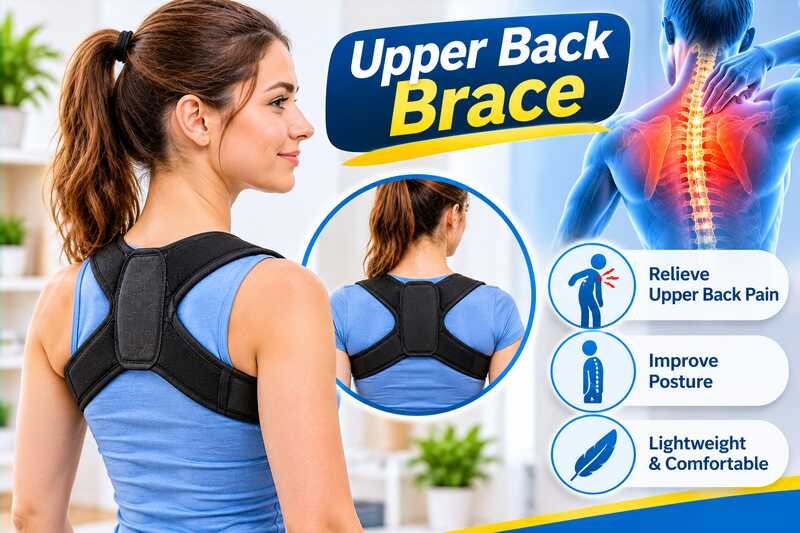
Understanding Your Upper Back
Your upper and middle back is called the thoracic spine. According to Cleveland Clinic, upper back pain affects the area from the base of your neck to the bottom of your rib cage, and your thoracic spine has 12 small bones called vertebrae.
Unlike your neck and lower back, the thoracic spine is attached to your ribs. That makes it much more stable and less mobile, which is one reason upper back pain is less common than lower back or neck pain. It also means the causes are often different.
Common Causes of Upper Back Pain
- Poor posture, especially slouching at a desk or looking down at a phone
- Muscle strain from lifting, sports, or sleeping awkwardly
- Tight or weak muscles around the shoulder blades
- Joint irritation where the ribs meet the spine
- Arthritis in the spine, more common with age
- Kyphosis, an exaggerated forward rounding of the upper back
- Vertebral compression fractures, often linked to osteoporosis
- Scoliosis, a sideways curve of the spine
Some upper back pain does not come from the spine at all. Heart, lung, and digestive problems can cause pain between the shoulder blades, so new or unusual pain should be checked by a doctor.
Who Might Benefit From a Back Brace for the Upper Back?
An upper back brace may help if you:
- Slouch for long hours at a computer and want a posture reminder
- Have mild upper back strain and want gentle support while it heals
- Have postural kyphosis, a rounded upper back from habit rather than bone changes
- Have osteoporosis with vertebral fractures and your doctor recommends a spinal orthosis
- Are recovering from mid-back surgery or a fracture, when a doctor prescribes a rigid brace
For plain posture problems, a brace works best as a short-term reminder. For bone-related problems, a brace should be chosen and fitted with medical guidance.
Types of Upper Back Braces
| Type | How it works | Best for |
|---|---|---|
| Figure-eight posture strap | Loops around shoulders and crosses between shoulder blades | Rounded shoulders, desk posture |
| Posture vest or harness | Back panel with shoulder straps | More even support for posture |
| Full-back brace | Shoulder straps plus a lumbar belt | Upper and lower back support together |
| Osteoporosis orthosis | Flexible back pad with shoulder straps, worn like a backpack | Vertebral fractures and kyphosis from osteoporosis |
| Thoracolumbar brace (TLSO) | Rigid shell covering the mid and lower back | Fractures and post-surgery, by prescription |
| Kinesiology tape | Elastic tape applied to the skin | Light posture cues during activity |
Posture Straps and Vests
These are the most common over-the-counter upper back braces. They gently pull your shoulders back and remind you to sit and stand taller. They are best for posture habits, not for injuries or bone problems.
Full-Back Braces
These combine shoulder straps with a lumbar belt. They suit people with both rounded shoulders and lower back aches. Our main guide to the best back braces includes several full-back posture braces.
Osteoporosis Orthoses
Some braces are designed specifically for people with osteoporosis and spinal fractures. They usually use a flexible back pad that sits along the spine, with straps that gently pull the shoulders back. These are often recommended by doctors and fitted carefully.
Rigid Thoracic Braces
Rigid braces, such as a TLSO, are used after spine fractures or surgery. They are prescribed and fitted by medical professionals. Our guide to a back brace after surgery explains what to expect.
What the Research Says
Research on upper back braces depends heavily on the type of brace and the condition.
For Posture
Small studies show that shoulder and posture braces can improve shoulder position and reduce tension in upper back muscles while they are worn. There is little evidence that they permanently change posture on their own. Most experts recommend using them alongside exercise.
For Osteoporosis and Vertebral Fractures
The research here is more encouraging. Researchers note that about one in four women aged 50 or older has one or more vertebral fractures. In a randomized trial published in the American Journal of Physical Medicine & Rehabilitation, women with postmenopausal osteoporosis and vertebral fractures who wore newly developed spinal orthoses showed improvements in trunk muscle strength and posture. The authors concluded that an orthosis may be an effective non-drug treatment option for spinal osteoporosis.
This type of brace is different from a typical posture strap, and it should be used under a doctor’s care.
How to Choose an Upper Back Brace
Know Your Goal
Are you trying to fix slouching, support a strained muscle, or manage a diagnosed condition? Posture straps suit the first, soft support suits the second, and medical orthoses suit the third.
Measure Correctly
Most upper back braces are sized by chest measurement, taken just under the armpits. Full-back braces may also need a waist measurement. Our back brace size chart guide explains how to measure for different types of support.
Look for Comfort Features
- Padded, wide shoulder straps to prevent armpit rubbing
- Breathable mesh or knit fabric
- Adjustable straps you can tighten from the front
- A design you can put on without help
Check With a Doctor First If
- Your upper back has rounded quickly, especially if you are over 50
- You have osteoporosis or a history of fractures
- You have scoliosis
- You have numbness, tingling, or weakness in your arms or legs
- Your pain started after a fall or injury
Older adults may find lighter, easy-on braces more comfortable. Our guide to the best back braces for seniors includes a gentle posture trainer.
How to Wear an Upper Back Brace
- Start with short sessions. Wear it for 15 to 30 minutes at first, then build up to an hour or two.
- Wear it during slouch-prone activities. Computer work, reading, and driving are good times.
- Keep straps snug, not tight. You should be able to move your arms and breathe freely.
- Wear a T-shirt underneath to prevent rubbing under the arms.
- Do not sleep in it unless a doctor has told you to.
- Pair it with exercises to strengthen your upper back.
In the video below, a physical therapist who specializes in osteoporosis discusses back braces for osteoporosis, compression fractures, posture, and back pain.
Common Mistakes With Upper Back Braces
Many people give up on an upper back brace because of avoidable mistakes. Watch out for these:
- Pulling the straps too tight. Tight straps can press on nerves and blood vessels near the armpit, causing tingling in the arms and hands. Loosen them if your fingers feel numb.
- Wearing it all day from the start. Your muscles and skin need time to adjust. Build up wear time slowly.
- Using it instead of exercise. If the brace does all the work, your postural muscles may stay weak.
- Ignoring your workstation. A brace cannot fix a screen that is too low or a chair that is too far from the desk.
- Buying by waist size. Most upper back braces are sized by chest measurement, so a waist-based guess often leads to a poor fit.
- Using a posture strap for a medical problem. If your doctor has diagnosed osteoporosis, a fracture, or scoliosis, ask which type of brace you need instead of choosing a generic strap.
Upper Back Brace vs. Kinesiology Tape
Some people prefer kinesiology tape for posture. It is thin, can be worn under clothing, and gives a gentle pull on the skin when you slouch. It does not provide real support, though, and the research on it is limited. Tape may suit active people who find straps restrictive, while a brace gives a stronger reminder during long desk sessions.
Exercises for a Stronger Upper Back
No brace can replace strong muscles. These exercises target the upper back and shoulders:

Photo: Shixart1985, CC BY 2.0, via Wikimedia Commons
Shoulder Blade Squeeze
Sit or stand tall. Squeeze your shoulder blades together and slightly down. Hold for five seconds, then relax. Repeat 10 times.
Thoracic Extension Over a Chair
Sit in a chair with a backrest that reaches mid-back. Clasp your hands behind your head and gently lean back over the top of the chair. Hold for a few seconds, then return. Repeat five to 10 times.
Prone Y Raise
Lie face down with your arms overhead in a Y shape, thumbs up. Gently lift your arms off the floor by squeezing your shoulder blades. Hold for two seconds. Do 10 reps.
Band Pull-Apart
Hold a resistance band in front of you at shoulder height. Pull the band apart by moving your arms out to the sides, squeezing your shoulder blades. Do two sets of 12.
Open Book Stretch
Lie on your side with knees bent. Reach both arms forward, then open your top arm across your body toward the floor behind you, turning your chest to the ceiling. Hold for a few breaths. Do five per side.
If you have osteoporosis, ask a physical therapist which exercises are safe for you, since some bending and twisting moves may not be recommended.
For a fuller routine, see our guide to upper back exercises for better posture.
Other Ways to Ease Upper Back Pain

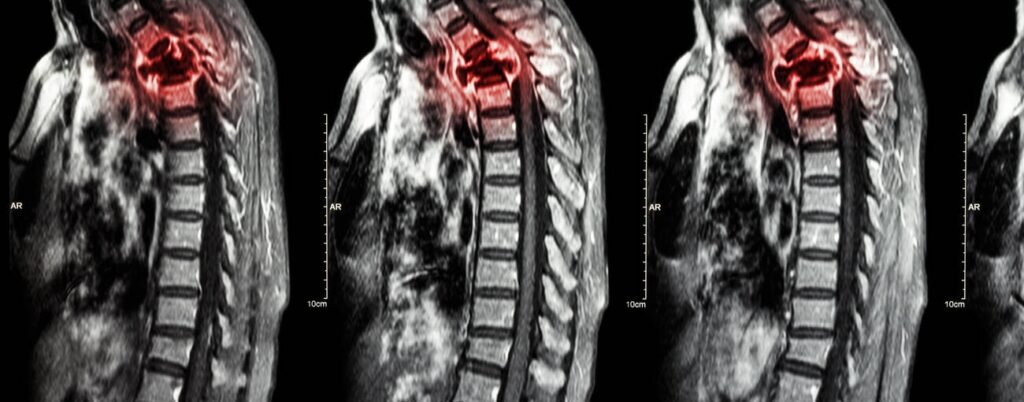
Image: Goleisureintl, CC BY 4.0, via Wikimedia Commons
- Fix your workstation. Raise your screen to eye level and keep your keyboard close.
- Take breaks. Stand up, roll your shoulders, and stretch every 30 to 45 minutes.
- Use heat. A warm pack can relax tight muscles between the shoulder blades.
- Try massage. Our guide to neck and shoulder massage tools covers options for the upper back.
- Check your pillow. A pillow that keeps your neck in line with your spine can help. Our neck support brace guide also covers neck support options.
- Stay active. Walking, swimming, and Pilates can all build upper body strength and posture.
When to See a Doctor
Cleveland Clinic advises seeing a doctor if you develop new symptoms such as fever, weight loss, or bowel or bladder problems along with upper back pain. Also seek prompt care if you have:
- Chest pain, shortness of breath, or pain spreading to your arm or jaw (call 911, as this can be a heart problem)
- Weakness or numbness in your arms or legs
- Pain after a fall or injury
- A rounded upper back that has developed quickly
- Pain that wakes you at night or does not improve with rest
- Pain that lasts more than a few weeks
Frequently Asked Questions
What is the best back brace for the upper back?
It depends on the cause. For posture, a padded posture strap or vest is a good start. For osteoporosis-related problems, a doctor-recommended spinal orthosis is better. For fractures or after surgery, a prescribed rigid brace is needed.
Do upper back braces help with kyphosis?
For postural kyphosis from habit, a brace can help as a reminder alongside exercise. For kyphosis from osteoporosis and vertebral fractures, research shows certain spinal orthoses can improve trunk muscle strength and posture.
How long should I wear an upper back brace?
For posture, start with 15 to 30 minutes and build up to one to two hours a day. For medical braces, follow your doctor’s instructions.
Can an upper back brace fix a hunchback?
Not on its own. A brace can remind you to stand taller, but lasting change comes from strengthening exercises. A hunched back caused by bone changes needs medical care.
Is it safe to sleep in an upper back brace?
Most upper back braces are not meant for sleep. Remove yours before bed unless your doctor says otherwise.
What is the difference between an upper back brace and a posture corrector?
A posture corrector is one type of upper back brace. The term upper back brace also includes medical orthoses for osteoporosis and rigid braces for fractures.
Can I wear an upper back brace at work?
Yes. Many people wear a posture brace during desk work, since that is when slouching is most common. Choose a slim design that fits under your clothing, wear it for an hour or two at a time, and take it off during breaks to stretch and move.
The Bottom Line
A back brace for the upper back can help with slouching, mild strain, and certain medical conditions, but the right type depends on the cause of your pain. Posture straps and vests work best as short-term reminders alongside exercise. For osteoporosis and vertebral fractures, research supports specially designed spinal orthoses used under a doctor’s care.
Whatever you choose, keep wear time sensible, strengthen your upper back muscles, fix your workstation, and see a doctor if your pain is severe, sudden, or comes with other symptoms. For lower back support, see our guide to the best lumbar support belt.
This article is for general information and is not medical advice. Talk to a doctor about upper back pain, kyphosis, or osteoporosis.


Hi, I’m Mamon, the content creator behind this blog. I share my experience in blogging, WordPress, SEO, and affiliate marketing through honest product reviews, in-depth buying guides, and practical how-to articles. Every piece of content is thoroughly researched and written to help readers make informed decisions.