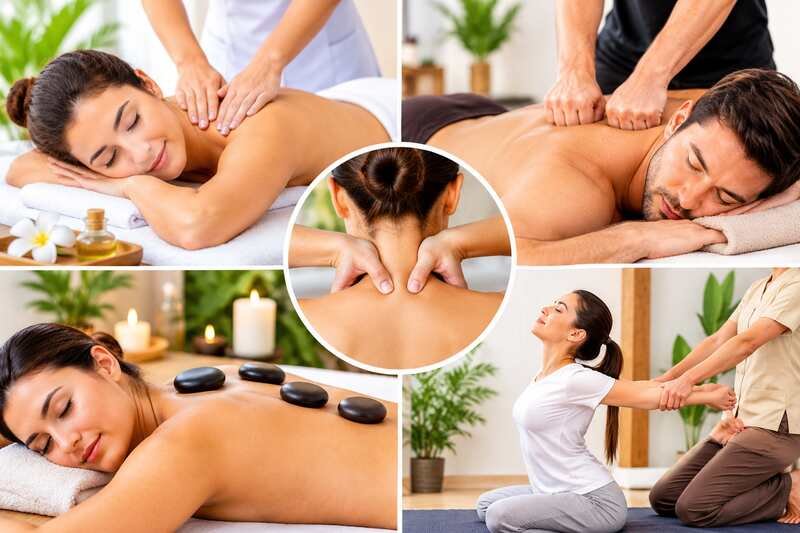
Book a massage in the U.S. and you will usually face a menu: Swedish, deep tissue, hot stone, sports, Thai, and more. Each name refers to a different style, and every style is built from a handful of basic strokes. Knowing the main types of massage techniques helps you pick the session that fits your body and goals, and it makes it easier to tell your therapist exactly what you want.
This guide explains the core strokes therapists use, the most common types of massages offered in the U.S., what each one feels like, who it suits, and what research says about them.
Key Takeaways
- Most massage styles are built from a few core strokes: effleurage, petrissage, friction, tapotement, vibration, compression, and stretching.
- Popular types of massages include Swedish, deep tissue, sports, trigger point, Thai, shiatsu, hot stone, aromatherapy, reflexology, prenatal, and lymphatic drainage.
- Swedish massage is the best starting point for first-timers. Deep tissue suits chronic tightness.
- Research supports massage for short-term pain relief and lower anxiety, but evidence varies by style.
- Choose by your goal: relaxation, pain relief, recovery, or flexibility.
Where Modern Massage Techniques Came From
People have used touch for healing for thousands of years in China, India, Egypt, Greece, and many other cultures. The Western types of massage techniques taught in U.S. schools today trace back mainly to the 1800s. Swedish physical educator Per Henrik Ling developed a system of movements and exercises often credited as a root of Swedish massage. Later, Dutch physician Johann Georg Mezger organized massage strokes into a system and popularized the French names still used today, such as effleurage, petrissage, and tapotement.
Eastern traditions developed in parallel. Thai massage draws on Thai, Buddhist, and Indian influences, and shiatsu grew out of traditional Japanese practice. Today, U.S. therapists often blend Western and Eastern types of massage techniques in one session.
The 7 Basic Massage Strokes
Almost every style of massage uses some mix of these foundational techniques. Many come from Swedish massage, which shaped how massage is taught in the U.S.
1. Effleurage (Gliding)
Long, smooth strokes with the palms, usually toward the heart. Therapists use effleurage to start and end a session, spread oil, and warm the tissue.
2. Petrissage (Kneading)
Lifting, squeezing, and rolling the muscle, much like kneading dough. It works deeper than effleurage and helps loosen tight muscles.
3. Friction
Small, firm circles or back-and-forth strokes with the thumbs or fingertips. Cross-fiber friction moves across the muscle fibers to work on stubborn knots and tight bands.
4. Tapotement (Percussion)
Rhythmic tapping, cupping, hacking with the edge of the hand, or light pounding. It feels energizing and is usually used briefly on fleshy areas like the upper back and thighs.
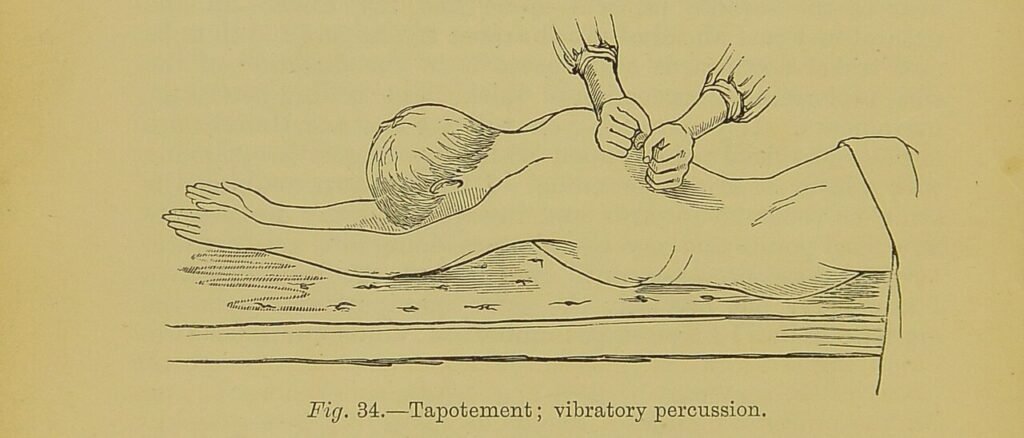
Illustration: Thomas Stretch Dowse, 1891 / Wikimedia Commons (public domain)
5. Vibration
Fast shaking or trembling movements with the hands. Electric massagers recreate this effect with motors.
6. Compression
Steady pressing and releasing with the palms, fists, or forearms. It is common in sports and Thai massage.
7. Stretching and Range of Motion
The therapist gently moves a limb to stretch muscles and loosen joints. This is a key part of Thai and sports massage.
| Stroke | What it does | Feel | Where it is used |
|---|---|---|---|
| Effleurage | Warms tissue, calms the body | Smooth and soothing | Start and end of most sessions |
| Petrissage | Loosens muscle | Kneading, moderate | Shoulders, back, legs |
| Friction | Works on knots | Focused, intense | Small tight spots |
| Tapotement | Stimulates | Rhythmic tapping | Upper back, thighs |
| Vibration | Relaxes or energizes | Shaking, buzzing | Large muscles |
| Compression | Releases tension | Steady pressing | Hips, glutes, legs |
| Stretching | Improves flexibility | Gentle pulling | Hips, hamstrings, shoulders |
14 Types of Massages Explained
1. Swedish Massage
One of the most common styles in the U.S. It uses effleurage, petrissage, friction, and tapotement with light to moderate pressure. It is the best choice for first-timers and relaxation.
2. Deep Tissue Massage
Slow, firm strokes reach deeper muscle layers and fascia. It targets chronic tension in the back, neck, and shoulders. Mild soreness for a day or two is common.
3. Sports Massage
A blend of techniques plus stretching, designed for athletes. It may be used before events to warm up, after events to aid recovery, or during training to prevent tightness.
4. Trigger Point Therapy
The therapist presses and holds tight knots that send pain to other areas. It is often used for tension headaches and shoulder pain.
5. Myofascial Release
Slow, sustained stretching pressure on the fascia, often without oil. It aims to ease stiffness and restricted movement.
6. Thai Massage
A traditional practice from Thailand that combines pressure along energy lines with assisted, yoga-like stretches. You stay clothed and lie on a mat. A 2015 systematic review of six studies found pain reductions of 25% to 80% after Thai massage for chronic pain.
7. Shiatsu
A Japanese technique that uses finger, thumb, and palm pressure on specific points, plus gentle stretching. It is usually done clothed.
8. Hot Stone Massage
Smooth, heated stones are placed on the body or used as massage tools. The warmth helps muscles relax. Ask the therapist to adjust temperature if it feels too hot.
9. Aromatherapy Massage
A Swedish-style massage with diluted essential oils. People choose scents like lavender for relaxation. Tell the therapist about allergies or sensitive skin.
10. Reflexology
Pressure on specific points of the feet, hands, or ears. Practitioners believe these points connect to other body areas. Many people find it relaxing, though claims about treating organs are not supported by strong evidence.
11. Prenatal Massage
A gentle style adapted for pregnancy, using side-lying positions and pillows for support. Choose a therapist trained in prenatal massage and check with your doctor first.
12. Lymphatic Drainage Massage
Very light, rhythmic strokes meant to encourage lymph flow. It is used in medical settings for lymphedema, often by specially trained therapists.
13. Chair Massage
A short, clothed massage in a special chair that supports your face and chest. It focuses on the neck, shoulders, back, and arms and is common at offices and events.
14. Couples Massage
Two people receive massages side by side in the same room, usually Swedish style. It is popular for special occasions.
Types of Massages Compared
| Massage type | Pressure | Clothing | Best for |
|---|---|---|---|
| Swedish | Light to moderate | Undressed, draped | Relaxation, first-timers |
| Deep tissue | Firm | Undressed, draped | Chronic tension |
| Sports | Moderate to firm | Varies | Athletes and recovery |
| Trigger point | Focused, firm | Varies | Knots and referred pain |
| Myofascial release | Slow, sustained | Varies | Stiffness |
| Thai | Moderate to firm | Clothed | Flexibility and pain |
| Shiatsu | Moderate | Clothed | Pressure point work |
| Hot stone | Light to moderate | Undressed, draped | Deep relaxation |
| Aromatherapy | Light to moderate | Undressed, draped | Stress relief |
| Reflexology | Moderate | Clothed, feet bare | Relaxation |
| Prenatal | Gentle | Draped, side-lying | Pregnancy comfort |
| Lymphatic drainage | Very light | Draped | Medical swelling care |
| Chair massage | Light to moderate | Clothed | Quick tension relief |
| Couples | Light to moderate | Undressed, draped | Shared relaxation |
Western vs. Eastern Types of Massage Techniques
| Factor | Western styles | Eastern styles |
|---|---|---|
| Examples | Swedish, deep tissue, sports, myofascial release | Thai, shiatsu, tui na, reflexology |
| Main idea | Work directly on muscles and connective tissue | Restore balance along energy lines or points |
| Oil or lotion | Usually yes | Usually no |
| Clothing | Undressed, draped | Often clothed |
| Common surface | Massage table | Floor mat or table |
Both approaches use pressure, movement, and stretching. The main differences are the theory behind them and how the session is set up.
Specialty and Medical Massage Types
Some therapists train in styles designed for specific groups or health needs:
- Oncology massage: Gentle, adapted massage for people with cancer, done with the care team’s approval.
- Geriatric massage: Lighter pressure and careful positioning for older adults with fragile skin or joints.
- Medical or clinical massage: Goal-focused work on a diagnosed problem, sometimes with a doctor’s referral.
- Orthopedic massage: Assessment-based work for injuries and muscle or joint problems.
Ask about extra training if you need one of these styles.
Watch: Massage Styles Explained
This video explains the differences between Swedish, deep tissue, sports, and other common massage styles:
What the Research Says About Massage Techniques
Research generally studies massage as a whole rather than individual strokes. Here is what the evidence shows:
- Pain: A Cochrane review of 25 trials found massage eased low back pain in the short term.
- Anxiety: A meta-analysis of 37 studies found single sessions lowered anxiety, blood pressure, and heart rate.
- Recovery: A large review found massage was the most effective recovery method studied for reducing post-exercise soreness.
- Safety: The National Center for Complementary and Integrative Health (NCCIH) says massage appears to be low risk. Rare serious problems have mostly been linked to vigorous techniques like deep tissue massage or to people at higher risk.
Evidence is stronger for some styles than others. Swedish and deep tissue have the most research. Reflexology, aromatherapy, and hot stone have fewer high-quality studies.
Photo: Shopify Burst
Types of Massage Techniques by Pressure Level
If you are not sure which style to book, sorting them by pressure can help:
- Very light: Lymphatic drainage, gentle prenatal massage, and oncology massage.
- Light to moderate: Swedish, aromatherapy, hot stone, chair, and couples massage.
- Moderate: Shiatsu, reflexology, and many sports massage sessions.
- Moderate to firm: Thai massage, myofascial release, and trigger point therapy.
- Firm: Deep tissue massage.
Pressure can always be adjusted. A good therapist will ease off or go deeper based on your feedback, no matter which style you choose.
How to Choose the Right Type of Massage
| Your goal | Try this style |
|---|---|
| Relax and de-stress | Swedish, hot stone, aromatherapy |
| Ease chronic back or neck tension | Deep tissue, trigger point, myofascial release |
| Recover from workouts | Sports massage |
| Improve flexibility | Thai, sports massage |
| Stay clothed | Thai, shiatsu, chair massage, reflexology |
| Get comfort during pregnancy | Prenatal massage |
| Quick relief at work | Chair massage |
Not sure? Book a 60-minute Swedish massage and ask the therapist to add deeper work on any tight spots.
How to Talk to Your Therapist About Techniques
- Name your goal: Say whether you want relaxation, pain relief, recovery, or flexibility.
- Point to problem areas: Show exactly where you feel tight or sore.
- Describe pressure: Use a 1 to 10 scale, or simply say light, medium, or firm.
- Mention dislikes: Some people dislike tapping, scented oils, or having their feet worked on.
- Ask questions: A good therapist will happily explain which strokes they plan to use and why.
Massage Techniques You Can Use at Home
Many basic strokes are easy to use at home on yourself or a partner:
- Effleurage: Glide your palms slowly along a partner’s back with lotion.
- Petrissage: Gently knead your own calves or a partner’s shoulders.
- Friction: Use your thumb in small circles on a tight spot in your forearm.
- Compression: Press and release with your palm on a partner’s upper back.
Electric devices can recreate some techniques too. A massage gun mimics tapotement, vibration wands mimic vibration, and shiatsu cushions mimic kneading. Compare options in our guides to the best massage gun and the best handheld back massager. For full-body rollers and air compression, see our best massage chair under $1,000 roundup. Reflexology fans may like the options in our review of the best foot massagers.
For step-by-step device tips, read our guide on how to use a personal massager.
Safety Tips for Any Type of Massage
- Tell your therapist about health conditions, medications, and pregnancy.
- Ask for lighter pressure if you bruise easily or have thin skin.
- Avoid deep pressure over bones, the front of the neck, and the spine.
- Skip massage on fresh injuries, open wounds, and areas with swelling.
- Check with your doctor first if you have a history of blood clots, osteoporosis, cancer, or recent surgery.
- Speak up if a technique hurts. Firm pressure is fine, but sharp pain is not.
Frequently Asked Questions
What are the main types of massage techniques?
The core strokes are effleurage, petrissage, friction, tapotement, vibration, compression, and stretching. Most styles combine several of them.
What is the most popular type of massage?
Swedish massage is one of the most common styles in the U.S. and the usual starting point for beginners.
Which type of massage is best for pain?
Deep tissue, trigger point therapy, and myofascial release are often used for chronic pain. Swedish massage can also help.
Which massage is most relaxing?
Swedish, hot stone, and aromatherapy massages are designed mainly for relaxation.
What is the difference between Swedish and deep tissue massage?
Swedish uses lighter, flowing strokes for relaxation. Deep tissue uses slower, firmer pressure to reach deeper muscle layers.
Do I have to undress for a massage?
No. You undress only to your comfort level, and you stay covered by a sheet. Thai, shiatsu, and chair massages are done fully clothed.
How many types of massage are there?
There is no fixed number. Dozens of named styles exist, but most are built from the same core strokes. The 14 styles above cover what most U.S. spas and clinics offer.
Conclusion
The many types of massage techniques all grow from a few basic strokes, including gliding, kneading, friction, tapping, and stretching. From Swedish and deep tissue to Thai, shiatsu, and hot stone, each style mixes those strokes differently to support relaxation, pain relief, recovery, or flexibility.
Start by naming your goal, then match it to the types of massages listed above. Choose a licensed therapist, share your health history, and speak up about pressure so every session feels right for you.
Health note: This article is for general information only and is not medical advice. Talk to your doctor before getting a massage if you have a health condition, injury, or are pregnant.

Hi, I’m Mamon, the content creator behind this blog. I share my experience in blogging, WordPress, SEO, and affiliate marketing through honest product reviews, in-depth buying guides, and practical how-to articles. Every piece of content is thoroughly researched and written to help readers make informed decisions.
Leave a Reply