


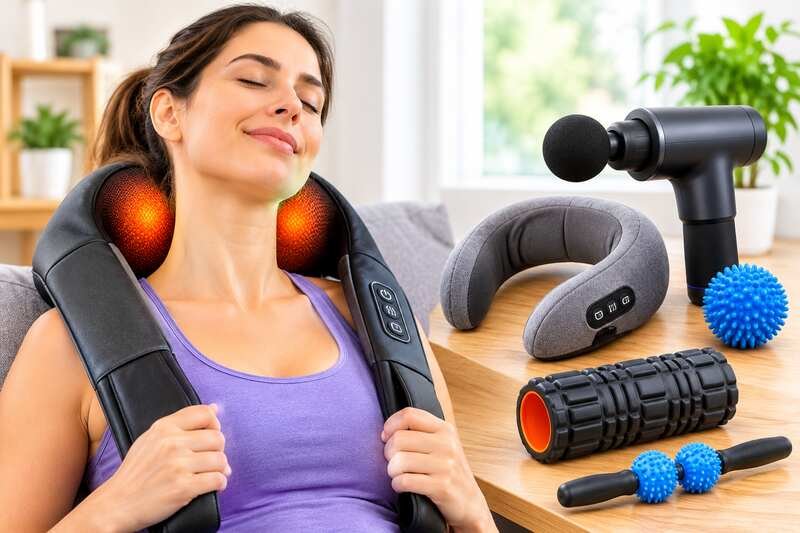
Hours at a desk, long drives, and constant phone scrolling all add up to the same thing: a stiff neck and tight shoulders. The right neck and shoulder massage tools can ease that tension at home in a few minutes a day. Options range from simple massage balls to heated shiatsu wraps and percussion guns.
Neck pain is common worldwide. A Global Burden of Disease analysis estimated that neck pain affected 203 million people in 2020, and it projects 269 million cases by 2050. This guide covers nine types of tools, how each one works, how to use them safely, and how to choose the best massager for neck and shoulders for your needs.
Key Takeaways
- The main neck and shoulder massage tools are shiatsu wraps, massage guns, massage canes, massage balls, foam rollers, vibration wands, kneading neck massagers, heated wraps, and TENS units.
- In a U.S. trial of 228 adults with chronic neck pain, 60-minute massages two or three times a week worked best. Short 30-minute sessions did not beat a wait list.
- Home tools are best for daily upkeep between professional sessions.
- Never use strong pressure or percussion on the front or sides of the neck.
- See a doctor for neck pain with arm numbness, weakness, or severe headache.
Why Do the Neck and Shoulders Get So Tight?
Several muscles connect the neck, upper back, and shoulders. The upper trapezius runs from the base of the skull to the shoulder. The levator scapulae links the neck to the shoulder blade. Both work hard to hold up your head, which weighs about 10 to 12 pounds.
Common causes of tension include:
- Forward head posture: Looking down at a phone or laptop strains the back of the neck.
- Long sitting: Desk work keeps the shoulders rounded for hours.
- Stress: Many people tense their shoulders without noticing.
- Sleeping position: A pillow that is too high or too flat can leave you stiff in the morning.
- Carrying bags: A heavy bag on one shoulder loads one side more than the other.
Does Massage Help Neck Pain? What the Research Says
A U.S. dosing trial published in the Annals of Family Medicine tested different amounts of massage in 228 adults with chronic neck pain. People were assigned to 30-minute or 60-minute sessions, given one to three times a week for four weeks, or to a wait list.
The results were clear about dose:
| Massage schedule | Better than wait list? |
|---|---|
| 30 minutes, 2 or 3 times a week | No significant difference |
| 60 minutes, once a week | Not significant |
| 60 minutes, twice a week | Yes, for both pain and neck function |
| 60 minutes, 3 times a week | Yes, with the strongest results |
The 60-minute, three-times-a-week group was nearly five times more likely to see a meaningful improvement in neck function than the wait-list group.
What does that mean for home tools? Professional massage seems to need enough time and frequency to make a lasting difference. Home neck and shoulder massage tools are not a replacement for that. They work best as daily upkeep, helping you stay loose between sessions and manage everyday tension.
9 Types of Neck and Shoulder Massage Tools
1. Shiatsu Neck and Shoulder Massager
This is the most popular massager for neck and shoulders. It drapes over your shoulders like a U-shaped pillow, with arm loops to control pressure. Inside, rotating nodes knead the muscles in circles, and many models add gentle heat.
Best for: Desk workers and anyone who wants hands-free relief. Tip: Rest the nodes on the muscles beside your spine, not on the spine or the front of your neck.
2. Percussion Massage Gun
A massage gun taps the muscle quickly with a piston-driven head. It works well on the thick upper trapezius and the muscles between the shoulder blades. Use a soft, round head and the lowest speed near the neck.
Best for: Thick, knotted shoulder muscles. Tip: Keep it off the front and sides of the neck, the spine, and the collarbone. Compare models in our best massage gun guide.
3. Massage Cane or Hook
A massage cane is an S-shaped or hook-shaped rod with knobs. You hook it over your shoulder and pull down to press a knob into a tight spot. It gives you precise trigger point pressure with very little effort.
Best for: Hard-to-reach knots near the shoulder blade. Tip: Press for 20 to 30 seconds, then release.
4. Massage Balls
Lacrosse balls, tennis balls, and “peanut” double balls are cheap and effective. Lean against a wall with the ball between your upper back and the wall, then roll slowly.
Best for: Budget-friendly trigger point work. Tip: A peanut ball sits on either side of the spine, so it avoids pressing on bone.

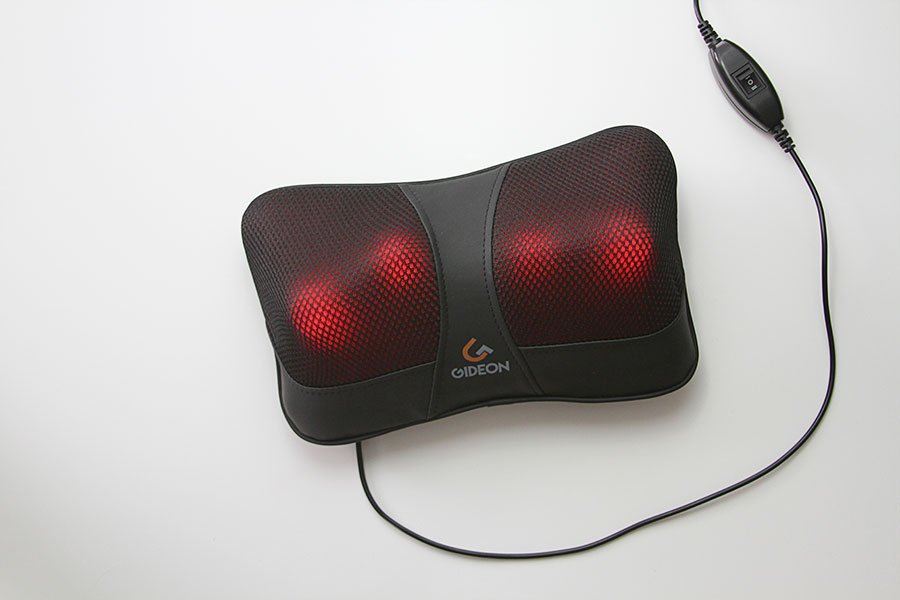
Photo: Your Best Digs / Wikimedia Commons (CC BY 2.0)
5. Foam Roller
A foam roller works the upper and mid back, which supports the shoulders. Lie on it with knees bent, support your head with your hands, and roll slowly from the mid back to the top of the shoulder blades.
Best for: Rounded shoulders and upper back stiffness. Tip: Do not roll directly on the neck.
6. Handheld Vibration Wand
A wand massager has a long handle and a vibrating head. The handle lets you reach your own shoulders and upper back without straining. Vibration feels lighter than percussion.
Best for: Gentle, all-around relief. Tip: See our best handheld back massager review for long-handled options.
7. Kneading or Tapping Neck Massager
Some neck massagers sit on the shoulders and use motorized “fingers” that squeeze or tap the upper trapezius. They mimic the squeeze a friend might give your shoulders.
Best for: People who like a grabbing, squeezing feel. Tip: Start on the lowest setting. Some models press hard.
8. Heated Neck Wrap
A heated or microwavable neck wrap does not massage, but it relaxes tight muscles before or after you use another tool. Many people pair a heated wrap with gentle stretching.
Best for: Morning stiffness and cold-weather tension. Tip: Follow the heating directions and never sleep with it on.
9. TENS Unit
A TENS unit is not a massager. It sends a mild electrical current through skin pads to calm pain signals. It is often sold alongside neck massagers.
Best for: Pain relief when massage is too uncomfortable. Tip: Never place pads on the front of the neck. See our guide to the best TENS machine for body pain relief.
Neck and Shoulder Massage Tools Compared
| Tool | Pressure | Hands-free? | Heat option | Cost level | Best for |
|---|---|---|---|---|---|
| Shiatsu neck massager | Moderate | Yes | Often | Moderate | Daily desk tension |
| Massage gun | Deep | No | Rare | Moderate to high | Thick shoulder knots |
| Massage cane | Deep, precise | No | No | Low | Hard-to-reach knots |
| Massage balls | Moderate to deep | Yes, against a wall | No | Lowest | Budget trigger point work |
| Foam roller | Moderate | Yes | No | Low | Upper back stiffness |
| Vibration wand | Light to moderate | No | Sometimes | Low to moderate | Gentle relief |
| Kneading neck massager | Moderate | Yes | Sometimes | Moderate | Squeezing feel |
| Heated neck wrap | None | Yes | Yes | Low | Warming stiff muscles |
| TENS unit | None (electrical) | Yes | No | Low to moderate | Pain relief |
Watch: Physical Therapists Test Neck and Shoulder Massagers
In this video, physical therapists Bob and Brad compare neck and shoulder massagers and share which one they liked best:

How to Choose the Best Massager for Neck and Shoulders
Ask yourself these questions before you buy:
- How deep do you want the pressure? Choose a shiatsu wrap or wand for gentle work, and a massage gun or cane for deep knots.
- Do you want hands-free use? Shiatsu wraps and kneading massagers let you relax while they work.
- Do you want heat? Heat helps with stiffness, especially in cold weather.
- Where will you use it? Cordless devices and small balls travel easily. Some shiatsu wraps include a car adapter.
- What is your budget? Massage balls and canes cost very little. Electric devices cost more but need less effort.
Quick Picks by Need
| If you want… | Try this tool |
|---|---|
| Relief at your desk | Shiatsu neck massager |
| The deepest pressure | Massage gun or massage cane |
| The lowest cost | Massage balls |
| Travel-friendly relief | Massage ball or mini massage gun |
| Gentle relief for older adults | Vibration wand or heated wrap |
| Relief while lying down | Foam roller or massage ball |
Manual vs. Electric Neck and Shoulder Massage Tools
Manual tools, such as massage balls, canes, and foam rollers, put you in full control of pressure. They are quiet, never need charging, and cost very little. The trade-off is effort. You have to lean, pull, or roll to make them work, which can be tiring when your shoulders already ache.
Electric tools do the work for you. A shiatsu wrap or kneading massager lets you sit back and relax, and many add heat. They cost more and need power, but they are easier to use every day. If you want full-body relief with neck and shoulder programs, a massage chair is another option. See our best massage chair under $1,000 roundup.
Many people keep one of each: a massage ball in a desk drawer and an electric massager at home.
How to Use Neck and Shoulder Massage Tools Safely
The neck holds major arteries, nerves, and the airway close to the surface. That makes safety more important here than almost anywhere else on the body.
- Avoid the front and sides of the neck: Work only the back of the neck and the tops of the shoulders.
- Stay off the spine: Press on the muscles beside the spine, not the bones.
- Start low: Use the lowest speed or intensity first.
- Keep it short: About 10 to 15 minutes total is enough. Limit a massage gun to 1 to 2 minutes per side.
- Use heat wisely: Follow the timer and keep fabric between the device and your skin.
- Stop if you feel dizzy: Dizziness, blurred vision, or a sudden headache during neck massage is a warning sign.
A 2022 U.S. case report described a young woman who developed a tear in a neck artery after repeated massage gun use on her neck. Cases like this are rare, but they show why percussion belongs on the shoulders, not the neck itself.
For more device tips, see our guide on how to use a personal massager.
Who Should Ask a Doctor First
- People with a history of neck injury, surgery, or arthritis in the neck
- Anyone with osteoporosis
- People with a pacemaker, before using electrical devices
- Anyone with blood clotting problems or who takes blood thinners
- People with nerve damage that reduces feeling

Photo: Shopify Burst
A 10-Minute Neck and Shoulder Routine
Try this simple routine at the end of your workday:
- Minutes 1 to 2: Warm up with a heated wrap or slow shoulder rolls.
- Minutes 3 to 5: Use a shiatsu massager or vibration wand on the tops of the shoulders.
- Minutes 6 to 8: Work one tight spot with a massage ball against the wall or a massage cane.
- Minutes 9 to 10: Finish with gentle stretches: tilt your ear toward your shoulder and hold for 20 to 30 seconds on each side.
Prevent Neck and Shoulder Tension
Massage tools ease tension, but daily habits help prevent it:
- Raise your screen to eye level.
- Take a short movement break every 30 to 60 minutes.
- Keep your shoulders down and relaxed while typing.
- Use a pillow that keeps your neck level with your spine.
- Strengthen your upper back with rows and shoulder blade squeezes.
- Switch shoulders when carrying a bag, or use a backpack.
When to See a Doctor
Get medical care if neck pain comes with:
- Numbness, tingling, or weakness in the arms or hands
- A severe or sudden headache
- Fever or a stiff neck that makes it hard to bend your head forward
- Pain after a fall, car accident, or injury
- Pain that lasts more than a few weeks or keeps getting worse
Frequently Asked Questions
What is the best tool for neck and shoulder tension?
For most people, a shiatsu neck and shoulder massager is the easiest daily option. For deep knots, a massage cane or massage gun on the shoulders works well.
Are neck massagers safe?
Most are safe when used on the back of the neck and shoulders at low intensity. Avoid the front of the neck and stop if you feel dizzy or numb.
Can I use a massage gun on my neck?
Use it only on the thick muscles of the upper shoulders, not on the neck itself. The neck has arteries and nerves close to the surface.
How long should I use a neck massager?
About 10 to 15 minutes per session is enough. Many shiatsu devices shut off automatically after 15 to 20 minutes.
Do neck massagers help headaches?
Tight shoulder and neck muscles can contribute to tension headaches, so gentle massage may help some people. See a doctor for frequent or severe headaches.
Can I use a neck massager every day?
Yes, for short sessions at low intensity. Take a day off if the area feels bruised or sore.
Conclusion
Neck and shoulder massage tools give you an easy way to manage daily tension at home. Shiatsu wraps offer hands-free comfort, massage balls and canes give low-cost trigger point relief, and massage guns handle deep shoulder knots. Research shows longer, regular professional massage helps chronic neck pain, so use home tools for upkeep between sessions.
Whatever massager for neck and shoulders you choose, keep pressure off the front of the neck, start low, and keep sessions short. Pair your tool with better posture and regular breaks for the best results.
Health note: This article is for general information only and is not medical advice. Talk to your doctor if you have ongoing neck pain, numbness, or a history of neck injury.


Hi, I’m Mamon, the content creator behind this blog. I share my experience in blogging, WordPress, SEO, and affiliate marketing through honest product reviews, in-depth buying guides, and practical how-to articles. Every piece of content is thoroughly researched and written to help readers make informed decisions.