Modern temperature measurement has changed a lot with non-contact thermometers. Knowing how to use infrared thermometer devices correctly lets you get precise readings without touching anything, and that matters whether you are checking a fever, a steak on the grill, or a piece of factory equipment.
These thermometers change how we measure temperature, giving quick, accurate readings in kitchens, factories, and clinics without spreading germs between uses.
Infrared thermometers work by catching the heat an object gives off and turning it into a temperature reading in seconds. This guide covers how the technology works, how to use infrared thermometer tools step by step, where these devices are used, and how to keep one accurate for years.
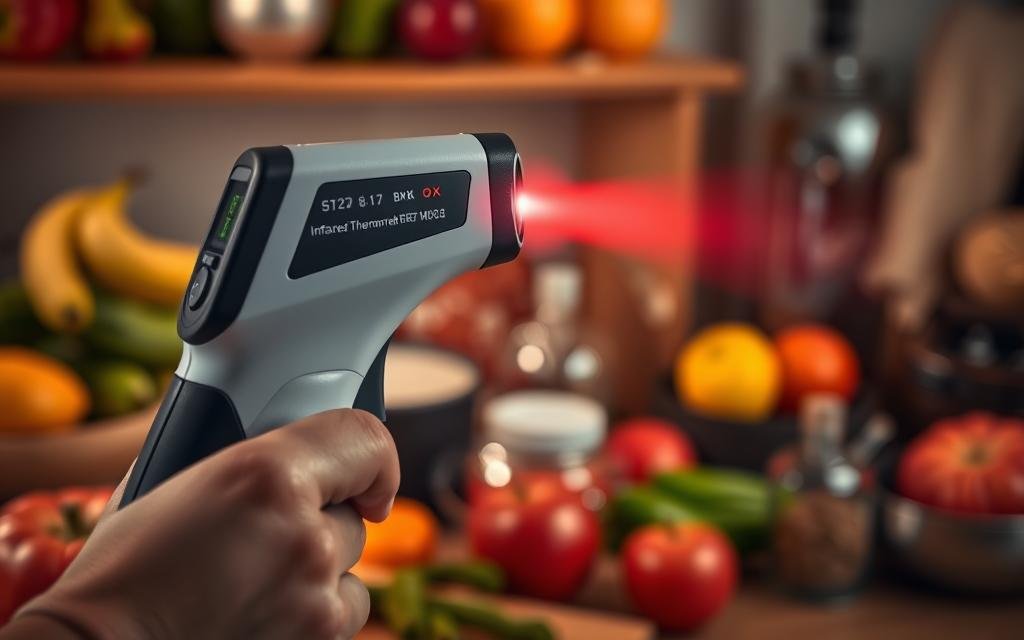
Key Takeaways
- Infrared thermometers provide instant, contactless temperature readings from a surface
- The device works by measuring thermal radiation, so knowing how to use infrared thermometer settings means understanding distance, angle, and emissivity
- Applicable across food safety, healthcare, and manufacturing, among other industries
- Eliminates cross-contamination risks in temperature measurement
- The FDA recommends a stable ambient environment of 60.8°F to 104°F with humidity below 85 percent for the most reliable readings
Understanding Infrared Thermometer Technology
Infrared thermometers are a way to measure surface temperature without touching it. They use thermal imaging to give fast, accurate readings in many settings.
Today’s infrared thermometers are advanced tools that pick up heat from a distance. They detect infrared radiation from objects and turn it into exact temperature numbers.
How Infrared Radiation Works
Every object with a temperature above absolute zero sends out infrared radiation. The best infrared thermometer models catch these invisible waves with special sensors called thermopiles. These sensors change the infrared radiation into electrical signals that show the temperature.
Key Components of an Infrared Thermometer
- Optical system for focusing infrared energy
- Thermopile detector
- Signal processing circuits
- Digital display
Temperature Range Capabilities
Infrared thermometers are very flexible for measuring temperature. Many models can read temperatures from -40°F to 626°F, which makes them useful across industry, medicine, and cooking alike.
| Distance-to-Spot Ratio | Measurement Accuracy |
|---|---|
| 4:1 | Accurate up to 4 inches |
| 8:1 | Accurate up to 8 inches |
| 30:1 | Accurate up to 30 inches |
When picking an infrared thermometer, think about its distance-to-spot ratio and temperature range. This will help it work best for your specific needs.
How to Use Infrared Thermometer Devices: Step-by-Step
Learning how to use infrared thermometer devices is straightforward once you know the basics. It comes down to following a few simple steps to get accurate temperature readings every time.

First, make sure your infrared thermometer is ready. Let it sit in the environment for 10-30 minutes before you take a reading, since this acclimation step is what the manufacturer and the device’s internal sensors need to settle to room conditions.
- Power on the device and check battery levels
- Select the appropriate measurement mode
- Adjust settings for the specific surface type, including emissivity if your model allows it
- Position the thermometer at the recommended distance
- Aim directly at the target surface, holding the sensor perpendicular to it
- Press the measurement trigger
- Read and record the temperature
For best results, keep the thermometer 5-8 cm away from what you are measuring, and check your specific model’s manual, since the ideal distance varies by device. The surface type can also affect how accurate your readings are.
| Temperature Type | Typical Reading | Accuracy Range |
|---|---|---|
| Body Temperature | 98.6°F | ± 0.3°C |
| Industrial Measurement | Varies | ± 2°C |
When checking body temperature, remember that ambient conditions matter. According to the FDA’s guidance on non-contact infrared thermometers, the room should be between 60.8°F and 104°F with humidity kept below 85 percent, and the device should be kept out of direct sun, drafts, and other radiant heat sources.
- Clean the thermometer regularly
- Check the manufacturer’s specific instructions for your model
- Avoid direct sunlight during measurements
- Allow the device to stabilize before use
Pro tip: many medical infrared thermometers show color codes on the display. Green usually means normal, and red usually means you might have a fever, though you should always confirm with the number itself. Our guide on how to check the accuracy of an infrared thermometer walks through a simple way to verify your device against a known reference point.
Applications and Uses of Infrared Thermometers
Infrared thermometers have changed how we measure temperature across many fields. They offer fast, non-contact readings, which makes them safer and more efficient in both work and home settings.
Industrial Applications
In factories, infrared thermometers are key for checking equipment and safety. People use them to:
- Check electrical parts without stopping the system
- Watch the temperature of machines on conveyor belts
- Find problems in equipment by scanning for unusual heat
- Check the heat of pipes in high-temperature processes
Regular thermal spot-checks like these can catch a developing equipment problem, such as a failing bearing or an overheating connection, before it causes downtime.
Kitchen and Food Safety Uses
Food safety needs exact temperature control. Infrared thermometers help cooks and food handlers keep food at the right temperature, which helps prevent foodborne illness. According to USDA’s safe minimum internal temperature chart, target temperatures vary by food type.
| Food Type | Safe Temperature | Purpose |
|---|---|---|
| Poultry | 165°F | Eliminate harmful bacteria |
| Ground Meats | 160°F | Eliminate harmful bacteria |
| Beef, Pork, Steaks & Roasts | 145°F, plus a 3-minute rest | Ensure proper cooking conditions |
| Refrigerated Items | 40°F or below | Prevent bacterial growth |
Keep in mind that an infrared thermometer reads surface temperature only. For meat and poultry, a probe thermometer inserted into the thickest part is still the reliable way to confirm the internal temperature meets USDA guidelines; the infrared reading is best used as a quick surface check on grills, pans, and cooking equipment.
Healthcare and Body Temperature Screening
In hospitals and clinics, infrared thermometers are useful for checking body temperature without touching the patient. They give fast readings for:
- Screening patients in hospitals and clinics
- Quick temperature checks in public places
- Lowering the risk of spreading germs between patients
- Supporting broader screening efforts during illness outbreaks
Infrared thermometers are changing how we measure temperature in many healthcare settings, though most manufacturers recommend confirming an unusual reading with a second measurement or a different type of thermometer before acting on it.
Benefits and Advantages of Non-Contact Temperature Measurement
Non-contact thermometers have changed how we measure temperature in many fields. They bring real benefits to healthcare, food safety, and industry, and these devices are now central to many everyday processes.
- Fast response time, often measured in a fraction of a second
- Ability to measure moving or rotating objects
- Safer measurement of high-temperature surfaces from a distance
- Reduced risk of surface contamination compared with contact thermometers
Infrared technology in these thermometers offers some genuinely useful abilities. They can check the temperature of fragile items like glass and wood without touching or damaging them. Their small size and built-in sensors make them practical for both home and professional use. If you are still deciding whether one is worth adding to your toolkit, our infrared thermometer reviews cover the options in more detail.
| Feature | Advantage |
|---|---|
| Response Speed | Near-instant measurements |
| Temperature Range | Wide spectrum from low to high temperatures |
| Environmental Adaptability | Best performance between 65°F and 95°F ambient |
For checking fevers and other medical screenings, non-contact thermometers are a genuine help. They let clinicians and caregivers quickly and safely take body temperatures, which cuts down on the chance of spreading germs between people being screened.
Non-contact thermometers are useful for a wide range of tasks beyond simple temperature checks. They help monitor industrial processes, food safety, and medical screenings, offering both precision and ease of use in one device.
Maintenance and Care Instructions
Keeping your infrared thermometer in good shape is key for accurate readings over the long run.
Cleaning Procedures
Keep the lens clean for accurate readings:
- Gently wipe the lens with a soft, lint-free cloth
- Use medical-grade alcohol for disinfection when needed
- Avoid abrasive materials that could scratch the lens
- Never submerge the device in water
Storage Requirements
Store it in these conditions:
| Storage Parameter | Recommended Condition |
|---|---|
| Temperature Range | 40°F to 149°F (4-65°C) |
| Humidity Level | Below 85% RH |
| Environment | Dry, dust-free area |
Calibration Tips
Calibration matters for your infrared thermometer’s accuracy over time. Here are some practical tips:
- Check calibration roughly every 12 months, or per the manufacturer’s recommendation
- Use a professional calibration service for medical or industrial-grade devices
- Compare readings with a reference thermometer periodically
- Allow 20 minutes for temperature adjustment before measuring

By following these maintenance steps, your infrared thermometer should keep giving you reliable temperature readings for years.
Common Mistakes to Avoid
Learning how to use infrared thermometer tools correctly also means knowing what can go wrong. Many people make mistakes that affect their readings, and these errors can change the accuracy of your temperature measurements in ways that are easy to miss.
Here are the most frequent errors to watch out for when using an infrared thermometer:
- Ignoring the distance-to-spot ratio
- Overlooking surface emissivity settings
- Attempting to measure through transparent surfaces like glass
- Not allowing the device to adjust to environmental temperatures first
Understanding the distance-to-spot ratio is key for accurate readings, since each infrared thermometer has its own ratio. If you do not know this number for your device, your readings could be measuring a much larger area than you intended, which throws off the result.
| Common Mistake | Potential Consequence |
|---|---|
| Incorrect Distance | Measurement of the wrong surface area |
| Ignoring Emissivity | Inaccurate temperature readings |
| Measuring Through Glass | Unreliable temperature data |
Remember, infrared thermometers measure surface temperatures, not internal ones. They cannot check internal temperatures. Always keep your device clean, calibrated, and used as directed for the best results.
Conclusion
Knowing how to use infrared thermometer devices comes down to a handful of habits: letting the device acclimate, keeping the right distance and angle, accounting for emissivity, and staying within the manufacturer’s recommended ambient conditions. Once those habits are in place, infrared thermometers are a genuinely useful tool for getting precise, non-contact readings across industrial settings, food safety, and healthcare.
These non-contact thermometers are convenient and accurate for a wide range of tasks, not just temperature checks. They help you avoid contamination risks by giving instant, safe readings without touching anything.
They are easy to use, which makes them practical for both professionals and home users, and their digital displays show temperature data clearly and quickly. As you keep learning how to use an infrared thermometer, remember to take care of it, understand emissivity settings, and follow the usage tips above. Doing so will improve both safety and efficiency in your work and personal life.
FAQs:
Basics and Accuracy
Q1: What is an infrared thermometer?
A: An infrared thermometer is a tool that measures temperature without touching an object. It uses infrared energy given off by objects. This makes it useful in many settings, including work, healthcare, and cooking.
Q2: How does an infrared thermometer work?
A: It has a lens that focuses infrared light coming from an object. This light reaches a detector that turns it into an electrical signal. The device then shows the temperature on the screen.
Q3: What is the typical temperature range for infrared thermometers?
A: Many consumer and industrial models read temperatures from about -58°F to 1,000°F, and some specialized models go beyond that. This range covers most household, cooking, and industrial uses.
Q4: Can an infrared thermometer measure internal temperatures?
A: No, it only reads surface temperature. For internal temperatures, such as the center of a roast, you need a probe thermometer instead.
Q5: How accurate are infrared thermometers?
A: They are usually accurate to within about ±1.5°F to ±2°F for typical readings between 32°F and 212°F. The exact accuracy can change based on the specific device and the surface being measured.
Usage, Care, and Safety
Q6: What is emissivity, and why does it matter when learning how to use an infrared thermometer?
A: Emissivity describes how well a material gives off infrared energy. Different surfaces emit infrared in different ways, and shiny or reflective surfaces are especially tricky. Better thermometers let you adjust for this to get more accurate readings.
Q7: How do I clean and maintain my infrared thermometer?
A: Clean the lens with a soft cloth or cotton swab. Do not use water or cleaning chemicals directly on it. Keep it in a dry place and calibrate it as needed, roughly once a year for most models.
Q8: What are the most common mistakes when using an infrared thermometer?
A: Common mistakes include not keeping the right distance and not accounting for the surface’s emissivity. It also helps to avoid measuring through clear surfaces like glass, or in steamy or dusty areas, since both can distort the reading.
Q9: Are infrared thermometers safe to use?
A: Yes, they are safe. They do not emit any radiation toward the person or object being measured; they only detect the infrared energy already being given off. They work well for non-contact temperature checks, whether for body temperature or industrial equipment.
Q10: Can I use an infrared thermometer for cooking?
A: Absolutely. They are great for checking the surface temperature of grills, pans, and griddles before you start cooking. Just remember that for meat and poultry doneness, you still need a probe thermometer to confirm the internal temperature is safe to eat.
If your readings still seem inconsistent after following these tips, our guide on how to calibrate an infrared thermometer walks through getting your device back to accurate readings.

Hi, I’m Mamon, the content creator behind this blog. I share my experience in blogging, WordPress, SEO, and affiliate marketing through honest product reviews, in-depth buying guides, and practical how-to articles. Every piece of content is thoroughly researched and written to help readers make informed decisions.
Leave a Reply