 If you are wondering how to pass blood pressure test, the short answer is simple. Most people can influence their reading with a few days of preparation and a calm, correctly measured test itself. Blood pressure is not a fixed number. It shifts with stress, posture, caffeine, and even how the cuff is placed on your arm. A single high reading is not necessarily a diagnosis, but it is also not something to ignore.
Nearly half of American adults, 48.1%, or about 119.9 million people, have high blood pressure, according to the Centers for Disease Control and Prevention. You might be prepping for a routine physical, a commercial driver’s medical exam, or a life insurance screening. Either way, understanding both the biology and the measurement technique behind the test can make a real difference in your result.
This guide covers what actually affects a blood pressure reading and the preparation steps worth taking in the days beforehand. It also covers the technique mistakes that commonly cause falsely high numbers, plus what the certification thresholds look like if you do not pass on your first attempt.
Key Takeaways
- 48.1% of American adults, about 119.9 million people, have high blood pressure, according to the CDC
- Common measurement errors, like talking during the test or an unsupported arm, can add 15-20 mmHg to a reading, according to the American Heart Association
- Commercial drivers with a reading of 140/90 or below typically qualify for a 2-year medical certification under FMCSA guidelines
- Diet, exercise, stress management, and sleep in the weeks before your test matter more than any last-minute trick

Understanding Blood Pressure
Blood pressure is the force of blood pushing against the walls of your arteries as your heart pumps. It is recorded as two numbers: systolic pressure, the force during a heartbeat, and diastolic pressure, the force between beats. Both are measured in millimeters of mercury (mmHg).
The measurement is usually taken with a sphygmomanometer, or blood pressure cuff, wrapped around the upper arm. The cuff inflates to briefly stop blood flow, then slowly deflates while a clinician or automatic device listens for or detects the return of blood flow. Here is how the American Heart Association categorizes the results:
| Systolic (mmHg) | Diastolic (mmHg) | Blood Pressure Category |
| Less than 120 | Less than 80 | Normal |
| 120-129 | Less than 80 | Elevated |
| 130-139 | 80-89 | High (Stage 1) |
| 140 or higher | 90 or higher | High (Stage 2) |
Why People Need to Pass a Blood Pressure Test

“Passing” a blood pressure test usually is not about a school-style test at all. It is about clearing a threshold required for a job physical, an insurance policy, or a medical certification. Commercial truck drivers are a common example. Under Federal Motor Carrier Safety Administration guidelines, a driver with a blood pressure reading at or below 140/90 mmHg typically qualifies for a 2-year medical certification.
A reading in the Stage 1 range, 140-159 over 90-99, generally results in a 1-year certification. A reading in the Stage 2 range, 160-179 over 100-109, usually means only a one-time, 3-month certification. The driver may still qualify for a full year if a recheck within that window comes in below 140/90. A reading above 180/110 typically results in disqualification until the numbers come down. You can review the complete FMCSA hypertension certification requirements directly from the agency.
Life insurance medical exams and routine annual physicals work differently, but the underlying goal is the same. Your provider wants an accurate, representative reading, not a stressed or poorly measured one. That is exactly why preparation and correct technique matter so much for how to pass blood pressure test on the day it counts.
How to Prepare in the Days Before Your Test
The habits you build in the weeks leading up to your appointment matter far more than anything you do the morning of. Sustainable changes to diet, activity, and stress levels are what actually lower blood pressure, rather than merely disguising it for a single reading. This is the part of how to pass blood pressure test that takes the most patience, but it also produces the most durable results.
1. Eat With Your Arteries in Mind
Aim for at least five servings of fruits and vegetables daily. Choose whole grains, such as brown rice, whole wheat bread, and oats, over refined ones. Add lean proteins like chicken, fish, and beans, and cut back on processed foods, which tend to be loaded with sodium. The American Heart Association recommends limiting daily sodium intake to under 2,300 milligrams. An ideal target is closer to 1,500 milligrams for most adults with elevated readings.
2. Move Regularly, Not Just Before the Test
Talk to your doctor before starting a new routine, especially with existing health conditions. Brisk walking, cycling, swimming, and resistance training are all effective for lowering blood pressure over time. Aim for at least 30 minutes of moderate activity most days of the week, and vary your routine to include some strength work alongside cardio.
3. Manage Stress Before It Manages You
Identify what actually triggers your stress and address it directly, whether that means adjusting your schedule or leaning on friends and family for support. Deep breathing, meditation, and gentle yoga all slow the heart rate and reduce circulating stress hormones. Consistent, quality sleep, ideally 7 to 9 hours a night, also plays a measurable role. Blood pressure normally dips during healthy sleep, and that dip is disrupted by poor rest.
4. Reconsider Alcohol and Caffeine
Alcohol consumption is linked to higher blood pressure, particularly for people with a history of hypertension. Caffeine causes a shorter-term spike by stimulating the nervous system, and having it too late in the day can also disrupt sleep, compounding the problem. Cutting back on both in the weeks before your test, not just the morning of, produces a more meaningful and lasting effect.
5. Work Toward a Healthy Weight
Losing even a modest amount of excess weight can lower blood pressure measurably. Keep a simple food log to spot where extra calories are creeping in, favor whole foods over processed ones, and build in regular physical activity. Small, sustained changes tend to outperform aggressive short-term diets for long-term blood pressure control.
6. Track Your Numbers at Home
If you are actively working to bring your blood pressure down, monitor it regularly. Use a validated home blood pressure monitor rather than relying on pharmacy kiosks or fitness trackers, which can be inconsistent. Consistent home monitoring also gives you and your doctor a realistic picture of your baseline, rather than a single office snapshot.
How to Prepare on the Day of Your Blood Pressure Test
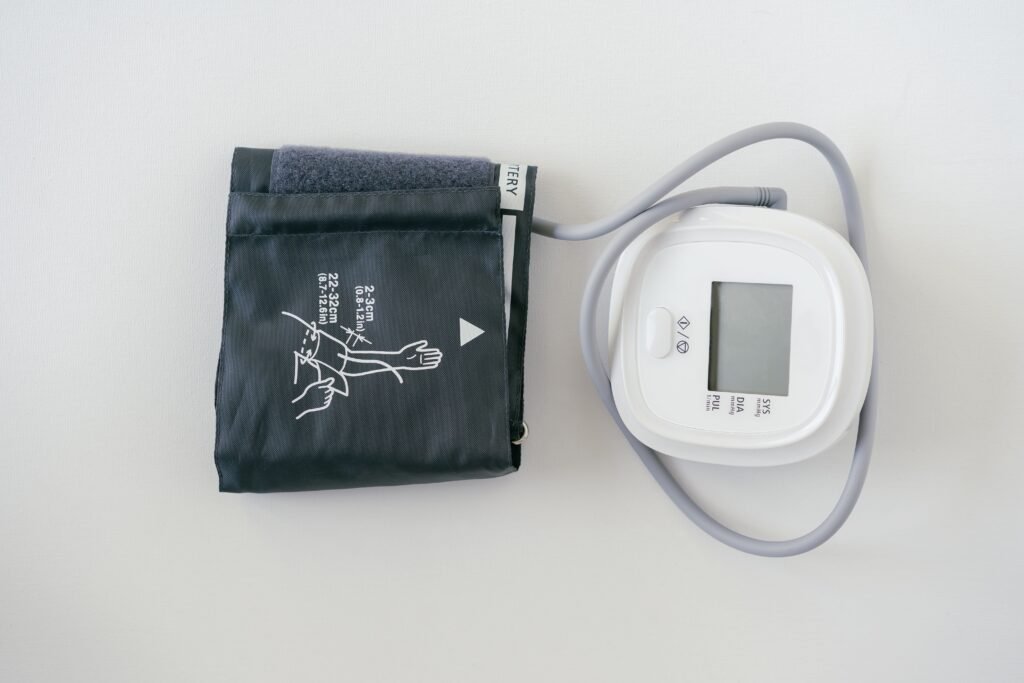
Same-day habits will not undo months of poor sleep or a high-sodium diet, but they do matter for getting an accurate, un-inflated reading. These same-day steps are the most direct answer to how to pass blood pressure test once your appointment is already on the calendar.
Avoid Caffeine, Alcohol, and Tobacco Beforehand
All three can temporarily raise your blood pressure. The American Heart Association recommends avoiding exercise, smoking, and caffeine for at least 30 minutes before a reading is taken.
Arrive Early and Relax
Rushing in from traffic or a full waiting room raises your heart rate right before the cuff goes on. Sit quietly for about 5 minutes beforehand, ideally with your back supported and both feet flat on the floor.
Wear Loose Sleeves
A cuff placed over a rolled-up, tight sleeve can compress the arm and skew the reading. Wear clothing that allows the cuff to sit directly against your bare upper arm.
Use the Restroom First
A full bladder measurably raises blood pressure during a reading, so use the restroom shortly before your appointment.
Tell Your Provider About Your Medications
If you take blood pressure medication or anything else that affects your cardiovascular system, let your provider know beforehand. Some medications influence timing and readings in ways worth accounting for.
Common Measurement Mistakes That Can Cause a False High Reading
Technique errors are more common, and more impactful, than most people realize. Dr. Yvonne Commodore-Mensah, an associate professor at the Johns Hopkins School of Nursing, put it plainly in a 2024 American Heart Association report. Sitting with your back supported and feet flat on the ground, she noted, helps you avoid the 5 to 20 mmHg increases that poor positioning can cause.
According to American College of Cardiology data cited in that same report, talking during the test can add up to 19 mmHg. Crossed legs can add up to 15 mmHg, and an unsupported arm can inflate a reading by as much as 20 mmHg. A full bladder is the biggest single factor, adding up to 33 mmHg on its own.
Dr. Shawna Nesbitt is medical director of Parkland Health’s Hypertension Clinic and a professor at UT Southwestern Medical Center. She noted that blood pressure measurement is “probably the most taken-for-granted measurement done across any clinical environment.” Avoiding these specific, well-documented errors is one of the simplest ways to approach how to pass blood pressure test without changing anything about your actual health.
What Happens If You Do Not Pass? Understanding the Numbers
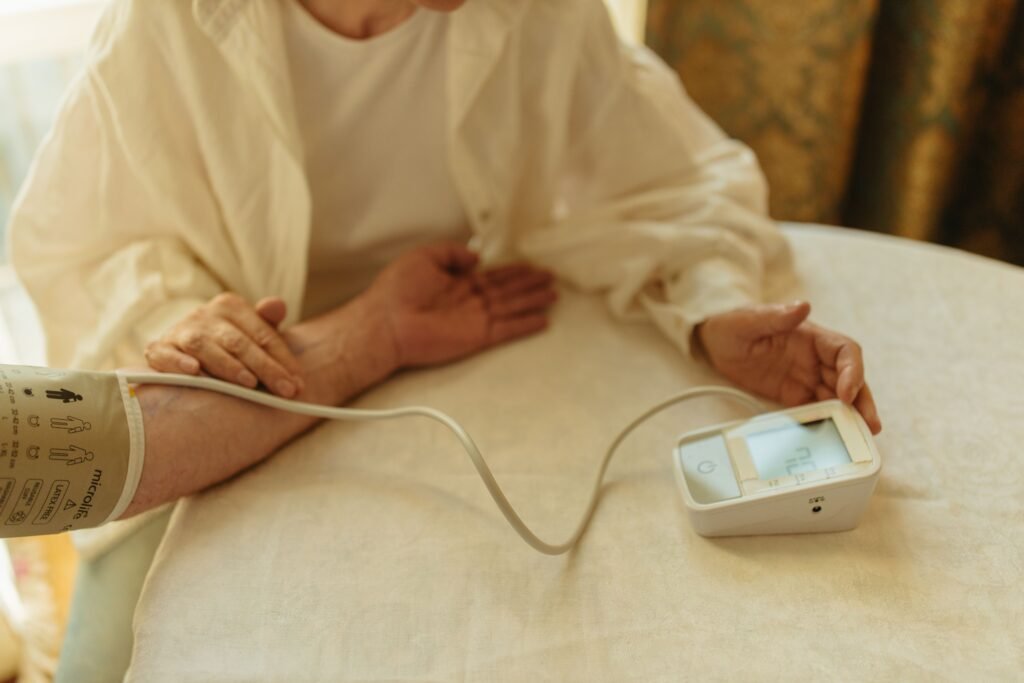
A single elevated reading rarely disqualifies anyone outright, though it can trigger a recheck or a shorter certification window depending on the context. For commercial drivers specifically, a reading between 160/100 and 179/109 generally triggers a one-time 3-month certification. There is an opportunity to requalify for a full year if a follow-up reading comes in under 140/90. A reading of 180/110 or higher typically means disqualification until blood pressure is brought under control, at which point 6-month certifications become available.
None of that is meant to be discouraging. It reflects a system designed to catch dangerously high readings early, not to permanently penalize people working to manage a common, very treatable condition. If your numbers are borderline, ask your provider whether a follow-up reading on a different day might help. Ambulatory monitoring over 24 hours can also paint a more accurate picture than a single office visit.
Monitoring Your Blood Pressure Regularly
Whatever prompted your test, ongoing monitoring matters more than any single result. A reliable blood pressure monitor lets you track trends over weeks and months instead of reacting to one number. Some people wonder whether a fitness tracker can substitute for a validated monitor. The short answer is that most wearables are not yet accurate enough for medical decisions.
It is also worth ruling out other contributors. Untreated sleep apnea is strongly linked to high blood pressure. Morning readings in particular can run higher, for reasons explained in our guide on why blood pressure is higher in the morning.
Frequently Asked Questions
Q: How do you manipulate a blood pressure test?
Attempting to manipulate a reading is not recommended. Blood pressure is an important indicator of cardiovascular health, and artificially lowering a single reading only delays proper treatment of a potential underlying issue. The strategies in this guide focus on genuine preparation and accurate measurement, not manipulation.
Q: Does holding your breath lower blood pressure?
No. Holding your breath may cause a brief, temporary increase rather than a decrease, since it raises resistance in the blood vessels. Blood pressure is primarily determined by how much blood the heart pumps and how much resistance the blood vessels create, not by breath-holding.
Q: Does knowing how to pass blood pressure test still matter if I am already on medication?
Yes. Medication addresses the underlying condition, but preparation and correct measurement technique still affect what shows up on test day. Many people on treatment still see falsely elevated readings from a full bladder, an unsupported arm, or talking during the cuff inflation. All of these are avoidable.
Q: How often should you get your blood pressure checked?
At least once a year for most healthy adults. Check more often if you have a history of high blood pressure or other cardiovascular risk factors. If you are on medication to control it, regular monitoring, including at home, is especially important.
Conclusion
So, how to pass blood pressure test? It comes down to two things working together. The lifestyle habits that genuinely lower your numbers over time, and the same-day technique that prevents an artificially high reading. Diet, exercise, stress management, sleep, and moderating alcohol and caffeine all do the real work in the weeks before your appointment. On the day itself, arriving relaxed, sitting properly, and avoiding common measurement errors round out the picture.
Certain conditions, including kidney disease, sleep apnea, and hormonal imbalances, can raise blood pressure in ways that lifestyle changes alone cannot fully address. Persistent high readings are always worth discussing with your doctor. Ultimately, the goal is not a single passing number. It is a genuinely healthy cardiovascular system that happens to produce good readings whenever, and however, it is tested.

Hi, I’m Mamon, the content creator behind this blog. I share my experience in blogging, WordPress, SEO, and affiliate marketing through honest product reviews, in-depth buying guides, and practical how-to articles. Every piece of content is thoroughly researched and written to help readers make informed decisions.
Leave a Reply