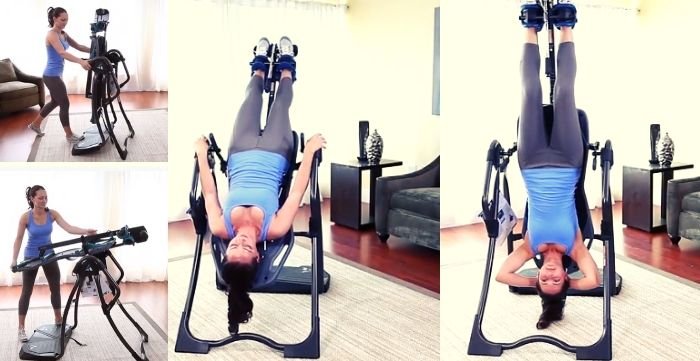
An inversion table works by letting you recline backward, feet secured, until gravity pulls in the opposite direction it normally does when you stand. If you’re wondering how does an inversion table work, the process is fairly simple: that reversal takes weight off your spine instead of loading it, temporarily creating extra space between your vertebrae. It is a simple idea, and it is why inversion tables have become one of the most common at-home tools for back pain relief in the U.S.
Back pain sends millions of Americans looking for relief every year, and many end up considering an inversion table before anything more invasive. But how does an inversion table work, exactly, and is it actually backed by evidence? Below is a complete, updated breakdown: the mechanics, the parts, a step-by-step usage guide, what the research actually shows, and who should skip it.
Key Takeaways
- An inversion table works through gravitational traction: reclining backward shifts your body weight off the spine and creates temporary space between vertebrae and discs.
- A retrospective study of sciatica patients found inversion therapy reduced the need for spinal surgery, though researchers note more high-quality trials are needed (Mendelow et al., 2021).
- Inversion is not safe for everyone. People with high blood pressure, heart disease, or glaucoma should talk to a doctor first, since inverting raises eye pressure and can affect heart rate.
- Beginners should start at a shallow angle (20 to 30 degrees) for a minute or two, not full 180-degree inversion.
What Is an Inversion Table?
An inversion table is a piece of home fitness equipment built around a pivoting, padded table. You lie back on it, lock your ankles into the footrest, and tilt backward until your head points toward the floor and your feet point up. The design lets you control the angle, so you are never forced into a full 180-degree hang unless you choose to go there.
Physical therapists and chiropractors often describe inversion therapy as a form of spinal traction, the same general principle used in some clinical decompression equipment, just achieved through body weight and gravity instead of a motorized pulley system.
How Does an Inversion Table Work?
Here is the short version: gravity compresses your spine all day, every day you are upright. Sitting, standing, walking, even carrying groceries all add downward pressure on the discs and joints in your back. An inversion table works by reversing that load. When you tilt backward, your torso’s weight starts pulling your spine in the opposite direction, gently separating the vertebrae and taking pressure off compressed nerve roots.
According to Cleveland Clinic, inversion therapy is also known as spinal traction, and the theory is that hanging upside down briefly relieves pressure on spinal nerves while giving the discs between vertebrae room to relax. The same source notes that most supporting studies have been small, so while the mechanism is well understood, the size of the benefit still varies by person.

One of the more frequently cited data points in this space comes from a peer-reviewed study by Mendelow and colleagues, published in the British Journal of Neurosurgery, which followed sciatica patients who had already been told they needed surgery. Patients who used inversion therapy needed spinal surgery less often than those who did not, an effect that persisted at the two-year follow-up. Five of the study’s authors were practicing neurosurgeons, which adds weight to the finding, though the sample size was still relatively small and the authors called for larger trials before drawing firm conclusions.
Key Parts of an Inversion Table
Before using one, it helps to know what you are working with. Most inversion tables share the same core components:
- The frame — usually steel, foldable or static, and rated to hold your body weight while you invert.
- Ankle locks — secure your feet so you do not slip while inverted. This is the single most important safety feature on the table.
- Floor stabilizers — keep the base from sliding across the floor mid-session.
- Vinyl side covers — protect your fingers from getting pinched between moving bars.
- Back pad — the surface you recline on; thicker pads generally mean more comfort during longer sessions.
- Adjustable inversion angle — lets you invert gradually instead of jumping straight to full inversion, which matters most for beginners.
How to Use an Inversion Table Safely: Step-by-Step
- Wear supportive shoes. Sneakers grip the ankle holders better than bare feet or socks and reduce injury risk.
- Adjust the table to your height before you get on it, and tighten the locking knob fully so the setting cannot slip mid-session.
- Stand on the footrest and lock your ankles using the provided cuffs or straps.
- Cross your arms or hold the frame, then shift your weight backward slowly. Do not jerk into the recline.
- Start small. Beginners should aim for a 20 to 30 degree angle for one to two minutes. Add roughly 10 degrees per week as your body adapts, rather than going straight to full inversion.
- Watch for warning signs. Dizziness, sharp leg pain, or a pounding headache means it is time to return upright, gradually, not all at once.
- Return upright slowly by bending your knees and using the side handles for control. Stay upright for a moment before standing, so you do not get lightheaded.
Consistency tends to matter more than duration. Several short sessions spread across the day, roughly three or more, are generally considered more useful for back pain relief than one long session.
Benefits of Inversion Therapy, Backed by Research
Beyond the surgery-reduction data above, people who use inversion tables regularly report a few consistent benefits:
- Temporary disc decompression. Spinal traction is thought to briefly relieve pressure on compressed discs and nerve roots, which is the same principle underlying some in-clinic decompression therapy. Some practitioners also report improved circulation to spinal structures during inversion, though this effect is harder to measure outside a lab setting.
- Improved flexibility and posture. Stretching the muscles along the spine during inversion can loosen tightness that builds up from sitting for long stretches, and some users find it restores a bit of the space between vertebrae that daily gravity gradually compresses.
- Muscle tension relief. Traction can reduce muscle guarding, the involuntary tensing that happens around an injured or irritated area of the back, which in turn can ease some of the referred pain that guarding causes elsewhere.
- A non-drug option to try first. Because it is minimally invasive, an inversion table gives people a way to test whether mechanical decompression helps their pain pattern before considering medication or a more invasive procedure.
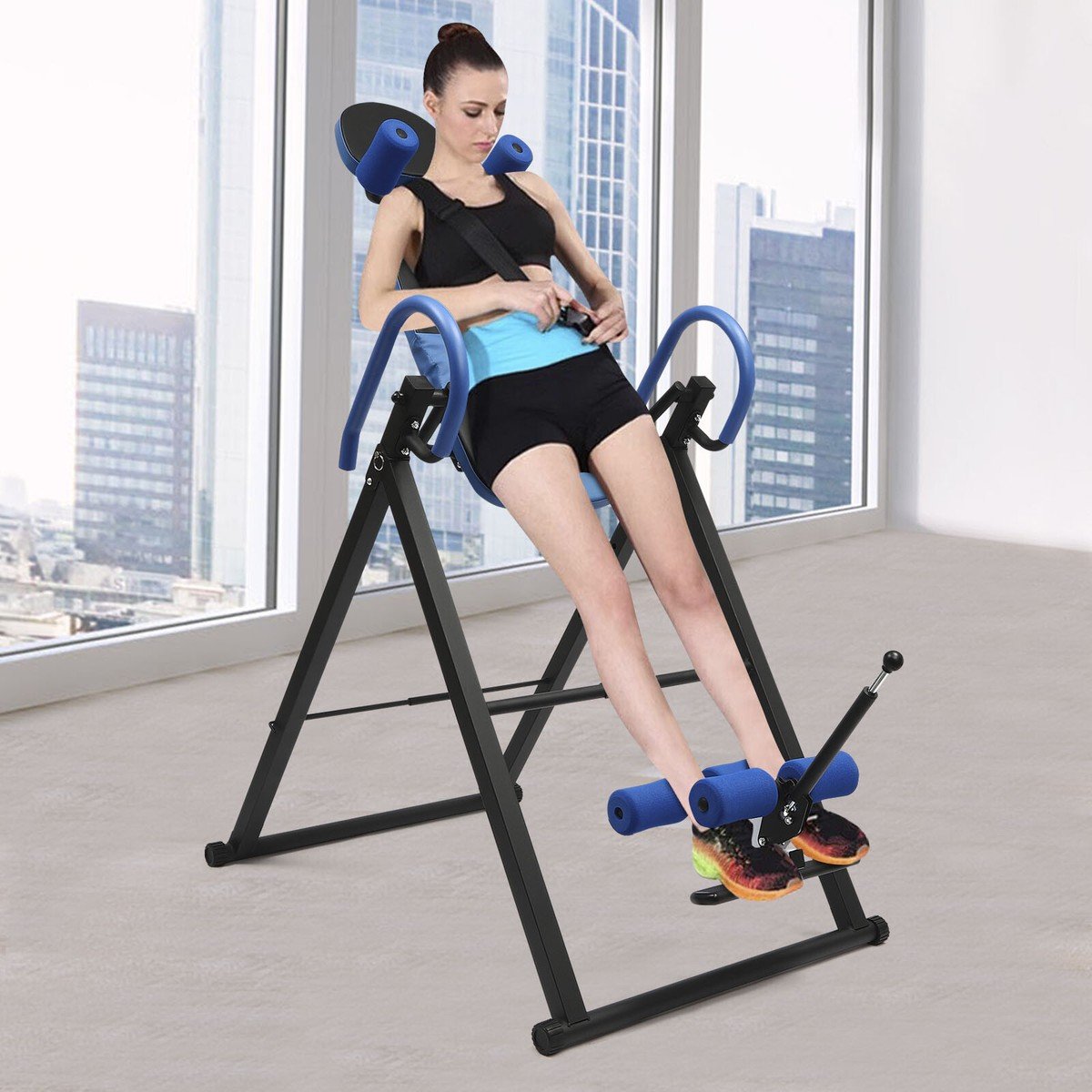
WebMD notes that because inversion tables are minimally invasive, doctors often consider them before recommending more invasive treatments. The same source cautions that injuries do happen, most often from user error rather than the equipment itself, which is why the step-by-step approach above matters.
Inversion Table vs. Other Spinal Decompression Methods
Inversion tables are not the only way to decompress the spine, and it helps to know how they compare before you invest in one. Clinical spinal decompression, the kind performed in a chiropractor’s or physical therapist’s office, uses a motorized table that applies precise, programmed traction forces to a specific area of the spine. A licensed provider adjusts the angle and force based on your individual diagnosis, which allows for more targeted treatment of conditions like spinal stenosis or degenerative disc disease.
An inversion table, by contrast, relies on your own body weight and gravity rather than a machine-calculated pulling force. That makes it far less expensive and available for daily home use, but it also means the traction is more general and less adjustable to a specific vertebra or disc level. For mild to moderate back pain and muscle tightness, an inversion table is often enough on its own. For diagnosed conditions such as a significant disc herniation or spinal stenosis, many providers recommend combining home inversion with in-office decompression therapy or physical therapy rather than relying on either one alone.
Cost is another practical difference worth weighing. A home inversion table is typically a one-time purchase, while clinical decompression sessions are billed per visit and may not be fully covered by insurance. If your pain is mild and you mainly want a daily maintenance habit, starting with an inversion table is usually the more practical first step, with an evaluation from a doctor or physical therapist if symptoms do not improve after a few weeks.
Who Should Avoid Inversion Tables?
Inversion is not risk-free for everyone. A device patent filing describing head-up spinal decompression equipment notes that the head-down position raises concerns for anyone with high blood pressure, heart disease, or glaucoma, since heart rate slows and blood pressure rises when a person stays inverted for more than a couple of minutes, and pressure inside the eyes increases sharply. If any of the following apply to you, talk to a doctor before trying inversion therapy:
- High blood pressure or heart disease
- Glaucoma or other eye conditions
- Pregnancy
- A hernia
- Recent stroke or history of blood clots
- Severe osteoporosis
If you are cleared to use one, always keep the first sessions short, and never invert alone the first few times until you know how your body responds.
Frequently Asked Questions
How long should a beginner stay inverted?
Start with one to two minutes at a shallow angle, around 20 to 30 degrees. It typically takes about two minutes for the spine to begin decompressing, so there is little benefit to rushing past that window before you are ready.
How often should I use an inversion table?
Most guidance favors using it multiple times a day, at least three short sessions, rather than one long session. Frequency tends to matter more than duration for back pain relief.
Can an inversion table fix a herniated disc?
It will not fix the underlying disc problem, but it may ease the pressure and nerve irritation that a herniated disc causes. If you are managing a herniated disc specifically, see our step-by-step guide to using an inversion table for a herniated disc for condition-specific guidance.
Is it normal to feel dizzy the first time?
Mild lightheadedness when you first invert is common as blood shifts toward your head. Sharp pain, a pounding headache, or significant dizziness is not normal and means you should return upright slowly and stop for the day.
Can inversion tables help neck pain too?
Yes, many users invert specifically for neck tension. See our dedicated guide to using an inversion table for neck pain for the adjusted technique.
Conclusion
An inversion table works by using your own body weight and gravity to reverse the compressive load your spine carries all day, and for many people that translates into real, if temporary, back pain relief. The evidence is promising, particularly for sciatica and disc-related pain, but it is not universal, and it is not a substitute for a doctor’s guidance if you have a heart, blood pressure, or eye condition. Start slow, use proper form, and give your body time to adapt to the angle before pushing further.
If you are shopping for your first table, browse our full lineup of inversion table reviews, or check out our broader exercise equipment guides if you are building out a full home recovery setup.

Hi, I’m Mamon, the content creator behind this blog. I share my experience in blogging, WordPress, SEO, and affiliate marketing through honest product reviews, in-depth buying guides, and practical how-to articles. Every piece of content is thoroughly researched and written to help readers make informed decisions.
Leave a Reply