


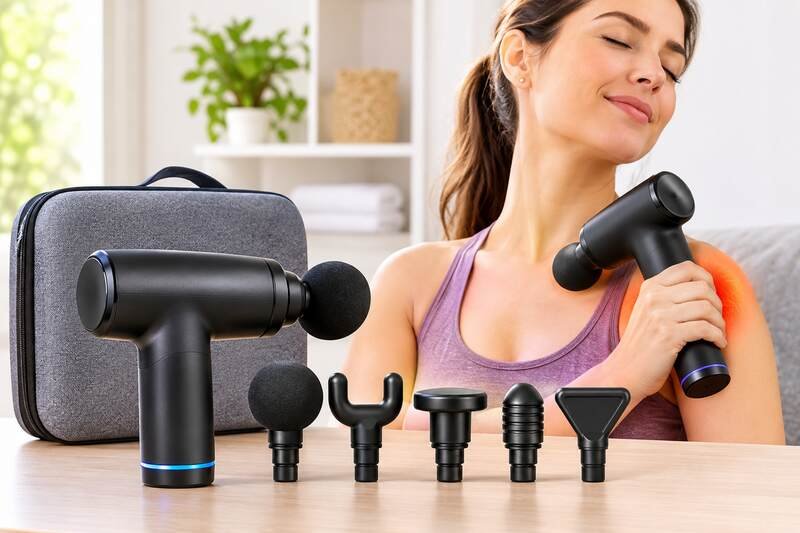
Heat and massage are two of the oldest tricks for sore muscles, and a heated personal massager puts both in one device. Many shiatsu pillows, neck wraps, seat cushions, and even some massage guns now come with a built-in warming feature. But does adding heat actually make a massager work better, or is it just a nice extra?
This guide looks at what the research says about heat therapy, how a heated personal massager works, who it helps most, and how to use one safely. If you are in the U.S. and shopping for relief from back, neck, or shoulder tension, you will know exactly what to look for by the end.
Key Takeaways
- A heated personal massager combines gentle warmth with kneading, rolling, or vibration in one device.
- Research supports heat for short-term muscle pain. In one trial of 371 adults, a low-level heat wrap beat both ibuprofen and acetaminophen for acute low back pain.
- U.S. doctors list superficial heat as a first-line, drug-free option for new low back pain.
- Heat works best for stiffness and chronic tension, not fresh injuries or swelling.
- Use the auto shut-off, keep a layer of fabric between the device and your skin, and never sleep with heat running.
What Is a Heated Personal Massager?
A heated personal massager is any small, at-home massage device with a built-in warming element. The heat usually comes from carbon fiber or wire heating pads placed near the massage nodes. Most heated models warm to a comfortable temperature within a few minutes and run on a timer.
Common types include:
- Shiatsu neck and shoulder wraps: Rotating nodes knead the muscles while heat warms the area.
- Shiatsu pillows: Small cushions you place behind your back or neck.
- Massage seat cushions: Pads that strap onto a chair and roll along your spine.
- Handheld massagers with heat: Wand-style devices with a heated head.
- Heated foot massagers: Units that knead and warm the soles and arches.
- Heated massage guns: Some newer models include a warming attachment head.
If you are comparing devices, our guide to the best handheld back massager covers several models with heat settings.
How Does Heat Help Sore Muscles?
Heat therapy, also called thermotherapy, raises the temperature of the skin and the tissue just beneath it. That simple change sets off several effects:
- More blood flow: Warm tissue widens blood vessels, which brings oxygen and nutrients to tired muscles.
- Looser tissue: Heat makes muscles and connective tissue more flexible, so they stretch more easily.
- Less pain signaling: Warmth activates heat sensors in the skin, which can dull pain messages to the brain.
- Relaxation: Many people find warmth calming, which helps tense muscles let go.
Massage adds pressure and movement on top of that. Together, heat and massage can make stiff muscles feel looser faster than either one alone.
Do Heated Massagers Work? What the Research Says
There are few studies on heated massagers as a product category. However, there is solid research on heat therapy itself, which is the part that sets these devices apart.
Heat Beat Common Pain Relievers in One Trial
A 2002 randomized trial in the journal Spine tested a continuous low-level heat wrap on 371 adults with acute low back pain. The wrap held a steady 104°F (40°C) for 8 hours a day. Researchers compared it with ibuprofen (1,200 mg a day) and acetaminophen (4,000 mg a day).
The results favored heat:
| Measure | Heat wrap | Ibuprofen | Acetaminophen |
|---|---|---|---|
| Pain relief, Day 1 (mean score) | 2.00 | 1.51 | 1.32 |
| Pain relief, Days 3 to 4 | 2.61 | 1.68 | 1.95 |
| Gain in side-bending flexibility | 4.28 cm | 2.51 cm | 2.93 cm |
| Reduction in disability, Day 4 | 4.9 | 2.7 | 2.9 |
None of the side effects were serious. The ibuprofen group had the highest side effect rate, at 10.4%.
A heat wrap is not the same as a heated massager. Most heated massagers run for 15 to 20 minutes, not 8 hours, and they reach lower depths of heat. Still, the trial shows that warmth itself has real pain-relieving power.
U.S. Doctors Recommend Heat for New Back Pain
The American College of Physicians’ 2017 guideline on low back pain tells doctors and patients to start with drug-free options for acute or subacute pain. Superficial heat was the top choice, backed by moderate-quality evidence. Massage, acupuncture, and spinal manipulation were also listed, with low-quality evidence.
In short, the two features in a heated personal massager, heat and massage, are both on the guideline’s first-line list.
What This Means for You
- Heat can ease muscle pain and stiffness, especially in the back.
- Massage adds short-term relief and relaxation.
- A heated massager is a convenient way to get both, but it is not a cure for chronic pain.

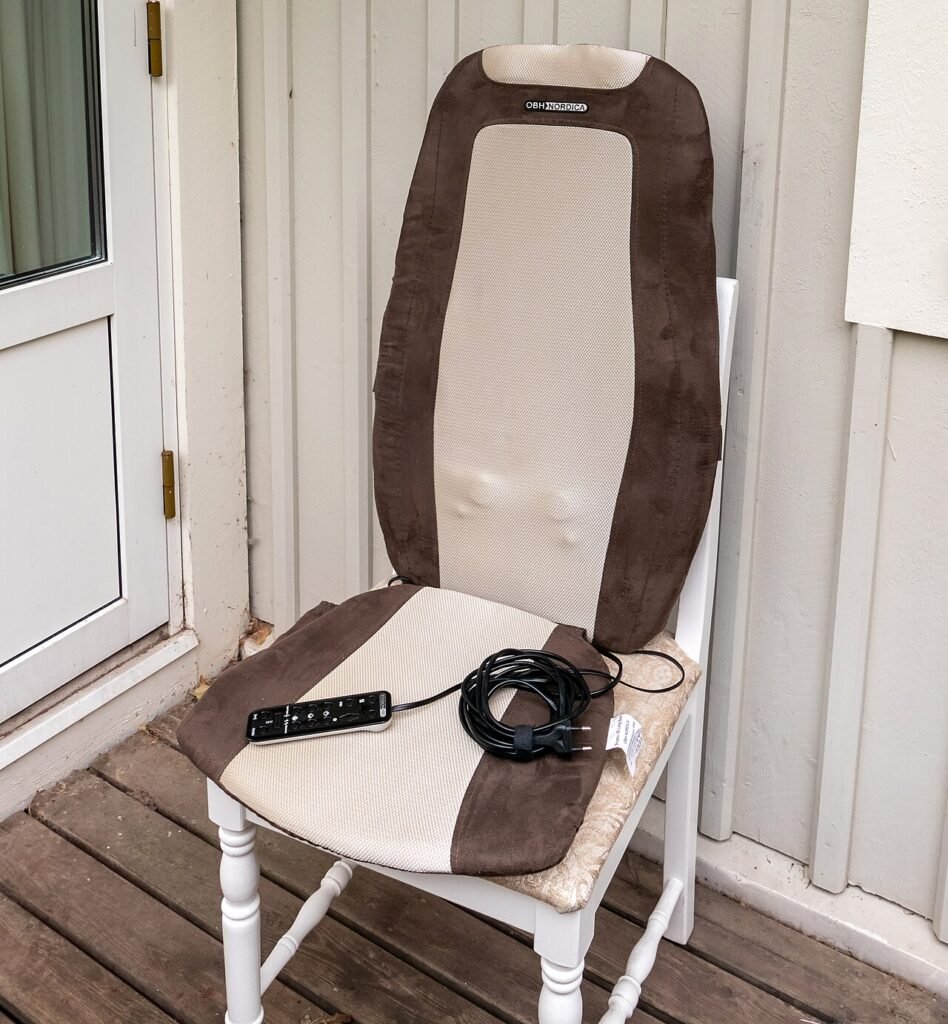
Photo: W.carter / Wikimedia Commons (CC BY 4.0)
Heated vs. Non-Heated Massagers
| Feature | Heated massager | Non-heated massager |
|---|---|---|
| Best for | Stiffness, chronic tension, cold weather | Post-workout soreness, deep knots |
| Feel | Warm, soothing, relaxing | Neutral, more focused on pressure |
| Session length | Usually 15 to 20 minutes with auto shut-off | Varies by device |
| Safety concerns | Burns, overheating, skin with poor feeling | Bruising, overuse |
| Use on fresh injuries | Not recommended | Gentle use may be fine after a few days |
| Typical devices | Shiatsu wraps, pillows, seat cushions | Massage guns, vibration wands |
If deep muscle work after exercise is your main goal, a percussion device may suit you better. See our best massage gun guide for options.
When to Use Heat and When to Use Cold
Heat is not right for every kind of pain. Here is a simple rule of thumb:
| Situation | Heat or cold? | Why |
|---|---|---|
| Chronic stiffness or tight muscles | Heat | Loosens tissue and boosts blood flow |
| Muscle soreness a day or more after a workout | Heat | Eases tightness and stiffness |
| Fresh sprain, strain, or bruise (first 48 hours) | Cold | Reduces swelling and numbs pain |
| Swollen, red, or hot joint | Cold | Heat can make swelling worse |
| Tension headache from tight shoulders | Heat | Relaxes the neck and upper back |
When in doubt, ask a doctor or physical therapist, especially if pain follows an injury.
Watch: Ice or Heat? A Physical Therapist Explains
In this video, Doctor of Physical Therapy Jo explains when heat helps, when cold is better, and how to use each one safely:

Benefits of a Heated Personal Massager
1. Faster Relief From Stiffness
Warm muscles respond to massage more quickly. Many people feel looser after a 15-minute heated session than after a cold one.
2. More Comfortable Pressure
Heat relaxes muscles, so kneading nodes can work without as much discomfort. This makes heated shiatsu devices a good fit for people who find deep pressure too intense.
3. Convenient, Drug-Free Comfort
A heated massager gives you a way to manage everyday aches without reaching for pills. That fits with U.S. guidelines that favor drug-free care first for new back pain.
4. Stress Relief
Warmth and rhythmic motion can be very calming. Many people use heated pillows in the evening to unwind.
5. Cold-Weather Comfort
Stiff muscles are common in winter. A heated massager can help you loosen up on cold mornings.
Who Should Use a Heated Massager?
A heated personal massager is a good fit for:
- Desk workers with tight necks, shoulders, and upper backs
- People with chronic, non-specific lower back stiffness
- Older adults who prefer gentle pressure over deep percussion
- Anyone who finds muscles tense up in cold weather
- People who want a relaxing evening routine
It may be less helpful for athletes who need deep work on large leg muscles or for fresh injuries that need cold therapy.
Safety Tips for Heated Massagers
Heat is safe for most adults when used correctly. Problems usually come from too much heat for too long. Prolonged or repeated heat on the same spot can cause burns or a mottled skin rash called erythema ab igne, sometimes called “toasted skin syndrome.” In rare cases, burns from heating pads have led to serious medical problems.
Follow these rules:
- Use the timer: Choose a device with an auto shut-off, usually 15 to 20 minutes.
- Add a barrier: Keep a layer of clothing or a cover between the device and your skin.
- Never sleep with it on: Falling asleep on a heated device is a leading cause of burns.
- Check your skin: Stop if your skin turns very red, blotchy, or painful.
- Skip damaged skin: Do not use heat on cuts, rashes, or burns.
- Avoid fresh injuries: Use cold for the first 48 hours after a sprain or strain.
- Do not lie on top of it: Body weight can trap heat and press it into the skin.
Who Should Talk to a Doctor First
Ask your doctor before using a heated personal massager if you:
- Have diabetes or nerve damage that reduces feeling in your skin
- Have poor circulation or peripheral artery disease
- Are pregnant, especially before using heat on the belly or lower back
- Have a pacemaker or other implanted device
- Have a history of blood clots
- Have skin conditions or very sensitive skin
People with reduced feeling may not notice when the device gets too hot. That raises the risk of burns.

Photo: Shopify Burst
How to Use a Heated Personal Massager
- Step 1: Read the manual. Check the recommended session length and body areas.
- Step 2: Start with heat off or on low. Let your body get used to the massage first.
- Step 3: Place it correctly. For neck wraps, rest the nodes on the muscles beside your spine, not on the spine itself.
- Step 4: Turn on the heat. Most devices warm up within 3 to 5 minutes.
- Step 5: Keep sessions short. About 15 minutes per area is enough for most people.
- Step 6: Rest between sessions. Give your skin time to cool down before using heat again on the same area.
For more step-by-step advice, see our guide on how to use a personal massager.
What to Look for When Buying a Heated Massager
| Feature | Why it matters |
|---|---|
| Auto shut-off | Prevents overheating and burns |
| Adjustable heat levels | Lets you choose gentle or warmer settings |
| Heat on/off switch | Lets you use massage without heat on fresh injuries |
| Adjustable intensity | Helps match pressure to your comfort |
| Removable, washable cover | Keeps the device clean |
| Cordless or car adapter | Adds flexibility for travel or office use |
| Clear safety certification | Look for a recognized safety mark on electrical devices |
| Return policy | Comfort is personal, so easy returns help |
For whole-body heated massage, many massage chairs include heat in the backrest or seat. Our best massage chair under $1,000 roundup covers models with heat. For tired feet, see our review of the best foot massagers.
Heated Massager vs. a Plain Heating Pad
A heating pad and a heated personal massager both deliver warmth, but they do different jobs. A heating pad gives broad, passive heat over a large area. You can rest it on your back while you read or watch TV, as long as you follow the timer. A heated massager adds movement, such as kneading nodes or vibration, which works on tight spots more directly.
| Factor | Heating pad | Heated massager |
|---|---|---|
| Main action | Passive warmth | Warmth plus kneading or vibration |
| Coverage | Large, flat areas | Targeted areas like the neck or lower back |
| Best for | General stiffness and cramps | Knots and muscle tension |
| Noise | Silent | Low motor hum |
Many people keep both. They use a heating pad for gentle all-over warmth and a heated massager when a specific muscle feels tight.
Common Mistakes to Avoid
- Using heat on a new injury: Fresh sprains and strains need cold first.
- Running sessions too long: More heat is not more healing. Stick to the timer.
- Placing it on bare skin: A thin layer of fabric helps prevent burns.
- Using it while drowsy: Turn it off if you feel sleepy.
- Ignoring numbness: Tingling or numbness is a sign to stop right away.
Frequently Asked Questions
Do heated massagers really work?
They can help with muscle stiffness and everyday aches. Research shows heat therapy relieves short-term low back pain, and massage adds extra relief. They are a comfort tool, not a cure.
How hot does a heated massager get?
Most reach a warm, comfortable range rather than a hot one. Exact temperatures vary by brand, so check the manual.
How long should I use a heated personal massager?
About 15 to 20 minutes per session is a common limit. Many devices shut off automatically at that point.
Can I use a heated massager every day?
Most healthy adults can use one daily for short sessions. Give your skin a break if it looks red or blotchy.
Is heat good for neck pain?
Heat can relax tight neck and shoulder muscles. Avoid strong pressure on the front of the neck.
Should I use heat after a workout?
Right after a hard workout, heat is usually fine if you have no injury. For sudden pain or swelling, use cold instead.
Can I use a heated massager while pregnant?
Ask your doctor first. Many providers advise avoiding heat on the belly and lower back during pregnancy.
Conclusion
A heated personal massager combines two drug-free tools that research supports: heat and massage. Heat therapy has strong evidence for short-term muscle pain relief, and U.S. doctors list it as a first choice for new back pain. Adding gentle kneading or vibration makes the experience even more soothing.
Use heat for stiffness and chronic tension, choose cold for fresh injuries, and always follow the timer. With safe habits, a heated massager can be a simple, comfortable part of your daily routine.
Health note: This article is for general information only and is not medical advice. Talk to your doctor before using heat or massage devices if you have a health condition, injury, or are pregnant.


Hi, I’m Mamon, the content creator behind this blog. I share my experience in blogging, WordPress, SEO, and affiliate marketing through honest product reviews, in-depth buying guides, and practical how-to articles. Every piece of content is thoroughly researched and written to help readers make informed decisions.