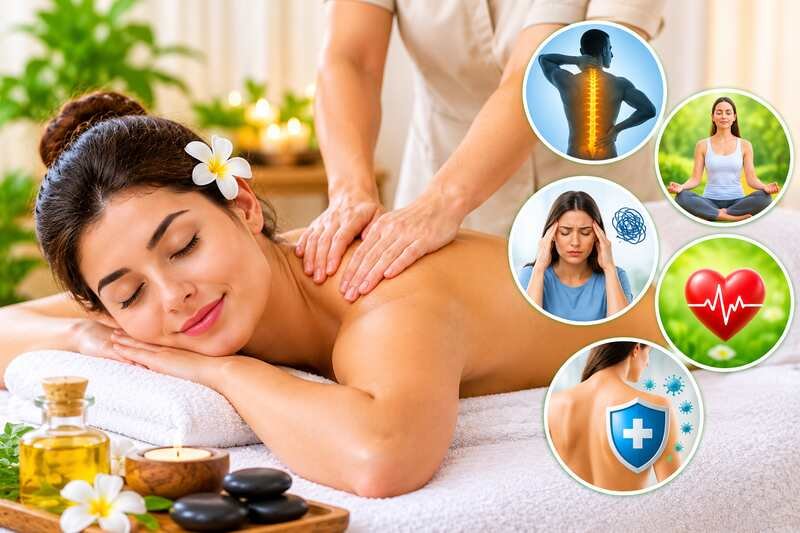
Massage is no longer seen as just a spa luxury. Hospitals, physical therapy clinics, and sports teams across the U.S. now use it alongside standard care. The benefits of massage reach well beyond feeling good for an hour. Research links it to lower anxiety, less pain, faster recovery from exercise, and a calmer heart rate and blood pressure.
This guide pulls together what the science says about the health benefits of massage, how strong the evidence is for each one, and how to get those benefits from professional sessions or home devices. Every major claim below is tied to published research so you can see what is proven and what is still uncertain.
Key Takeaways
- A meta-analysis of 37 randomized studies found that a single massage lowered anxiety, blood pressure, and heart rate, while a course of massage had large effects on anxiety and depression.
- A review of 99 studies on exercise recovery found massage was the most effective method for reducing delayed muscle soreness and fatigue.
- A Cochrane review of 25 trials found massage eased low back pain in the short term.
- In a U.S. neck pain trial, 60-minute sessions two or three times a week worked best.
- The benefits of massage therapy are mostly short to medium term, and regular sessions matter.
How Popular Is Massage in the U.S.?
According to the National Center for Complementary and Integrative Health (NCCIH), 10.9% of U.S. adults used massage therapy in 2022, more than double the 4.8% rate in 2002. That growth reflects how many Americans now see massage as part of health care, not just pampering.
How Does Massage Work?
Scientists are still studying exactly why massage helps. Leading explanations include:
- Nervous system effects: Pleasant touch may shift the body toward “rest and digest” mode, slowing the heart rate.
- Pain signal changes: Pressure and movement may compete with pain signals traveling to the brain.
- Muscle and tissue effects: Massage may ease muscle tension and help tissue move more freely.
- Mental effects: Focused attention, quiet time, and caring touch can lower stress and improve mood.
12 Benefits of Massage Backed by Research
1. Lower Anxiety
The strongest evidence for massage is on anxiety. A landmark meta-analysis in Psychological Bulletin pooled 37 randomized studies. A single session reduced state anxiety, meaning how anxious people felt at that moment. A course of massage reduced trait anxiety, or general anxiety levels, by amounts similar to psychotherapy in other studies.
In a later U.S. trial at Emory University, adults with generalized anxiety disorder who received Swedish massage twice a week for six weeks saw larger drops in anxiety scores than those who got light touch.
2. Less Depression
The same meta-analysis found that reducing depression was one of massage’s largest effects after a course of treatment. Massage is not a substitute for mental health care, but it may be a helpful addition.
3. Lower Blood Pressure and Heart Rate
Single massage sessions reduced blood pressure and heart rate in the meta-analysis. A separate study of 263 adults found average drops of 10.4 mm Hg in systolic pressure and 10.8 beats per minute in heart rate after a deep tissue massage.
4. Faster Recovery From Exercise
A 2018 meta-analysis in Frontiers in Physiology compared recovery methods such as massage, compression, cold water, and active recovery. Massage was the most effective technique for reducing delayed onset muscle soreness (DOMS) and perceived fatigue. Massage and cold exposure were also the most effective methods for lowering markers of inflammation.
5. Relief From Low Back Pain
A 2015 Cochrane review of 25 trials with 3,096 people found that massage beat sham or no treatment for pain and function in the short term for subacute and chronic low back pain. The American College of Physicians also lists massage as a first-line, drug-free option for acute and subacute back pain.
6. Relief From Neck Pain
In a U.S. trial of 228 adults with chronic neck pain, 60-minute massages two or three times a week were much more likely to bring meaningful improvement than a wait list. Shorter 30-minute sessions did not make a significant difference.
7. Less Muscle Tension and Stiffness
Massage loosens tight muscles and helps tissue move more freely. Many people notice better range of motion right after a session.
Photo: Shopify Burst
8. Better Flexibility
A 2023 systematic review of massage guns found they could improve flexibility in the hamstrings, hip flexors, and calves. Hands-on techniques that combine pressure and stretching, such as Thai massage, also aim to improve range of motion.
9. Better Sleep
Many people feel calm and drowsy after massage. A small 2025 crossover study of 12 adults found a 30-minute massage chair session improved sleep efficiency by 5.7%. Larger studies are needed, but the link between relaxation and sleep is promising.
10. Stress Relief
Even without measurable changes in stress hormones, people consistently report feeling less stressed after massage. The meta-analysis found no significant change in cortisol after one session, which suggests the benefits work through other pathways.
11. Comfort During Illness
NCCIH notes that massage may help people with cancer feel better in the short term, including easing pain, fatigue, and anxiety. Many U.S. cancer centers now offer massage as part of supportive care. Patients should always check with their care team first.
12. A Sense of Well-Being and Connection
Caring touch and focused attention can improve mood and a general sense of well-being. For many people, a massage is a rare chance to fully slow down.
Health Benefits of Massage: Strength of Evidence
| Benefit | Strength of evidence | Key data |
|---|---|---|
| Lower short-term anxiety | Moderate to strong | 37-study meta-analysis |
| Less depression with regular sessions | Moderate | Large effect after a course of massage |
| Lower blood pressure and heart rate | Moderate | Reduced after single sessions |
| Less muscle soreness after exercise | Moderate | Most effective of recovery methods studied |
| Short-term low back pain relief | Low to moderate | 25 trials, 3,096 people |
| Neck pain relief | Low to moderate | Best with 60-minute sessions 2 to 3 times a week |
| Better flexibility | Low to moderate | Short-term gains |
| Better sleep | Limited | Small studies only |
| Lower cortisol | Not supported | No significant change in meta-analysis |
| “Detox” or flushing toxins | No evidence | Not supported by research |
Watch: Benefits of Massage Therapy
In this video from The Ohio State University Wexner Medical Center, experts explain the benefits of massage therapy and how it fits into health care:
Benefits of Massage Therapy by Type
Different styles of massage suit different goals:
| Massage type | Main benefits | Best for |
|---|---|---|
| Swedish massage | Relaxation, lower anxiety | First-timers and stress relief |
| Deep tissue massage | Chronic tension and pain relief | Long-term tightness |
| Sports massage | Recovery and flexibility | Athletes and active adults |
| Thai massage | Flexibility and pain relief | People with tight hips and back |
| Trigger point therapy | Relief of specific knots | Referred pain, such as headaches |
| Prenatal massage | Comfort during pregnancy | Pregnant people, with a trained therapist |
| Hot stone massage | Deep relaxation | Stress and muscle tension |
Benefits of Massage for Different Groups
- Desk workers: Massage can ease the neck, shoulder, and upper back tension that builds from long hours at a screen. Pair it with regular movement breaks.
- Athletes and active adults: Research favors massage for reducing post-exercise soreness and fatigue, which can help you train consistently.
- Older adults: Gentle massage may ease stiffness and offer comforting touch. Choose lighter pressure, especially with thin skin or low bone density.
- People with chronic back or neck pain: Massage offers short-term relief and works best alongside exercise and other care your doctor recommends.
- People under stress: Regular sessions show some of the clearest benefits for anxiety and mood.
- Pregnant people: Prenatal massage from a trained therapist may ease back discomfort. Check with your doctor first.
Professional vs. Home Massage: Which Benefits Can You Get?
| Benefit | Professional massage | Home devices |
|---|---|---|
| Lower anxiety and stress | Strong support from research | Likely helpful, less studied |
| Exercise recovery | Supported | Massage guns and rollers can help |
| Back and neck pain relief | Supported short term | Helpful for upkeep |
| Flexibility | Supported, especially with stretching | Short-term gains with massage guns |
| Personalized treatment | Yes, a therapist adapts to you | No |
| Convenience and cost over time | Lower convenience, ongoing cost | High convenience, one-time cost |
How Often Do You Need Massage to Get the Benefits?
Research suggests that dose matters:
- In the neck pain trial, 60-minute sessions two or three times a week for four weeks worked best.
- In the anxiety trial, Swedish massage twice a week for six weeks reduced symptoms.
- In the meta-analysis, the largest effects on anxiety and depression came from a course of sessions, not single visits.
For general well-being, many people book a session every two to four weeks and use home tools in between.
Can You Get the Benefits of Massage at Home?
Home devices do not fully match a trained therapist, but they can deliver some of the same benefits, especially for muscle tension and exercise recovery:
- Massage guns for leg and shoulder recovery. See our best massage gun guide.
- Handheld massagers for the back and shoulders. Compare picks in our best handheld back massager review.
- Massage chairs for hands-free, full-body relaxation. Explore our best massage chair under $1,000 roundup.
- Gym massage chairs for occasional use. Learn the basics in our guide on how to use massage chairs at Planet Fitness.
- Foot massagers for tired feet. See the best foot massagers.
For step-by-step device tips, read our guide on how to use a personal massager.
Photo: Shopify Burst
What the Research Does Not Show Yet
It is just as important to know the limits of the evidence. Many massage studies are small, short, and hard to blind, since people know whether they are getting a massage. Most benefits have been measured over days or weeks, not years. Research has not shown that massage cures medical conditions, boosts long-term immunity, or removes toxins.
That does not make massage less valuable. It simply means the benefits of massage are best viewed as real but modest, and strongest when sessions are regular and part of a wider plan that includes movement, sleep, and medical care when needed.
Risks and Who Should Be Careful
For most healthy adults, massage is low risk. NCCIH notes that rare serious problems, such as blood clots, nerve injury, and bone fractures, have been reported, mostly with vigorous techniques or in people at higher risk. Common minor side effects include soreness for a day or two.
Talk to your doctor before massage if you:
- Have a history of blood clots or take blood thinners
- Have osteoporosis or a recent fracture
- Had recent surgery
- Are pregnant
- Have cancer or are in treatment
- Have an open wound, infection, or contagious skin condition
- Have diabetes with nerve damage
How to Get the Most From a Massage
- Share your goals: Tell the therapist if you want relaxation, pain relief, or recovery.
- Speak up about pressure: Comfortable pressure often works better than intense pressure.
- Be consistent: Regular sessions bring larger benefits than one-off visits.
- Combine with movement: Stretching and exercise help you keep the gains.
- Choose a licensed therapist: Most U.S. states regulate massage therapists.
- Check your benefits: Some HSA and FSA plans cover massage with a doctor’s letter of medical necessity.
Common Myths About Massage Benefits
- “Massage flushes toxins.” There is no good evidence for this.
- “Massage breaks up lactic acid.” Lactic acid clears on its own within hours after exercise.
- “It has to hurt to work.” Strong pain can make muscles tense up and may lead to bruising.
- “One massage fixes chronic pain.” Most benefits are short term and build with regular sessions.
Frequently Asked Questions
What are the main benefits of massage?
The best-supported benefits are lower anxiety, less depression with regular sessions, lower blood pressure and heart rate, faster recovery from exercise soreness, and short-term relief of back and neck pain.
What are the health benefits of massage for the body?
Massage can ease muscle tension, improve flexibility, reduce muscle soreness after exercise, and calm the heart rate. It may also help with sleep.
How long do the benefits of massage last?
Many effects, such as lower anxiety and pain relief, are short term, lasting hours to weeks. Regular sessions help maintain them.
Is it good to get a massage every week?
Weekly massage is safe for most healthy adults. Research on neck pain and anxiety used one to three sessions per week.
Does insurance cover massage therapy?
Some plans cover it when prescribed for a medical condition. Check with your insurer, HSA, or FSA plan.
Are home massagers as good as a massage therapist?
Not fully. Home devices are great for upkeep and recovery, but a trained therapist can adjust to your body and needs.
Can massage help headaches?
Tight neck and shoulder muscles can contribute to tension headaches, and some people find massage helps. See a doctor for frequent, severe, or sudden headaches.
Conclusion
The benefits of massage are backed by a growing body of research. The strongest evidence supports lower anxiety, reduced depression with regular sessions, lower blood pressure and heart rate, and faster recovery from exercise soreness. Massage also offers short-term relief for back and neck pain, especially when sessions are long enough and frequent enough.
To get the most from the health benefits of massage, choose a licensed therapist, be consistent, and pair massage with stretching and movement. Home devices can help you stay on track between visits.
Health note: This article is for general information only and is not medical advice. Talk to your doctor before starting massage if you have a health condition, injury, or are pregnant.

Hi, I’m Mamon, the content creator behind this blog. I share my experience in blogging, WordPress, SEO, and affiliate marketing through honest product reviews, in-depth buying guides, and practical how-to articles. Every piece of content is thoroughly researched and written to help readers make informed decisions.
Leave a Reply