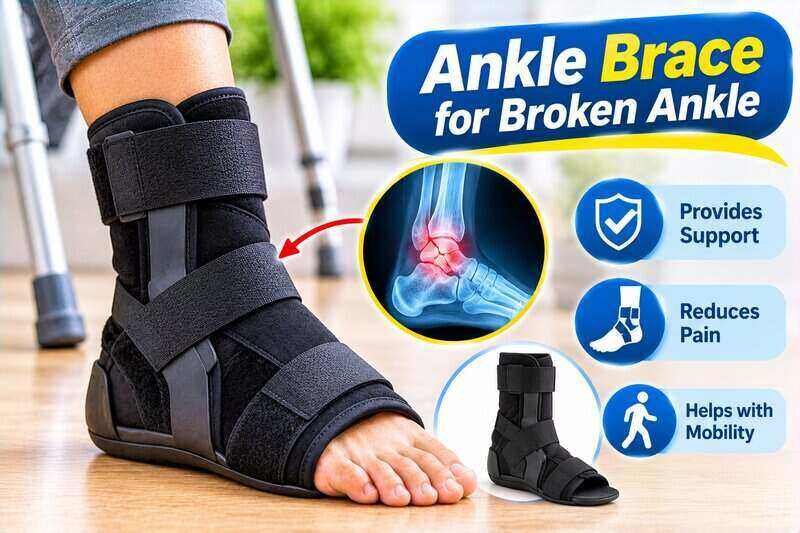
If you have broken your ankle, the support you wear changes as you heal. Most people move from a splint to a cast or walking boot, and then to an ankle brace for a broken ankle once the bone is strong enough to bear weight in a regular shoe. Choosing the right support at each stage protects the healing bone, eases pain, and helps you get back to normal walking sooner.
This guide explains when an ankle brace is used after a fracture, how it differs from a boot or cast, what the research says about early weight bearing, the main brace types, and a realistic broken ankle recovery timeline. It is written for U.S. readers and is general information only, so always follow your orthopedic surgeon’s plan.
Key Takeaways
- Stable, nondisplaced ankle fractures are often treated with a cast or walking boot, then an ankle brace for the final weeks of recovery.
- Unstable or displaced fractures usually need surgery first, followed by a boot and then a brace.
- A 2025 meta-analysis of randomized trials found removable braces allowed earlier weight bearing and an earlier return to work than casts.
- Most people move into a lace-up or stirrup ankle brace 6 to 10 weeks after the injury, once their doctor confirms healing on X-ray.
What Is a Broken Ankle?
A broken ankle, or ankle fracture, means one or more of the bones that form the ankle joint are broken. The ankle joint is made up of three bones:
- Tibia: the shinbone, which forms the inner ankle bone (medial malleolus) and the back of the joint (posterior malleolus)
- Fibula: the thinner outer leg bone, which forms the outer ankle bone (lateral malleolus)
- Talus: the foot bone that sits under the tibia and fibula
According to the American Academy of Orthopaedic Surgeons (OrthoInfo), a fractured ankle can range from a simple break in one bone, which may not stop you from walking, to several fractures that force the ankle out of place and may require that you not put weight on it for a few months.
Common Types of Ankle Fractures
| Fracture type | Bones involved | Usual treatment |
|---|---|---|
| Lateral malleolus fracture | End of the fibula | Often boot or cast if stable |
| Medial malleolus fracture | Inner end of the tibia | Boot or cast if nondisplaced; surgery if displaced |
| Bimalleolar fracture | Inner and outer ankle bones | Usually surgery |
| Trimalleolar fracture | Inner, outer, and back of the tibia | Usually surgery |
| Avulsion fracture | Small chip pulled off by a ligament | Boot, then brace |
| Pilon fracture | Weight-bearing surface of the tibia | Surgery, longer recovery |
OrthoInfo notes that a nondisplaced medial malleolus fracture can be treated with a short leg cast or walking boot. In general, the more bones that are broken, the more unstable the ankle is, and the more likely surgery becomes.
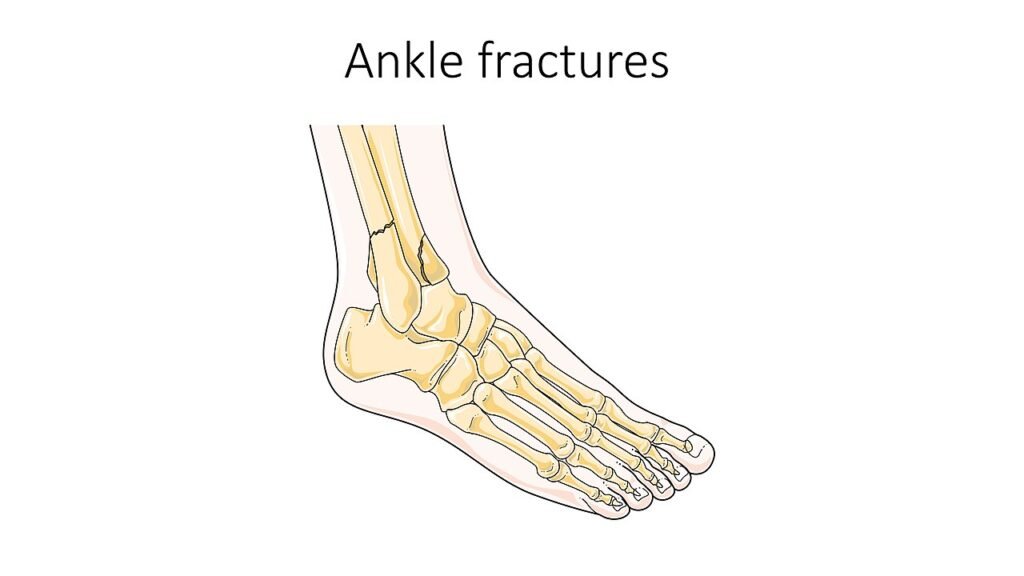
Image: Laboratoires Servier, CC BY-SA 3.0, via Wikimedia Commons
Symptoms of a Broken Ankle
- Immediate and severe pain
- Swelling and bruising
- Tenderness to touch over the bone
- Inability to put weight on the foot
- Deformity, especially if the joint is dislocated
Being able to walk does not rule out a fracture. If you cannot take four steps, or the bone is tender at the back edge of either ankle bone, get an X-ray. Our guide to rolled ankle treatment explains the Ottawa ankle rules doctors use to decide on X-rays.
Splint vs Cast vs Boot vs Brace
Each device has a different role during broken ankle recovery:
| Device | When it is used | Removable? | Weight bearing |
|---|---|---|---|
| Posterior ankle splint | First few days, while swelling peaks | Usually not by the patient | None |
| Short leg cast | Stable or post-surgery fractures needing strict immobilization | No | Often none or partial |
| Walking boot (CAM boot) | Stable fractures, after surgery, or after a cast | Yes, for bathing and sleep if allowed | As your surgeon allows |
| Ankle brace | Late healing and return to shoes | Yes | Full |
Posterior Ankle Splint
A posterior ankle splint is a half-shell of plaster or fiberglass that runs along the back of the leg and under the foot, held in place with an elastic wrap. It is used in the emergency room and for the first days after surgery because it allows room for swelling, which a full cast does not.
Walking Boot
A walking boot, also called a fracture boot or CAM boot, is a rigid shell with straps and sometimes air bladders. It protects the ankle while allowing you to remove it for skin care, bathing, and sometimes gentle exercises.
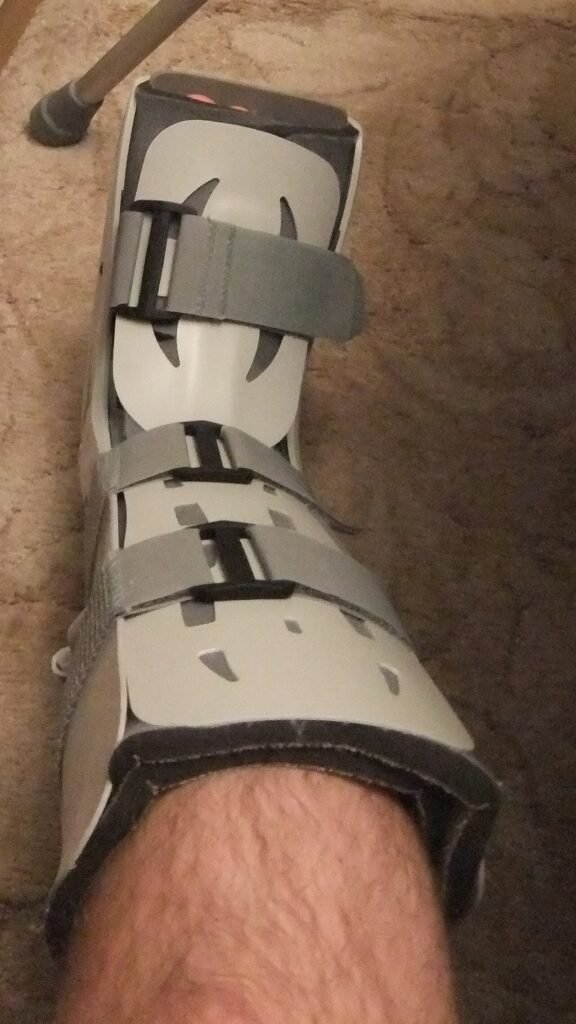
Image: Pagemaker787, CC BY-SA 4.0, via Wikimedia Commons
Ankle Brace
An ankle brace is lighter and fits inside a shoe. It controls side-to-side rolling while letting the ankle bend up and down. After a fracture, it is usually the last support you wear before going without one.
What the Research Says About Boots, Braces, and Early Weight Bearing
For decades, most broken ankles were treated in a cast with no weight bearing for about six weeks. Newer research has shifted practice toward removable supports and earlier walking for suitable fractures.
- A 2025 meta-analysis of randomized controlled trials in Frontiers in Medicine found that braces offered an advantage in promoting early weight bearing, which improved recovery of ankle function, and allowed patients to return to work earlier than cast immobilization.
- A randomized trial of stable Weber B (outer ankle) fractures, published in 2023, concluded that weight bearing and mobilization in a walking boot may be a safe treatment for these patients.
- A large UK trial of 669 patients across 20 hospitals reported no significant difference in function between casts and removable boots after surgery, with similar complication rates.
The takeaway: for the right fracture, a removable boot or brace with early, guided weight bearing appears at least as good as a cast and may get you back to work sooner. The key words are “for the right fracture.” Your surgeon decides when and how much weight is safe.
When Can You Use an Ankle Brace for Broken Ankle Recovery?
Most people move into an ankle brace for a broken ankle when:
- X-rays show the bone is healing well, typically 6 to 10 weeks after injury
- You can walk in the boot with little or no pain
- Swelling has gone down enough to fit into a supportive shoe
- Your surgeon or physical therapist gives the go-ahead
For example, some orthopedic practices treat stable lateral malleolus fractures with a walking boot for 5 to 6 weeks, then switch patients to regular shoes with a lace-up ankle brace. Avulsion fractures are often moved into a brace even sooner, once walking is comfortable.
Types of Ankle Braces After a Fracture
| Brace type | Support level | Best for | Pros | Cons |
|---|---|---|---|---|
| Stirrup brace (air or gel) | High side-to-side | Late fracture healing, first weeks in shoes | Fits in sneakers, easy on and off | Bulkier in dress shoes |
| Lace-up brace with straps | Moderate to high | Return to walking and light sport | Adjustable, low profile | Takes longer to put on |
| Hinged brace | High | Return to sport, weak ankle after fracture | Blocks rolling, allows up-down motion | More expensive |
| Compression sleeve | Low | Swelling control late in recovery | Comfortable, cheap | Little mechanical support |
For top-rated options in each category, see our main guide to the best ankle braces. If your fracture came with a bad sprain, our roundup of the best ankle brace for a sprained ankle compares stirrup and lace-up models in detail.
How to Wear the Brace
- Wear a thin, moisture-wicking sock under the brace
- Choose a supportive sneaker with a wide toe box and removable insole
- Tighten straps snugly, but loosen them if your toes tingle, go numb, or change color
- Wear it for walking and standing at first, then wean off as strength returns
Our step-by-step guide on how to wear an ankle brace with shoes covers fit tips, and our article on how ankle braces work explains what each type controls.
Checklist: Choosing an Ankle Brace for Broken Ankle Recovery
Once your surgeon approves the switch, use this checklist to pick a brace that fits your stage of healing:
- Support level: in the first weeks out of the boot, a stirrup or lace-up brace with figure-eight straps gives more protection than a sleeve
- Swelling room: choose adjustable straps or laces, because the ankle may still swell by evening
- Shoe fit: bring the shoes you plan to wear, since many braces add half a size
- Skin protection: padded liners help if you have a surgical scar or sensitive skin over hardware
- Easy on and off: hook-and-loop closures help if bending down is still hard
- Sizing: measure around the ankle and check shoe size against the brand chart, since sizing varies
- Insurance: braces prescribed by a doctor may be covered as durable medical equipment, so ask for a prescription and keep your receipt
Practical Tips for Life in a Boot
The walking boot stage can be the hardest part of broken ankle recovery. These tips make it easier:
- Even up your legs: a boot adds height, so wear a shoe leveler or a thicker-soled shoe on the other foot to protect your hips and back
- Check your skin daily: look for redness or blisters where the straps press
- Keep it dry: use a cast cover in the shower if you must wear the boot
- Elevate often: keep the ankle above heart level for 20 to 30 minutes several times a day to control swelling
- Move what you can: wiggle your toes and work your knees and hips to keep blood flowing
- Plan your home: clear walkways, add night lights, and keep essentials within easy reach to avoid falls
- Driving: do not drive with a boot on your right foot, and check with your doctor before driving at all
Watch: Broken Ankle Recovery Timeline
This video walks through the stages of recovery, from crutches and casts to boots and returning to normal walking.
Broken Ankle Recovery Timeline
Every fracture heals differently, but this is a typical timeline for a stable or surgically repaired ankle fracture in a healthy adult:
| Time after injury | Typical stage | Support |
|---|---|---|
| Days 0 to 14 | Swelling control, often no weight bearing | Splint, then cast or boot |
| Weeks 2 to 6 | Protected weight bearing as allowed | Cast or walking boot |
| Weeks 6 to 10 | Full weight bearing, start physical therapy | Boot to brace transition |
| Weeks 10 to 16 | Strength, balance, normal walking | Ankle brace for activity |
| Months 4 to 6 | Return to running and sport | Brace for sport if advised |
| Up to 12 months | Swelling and stiffness slowly settle | As needed |
It is common for the ankle to swell at the end of the day for several months after the bone has healed.
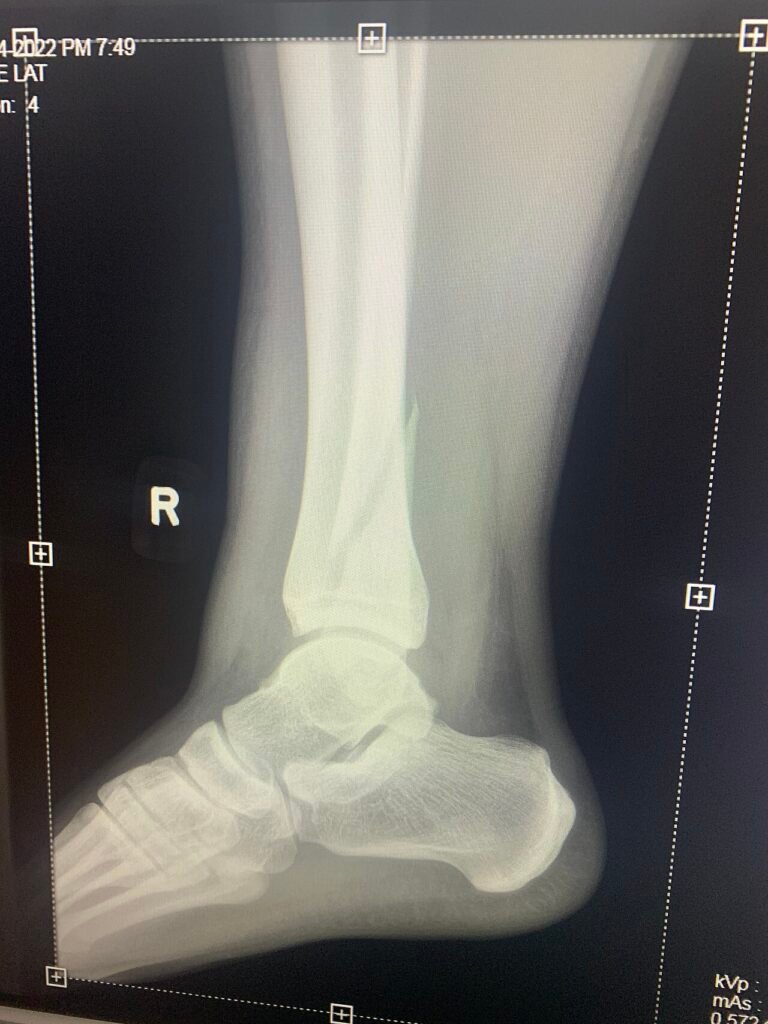
Image: Zuluetae24, CC BY-SA 4.0, via Wikimedia Commons
Staying Fit and Rehabbing Safely
While your ankle heals, you can keep the rest of your body strong. Our guide on how to exercise with a broken ankle shows eight upper body workouts you can do while seated.
Once your surgeon clears you, a physical therapist will work on:
- Ankle range of motion, especially bending the foot up
- Calf and foot strength
- Balance and proprioception
- Normal walking pattern without a limp
Our guide to ankle rehabilitation exercises explains each stage. If you need extra support while walking, read our comparison of a rollator vs walker or learn how to use a walking stick correctly.
Warning Signs During Recovery
Call your doctor right away if you notice:
- Calf pain, swelling, or warmth in the leg, which can signal a blood clot
- Shortness of breath or chest pain (call 911)
- Numbness, tingling, or pale, cold toes
- Increasing pain or a new deformity
- Redness, drainage, or fever after surgery
- Pressure sores or blisters under a boot or brace
Frequently Asked Questions
Can I use an ankle brace instead of a boot for a broken ankle?
Only if your doctor says so. Some minor avulsion fractures are treated with a brace early, but most fractures need a cast or boot first. A brace is usually the final stage of support.
How long do you wear an ankle brace after a broken ankle?
Many people wear a brace for 4 to 8 weeks after leaving the boot, and some continue to wear one during sport for several months.
Can I walk on a broken ankle with a brace?
Yes, once your surgeon allows full weight bearing. Walking in a brace too early can shift the bone, so follow your weight-bearing instructions closely.
Do I need to sleep in my brace or boot?
Usually not with a brace. Some doctors want you to sleep in the boot during the first weeks, especially after surgery. Ask your care team.
Will my ankle ever be the same after a fracture?
Most people return to normal daily activities, and many return to sport. Some stiffness, swelling, or aching in cold weather can linger, and some fractures raise the risk of arthritis later in life.
The Bottom Line
An ankle brace for a broken ankle is usually the last step in recovery, after a splint, cast, or walking boot has protected the healing bone. Research supports removable boots and braces with early, guided weight bearing for suitable fractures, which may speed return to work and function. Choose a stirrup or lace-up brace that fits your shoe, follow your surgeon’s weight-bearing plan, and pair the brace with physical therapy to rebuild strength and balance.
This article is for general information and is not medical advice. Always follow the instructions of your orthopedic surgeon or physical therapist.

Hi, I’m Mamon, the content creator behind this blog. I share my experience in blogging, WordPress, SEO, and affiliate marketing through honest product reviews, in-depth buying guides, and practical how-to articles. Every piece of content is thoroughly researched and written to help readers make informed decisions.
Leave a Reply