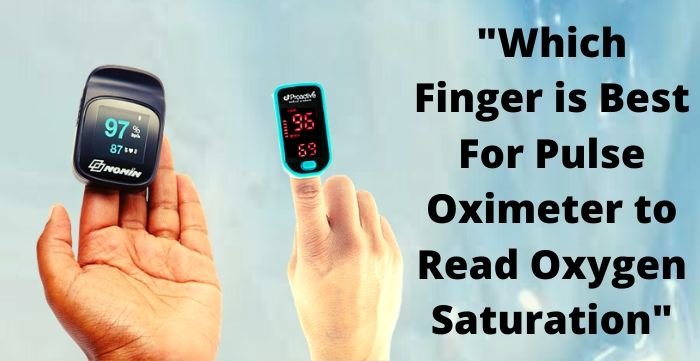
Pulse oximetry is a painless, noninvasive test that measures your blood oxygen saturation (SpO2) and pulse rate in seconds. It’s a simple device, but the finger you clip it onto can quietly change the number on the screen. If you’ve ever tested two fingers back to back and gotten two different readings, you already know the question is worth answering properly. The pulse oximeter is a small, clip-like device usually placed on a fingertip to take its reading. Hospitals and emergency rooms rely on it constantly, and many U.S. households now keep one in the medicine cabinet too. In this guide, you’ll learn exactly which finger is best for pulse oximeter readings, why it matters, what the research actually says, and how to get a reliable number every time.
Key Takeaways
- The middle and index fingers of your dominant hand generally give the most consistent pulse oximeter readings
- The thumb and pinky are not recommended; they’re harder to clip securely and tend to produce less stable readings
- Peer-reviewed studies show some finger-to-finger variation even in healthy adults, so the “best” finger is a starting point, not an absolute rule
- Warm hands, bare nails, and stillness matter more than which single finger you pick
- A normal SpO2 reading is 95-100%; consistent readings below 90% warrant medical attention regardless of which finger you used
Which Finger Is Best for Pulse Oximeter Readings?
Most healthcare professionals reach for the middle or index finger first, and for good reason. These two fingers tend to have larger, more consistent blood vessels near the surface, which gives the device’s light sensors a cleaner signal to read.
The Short Answer
Use the middle or index finger on your dominant hand. If you’re right-handed, that means your right middle or right index finger; if you’re left-handed, use the left hand instead. The ring finger is a solid backup if your middle or index finger has an injury, poor circulation, or a manicure you don’t want to remove.
Why the Dominant Hand?
The dominant hand typically has slightly better circulation from regular use, which can produce a marginally stronger, steadier pulse signal. The difference is small, but it’s one more reason clinicians default to it when every fraction of a percent matters.
Fingers to Avoid
- Thumb: too wide for most consumer clips to seat properly
- Pinky: too narrow, which can let outside light interfere with the sensor
- Any finger with an injury, cold skin, nail polish, or an artificial nail
| Finger | Recommended? | Why |
|---|---|---|
| Middle | Best choice | Largest, most stable readings in most studies |
| Index | Best choice | Easy to position, consistently accurate |
| Ring | Good backup | Comparable accuracy to index/middle |
| Thumb | Not recommended | Too wide for a secure, even clip |
| Pinky | Not recommended | Too narrow; less reliable signal |
What Does the Research Actually Say?
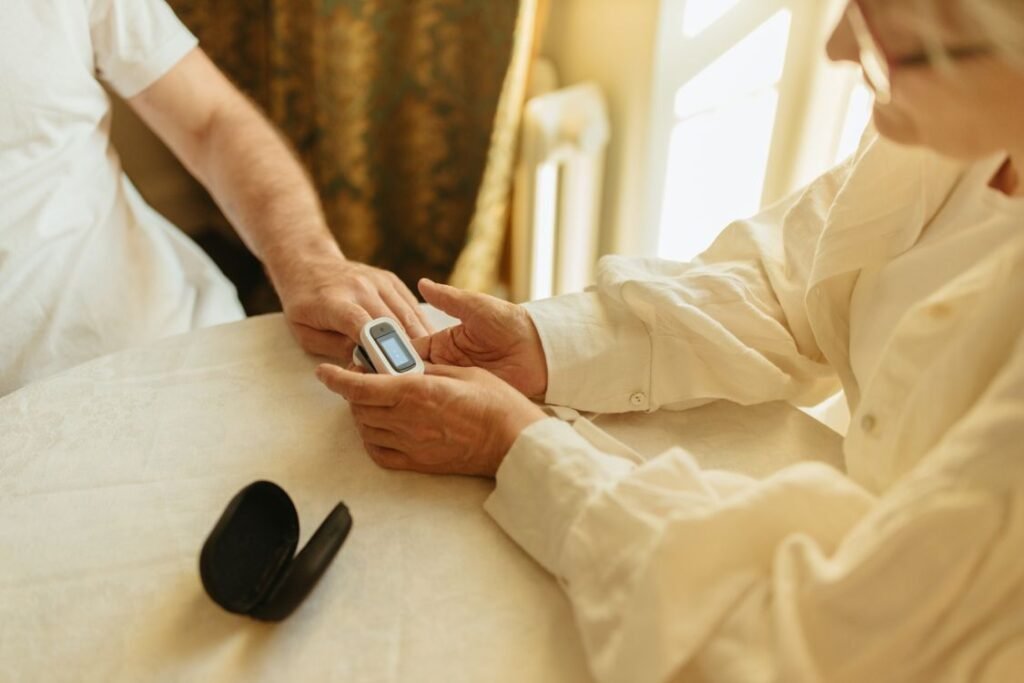
Finger choice has been studied more than you’d expect. A comparison of SpO2 values recorded from different fingers, published in the peer-reviewed literature, found measurable differences between fingers on the same hand, even in healthy volunteers, though the gap was usually small enough not to change a clinical decision. A separate cross-sectional study on perfusion index agreement across fingers reached a similar conclusion: readings are generally comparable finger to finger, but the middle and index fingers produced the most consistent signal strength.
The practical takeaway is not that other fingers are unsafe to use, but that switching fingers between readings can explain a small, confusing jump in your numbers. If you’re tracking oxygen levels over days or weeks, using the same finger every time makes your trend line far more meaningful than the raw number from a single reading.
Video: How to correctly place a pulse oximetry sensor for an accurate reading.
How Finger Pulse Oximetry Works
Now that you know which finger is best for pulse oximeter readings, it helps to understand why the device even cares which finger you use.
An accurate pulse oximeter shines two wavelengths of light, red and infrared, through your fingertip. Those wavelengths target hemoglobin, the protein in your blood responsible for carrying oxygen. Oxygen-rich and oxygen-poor hemoglobin absorb the light differently, and the device calculates your SpO2 from that difference. The same light pulses double as a pulse counter, which is where your beats-per-minute reading comes from.
A few things influence how well this process works on any given finger:
- Skin thickness and nail bed size, which affect how much light reaches the sensor
- Blood flow to that specific finger at that moment
- How well the clip seats around the fingertip
The device is more accurate when your hands are warm, and because oxygen levels naturally shift a little throughout the day, it’s worth taking a few readings at different times rather than trusting a single number. For a full walkthrough of the process, see our guide on how to read an oximeter correctly at home.
Step-by-Step: Getting an Accurate Reading From the Right Finger
- Warm your hands and remove any nail polish, gel color, or artificial nails
- Sit still for a few minutes before testing
- Choose your dominant hand’s middle or index finger
- Clip the device on with the fingernail facing the light source
- Rest your hand at heart level and stay still
- Wait 30-60 seconds for the reading to stabilize
- Record the highest consistent number, not the first flash of digits
- Use the same finger each time you retest, so your trend is comparing like with like

What Is a Normal Pulse Oximeter Reading?
For most healthy adults, a normal SpO2 reading falls between 95% and 100%, regardless of which recommended finger you use. Readings in the 90-94% range are considered borderline and worth monitoring closely, while anything consistently below 90% is generally considered low and worth a call to your doctor.
A single low reading isn’t automatically an emergency, especially if it doesn’t repeat and you have no other symptoms. Quality consumer pulse oximeters are typically accurate within about 2-4% of a hospital-grade device, so a one-off dip could simply be a measurement quirk. If low readings keep showing up, or come with shortness of breath, chest discomfort, or confusion, treat that as a signal to seek medical care rather than a device error.
How Accurate Is Finger Pulse Oximetry?
When used correctly on a recommended finger, consumer pulse oximeters are generally accurate to within a few percentage points of clinical devices, and the same core technology is used in emergency rooms and operating rooms every day. That said, accuracy isn’t guaranteed by finger choice alone.
The facts about pulse oximetry worth knowing include that skin pigmentation, cold skin, and poor circulation can all reduce accuracy regardless of which finger you use, and that home devices can occasionally give a faulty reading even when everything is done correctly. If you get a low reading paired with real symptoms, seek medical attention. A low reading with no other symptoms is more likely a measurement issue than a medical emergency, but it’s still worth a recheck on a different, warm, polish-free finger.
What Can Cause Inaccurate Readings, No Matter the Finger?
Choosing the right finger only gets you part of the way to an accurate number. These factors can throw off a reading on any finger:
- Nail polish, gel manicures, or artificial nails, which block light transmission
- Cold hands or poor circulation, which weaken the signal
- Movement or talking during the measurement
- Tight rings on the testing finger
- Bright ambient light or direct sunlight hitting the sensor
Removing nail polish and staying still during the reading make a bigger difference than most people expect, often more than the specific finger you choose.
When Switching Fingers Doesn’t Fix a Low Reading
If you’ve tried your middle finger, then your index finger, warmed your hands, and removed your nail polish, and you’re still seeing a low number, it’s time to stop troubleshooting the device and start paying attention to your body. Consistent readings below 90%, or any reading paired with shortness of breath, chest pain, confusion, or bluish lips or fingertips, should prompt a same-day call to your doctor or a trip to urgent care. A sudden drop with severe symptoms warrants calling 911. If you manage a chronic condition like COPD, asthma, or sleep apnea, ask your doctor what your personal normal range should look like, since it may run a little different from the general 95-100% guideline. Our guide on how to increase oxygen saturation levels is a useful next read if your numbers run low.
Top Pulse Oximeters to Consider
If you’re shopping for a new device, look for one with a snug, even clip that comfortably fits a middle or index finger, a clear display, and FDA clearance. A few consistently well-reviewed options:
1. Mibest Dual Color OLED Fingertip Pulse Oximeter
A favorite for its affordability, build quality, and reliability. It’s portable, straightforward to use, and ready out of the box.
2. Innovo Deluxe Fingertip Pulse Oximeter
A strong budget pick that doesn’t sacrifice reliability or accuracy, which is why it consistently ranks near the top of our list.
3. AccuMed CMS-50D Fingertip Pulse Oximeter
Features a bright LED display with automatic screen rotation, so the numbers stay readable no matter which way your hand is turned. For a broader comparison, see our best pulse oximeter reviews and our fingertip pulse oximeter buyer’s guide.
Frequently Asked Questions
Which finger is best for a pulse oximeter?
The middle or index finger of your dominant hand. The ring finger is a good backup. Avoid the thumb and pinky, which don’t fit most clips as securely.
Does it matter which finger I use each time?
It can. Switching fingers between readings can cause small, confusing differences. Stick with the same finger so you’re comparing like with like over time.
Can I use a pulse oximeter on a child’s finger?
Most consumer devices are sized for adult fingers and may not clip securely on a small child’s finger. Check the manufacturer’s guidance, and ask your pediatrician about pediatric-specific devices if needed.
Why does my reading change when I switch fingers?
Small differences in blood vessel size, circulation, and how snugly the clip fits can all shift the number slightly. This is normal and documented in peer-reviewed research, and it’s rarely something to worry about on its own.
What’s a normal pulse oximeter reading?
95% to 100% SpO2 for most healthy adults, with a resting pulse rate around 60-100 bpm. For a full breakdown of your numbers, see our guide on understanding PR and BPM on a pulse oximeter.
The Bottom Line
A pulse oximeter is a genuinely useful device for anyone managing a health condition, or simply keeping an eye on their wellbeing at home. Most of these devices live in hospitals and clinics, but having one in your own medicine cabinet is a reasonable, low-cost way to stay informed.
Knowing which finger is best for pulse oximeter readings, your middle or index finger on your dominant hand, gets you most of the way to an accurate number. The rest comes down to technique: warm hands, bare nails, stillness, and consistency from one reading to the next. Used that way, your pulse oximeter becomes a genuinely reliable home health tool rather than a source of confusing, contradictory numbers.

Hi, I’m Mamon, the content creator behind this blog. I share my experience in blogging, WordPress, SEO, and affiliate marketing through honest product reviews, in-depth buying guides, and practical how-to articles. Every piece of content is thoroughly researched and written to help readers make informed decisions.
Leave a Reply