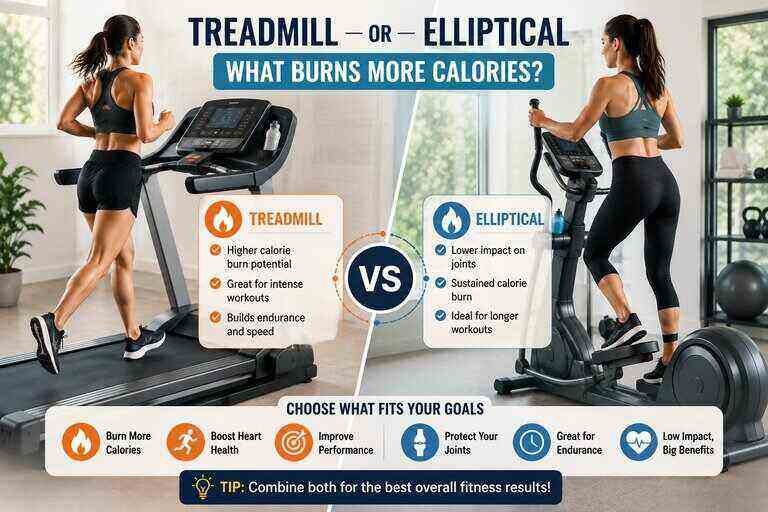
What burns more calories treadmill or elliptical is one of the most common questions gym-goers ask before picking a cardio machine. The short answer, backed by research rather than guesswork, is that a treadmill generally burns more calories at the same perceived effort. That does not automatically make it the right choice for every reader, though. This guide breaks down the actual numbers and explains why the gap exists. It also helps you decide which machine fits your body and your goals.
Key Takeaways
- At a matched, moderately hard effort, research shows a treadmill burns roughly 40% more calories per minute than an elliptical.
- The gap comes down to biomechanics. Weight-bearing movement against gravity costs your body more energy than the elliptical’s suspended, gliding motion.
- An elliptical still offers a strong calorie burn with far less impact on your knees, hips, and lower back.
- Incline, resistance, and pace matter more than the machine itself once you are burning calories consistently.
- Your joint health, injury history, and which machine you’ll actually use regularly should weigh as heavily as the calorie math.
What Burns More Calories Treadmill or Elliptical? The Research Answer
A 2020 ACE-sponsored study measured energy expenditure across ten indoor cardio machines at a matched rating of perceived exertion. At a “somewhat hard” effort level, the treadmill produced roughly 11.8 calories per minute. The elliptical produced about 8.5 calories per minute at that same effort. Over a 30-minute session, that works out to close to 354 calories on the treadmill versus around 255 on the elliptical, a difference of about 40%.
The researchers pointed to weight-bearing movement as the main reason. Running or walking on a moving belt forces your body to work against gravity with every step. That raises your heart rate and oxygen demand more than the elliptical’s smoother, suspended stride.
Calories Burned by Body Weight: A Side-by-Side Look
Exact numbers depend on your body weight, pace, and effort. General activity data from Harvard Health still gives a useful comparison for 30 minutes of exercise.
| Activity (30 minutes) | 125 lbs | 155 lbs | 185 lbs |
| Elliptical trainer, general use | 270 cal | 324 cal | 378 cal |
| Running, 5 mph (12 min/mile) | 240 cal | 288 cal | 336 cal |
| Running, 7.5 mph (8 min/mile) | 375 cal | 450 cal | 525 cal |
Notice that a brisk elliptical session actually beats a slow jog for calorie burn. It’s the faster treadmill paces that pull ahead. According to Harvard Health’s activity calorie chart, intensity matters more than the type of machine for most of the difference you’ll see on your fitness tracker.
Body weight changes the raw numbers too. A 185-pound person burns noticeably more than a 125-pound person doing the identical workout. Moving a larger mass simply takes more energy. This is normal physiology, not a flaw in either machine. It applies whether you are comparing a treadmill session to an elliptical session, or comparing your own results to a friend’s.
Does Adding Incline Change What Burns More Calories Treadmill or Elliptical?
Yes, and this is where the gap between the two machines can shrink considerably. Walking at a steep treadmill incline recruits your glutes and hamstrings much like an elliptical does. It still keeps the weight-bearing demand that drives higher calorie burn. A 15% incline walk at a moderate pace can rival, or even exceed, the calorie burn of a faster flat run.
Most ellipticals offer a comparable lever: resistance level. Cranking up resistance while keeping your stride rate steady increases the muscular effort required from your legs. That narrows the calorie gap versus a treadmill at a similar perceived effort. Neither machine is fixed at one intensity. The “which burns more” question really depends on how you set it up each session.
Why the Treadmill Has the Edge at the Same Effort
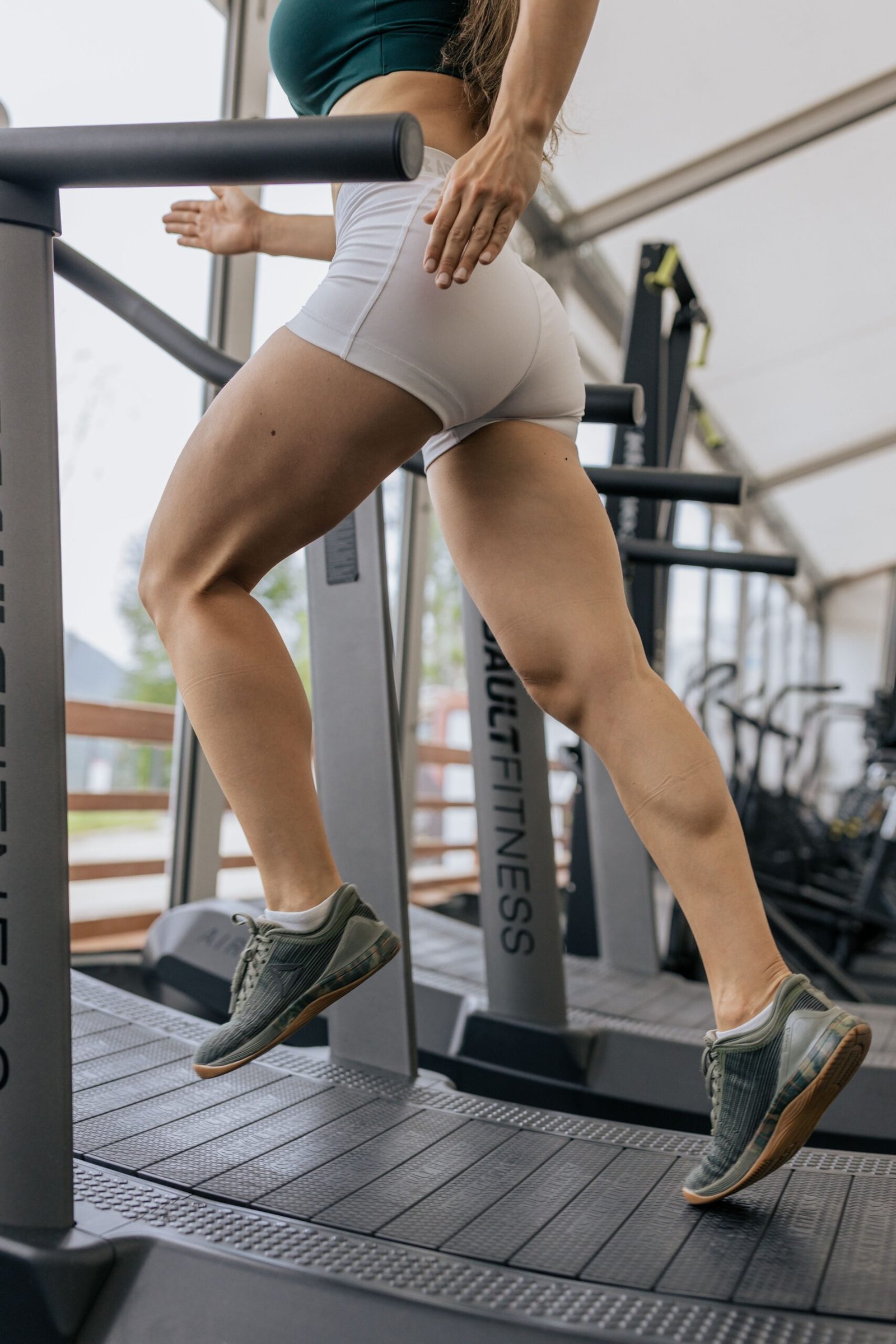
Every step on a treadmill belt is a small weight-bearing impact. Your leg muscles, core, and cardiovascular system all work harder to stabilize your body and propel you forward. An elliptical, by contrast, keeps your feet on suspended pedals moving in a fixed elliptical path. This lowers the mechanical demand on your body for a given speed. That is exactly why it feels easier at a similar pace.
This same quality is why physical therapists often recommend an elliptical during recovery from a knee, hip, or back injury. Lower mechanical demand also means lower joint stress.
When the Elliptical Might Still Be the Better Choice
Raw calorie numbers do not tell the whole story. Several readers are better served by the lower-impact machine even though it burns somewhat fewer calories per minute.
- Joint pain or arthritis. An elliptical’s gliding motion puts far less pressure through the knees and hips than repeated foot strikes.
- Recovering from injury. Many rehab programs introduce an elliptical before a return to running.
- Upper body engagement. Moving handlebars let you work your arms and shoulders while your legs pedal, something a treadmill session does not offer.
- Consistency over intensity. A machine you’ll actually use several times a week beats one that burns slightly more per session but sits unused.

Watch: Treadmill vs. Elliptical for Weight Loss
This video walks through the calorie-burn tradeoffs discussed above. It also adds a few practical tips for getting more out of either machine.
How to Get More Calorie Burn Out of Either Machine
Regardless of what burns more calories treadmill or elliptical turns out to be for your specific routine, a few adjustments make a bigger difference than the machine choice itself.
- Add incline or resistance. Raising the incline on the belt, or increasing resistance on the pedals, forces your body to work harder for the same speed.
- Try intervals. Alternating short bursts of higher effort with recovery periods burns more total calories than a steady, flat pace.
- Use your arms. Pumping the moving handlebars on an elliptical, or swinging your arms naturally while running, recruits more muscle mass.
- Track your heart rate. Staying in a higher training zone keeps your calorie burn closer to its potential on either option. Keep that zone safe and sustainable, though, rather than maxed out every session.
Treadmill vs. Elliptical: Quick Comparison
The table below breaks down what burns more calories treadmill or elliptical alongside the other differences that matter most for your decision.
| Factor | Treadmill | Elliptical |
| Calorie burn at matched effort | Higher | Moderate |
| Joint impact | Higher | Lower |
| Muscles targeted | Calves, hamstrings, glutes, quads, core | Full lower body plus arms and shoulders with handlebars |
| Maintenance | Belt lubrication, periodic centering | Generally lower upkeep |
| Best for | Runners, higher calorie targets, leg strength | Joint-friendly cardio, injury recovery, full-body engagement |
Which One Should You Choose?
Start with your body, not the spreadsheet. If you have healthy joints and want to maximize calories burned in a given session, a treadmill is the stronger option. This is especially true once you add incline or speed intervals. If you deal with knee, hip, or back discomfort, or you’re returning from an injury, an elliptical is worth a close look. It delivers a genuinely effective cardio workout with much less wear on your body. Many people benefit most from alternating between the two throughout the week. Try the elliptical on recovery days and the treadmill when you want a harder push.
Your goal matters as much as your joints. Someone training for a 5K needs treadmill-specific running practice regardless of the calorie math. Running form and pacing simply do not transfer from an elliptical stride. Someone focused purely on daily calorie burn with minimal injury risk may lean elliptical. This is especially true in the first few months of a new fitness routine. Someone short on space at home might simply choose whichever machine fits the room. Consistent use beats theoretical efficiency every time.
It is also worth asking a physical therapist or trainer for input if you have a diagnosed joint condition. Individual circumstances can outweigh general guidance like this article.
Common Mistakes That Skew Your Calorie Burn
- Holding the handrails. Gripping a treadmill’s front bar for balance takes weight off your legs. This can lower calorie burn by a meaningful margin.
- Relying only on the console estimate. Built-in calorie counters use generic formulas and can overestimate or underestimate your actual burn by a wide range.
- Skipping a warm-up. Jumping straight into a hard pace increases injury risk without meaningfully improving your total calorie burn for the session.
- Never changing intensity. Your body adapts to a repeated routine over time, which gradually reduces the calorie burn of the exact same workout.
Related Cardio Machine Guides
Want to dig deeper into elliptical-specific numbers? Our guide on how many calories an elliptical burns breaks down intensity levels in more detail. Curious how a stationary bike stacks up instead? See our comparison of exercise bike vs. treadmill for weight loss. Still shopping for equipment? Our guides to the best treadmills under $1,000 and the best ellipticals under $1,000 can help you compare models.
Frequently Asked Questions
What burns more calories treadmill or elliptical at the same speed setting?
The treadmill typically burns more. Weight-bearing movement demands more energy than the elliptical’s gliding motion, even at a matching speed number.
Is 30 minutes on the elliptical enough to lose weight?
It can contribute meaningfully to weight loss, especially combined with a calorie-appropriate diet. Results still depend on effort level, frequency, and consistency over time.
Does incline on a treadmill really increase calorie burn?
Yes. Even a modest incline significantly raises the effort your legs and cardiovascular system need to maintain the same pace.
Can beginners use a treadmill safely?
Most beginners do well starting with a brisk walk and gradually adding incline or jogging intervals as fitness improves.
Is the elliptical bad for building muscle?
No, though it favors endurance over strength. It engages your glutes, quads, hamstrings, and calves, plus your arms and shoulders if you use the handlebars.
Which machine is gentler after knee surgery?
An elliptical is generally recommended for lower joint impact. Always confirm timing and appropriate exercise types with your physical therapist or surgeon first.
Do I need to alternate between the two machines?
It’s not required, but alternating can reduce overuse injuries and keep workouts from feeling repetitive. It also gives you a well-rounded cardio routine.
How many calories does a 30-minute treadmill run burn?
At a 5 mph pace, a 155-pound person burns roughly 288 calories in 30 minutes. Faster paces and added incline both push that number higher.
Which machine is quieter for home use?
Ellipticals tend to run quieter overall, since there is no belt friction or foot-strike impact. Both machines still vary by model and build quality.
Should I trust the calorie counter on my machine’s console?
Treat it as a rough estimate rather than an exact figure. Console readings often run higher than a fitness tracker or heart rate monitor would show for the same session.
Can I switch between a treadmill and an elliptical in the same workout?
Yes. Alternating between the two in a single session varies muscle recruitment and joint load. It also keeps your heart rate elevated throughout.
If your main goal is core and stomach toning rather than overall calorie burn, see our breakdown of whether the elliptical works your stomach for a closer look.
Bottom Line
When it comes to what burns more calories treadmill or elliptical, the research points clearly to the treadmill at a matched effort level. That does not mean it’s the automatic winner for everyone. Your joints and injury history matter just as much as the raw calorie count. So does which machine you’ll actually stick with. Whichever you choose, adding incline, resistance, or intervals will do more for your results than the machine label ever will.

Hi, I’m Mamon, the content creator behind this blog. I share my experience in blogging, WordPress, SEO, and affiliate marketing through honest product reviews, in-depth buying guides, and practical how-to articles. Every piece of content is thoroughly researched and written to help readers make informed decisions.
Leave a Reply