

Wearing a back brace while sitting is fine for many people, and it can help some people with lower back pain get through long hours at a desk or behind the wheel. But sitting changes how a brace fits. A brace that feels perfect when you stand can dig into your hips, push on your stomach, or nudge you into a slump once you sit down.
This guide explains when wearing a back brace while sitting helps, when it does not, how to adjust your brace for sitting, and which seated setups and habits do more for your back than any brace. If you are still choosing a brace, our guide to the best lumbar support belt compares 10 options.
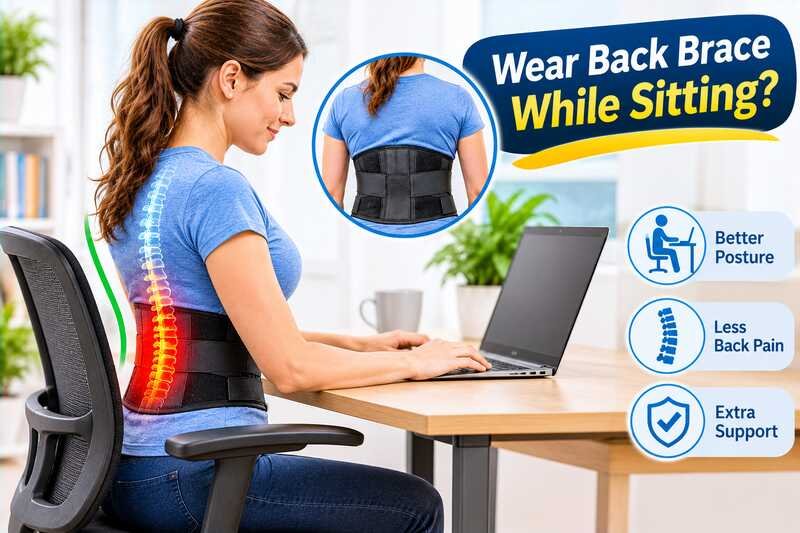

Is It OK to Wear a Back Brace While Sitting?
Yes, for most people, as long as the brace fits well and you do not wear it too tight. Many people with lower back pain find that a brace helps them sit for longer, especially when they are driving, working at a computer, or traveling.
That said, a brace is not always needed while sitting. When you sit in a chair with good back support, the chair already supports your lower back. In that case, a brace may add little and can even get in the way. The goal is to support the natural inward curve of your lower back without squeezing your hips or belly.
Here is a quick guide:
| Situation | Brace while sitting? |
|---|---|
| Recent back flare-up, long drive or flight | Often helpful |
| Desk work during a painful week | Can help, worn looser |
| Good office chair with lumbar support | Often not needed |
| Pain that gets worse when you sit with the brace | Remove or loosen it |
| After surgery | Follow your surgeon’s instructions |
| All day, every day, for months | Not recommended |
How Sitting Affects Your Lower Back
When you sit, your pelvis tends to roll backward, and the natural inward curve of your lower back can flatten. Over hours, many people slump forward, which puts more strain on the discs, muscles, and ligaments of the lower back.
The OSHA Computer Workstations eTool explains that a chair backrest should conform to the natural curvature of your spine and provide adequate lumbar support. It adds that a chair without a suitable or adjustable backrest will not help maintain the spine’s natural S-shaped curve.
A back brace can help in a similar way by:
- Supporting the lower back curve, especially braces with a lumbar pad
- Reminding you to sit up instead of slumping
- Adding warmth and compression to stiff or sore muscles
- Limiting twisting when you reach or turn in your seat
When Wearing a Back Brace While Sitting Can Cause Problems
A brace that works well when standing can cause issues when you sit. Watch for these common problems:
- Digging into the hips or ribs. Tall braces often press into the tops of your thighs and the bottom of your ribs when you bend at the hips.
- Pressure on the stomach. Sitting pushes your belly forward, so a brace that was snug when standing can feel tight and uncomfortable.
- Tingling in the thighs or groin. A brace that is too tight or sits too low can press on nerves near the hips.
- Slumping. Some people sit back on the brace and slouch, which defeats the purpose.
- Overheating. Neoprene braces can trap heat during long sitting sessions.
- Weaker muscles over time. Wearing a brace every time you sit, for months, may let your core muscles do less work.
If you notice any of these, loosen the brace, adjust its position, or take it off while you sit.
How to Wear a Back Brace While Sitting
Follow these steps to make a brace more comfortable when you sit:
- Put it on while standing. Fasten the brace while standing, with the back panel low over the curve of your lower back.
- Loosen it slightly before you sit. Release the side straps or pulley a little, since your belly expands when you sit.
- Sit all the way back. Scoot your hips to the back of the chair so the brace and backrest support your lower back together.
- Check the edges. The bottom edge should not dig into your thighs, and the top should not press into your ribs.
- Keep your feet flat. Rest your feet on the floor or a footrest, with your knees about level with your hips.
- Tighten again when you stand. Before you get up to walk or lift, tighten the brace back to standing snugness.
Our guide on how to properly wear a back brace shows exactly where the brace should sit on your body.
In the video below, a chiropractor shares tips for wearing a back brace and the mistakes to avoid.
Best Types of Back Brace for Sitting
Not every brace is comfortable for long periods of sitting. These features help:
- A shorter back panel, about 8 inches tall or less, so it does not dig into your hips and ribs
- A lumbar pad that fills the curve of your lower back
- Easy adjustment, such as a pulley you can loosen with one hand while seated
- Breathable mesh or knit, not thick neoprene
- Flexible stays rather than rigid plastic panels
Pulley braces that adjust with one quick pull are especially handy for drivers and desk workers, because you can loosen them without standing up. Our lumbar support belt guide includes a brace designed for one-hand adjustment while seated.
For older adults who sit for long periods, lighter, easy-on braces are often more comfortable. See our guide to the best back braces for seniors.
Wearing a Back Brace While Driving
Long drives are one of the most common reasons people wear a brace while sitting. Car seats often lack good lumbar support, and road vibration adds strain to the lower back.


Photo: Juan Di Nella, CC0, via Wikimedia Commons
Tips for driving with a back brace:
- Loosen the brace slightly before you buckle up
- Make sure the seatbelt sits across your hips and chest, not on top of a bulky brace buckle
- Adjust the seat so your knees are slightly bent and you can reach the pedals without stretching
- Recline the backrest slightly instead of sitting bolt upright
- Use the car’s built-in lumbar support, or add a small cushion
- Stop every hour or so to stand, walk, and stretch
Never let a brace make it harder to turn your head and body to check mirrors and blind spots. If it restricts your movement too much, remove it before driving.
Wearing a Back Brace at a Desk
If you work at a desk, your chair and setup matter more than your brace. Start by fixing your workstation, then add a brace if you still need extra support.
Set Up Your Chair
- Adjust the backrest so its curve fits into the small of your back
- If your chair has no lumbar support, OSHA suggests using a rolled-up towel or a removable back support cushion
- Choose a backrest that lets you recline slightly
- Keep your feet flat on the floor, or use a footrest
Position Your Screen and Keyboard
According to Mayo Clinic’s office ergonomics guide, you should place your monitor directly in front of you, about an arm’s length away, with the top of the screen at or slightly below eye level. Keep your keyboard and mouse close so your elbows stay by your sides.
Move Often
Mayo Clinic also notes that no matter how well your workspace is set up, sitting in the same position for hours at a time is not good for your body. Get up and walk around as often as you can.
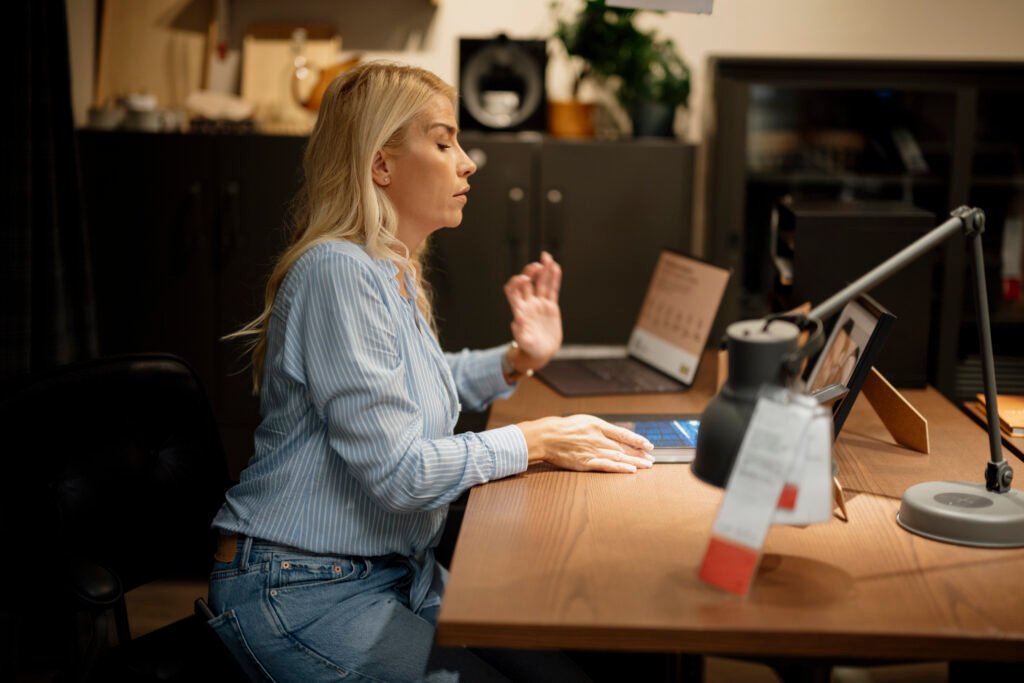
Photo: Shixart1985, CC BY 2.0, via Wikimedia Commons
Brace vs. Lumbar Cushion vs. Better Chair
You have several ways to support your back while sitting. Here is how they compare:
| Option | Pros | Cons | Best for |
|---|---|---|---|
| Back brace | Supports you anywhere, adds compression | Can dig in, may weaken muscles if overused | Flare-ups, travel, mixed sitting and standing |
| Lumbar cushion | Cheap, easy, moves between chairs | Can slip, only works when you lean back | Desk and car seats without support |
| Rolled towel | Free and adjustable | Not very stable | Quick fix for any chair |
| Ergonomic chair | Best long-term support | Costs more | Daily desk work |
For most desk workers, a good chair or a lumbar cushion is the best everyday solution. A brace is most useful during flare-ups or when you cannot control your seating, such as on a plane or in a work vehicle.
Simple Seated Stretches for Lower Back Relief
Try these stretches every hour or so to ease stiffness while you sit:
Seated Pelvic Tilt
Sit on the front half of your chair. Gently arch your lower back, then round it, rocking your pelvis forward and back. Repeat 10 times.
Seated Knee Hug
Sit tall and pull one knee toward your chest with both hands. Hold for 15 to 20 seconds. Switch legs.
Seated Twist
Sit tall with feet flat. Gently turn your upper body to one side, using the chair back for a light assist. Hold for 15 seconds, then switch sides. Skip this one if twisting causes pain.
Stand and Extend
Stand up, place your hands on your lower back, and gently lean back a few inches. Hold for a few seconds. Repeat five times.
Massage can also help release tight muscles after long sitting. Our guide to lower back massage techniques covers simple methods you can do at home.
Common Mistakes When Wearing a Back Brace While Sitting
Avoid these errors, which make a brace uncomfortable or less useful when you sit:
- Keeping it at standing tightness. This is the most common mistake and the main cause of hip and stomach discomfort.
- Wearing it too high. A brace riding up over your ribs does little for the lower back.
- Perching on the front of the chair. If you sit forward, neither the brace nor the backrest supports you.
- Sitting for hours without a break. Even with a brace, your back needs movement.
- Wearing it all day, every day. Save the brace for painful days and longer sitting sessions.
- Ignoring numbness. Tingling in your thighs means the brace is too tight or sitting too low.
When to See a Doctor
See a doctor if your back pain while sitting:
- Comes with numbness, tingling, or weakness in your legs
- Spreads down one leg below the knee
- Started after a fall or accident
- Comes with loss of bladder or bowel control (seek emergency care)
- Has not improved after several weeks
Pain that shoots down the leg when you sit can be a sign of sciatica. Our guide on whether back braces help sciatica explains your options.
Frequently Asked Questions
Is it OK to wear a back brace while sitting?
Yes, for most people. Loosen it slightly before you sit, make sure it does not dig into your hips or ribs, and tighten it again when you stand. Remove it if it causes pain, tingling, or pushes you into a slump.
Should a back brace be tight when sitting?
It should be a little looser than when you stand. Your belly expands when you sit, so a brace that is snug while standing can feel too tight once you sit down.
Can I wear a back brace while driving?
Yes, as long as it does not restrict your movement or interfere with the seatbelt. Loosen it before you drive and stop every hour to stretch.
How long can I wear a back brace while sitting?
Most people do best wearing it for a few hours at a time during flare-ups, not every time they sit. Take breaks to stand and move every 30 to 60 minutes.
Is a lumbar cushion better than a back brace for sitting?
For everyday desk work, a lumbar cushion or a good chair is often more comfortable and does not risk weakening your muscles. A brace is more useful during flare-ups or when you cannot control your seating.
Can wearing a back brace while sitting cause leg numbness?
Yes, if it is too tight or sits too low, it can press on nerves near the hips. Loosen or reposition it, and see a doctor if numbness continues.
Can I wear a back brace on a long flight?
Yes. Many people find a brace helpful on long flights, where seats offer little lumbar support. Loosen it slightly once seated, make sure the seatbelt fits comfortably over it, and get up to walk the aisle when it is safe to do so.
The Bottom Line
Wearing a back brace while sitting is fine and can help during flare-ups, long drives, and busy workdays. The key is to adjust it for sitting: put it on while standing, loosen it slightly before you sit, sit all the way back in your chair, and tighten it again when you stand.
For everyday sitting, a supportive chair, a lumbar cushion, a well-placed screen, and regular movement breaks usually do more for your back than a brace. Use a brace as a short-term helper, and see a doctor if sitting causes leg pain, numbness, or pain that will not go away. For more on how braces work, read our article on whether back braces really work.
This article is for general information and is not medical advice. Talk to a doctor about ongoing back pain.


Hi, I’m Mamon, the content creator behind this blog. I share my experience in blogging, WordPress, SEO, and affiliate marketing through honest product reviews, in-depth buying guides, and practical how-to articles. Every piece of content is thoroughly researched and written to help readers make informed decisions.