

You step off a curb wrong, land awkwardly on someone’s foot, or catch the edge of a trail, and your ankle rolls. The pain is instant, and swelling often follows within minutes. What you do in the next 48 hours, and in the weeks after, has a big effect on how fast you heal and whether the ankle stays weak. Good rolled ankle treatment is simple, but timing and the right steps matter.
This guide walks you through rolled ankle treatment step by step: what to do right away, how to tell if you need an X-ray, how to use ice, compression, and a brace, which exercises to start and when, and how to avoid rolling the same ankle again. For support options, see our roundup of the best ankle brace for a sprained ankle.

Key Takeaways
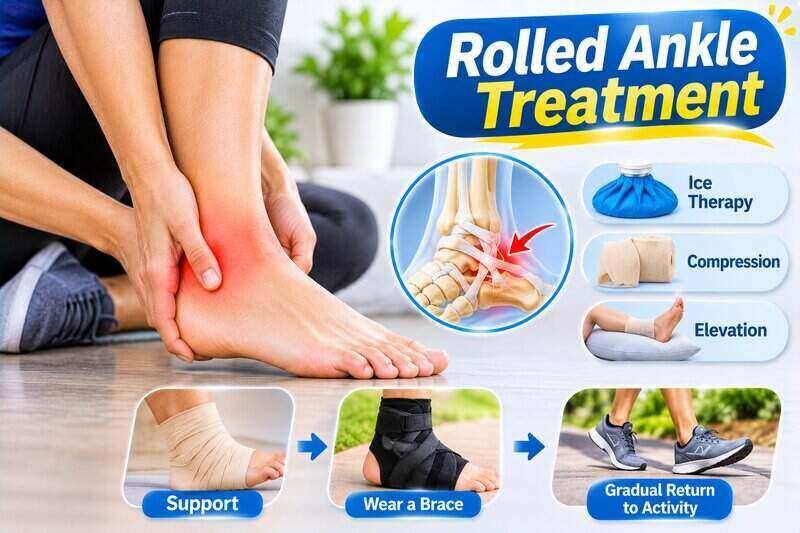
- A rolled ankle usually means a sprain, a stretch or tear of the ligaments on the outer ankle.
- In the first two to three days, rest, ice, compression, and elevation (R.I.C.E.) help control pain and swelling.
- Gentle movement as soon as pain allows, and rehab exercises after that, speed recovery and lower the risk of rolling it again.
- Get an X-ray if you cannot take four steps or have tenderness over the ankle bones.
What Happens When You Roll Your Ankle?
Most rolled ankles happen when the foot turns inward and the outside of the ankle stretches too far. This strains or tears the ligaments on the outer ankle, most often the anterior talofibular ligament (ATFL). A twisted ankle and a rolled ankle are usually the same injury: an ankle sprain.
Symptoms depend on how badly the ligaments are injured:
| Severity | What you may notice | Typical recovery |
|---|---|---|
| Mild (Grade 1) | Mild pain and swelling, can walk | About 1 to 3 weeks |
| Moderate (Grade 2) | More swelling and bruising, painful to walk, ankle feels loose | About 3 to 6 weeks |
| Severe (Grade 3) | Severe pain, large swelling, hard or impossible to bear weight | Several weeks to months |
Our guide to ankle ligaments explains which ligaments are involved and how they heal.
Step 1: What to Do Right After You Roll Your Ankle
- Stop the activity. Playing through pain can turn a mild sprain into a severe one.
- Check if you can bear weight. Try to take a few careful steps.
- Look for warning signs. Note deformity, numbness, or pain right over the ankle bones.
- Start ice and elevation as soon as you can.
- Protect the ankle with a brace, wrap, or crutches if walking hurts.
Step 2: Do You Need an X-Ray?
Not every rolled ankle needs an X-ray, but some need one to rule out a broken bone. Doctors often use a tool called the Ottawa ankle rules. According to an Ottawa ankle rules guide from NHS Scotland’s Centre for Emergency Medicine, an ankle X-ray is needed only if there is pain around the ankle bones and any one of these:
- Bone tenderness along the back edge or tip of the outer ankle bone (lateral malleolus)
- Bone tenderness along the back edge or tip of the inner ankle bone (medial malleolus)
- Being unable to take four steps both right after the injury and when you are examined
Similar rules apply to the midfoot, including tenderness at the base of the fifth metatarsal on the outer edge of the foot. If any of these apply to you, get checked at urgent care or by your doctor.
Step 3: Rolled Ankle Treatment With R.I.C.E. for the First 2 to 3 Days
Mayo Clinic recommends the R.I.C.E. approach for self-care of an ankle sprain for the first two or three days.
Rest
Avoid activities that cause pain, swelling, or discomfort. This does not mean total bed rest. Short, careful walks within your comfort level are fine for mild sprains. Use crutches if walking is very painful.
Ice
Mayo Clinic advises using an ice pack or ice slush bath for 15 to 20 minutes and repeating every two to three hours while you are awake. Always place a thin towel between the ice and your skin. If you have diabetes, vascular disease, or reduced feeling in your feet, talk with your doctor before using ice.
Compression
An elastic bandage, compression sleeve, or ankle brace helps control swelling. Wrap from the toes toward the ankle, firm but not tight. Loosen it if your toes tingle, feel cold, or turn pale.

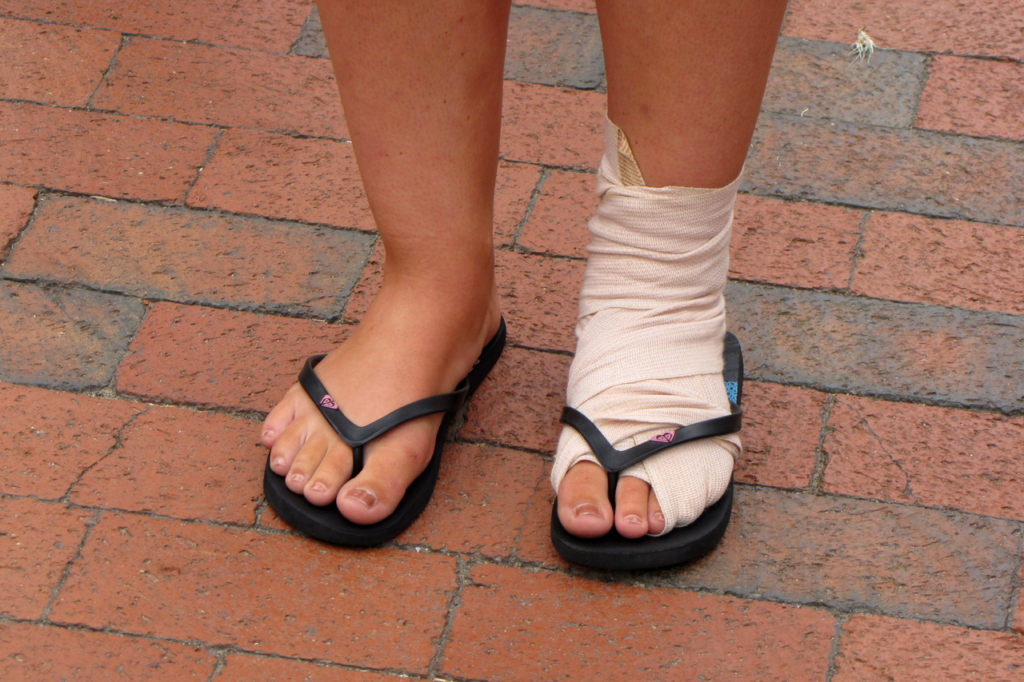
Photo: Ben Schumin, CC BY-SA 2.0, via Wikimedia Commons
Elevation
Raise your ankle above the level of your heart, especially at night. Prop your foot on pillows while you rest or sleep to help swelling drain.
Step 4: Support Your Ankle With a Brace or Wrap
An elastic wrap is fine for the first day or two, but it does little to stop the ankle from rolling again. For moderate sprains, a lace-up, strapped, or semi-rigid brace gives better protection while you walk and return to activity.
| Support | Best for | Notes |
|---|---|---|
| Elastic wrap | Early swelling, mild sprain | Loosens quickly, little stability |
| Compression sleeve | Mild sprain, swelling | Comfortable, light support |
| Lace-up or strapped brace | Moderate sprain, return to activity | Mimics athletic tape |
| Semi-rigid stirrup brace | Moderate to severe sprain | Blocks rolling, allows walking |
| Walking boot | Severe sprain, as advised | Short term only |
See our guides to an ankle brace for a torn ligament and an ankle wrap vs. brace for help choosing.
Step 5: Manage Pain
Many people use over-the-counter pain relievers such as ibuprofen, naproxen, or acetaminophen for a few days. Ask a pharmacist or doctor first if you take other medicines, are pregnant, or have stomach, kidney, liver, or heart problems.
Step 6: Start Moving Early
Once the sharp pain eases, usually within a day or two for mild sprains, gentle movement helps healing. In the video below, a physiotherapist explains what to do after the first 48 hours of an ankle sprain.
Try these early exercises, stopping if pain is sharp:
- Ankle alphabet: Sit and trace the letters A to Z with your big toe, 2 to 3 times a day.
- Ankle pumps: Point and flex your foot slowly, 10 to 15 times.
- Towel stretch: Loop a towel around the ball of your foot and gently pull your toes toward you for 30 seconds.
- Seated heel raises: Lift and lower your heels while sitting, 10 to 15 times.
Step 7: Strengthen and Rebuild Balance
After the first week or two, add exercises that rebuild strength and balance, which are key to preventing another rolled ankle:
- Resistance band moves: Push your foot down, up, in, and out against a light band.
- Standing calf raises: Start on both feet, then progress to the injured side.
- Single-leg balance: Stand on the injured leg for 30 seconds near a counter.
- Balance challenges: Close your eyes or stand on a pillow once single-leg balance is easy.
- Hopping and side steps: Add these only when walking and balance are pain-free.
Our full guide to ankle rehabilitation exercises walks through each phase.

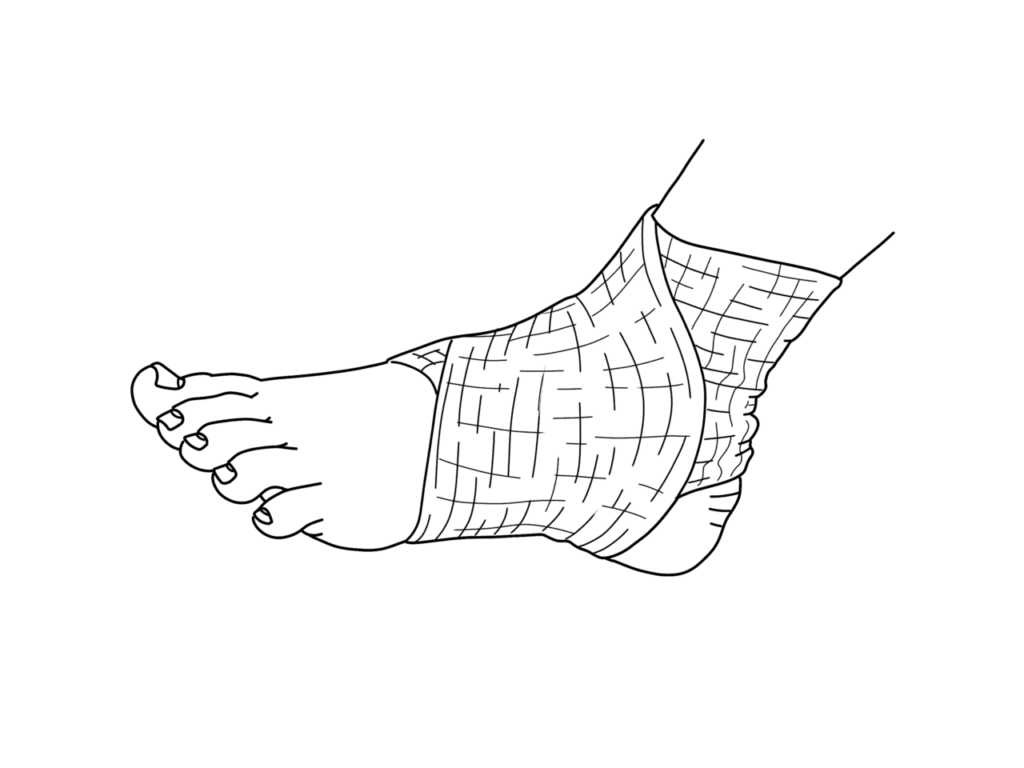
Image: Baedr-9439, CC0, via Wikimedia Commons
Rolled Ankle vs. Broken Ankle: How to Tell the Difference
A bad sprain and a broken ankle can look alike, with swelling and bruising in both. These clues help, but only an X-ray can confirm a fracture:
| Clue | More likely a sprain | More likely a fracture |
|---|---|---|
| Where it hurts | Soft area in front of or below the outer ankle bone | Directly on the bone, especially the back edge or tip |
| Walking | Painful but possible | Cannot take four steps |
| Shape of the ankle | Swollen but normal shape | Deformed or out of place |
| Sound at injury | Sometimes a pop | Sometimes a crack or snap |
| Numbness | Usually none | Possible numbness or tingling |
If you are unsure, get it checked. If your ankle turns out to be broken, see our guide on how to exercise with a broken ankle for safe ways to stay active while it heals.
Common Rolled Ankle Treatment Mistakes
- Applying ice directly to the skin or for too long. Keep sessions to 15 to 20 minutes with a towel between ice and skin.
- Wrapping too tightly. A tight wrap can cut off circulation. Toes should stay warm and pink.
- Resting too long. Complete rest for more than a few days can make the ankle stiff and weak.
- Skipping rehab. Many people stop once the pain fades, but weak muscles and poor balance raise the risk of another sprain.
- Returning to sports too soon. Wait until you can walk, jog, hop, and cut without pain, and wear a brace when you return.
Rolled Ankle Treatment for Kids and Older Adults
Children and Teens
In growing children, a rolled ankle can injure the growth plate near the end of the leg bones instead of the ligament. Growth plate injuries can look like sprains. If a child has pain over the bone, a limp that lasts more than a day or two, or trouble bearing weight, see a pediatrician or urgent care.
Older Adults
As we age, bones become more fragile and balance can decline, so a rolled ankle is more likely to involve a fracture. Older adults should have a low threshold for getting an X-ray. A cane or walker can help while the ankle heals. Our guides to using a walking stick correctly and choosing between a rollator vs. walker can help.
Rolled Ankle Recovery Timeline After Treatment
| Time after injury | What to focus on |
|---|---|
| Days 1 to 3 | R.I.C.E., protect the ankle, gentle range of motion |
| Days 3 to 14 | Walk with support as pain allows, start band exercises |
| Weeks 2 to 6 | Strength and balance training, wean off the brace for daily walking |
| Weeks 6 and later | Sport-specific drills, keep wearing a brace for sports |
Mild sprains may move through these stages faster, while severe sprains may take longer.
How to Prevent Rolling Your Ankle Again
- Finish your rehab. Stopping exercises early is a common reason ankles stay weak.
- Train your balance a few times a week, even after you feel better.
- Wear a brace for sports for the rest of the season after a moderate sprain.
- Choose supportive shoes with a firm heel and good grip. See our review of the best shoes for ankle support.
- Warm up before sports and watch for uneven ground.
When to See a Doctor
Get medical care if:
- You cannot take four steps
- You have pain or tenderness right over the ankle bones or the outer edge of the foot
- The ankle looks deformed, or your foot is numb, cold, or pale
- Swelling and pain get worse after two to three days
- The ankle still feels loose or painful after a few weeks
- You keep rolling the same ankle
Frequently Asked Questions
What is the fastest rolled ankle treatment?
The fastest approach for most mild to moderate sprains is R.I.C.E. for two to three days, a supportive brace, and gentle movement as soon as pain allows, followed by strength and balance exercises.
Should I walk on a rolled ankle?
If you can walk with only mild pain, gentle walking usually helps healing. If you cannot take four steps, see a doctor to rule out a fracture.
Is heat or ice better for a rolled ankle?
Ice is usually recommended in the first two to three days to help with pain and swelling. Some people switch to gentle heat later to ease stiffness before exercise.
How long does a rolled ankle take to heal?
A mild sprain often feels better in one to three weeks. Moderate sprains take about three to six weeks, and severe sprains can take months. Ligaments keep getting stronger after the pain goes away.
Can I sleep with a brace on after rolling my ankle?
Most people do not need to, but a doctor may suggest a stirrup brace at night after a severe sprain. Keep the ankle elevated on a pillow.
Do I need physical therapy after rolling my ankle?
Many mild sprains heal well with a home exercise program. Physical therapy is a good idea for moderate or severe sprains, if you keep rolling the same ankle, or if you play sports and want a guided return.
Should I wrap my ankle overnight?
A light compression wrap or sleeve at night can help some people with swelling, but it should never be tight. Elevating the foot on pillows is often more helpful.
Why is my ankle bruised days after I rolled it?
Bruising often shows up a day or two after a sprain as blood from torn tissue spreads under the skin. It can travel down to the heel and toes as it fades. Bruising alone is not a sign of a fracture, but see a doctor if pain is severe or you cannot walk.
The Bottom Line
Good rolled ankle treatment starts with protecting the ankle, checking for warning signs, and using R.I.C.E. for the first two to three days. From there, a supportive brace, early gentle movement, and progressive strength and balance exercises help you heal faster and lower the risk of rolling the ankle again.
See a doctor if you cannot bear weight, have bone tenderness, or are not improving. For brace options, visit our main guide to the best ankle braces.
This article is for general information and is not medical advice. See a doctor for severe ankle injuries.


Hi, I’m Mamon, the content creator behind this blog. I share my experience in blogging, WordPress, SEO, and affiliate marketing through honest product reviews, in-depth buying guides, and practical how-to articles. Every piece of content is thoroughly researched and written to help readers make informed decisions.