Choosing a mobility aid is a big decision. The right one helps you stay steady and independent, while the wrong one can raise your risk of a fall. The rollator vs walker question comes up often for older adults and their families. Both give support, but they work in very different ways. This guide explains the differences, who each one suits, how to size it, and what Medicare covers.

Medical note: This article is for general information only. Ask your doctor or a physical therapist which mobility aid is right for you. They can check your balance, strength, and fit.
Key Takeaways
- A standard walker has four legs with rubber tips. You lift it with each step, and it gives the most stability.
- A rollator has three or four wheels, hand brakes, and often a seat. It is easier to push but less stable.
- More than one in four older adults falls each year, according to the CDC.
- A CDC-led study found walker and cane falls sent more than 47,000 older adults to emergency departments each year.
- Mayo Clinic says the grip should line up with your inner wrist crease. Your elbows should bend about 15 degrees.
- Medicare Part B covers walkers, including rollators if you are eligible. You pay 20% after the Part B deductible.
Why the Right Mobility Aid Matters
Falls are a serious risk for older adults. The CDC reports that more than one out of four older people falls each year. Yet less than half tell their doctor. Falls lead to about 4.5 million emergency department visits each year among older adults.
A walker or rollator can reduce that risk, but only when it fits your needs. A CDC-led study looked at emergency room data. It found that more than 47,000 adults 65 and older were treated each year for falls involving walkers and canes. Walkers were involved in 87% of those injuries, and 60% of walker-related falls happened at home. Choosing the right aid, and learning to use it well, matters.
What Is a Standard Walker?
A standard walker, also called a pickup walker, has a lightweight metal frame and four legs with rubber tips. You lift the walker, set it down a short step ahead, and then step into it.
All four legs rest on the ground when you put weight on it. That is why a standard walker offers the most stability. It suits people who need to lean on the frame to take weight off a leg, such as after surgery.
Two-wheel walkers are a middle option. They have wheels on the front legs and tips or glides on the back. According to Mayo Clinic, standing fully upright can be easier with a two-wheel walker.
What Is a Rollator?
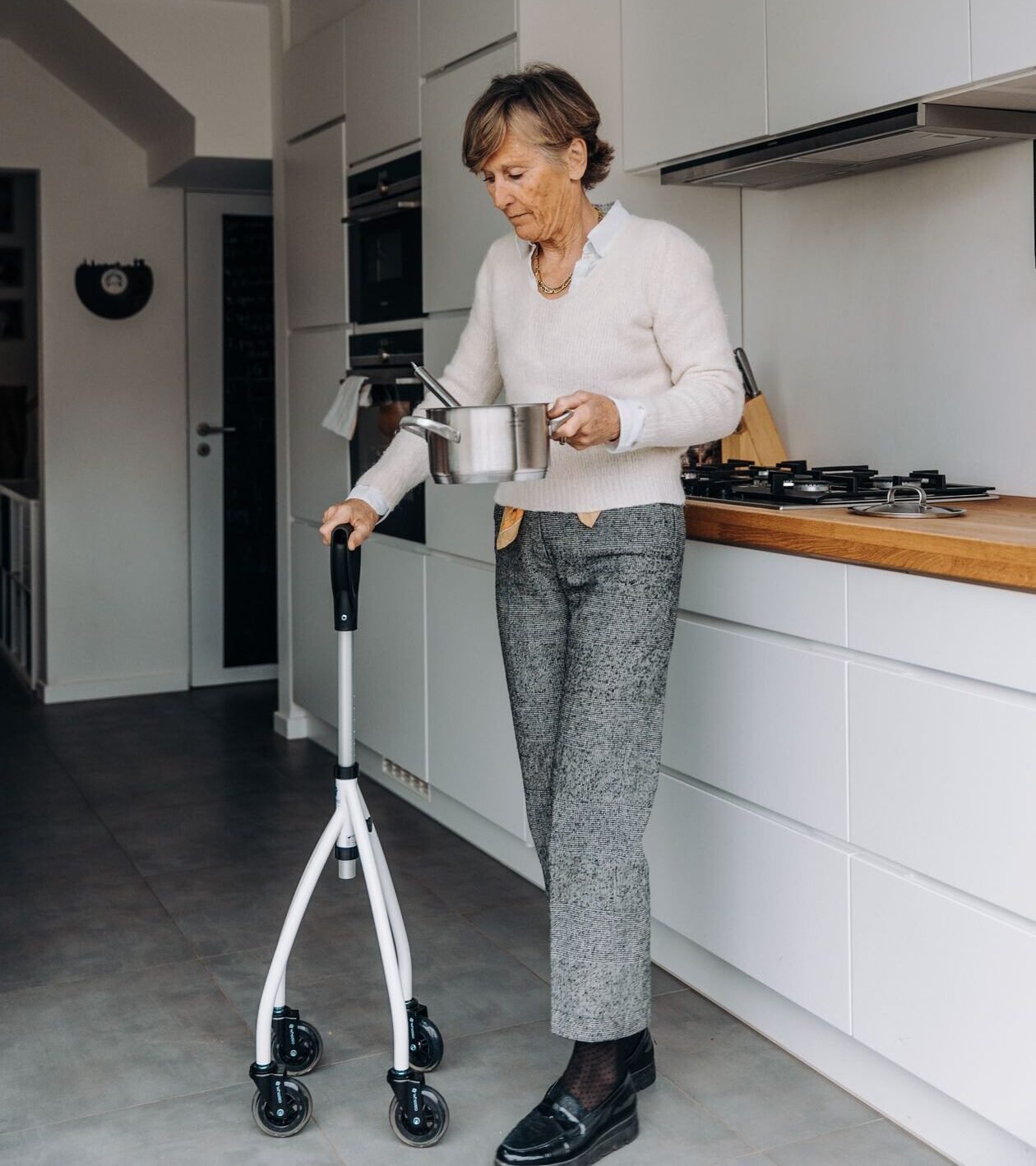
A rollator is a walker with wheels on every leg. Most have four wheels, though three-wheel models exist. You push a rollator instead of lifting it. Most rollators have hand brakes, a built-in seat, and a basket or pouch.
Mayo Clinic notes that four-wheel walkers give continuous balance support but are less stable than standard models. Three-wheel walkers are lighter and easier to steer in tight spaces.
Rollators suit people who have decent balance and strength but tire easily. The seat lets you rest during longer walks, errands, or outings.
Rollator vs Walker at a Glance
| Feature | Standard Walker | Rollator |
|---|---|---|
| How it moves | Lift and place with each step | Push on wheels |
| Stability | Highest | Lower; can roll away if not braked |
| Weight bearing | Can support leaning weight | Not for heavy leaning |
| Walking speed | Slower | More natural pace |
| Brakes | None needed | Hand brakes |
| Seat | No | Usually yes |
| Best terrain | Indoors, smooth floors | Indoors and outdoors |
| Frame weight | Usually lighter | Usually heavier |
| Best for | Poor balance, post-surgery, weight bearing limits | Fair balance, low endurance, longer outings |
Who Should Use a Standard Walker?
- People with poor balance who need maximum stability.
- People recovering from hip or knee surgery who must limit weight on one leg.
- People who need to lean on the frame for support.
- People who walk mostly short distances indoors.
Your doctor or therapist may start you on a standard walker, then move you to a rollator as you recover.
Who Should Use a Rollator?
- People with fair balance who tire quickly or need rest breaks.
- People who want a more natural walking pace.
- People who walk outdoors, shop, or run errands.
- People with conditions that limit endurance, such as some heart or lung conditions, as advised by a doctor.
A rollator is not a good fit if you need to put a lot of weight on your arms. The wheels can roll away if the brakes are not set.
Rollator vs Walker for Common Situations
Here is how the rollator vs walker choice often plays out in real life. Your care team may advise differently based on your needs.
| Situation | Often a Better Fit | Why |
|---|---|---|
| Right after hip or knee surgery | Standard or two-wheel walker | Supports leaning weight and limits load on one leg |
| Shopping and errands | Rollator | Seat for rest, basket for items, easier on sidewalks |
| Poor balance, frequent unsteadiness | Standard walker | Does not roll away |
| Tires quickly on longer walks | Rollator | Built-in seat for breaks |
| Small home with tight hallways | Two-wheel or three-wheel walker | Narrower and easier to turn |
Signs You May Need a Walker or Rollator
- You hold onto furniture or walls to get around the house.
- You have fallen, or nearly fallen, in the past year.
- You feel unsteady when you stand up or turn.
- You avoid walking because you feel tired or unsafe.
- A cane no longer feels like enough support.
If any of these sound familiar, talk with your doctor. Remember that the CDC says falling once doubles your chances of falling again.
How to Size a Walker or Rollator
A walker that is too high or too low can strain your back and shoulders and throw off your balance. Mayo Clinic recommends two simple checks:
- Wrist check: Stand up straight inside the walker with your arms relaxed at your sides. The top of the grip should line up with the crease on the inside of your wrist.
- Elbow check: When you hold the grips, your elbows should bend at a comfortable angle of about 15 degrees.
Wear the shoes you usually walk in when you adjust the height. For a rollator, also check that the seat height lets you sit with your feet flat on the floor.
How to Use Each Aid Safely
Using a Standard Walker
- Lift the walker and set it down a short step ahead, with all four legs on the floor.
- Step into the walker, leading with your weaker leg if advised by your therapist.
- Stay upright. Mayo Clinic says standing tall protects your back from strain.
- Take small steps and do not push the walker too far ahead.
Using a Rollator
- Walk inside the frame, not behind it.
- Keep your hands on the grips and your fingers near the brakes.
- Always lock the brakes before you sit down or stand up.
- Never ride on the seat while someone pushes it. A rollator is not a wheelchair.
- Slow down on slopes and use the brakes to control speed.
Features to Look For in a Rollator
- Reliable hand brakes that lock in place for sitting.
- Seat height that lets your feet rest flat on the floor.
- Weight capacity above your body weight.
- Wheel size. Larger wheels handle outdoor surfaces better, while smaller wheels suit indoor use.
- Folding design that fits in your car trunk.
- Adjustable handles so you can match the wrist-crease height.
- Frame width that fits through your doorways.
Test a few models in person if you can. Comfort and fit matter as much as features in the rollator vs walker decision.
What Does Medicare Cover?
According to Medicare.gov, Medicare Part B covers walkers, including rollators if you are eligible. After you meet the Part B deductible, you pay 20% of the Medicare-approved amount.
To qualify, your doctor must prescribe the walker for use in your home. Medicare also only pays for equipment from suppliers enrolled in Medicare. Ask the supplier whether they accept assignment before you buy. Medicare Advantage plans must cover the same items, though costs and supplier rules can differ.
Make Your Home Safer, Too
With 60% of walker-related falls happening at home, a safer home matters as much as the right aid:
- Remove loose rugs and clutter from walkways.
- Add night lights in halls, bedrooms, and bathrooms.
- Install grab bars near the toilet and in the shower.
- Use a shower chair for safer bathing. See our bariatric shower chair reviews.
- Wear supportive, non-slip shoes. Our guide to shoes for ankle support can help.
What About Canes and Wheelchairs?
A cane may be enough if you only need a little help with balance. Learn more in our guide on how to use a walking stick correctly and our walking cane reviews.
If walking becomes unsafe or very tiring, a wheelchair may be the better choice for longer distances. Our self-propelled wheelchair reviews compare options.
Frequently Asked Questions
Which is safer in the rollator vs walker comparison?
A standard walker is more stable because it does not roll. A rollator is safe for people with fair balance who use the brakes correctly. Your doctor or therapist can help you decide.
Can I sit on my rollator?
Yes, if it has a seat. Lock both brakes first. Never let someone push you while you sit on it.
Is a rollator better for outdoor use?
Usually, yes. Larger wheels roll more easily over sidewalks and uneven ground than a standard walker.
How do I know if my walker is the right height?
Stand inside it with arms relaxed. The grip should line up with your wrist crease, and your elbows should bend about 15 degrees when holding it.
Can I use a walker or rollator on stairs?
No. Walkers and rollators are not designed for stairs and can cause a serious fall. Use the handrail, and ask a physical therapist to teach you a safe way to climb stairs. Some people keep a second walker on each floor.
Does Medicare pay for a rollator?
Medicare Part B covers walkers, including rollators if you are eligible. You pay 20% of the approved amount after the deductible, with a doctor’s prescription and an enrolled supplier.
Final Thoughts
The rollator vs walker choice comes down to balance, strength, and how you plan to use it. A standard walker offers the most stability for short distances and recovery. A rollator gives a more natural pace, a seat for rest, and better outdoor use for people with fair balance.
Whichever side of the rollator vs walker question you land on, get fitted properly. Learn safe techniques and make your home safer. Most of all, ask your doctor or physical therapist before you choose. The right aid can help you stay active and independent for years.

Hi, I’m Mamon, the content creator behind this blog. I share my experience in blogging, WordPress, SEO, and affiliate marketing through honest product reviews, in-depth buying guides, and practical how-to articles. Every piece of content is thoroughly researched and written to help readers make informed decisions.
Leave a Reply