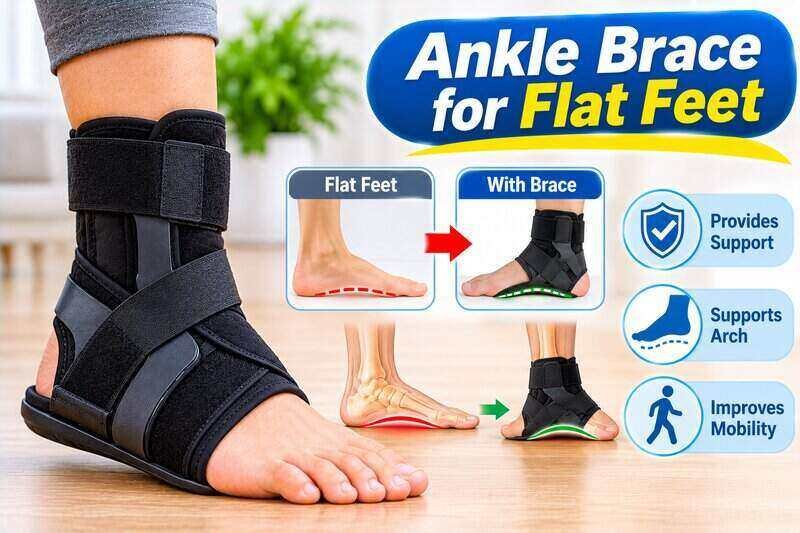
An ankle brace for flat feet can do something a regular sprain brace cannot: support the inner ankle and the arch at the same time. If you have flat feet, your ankle tends to roll inward (overpronate) with each step. That places extra strain on the tendon that holds up your arch and on the inner side of the ankle, which can lead to pain, fatigue, and, over time, a collapsing arch.
This guide explains how flat feet affect the ankle, when you need ankle support for flat feet, which brace types work best, how they compare with orthotic insoles, and what exercises help. It is written for U.S. readers and is general information, not a diagnosis.
Key Takeaways
- Most flat feet cause no symptoms and need no treatment. Treatment is for painful or worsening flat feet.
- The most common cause of painful flatfoot in adults is a problem with the posterior tibial tendon, which supports the arch.
- Combine an ankle brace with arch support or orthotics, because ankle control alone does not hold up the arch.
- Custom braces such as the Arizona or Richie brace are used for more advanced, collapsing flatfoot under medical guidance.
How Flat Feet Affect the Ankle
With flat feet, the arch flattens and most of the sole touches the floor when you stand. According to Cleveland Clinic, flat feet do not always cause symptoms, but they can change the way you walk and transfer too much stress to parts of the lower body that are not prepared to bear it. Cleveland Clinic also notes that flat feet can cause ankle instability.
Here is what happens at the ankle:
- The heel tilts outward and the ankle rolls inward
- The posterior tibial tendon on the inside of the ankle works overtime to hold up the arch
- Tissues on the inner ankle stretch, while the outer ankle can get pinched
- The knee and hip may rotate inward, adding strain higher up
Types of Flat Feet
| Type | What it means | Typical approach |
|---|---|---|
| Flexible flat foot | Arch appears when sitting or on tiptoe, disappears when standing | Usually no treatment unless painful; arch support if needed |
| Rigid flat foot | No arch in any position, stiff foot | Medical evaluation, orthotics, sometimes surgery |
| Adult acquired flatfoot | Arch collapses in adulthood, often from tendon failure | Bracing, orthotics, physical therapy, sometimes surgery |
| Tight Achilles flatfoot | Short calf and Achilles force the arch down | Stretching plus arch support |
Flexible flat feet are the most common type. Commonly cited estimates suggest that roughly one in four adults has low or flat arches, and most of them have no symptoms.
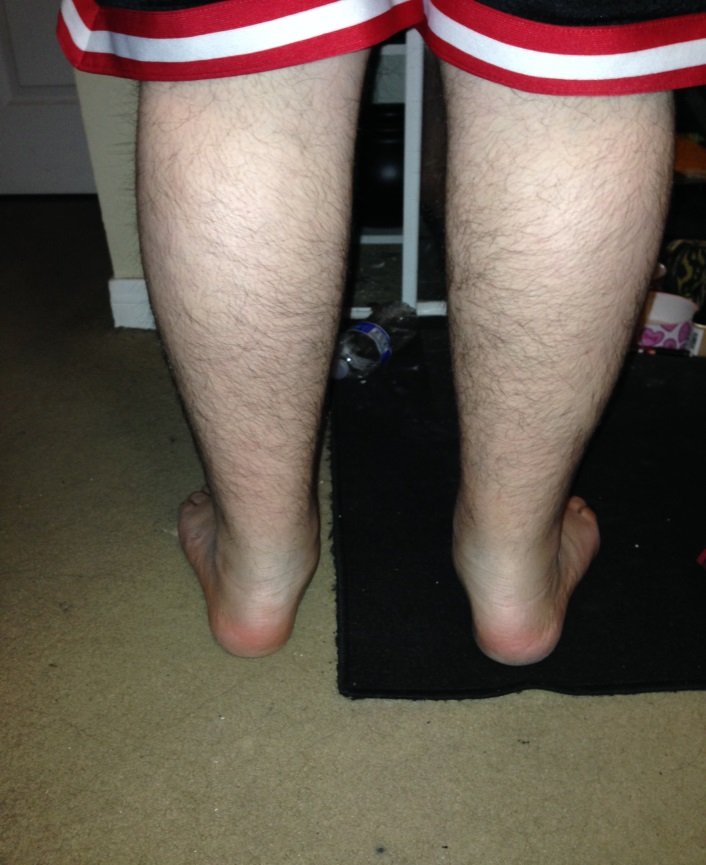
Image: Anviteri, CC BY-SA 3.0, via Wikimedia Commons
When Do You Need Ankle Support for Flat Feet?
You may benefit from an ankle brace with arch support if you have:
- Pain along the inner ankle or arch, especially after walking or standing
- Swelling behind the inner ankle bone
- An arch that looks flatter on one side than the other, or that is getting flatter over time
- Trouble rising up on tiptoe on one foot
- Frequent ankle fatigue, rolling, or a feeling of instability
- Outer ankle pain where the heel bone presses against the fibula in advanced cases
Inner ankle pain with flat feet often points to posterior tibial tendon dysfunction. Our guide to medial ankle pain explains this condition in detail, and our overview of the ankle tendons shows how this tendon supports the arch.
Types of Ankle Braces for Flat Feet
| Brace type | Arch support | Ankle support | Best for |
|---|---|---|---|
| Arch support sleeve or strap | Mild | Low | Mild arch fatigue, plantar soreness |
| Ankle brace with arch support strap | Moderate | Moderate | Flexible flat feet with inner ankle pain |
| Lace-up brace plus orthotic insole | Moderate to high (from insole) | Moderate to high | Active people, sports, instability |
| PTTD brace (off-the-shelf) | High | High | Early posterior tibial tendon problems |
| Custom Arizona or Richie brace | Very high | Very high | Advanced or collapsing flatfoot |
Ankle Brace With Arch Support Straps
These braces add a strap that wraps under the arch and pulls upward on the inside of the foot, along with figure-eight ankle straps. They fit in most athletic shoes and offer a good balance of comfort and control for flexible flat feet.
Lace-Up Brace Plus Orthotics
A lace-up ankle brace controls ankle rolling, while an orthotic insole supports the arch. Together, they cover both problems. This is a popular combination for runners and people who stand all day.
PTTD and Custom Braces
When the posterior tibial tendon is failing, a stronger brace is often needed. Custom ankle-foot orthoses such as the Arizona brace and the Richie brace hold the heel, ankle, and arch in a better position. Research summarized in Lower Extremity Review reported that 90% of patients with posterior tibial tendon dysfunction who used an Arizona brace had significant improvement in symptoms and quality of life after about a year. Our roundup of the best ankle brace for arthritis includes an off-the-shelf PTTD brace and explains custom options.
Ankle Brace vs Orthotic Insoles for Flat Feet
| Feature | Ankle brace | Orthotic insole |
|---|---|---|
| Supports the arch | Only if it has an arch strap | Yes, main purpose |
| Controls ankle rolling | Yes | Partly, by aligning the heel |
| Visible or bulky | Somewhat | No, hidden in the shoe |
| Typical U.S. cost | $20 to $90 off the shelf; custom often $500 or more | $20 to $60 over the counter; custom about $300 to $600 |
| Best for | Instability, tendon pain, sport | Everyday arch support, mild pain |
For most people with mild symptoms, a good arch-supporting insole in a stable shoe is the first step. Add an ankle brace if you still have ankle pain or instability. Cleveland Clinic notes that treatment for painful flatfoot in adults often starts with orthotic devices worn inside sturdy shoes.
Watch: Flat Feet Explained
This video covers what flat feet are, when they cause problems, and how they are treated.
How to Choose an Ankle Brace for Flat Feet
- Match the brace to the problem: arch fatigue needs arch support; inner ankle pain needs both arch and ankle control
- Check shoe fit: choose a low-profile brace and a shoe with a removable insole so you can add an orthotic
- Look for medial support: straps or panels that lift the inner ankle and arch
- Prioritize comfort: breathable fabric and padding matter if you wear it all day
- Measure carefully: use the brand’s sizing chart based on ankle circumference and shoe size
- See a professional for progressive flatfoot: custom bracing works best when fitted by an orthotist
For general brace guidance, see our main guide to the best ankle braces and our tips on how to wear an ankle brace with shoes.
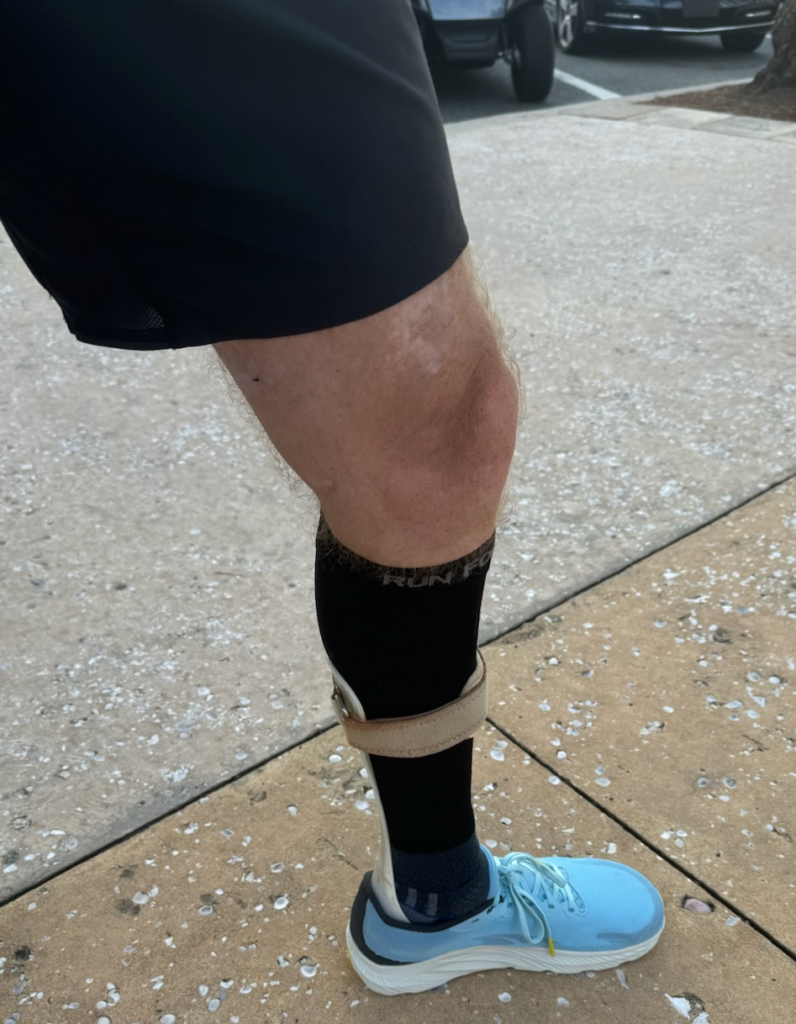
Image: Whoisjohngalt, CC0, via Wikimedia Commons
Choosing an Ankle Brace for Flat Feet by Activity
| Activity | Suggested support | Tip |
|---|---|---|
| Walking and errands | Arch-support insole, optional light brace | Start with shoes and insoles before adding a brace |
| Standing at work all day | Lace-up brace with arch strap plus insole | Choose breathable fabric for long shifts |
| Running | Stability shoe plus orthotic; brace if ankle pain | Build mileage slowly |
| Court and field sports | Lace-up or hinged brace plus orthotic | Protects against rolling during cuts and jumps |
| Hiking | Supportive boot plus orthotic and lace-up brace | Trekking poles reduce load on the arch |
| Advanced flatfoot or PTTD | Off-the-shelf PTTD brace or custom brace | Have it fitted by an orthotist |
Flat Feet and Ankle Sprains
People usually picture high arches when they think of ankle sprains, because a high-arched foot rolls outward more easily. Flat feet create a different pattern. The inner ankle and the posterior tibial tendon carry more strain, and the ankle can feel tired, wobbly, or achy after long days. If you have flat feet and also sprain your ankle, recovery may take longer because the inner ankle structures are already working hard. A brace with both ankle straps and arch support, plus balance training, gives the best protection. Our guide to rolled ankle treatment covers the first steps after a sprain, and our article on the ankle ligaments explains the deltoid ligament on the inner ankle, which can also be stretched in long-standing flatfoot.
Flat Feet in Children
All babies and toddlers have flat feet, and arches usually develop during early childhood. Flexible flat feet in children are common and generally need no treatment if they cause no pain. See a pediatrician or podiatrist if your child has foot or ankle pain, tires easily when walking, has a stiff foot, or has flat feet on only one side. Supportive shoes and, in some cases, orthotic insoles are used for children with symptoms. Ankle braces are rarely needed unless there is another condition.
Weight, Age, and Flat Feet
Adult acquired flatfoot is more common in women and in people over 40, especially those who are overweight or have diabetes, high blood pressure, or inflammatory arthritis. Each extra pound adds load to the posterior tibial tendon with every step. Losing even a modest amount of weight, staying active with low-impact exercise like cycling or swimming, and using supportive footwear can reduce strain on the arch. If you also have joint pain, see our guide to ankle joint pain.
Shoes for Flat Feet
The right shoe makes any brace or insole work better. Look for:
- A firm heel counter that holds the heel straight
- Stability or motion-control features in running shoes
- A wide, flat base and good arch contour
- A removable insole for orthotics
- Enough room for a brace without squeezing the foot
Our review of the best shoes for ankle support highlights stable options.
Exercises for Flat Feet and Ankle Support
Strengthening the muscles that hold up the arch can reduce symptoms. Try these 3 to 5 times a week:
- Short-foot exercise: while standing, gently draw the ball of the foot toward the heel to raise the arch without curling the toes; hold 5 seconds, 10 reps
- Heel raises: rise up on both toes, focusing on rolling the ankle slightly outward; 3 sets of 10 to 15
- Band inversion: turn the foot inward against a resistance band to strengthen the posterior tibial tendon; 3 sets of 15
- Towel scrunches and marble pickups: strengthen the small foot muscles
- Calf stretches: a tight Achilles pulls the arch down, so stretch 30 seconds, 3 times
See our full ankle exercises for rehabilitation program for progressions.
When to See a Doctor About Flat Feet and Ankle Pain
- Your arch is getting flatter, especially on one side
- You have pain and swelling behind the inner ankle
- You cannot rise up on tiptoe on one foot
- Pain limits walking or standing despite insoles and supportive shoes
- You have diabetes and notice a warm, red, swollen foot, which needs prompt evaluation
Frequently Asked Questions
Do ankle braces help flat feet?
An ankle brace helps when flat feet cause ankle pain, rolling, or tendon strain. Choose one with arch support or pair it with an orthotic insole, because a standard ankle brace does not lift the arch.
Can I wear an ankle brace and orthotics together?
Yes. Many people wear a low-profile ankle brace with an orthotic insole. Choose shoes with removable insoles and enough room for both.
Should I wear an ankle brace all day for flat feet?
Wear it during activities that cause symptoms, such as long walks, standing at work, or sport. If you need support all day, talk to a podiatrist or orthopedist about orthotics or a custom brace.
Can flat feet be fixed with a brace?
Braces and orthotics support the foot and ease symptoms, but they do not permanently change foot shape in adults. Exercise can strengthen the supporting muscles, and surgery is an option for severe, painful cases.
Are flat feet a problem for runners?
Not always. Many runners with flat feet run without pain. If you get pain, stability shoes, orthotics, and strength training usually help.
What is the best ankle brace for flat feet and overpronation?
Look for a brace with a strap that lifts the inner arch and figure-eight straps that control rolling, or pair a lace-up brace with an orthotic insole. For advanced flatfoot from tendon failure, a PTTD brace or custom brace is usually more effective.
Can flat feet cause outer ankle pain?
Yes, in more advanced flatfoot. As the heel tilts outward, the heel bone can press against the end of the fibula, causing pain on the outside of the ankle. This needs a medical evaluation.
Are compression sleeves good for flat feet?
A compression sleeve that covers the arch can ease mild soreness and swelling, but it does not lift the arch or control rolling the way a brace with an arch strap or an orthotic insole does. It works best as a comfort layer for mild symptoms. See our guide to the compression sleeve for ankle support for details.
The Bottom Line
An ankle brace for flat feet works best when it supports both the inner ankle and the arch, either through an arch strap or by pairing a brace with orthotic insoles. Most flat feet need no treatment, but if you have inner ankle pain, instability, or a flattening arch, combine supportive shoes, arch support, a well-chosen brace, and strengthening exercises, and see a professional if symptoms progress.
This article is for general information and is not medical advice. See a podiatrist or orthopedist for painful or worsening flat feet.

Hi, I’m Mamon, the content creator behind this blog. I share my experience in blogging, WordPress, SEO, and affiliate marketing through honest product reviews, in-depth buying guides, and practical how-to articles. Every piece of content is thoroughly researched and written to help readers make informed decisions.
Leave a Reply