Ankle joint pain can make every step uncomfortable, whether it starts after a twist on the stairs or creeps in slowly over months. Because the ankle carries your full body weight, even mild pain can limit walking, work, and exercise. The good news is that with the right ankle joint pain treatment, including at-home care, support, and exercise, most people improve, and only a small number of people need surgery.
This guide explains how the ankle joint works, the most common causes of ankle joint pain, proven ankle joint pain treatment options from home care to medical care, how braces and shoes help, and when to see a doctor. For a symptom-based overview, see our guide to the causes of ankle pain.

Key Takeaways
- Injuries, arthritis, and normal wear and tear are the most common causes of ankle joint pain.
- First-line ankle joint pain treatment includes rest, ice, compression, elevation, gentle movement, and pain relievers.
- Braces, supportive shoes, and exercise help with ongoing pain, especially from arthritis or instability.
- See a doctor if pain is severe, lasts more than a few days, or comes with swelling, warmth, or trouble walking.
How the Ankle Joint Works
The main ankle joint, called the talocrural joint, is where the shinbone (tibia), the smaller leg bone (fibula), and the ankle bone (talus) meet. It works mainly like a hinge, letting your foot move up and down. Just below it, the subtalar joint lets your foot tilt in and out. Ligaments hold the bones together, tendons move them, and smooth cartilage lets the joint surfaces glide.
According to the American Academy of Orthopaedic Surgeons (OrthoInfo), three bones make up the ankle joint, which mainly enables up-and-down movement, and the foot and ankle provide support, shock absorption, and balance during standing, walking, and running.
Common Causes of Ankle Joint Pain
Cleveland Clinic notes that injuries, arthritis, and normal wear and tear are the most common causes of ankle pain.
| Cause | Typical pain pattern | Key clues |
|---|---|---|
| Ankle sprain | Sudden pain after a twist | Swelling, bruising, pain on the outer ankle |
| Fracture | Sudden severe pain | Cannot bear weight, bone tenderness |
| Osteoarthritis | Gradual, worse with activity | Stiffness, grinding, past ankle injury |
| Rheumatoid arthritis | Pain in both ankles | Morning stiffness, swelling in other joints |
| Gout | Sudden, intense pain | Red, hot, swollen joint, often overnight |
| Tendinitis | Pain around tendons | Worse with activity, specific location |
| Bursitis | Pain at the back of the heel or ankle | Swelling, tenderness |
| Infection | Pain with warmth and fever | Needs urgent care |
Injuries
Sprains, strains, and fractures are the most common causes of sudden ankle joint pain. Most sprains involve the ligaments on the outer ankle. See our guide to rolled ankle treatment for first-aid steps.
Arthritis
Osteoarthritis, rheumatoid arthritis, and post-traumatic arthritis are the major types of arthritis that affect the foot and ankle, according to OrthoInfo. In the ankle, arthritis often develops years after a fracture or repeated sprains.
Tendon and Soft Tissue Problems
Tendinitis, tendon tears, and bursitis cause pain around the joint rather than in it. Our guide to ankle tendons explains these in detail.
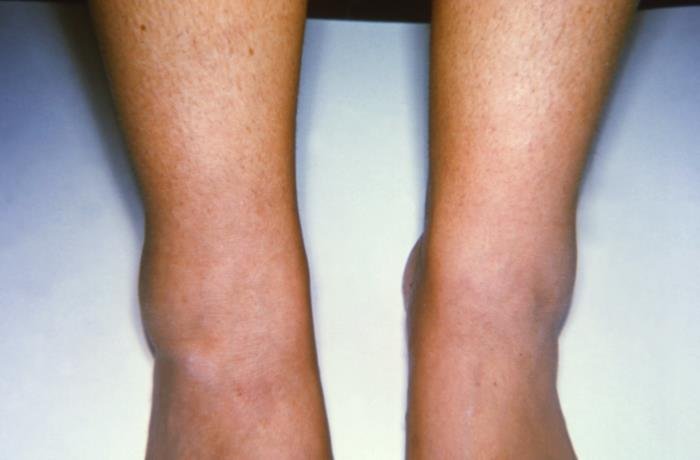
Photo: CDC, CC0, via Wikimedia Commons
Ankle Joint Pain Treatment at Home
For minor injuries and flare-ups, at-home treatment is often enough.
R.I.C.E. for Acute Pain
- Rest: Avoid activities that cause pain for a few days.
- Ice: Apply ice wrapped in a towel for 15 to 20 minutes several times a day.
- Compression: Use an elastic bandage or compression sleeve to control swelling.
- Elevation: Keep your ankle above heart level when resting.
Gentle Movement
Once sharp pain eases, gentle range-of-motion exercises help prevent stiffness. Try ankle circles, ankle pumps, and tracing the alphabet with your toes.
Over-the-Counter Pain Relief
Anti-inflammatory medicines such as ibuprofen or naproxen, or acetaminophen, can ease pain for a short time. Ask a pharmacist or doctor first if you take other medicines or have stomach, kidney, liver, or heart problems.
Heat for Stiffness
For long-term stiffness from arthritis, gentle heat before activity can loosen the joint. Many people use ice after activity and heat before it.
Exercises for Ankle Joint Pain
In the video below, a physical therapist leads a short routine of stretches for ankle pain relief.
Once pain allows, these exercises help keep the joint healthy:
- Ankle alphabet: Trace A to Z with your big toe, once or twice a day.
- Calf stretch: Lean on a wall with one leg back and the heel down. Hold 30 seconds.
- Resistance band moves: Push your foot down, up, in, and out against a light band, 10 to 15 times each.
- Calf raises: Rise onto your toes and lower slowly, 10 to 15 times.
- Single-leg balance: Stand on one foot near a counter for 30 seconds.
Our guide to ankle rehabilitation exercises explains how to progress safely.
Braces and Supports for Ankle Joint Pain
An ankle brace can ease joint pain by limiting painful motion, adding compression, and improving stability.
| Support type | Best for | How it helps |
|---|---|---|
| Compression sleeve | Mild pain, swelling, stiffness | Gentle compression and warmth |
| Strapped or lace-up brace | Instability, sprain recovery | Limits rolling |
| Hinged brace | Moderate arthritis, instability | Controls side motion, allows walking |
| Custom ankle-foot orthosis | Severe arthritis or deformity | Limits painful joint motion |
For arthritis-related pain, see our roundup of the best ankle brace for arthritis. For general support, see our main guide to the best ankle braces.
Shoes and Insoles
The right footwear can take pressure off a painful ankle joint:
- Rocker-bottom soles let the foot roll forward with less ankle motion.
- Cushioned insoles absorb shock with each step.
- Firm heel counters keep the heel stable.
- High-top shoes or boots add a little extra ankle support.
Our review of the best shoes for ankle support compares options.
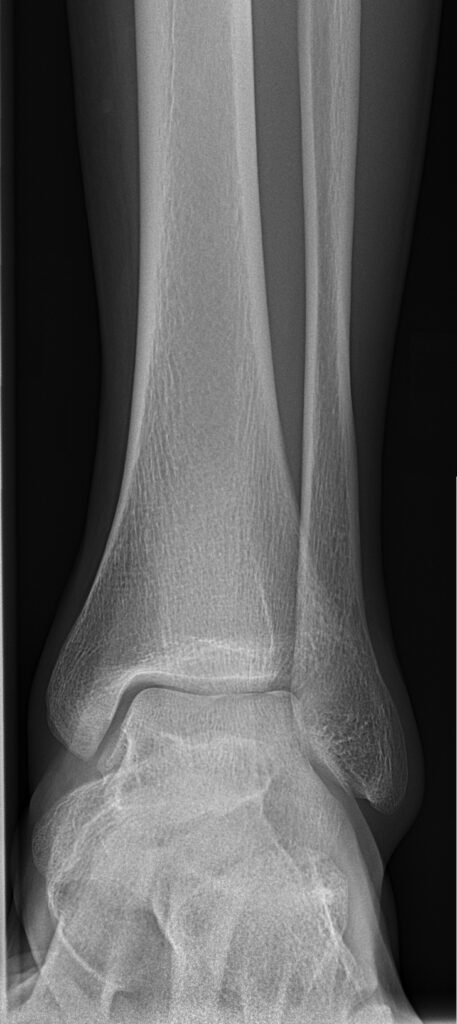
Image: Mikael Häggström, CC0, via Wikimedia Commons
Ankle Joint Pain by Location
Where your ankle hurts can point to the cause:
| Location | Possible causes | Learn more |
|---|---|---|
| Outer ankle | Sprain, peroneal tendon problems, arthritis | Ankle ligaments |
| Inner ankle | Posterior tibial tendon problems, deltoid sprain, tarsal tunnel | Medial ankle pain |
| Front of the ankle | Impingement, arthritis, tendinitis | Anterior ankle pain |
| Back of the ankle | Achilles tendinitis, bursitis | Back of ankle pain |
| Whole joint | Arthritis, gout, infection | See a doctor if hot and swollen |
How Doctors Diagnose Ankle Joint Pain
A doctor or podiatrist will usually:
- Ask about your symptoms, including when pain started, what makes it worse, and any past injuries
- Examine the ankle, checking for swelling, tenderness, range of motion, and stability
- Watch you walk to see how the joint moves and where you limp
- Order X-rays to look for fractures, arthritis, or bone spurs
- Use MRI, CT, or ultrasound for soft tissue injuries, cartilage damage, or unclear cases
- Order blood tests if gout, rheumatoid arthritis, or infection is suspected
Knowing the exact cause helps you choose the most effective ankle joint pain treatment.
Ankle Joint Pain Treatment for Specific Groups
Runners and Athletes
Overuse, old sprains, and tendon problems are common in active people. Reduce mileage or intensity, cross-train with cycling or swimming, strengthen the calves and hips, and consider a brace for sports after an injury.
Older Adults
Arthritis and balance problems are more common with age. Low-impact exercise, supportive shoes, a light brace, and a cane for longer walks can make a big difference. Our guide to using a walking stick correctly explains proper technique.
People With Diabetes
Diabetes can reduce feeling in the feet and slow healing. Even minor ankle pain, swelling, or redness should be checked by a doctor, and braces should be fitted carefully to avoid skin damage.
Lifestyle Changes That Ease Ankle Joint Pain
- Maintain a healthy weight. Every extra pound adds stress to the ankle with each step.
- Choose low-impact exercise such as swimming, cycling, and water walking.
- Warm up before activity and cool down afterward.
- Avoid high heels and worn-out shoes.
- Break up long periods of standing with short rests and position changes.
Common Ankle Joint Pain Treatment Mistakes
- Ignoring pain for too long. Pain that lasts more than a few days deserves a checkup.
- Resting completely for weeks. Too much rest can make the joint stiff and weak.
- Wrapping too tightly. Tight bandages can reduce circulation.
- Skipping strength and balance work. Weak muscles make re-injury more likely.
- Relying only on pain medicine. Medicine can ease symptoms, but it does not fix the cause.
Complementary Options for Ankle Joint Pain
Some people find extra relief from these options alongside standard care. Evidence varies, so treat them as add-ons rather than replacements:
- Massage: Gentle massage of the calf and foot muscles may ease tension around a sore ankle. See the benefits of massage for more.
- TENS units: Small devices that send mild electrical pulses through the skin. Some people use them for joint pain. Our guide to the best TENS machine for pain relief explains how they work.
- Contrast baths: Alternating warm and cool water soaks can feel soothing for stiff joints, though research is limited.
- Kinesiology tape: A light, flexible tape some people use for comfort. See our guide to kinesiology tape for ankle support.
Sleeping With Ankle Joint Pain
Night pain can make recovery harder. Try these tips:
- Elevate the ankle on a pillow to reduce swelling
- Avoid tight sheets that push the foot down
- Do gentle ankle circles before bed to ease stiffness
- Apply ice or heat for 15 to 20 minutes before sleep, depending on what helps you
Pain that wakes you at night, especially with swelling or fever, should be checked by a doctor.
Medical Ankle Joint Pain Treatment Options
If home care is not enough, a doctor may suggest:
- Physical therapy to improve motion, strength, and balance
- Prescription medicines, including stronger anti-inflammatories or medicines for gout and rheumatoid arthritis
- Corticosteroid injections for short-term relief of arthritis or inflammation
- Custom orthotics or braces
- Surgery for severe cases, such as ligament repair, cleaning out the joint, joint fusion, or ankle replacement
When to See a Doctor
Cleveland Clinic advises seeing a healthcare provider if ankle pain does not go away in a few days or is getting worse. Get urgent care if you:
- Cannot bear weight or take four steps
- Have a deformed ankle, numbness, or cold, pale toes
- Notice a red, hot, swollen joint, especially with fever
- Have sudden severe pain without an injury
- Have diabetes and notice foot or ankle swelling, redness, or wounds
Frequently Asked Questions
What is the best treatment for ankle joint pain?
The best treatment depends on the cause. For most injuries and flare-ups, rest, ice, compression, elevation, and gentle movement help. For long-term pain, exercise, braces, supportive shoes, and medical treatment for the underlying cause work best.
Why does my ankle joint hurt without an injury?
Arthritis, gout, tendinitis, bursitis, and overuse can all cause ankle joint pain without a clear injury. If pain lasts more than a few days or the joint is red and hot, see a doctor.
Is walking good for ankle joint pain?
Gentle walking is usually helpful for mild pain and arthritis, as long as it does not make pain much worse. Use supportive shoes and a brace if needed.
Should I use heat or ice for ankle joint pain?
Ice usually helps new injuries and swelling. Heat often helps chronic stiffness from arthritis, especially before activity.
Can an ankle brace help joint pain?
Yes. Braces can limit painful motion, add compression, and make the joint feel more stable. The right type depends on the cause and severity of your pain.
How long does ankle joint pain last?
Pain from a mild sprain often improves in one to three weeks. Pain from arthritis may come and go for years but can be managed with exercise, support, and medical care. Pain that does not improve after a few days of home care should be checked.
Can ankle joint pain be a sign of something serious?
Sometimes. A red, hot, swollen ankle with fever may mean infection. Sudden severe pain without an injury may be gout. Pain with calf swelling can be a sign of a blood clot. These need prompt medical care.
Does weather affect ankle joint pain?
Many people with arthritis say their ankles ache more in cold or damp weather. Research on this is mixed, but staying warm, keeping active, and using gentle heat can help on days when the joint feels stiffer.
Can supplements help ankle joint pain?
Some people try supplements such as glucosamine or fish oil for joint pain, but research results are mixed. Talk with your doctor before starting any supplement, especially if you take other medicines.
The Bottom Line
Ankle joint pain is common and usually manageable. Most people improve with R.I.C.E., gentle movement, pain relievers, exercise, a supportive brace, and good shoes. Ongoing or severe pain needs a medical evaluation to find the cause, whether it is arthritis, a tendon problem, or an old injury that never fully healed.
Start with simple steps, track what helps, and see a doctor if pain is severe, lasting, or comes with warning signs.
This article is for general information and is not medical advice. See a doctor for severe or lasting ankle pain.

Hi, I’m Mamon, the content creator behind this blog. I share my experience in blogging, WordPress, SEO, and affiliate marketing through honest product reviews, in-depth buying guides, and practical how-to articles. Every piece of content is thoroughly researched and written to help readers make informed decisions.
Leave a Reply