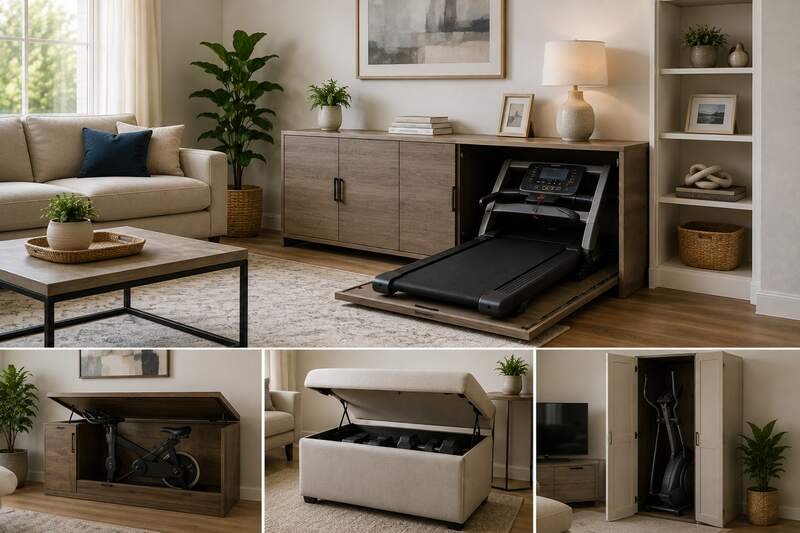
We all have our own fitness goals. One of the biggest challenges in reaching them doesn’t even involve the actual exercise. Sometimes the struggle is just making it to the gym. Working out at home solves that problem. But treadmills, kettlebells, and other equipment can quickly take over the room. That’s especially true when square footage is limited, turning a living space into something that looks more like a gym. This guide covers how to hide exercise equipment in living room settings. You don’t have to give up your workout routine or your room’s style to do it.
Key Takeaways
- Folding screens, curtains, and half-walls all let you conceal bulky equipment without moving it out of the room.
- Dual-purpose furniture, like storage ottomans and lift-top benches, hides smaller gear in plain sight.
- Choosing compact, foldable, or stylish equipment from the start reduces how much you need to hide later.
- Equipment covers protect your gear from dust while keeping it visually out of the way.
- Some people do better keeping equipment visible as a motivational cue, so there’s no single “right” answer.
Find a Good Folding Screen or Room Divider
It’s nearly impossible to hide heavy exercise equipment like a treadmill or stationary bike inside a closet. Moving heavy machines around also risks damaging your floor. Relocating them every time you want the room to look tidy isn’t realistic. A folding screen solves this without any lifting. Screens now come in enough styles, from woven wood panels to fabric-covered frames, to match your existing decor. Your treadmill stays out of view either way. Fold it flat against a wall when you’re ready to work out, and unfold it again when you’re done.
Place Equipment Strategically
A folding screen can make a small living room feel even smaller. If that’s a concern, you can hide exercise equipment without covering it at all. Find a spot that’s not usually in your direct line of sight, like a corner near a doorway. Place your equipment there instead of in the center of the room. Painting a wall the same color as your equipment, or hanging a large piece of art above it, also works. Neither trick hides the equipment physically, but both pull visual attention away from it. This is one of the simplest answers to how to hide exercise equipment in living room corners. It doesn’t cost a dime.
Use a Curtain
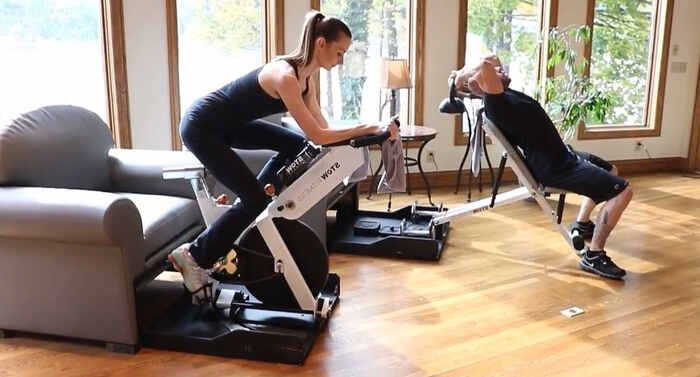
A curtain is a good middle ground. It hides equipment when guests are over but is quick to open when you’re ready to exercise. Hang a rod from the ceiling and drape a curtain or fabric panel from it. Closing the curtain conceals a treadmill or stationary bike in seconds, and opening it back up takes just as long. This approach also works well in rented apartments, since it typically requires nothing more than a single ceiling anchor.
Create a Half-Wall or Use a Bookcase
If you have a larger living room, a dividing wall can section off part of it as a workout area. A full wall isn’t always necessary. A half-wall tall enough to block equipment from view still preserves the open feeling of the room. You’re not closing off the space entirely. If construction isn’t an option, a tall bookcase or display case accomplishes something similar. It separates the space, hides your equipment on the other side, and doubles as storage for books or display items.
Try Dual-Purpose Furniture
Smaller gear, like resistance bands, hand weights, or a yoga mat, doesn’t need a wall or screen at all. According to House Digest, storage ottomans, benches, and lift-top coffee tables work well. They simply don’t look like fitness storage. A magazine rack or a rolling utility cart can work the same way. Both hold resistance bands or a yoga mat without announcing what’s inside. These pieces do double duty as regular living room furniture the rest of the time. That makes them worth the investment beyond just hiding your equipment.
Choose Compact, Stylish Equipment From the Start
If you’re just starting to build a home gym, it pays to research equipment that doesn’t demand much space. Many newer treadmills are considerably smaller and better designed than older models. Some look stylish enough to leave out in the open. If you’re tight on space, a treadmill that folds flat after use is worth the extra cost. Our guide on how much a treadmill weighs can help. It shows whether a given model is light enough to fold and tuck away yourself. The same logic applies to a folding exercise bike or a portable weights bench. Both can slide under a bed or into a closet once you’re finished. Starting with the right gear from day one is half the battle in how to hide exercise equipment in living room settings long-term. There’s simply less bulk to deal with later.
How Much Space Do You Need to Hide Exercise Equipment in a Living Room?
Figuring out how to hide exercise equipment in living room spaces often comes down to how much room you actually have. A folding screen or curtain needs only enough wall space to mount a rod or stand a few panels. That’s typically 3 to 4 feet of width against a wall. A half-wall or bookcase divider needs a permanent footprint. It works best in living rooms with at least 150 to 200 square feet of open floor space. Dual-purpose furniture and equipment covers need almost no extra space at all, since they simply replace furniture you’d already own. If your living room is on the smaller side, lean toward the low-footprint options first. Save the half-wall or bookcase for a larger space. Renters in studio or one-bedroom apartments tend to get the most mileage out of curtains and folding screens for exactly this reason.
Invest in Equipment Covers
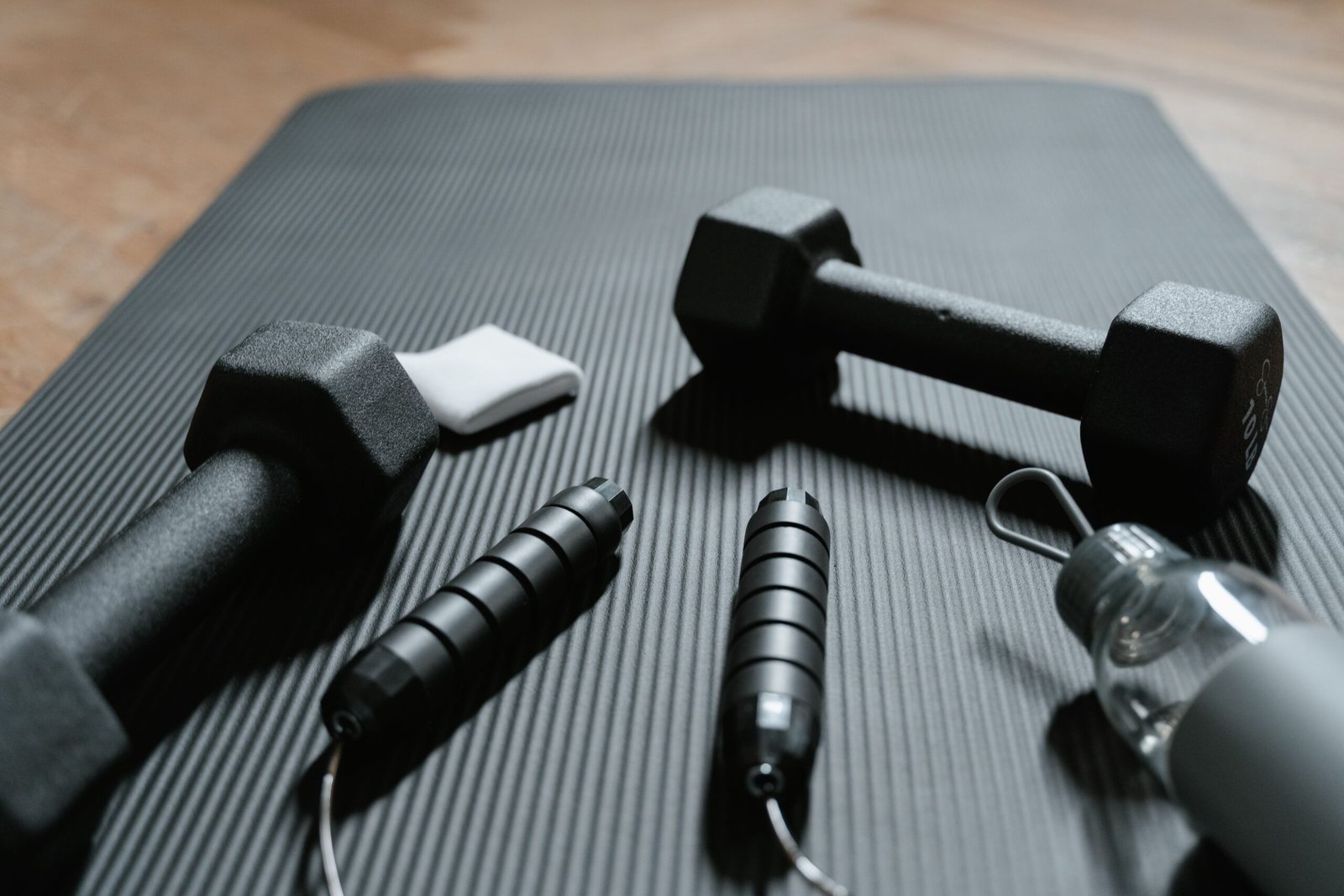
If none of the above options fit your space, covering your equipment is the simplest fallback. Covers designed specifically for treadmills, stationary bikes, and other gym machines are widely available. Many styles blend with the rest of your interior instead of standing out. Beyond the visual benefit, a cover also protects your equipment from dust and pet hair. That helps it last longer between deep cleanings. A fitted cover can also double as a makeshift side table in a pinch. It gives you somewhere to set a water bottle or towel between sets.
Common Mistakes to Avoid
A few habits make hiding exercise equipment harder than it needs to be. Buying a folding screen that’s too short to fully block a tall treadmill console is a common one. Measure your equipment’s height before you shop. Another mistake is choosing a curtain rod that isn’t rated for the weight of a heavy fabric panel. That can pull loose from the ceiling over time. People also tend to forget about noise. A half-wall or bookcase blocks visibility, but it won’t muffle the sound of a treadmill motor the way a separate room would. Finally, resist the urge to shove equipment into a closet if it won’t easily come back out. Equipment you have to fight to access tends to get used less. That defeats the purpose of learning how to hide exercise equipment in living room settings in the first place. A little planning up front saves a lot of frustration later.
Watch: Small Space Home Gym Organization Ideas
This video walks through additional storage tricks for keeping a home gym tidy in a small living space.
Why Keeping Your Home Gym Visible Isn’t All Bad
Hiding equipment isn’t the right call for everyone. Real Homes points out that a visible setup can double as a motivational cue. Equipment you can see is equipment you’re more likely to use. If motivation is more of a struggle for you than clutter, leave your setup out. Invest your energy in styling it instead of concealing it.
Related Guides
If you’re weighing equipment options before you buy, our guide on how much a treadmill weighs can help with moving and storage decisions. For a compact cardio alternative, see our review of the best folding exercise bikes. Curious about the bigger-picture benefits of working out at home?
Frequently Asked Questions
What’s the cheapest way to hide exercise equipment in a living room?
Strategic placement costs nothing. Tucking equipment into an unused corner is free. It still noticeably reduces visual clutter.
Will a folding screen fit in a small apartment?
Yes. Folding screens fold flat against a wall when not in use. They take up minimal floor space compared to a permanent divider.
Is it better to hide a treadmill or just buy a smaller one?
Both work, and they’re not mutually exclusive. A compact or folding model is easier to hide. It fits behind a screen or in a closet in a way a full-size machine never will.
How do I hide exercise equipment in a rented apartment?
Curtains, folding screens, and freestanding bookcases all work well in rentals. None of them require permanent changes to the walls.
What furniture doubles best as gym equipment storage?
Storage ottomans, lift-top coffee tables, and rolling utility carts are popular choices. They hold smaller gear while functioning as normal furniture.
Do equipment covers actually help with dust?
Yes. A properly fitted cover keeps dust, pet hair, and general debris off your equipment. That can extend the life of the machine between cleanings.
Should I always hide my exercise equipment?
Not necessarily. Some people find that visible equipment reinforces their workout habit. It comes down to personal preference and what keeps you motivated.
What’s the first step in how to hide exercise equipment in living room settings on a budget?
Start with strategic placement, since it costs nothing. Tucking equipment into a corner or against a wall that’s out of your normal sightline makes a noticeable difference. You don’t need to spend anything on a screen, curtain, or furniture to see that first improvement.
Do I need a big living room to hide exercise equipment well?
No. Curtains, folding screens, and dual-purpose furniture all work in smaller rooms. Half-walls and bookcase dividers need more floor space, so they suit larger living rooms better.
Bottom Line
There’s no single trick for how to hide exercise equipment in living room spaces. Plenty of options exist depending on your room size, budget, and rental situation. Folding screens, curtains, half-walls, dual-purpose furniture, and equipment covers can all work on their own or together. The right combination comes down to trial and error. Once you find a setup that fits your space, your equipment stays accessible. It won’t take over your living room.

Hi, I’m Mamon, the content creator behind this blog. I share my experience in blogging, WordPress, SEO, and affiliate marketing through honest product reviews, in-depth buying guides, and practical how-to articles. Every piece of content is thoroughly researched and written to help readers make informed decisions.
Leave a Reply