

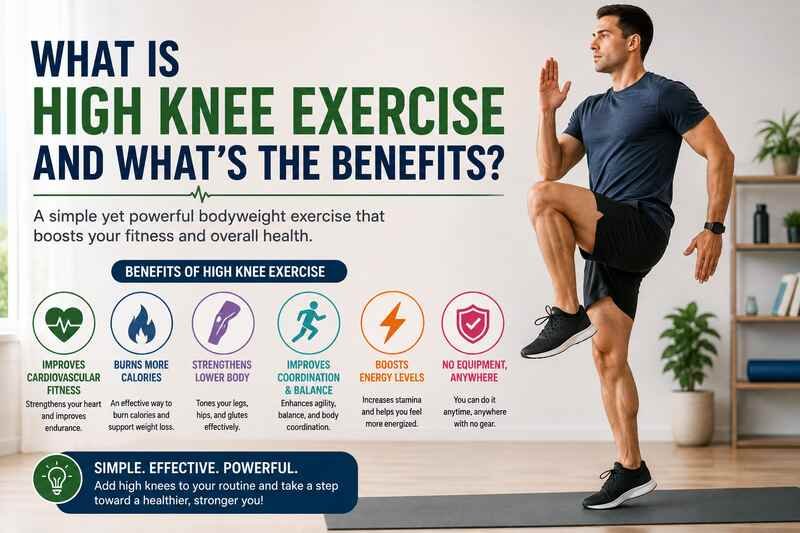

What is high knee exercise, and why do so many trainers build it into their workouts? High knees are a simple cardio move where you jog in place while driving your knees up toward your chest. U.S. fitness coaches use this exercise as a warm-up, a HIIT interval, and a core-strengthening drill all at once. This guide breaks down proper form, the muscles it works, and how to add high knees to your own routine safely.
Key Takeaways
- High knees work your lower body, core, and cardiovascular system at the same time.
- No equipment is needed, so you can do this move anywhere you have standing room.
- Proper form means driving your knees to hip height without leaning your torso back.
- Most healthy adults do not need a knee brace for high knees, but check with your doctor if you have existing knee pain.
- Start with shorter intervals and build up duration as your fitness improves.
What Is High Knee Exercise?
High knee exercise is a bodyweight cardio move that mimics running in place. You lift each knee up toward your chest one at a time, alternating sides at a quick pace. Your arms typically pump alongside the motion, similar to a sprinting form. The exercise works your hip flexors, quadriceps, hamstrings, calves, and core muscles all in one movement.
Coaches often place high knees at the start of a workout to raise your heart rate quickly. Others use it as a standalone interval inside a HIIT circuit. Either way, the exercise requires no equipment and very little space, which makes it a popular choice for home workouts and gym warm-ups alike.
You will often see high knees listed alongside butt kicks, jumping jacks, and mountain climbers in warm-up routines. All four moves share a similar goal: raising your heart rate and loosening your joints before a harder workout begins. High knees stand out because they also demand real core stability, which makes the move feel more like a strength exercise than a simple warm-up drill once the pace increases.
How to Do High Knees With Proper Form
Good form keeps the exercise safe and effective. Follow these steps every time you perform the movement.
Step 1: Set Your Starting Position
Stand with your feet about hip-width apart. Keep your chest lifted and your core braced. Your arms should sit bent at roughly ninety degrees, ready to pump as you move.
Step 2: Drive One Knee Up
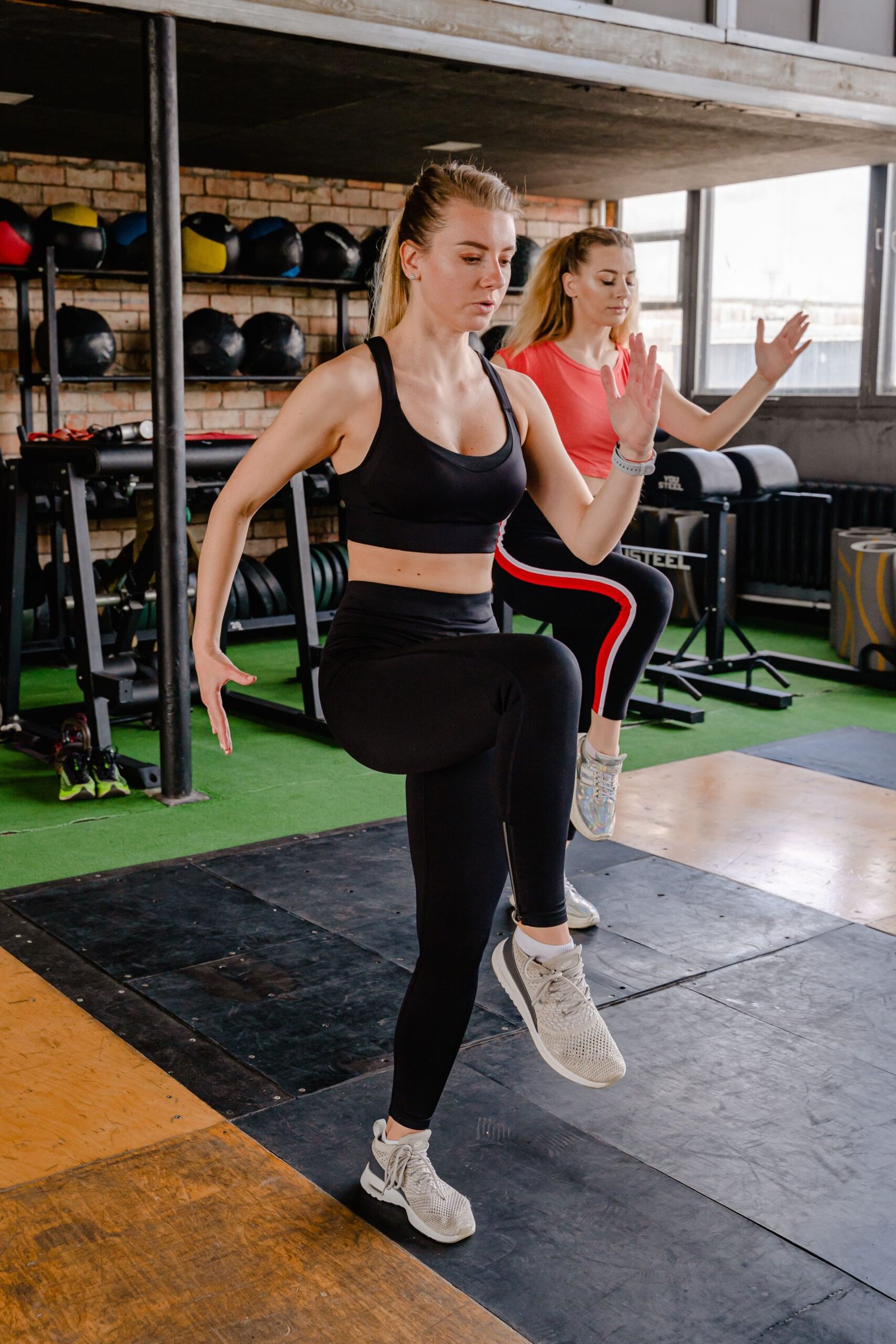
Lift one knee toward your chest until your thigh reaches close to parallel with the floor. Keep your standing leg slightly bent rather than locked straight. Land softly on the ball of your foot as that leg returns to the ground.
Step 3: Alternate Quickly
Switch to the other knee as soon as your first foot lands. Keep the pace brisk, almost like a light jog in place. Swing your opposite arm forward each time, just as you would while running.
Step 4: Keep Your Posture Tall
Avoid leaning your torso backward as you tire. Leaning back reduces how effectively the exercise targets your core and can strain your lower back over time. Keep your eyes forward and your shoulders stacked over your hips throughout the set.

Muscles Worked and Benefits of High Knees
High knees deliver more than a quick calorie burn. Understanding what is high knee exercise doing to your body helps explain why trainers use it so often.
Cardiovascular Conditioning
High knees raise your heart rate fast, which makes them an effective cardio tool. Regular cardio work like this supports healthy blood pressure and blood sugar levels over time. The American College of Sports Medicine notes that adults benefit from a mix of moderate and vigorous aerobic activity each week, and short bursts of movement like high knees can help you reach that goal through the ACSM’s physical activity guidelines.
Core and Lower Body Strength
Your abdominal muscles work hard to stabilize your body during each knee drive. Your hip flexors, quadriceps, and calves also get a solid workout with every repetition. Over time, this combination can improve your balance and your running stride.
No Equipment Required
You do not need a gym, weights, or any special gear to perform high knees. A small patch of floor is all it takes. That convenience makes the exercise easy to fit into a busy schedule, whether you train at home, outdoors, or in a hotel room while traveling.
Low Injury Risk When Done Correctly
High knees are lower impact than sprinting outdoors, since you are not covering ground at speed. Most healthy adults can perform this move safely with proper form. People recovering from a lower body injury should still get clearance from a doctor first.
Do You Need Knee Support or Protection?
High knees are not a particularly intense exercise on the joints, so most people will not need a knee brace to perform them safely. That said, some protection makes sense if you have a history of knee pain or a recent injury. If your knee brace tends to shift out of place during movement, our guide on how to keep a knee brace from slipping down covers fixes that keep support gear in place during cardio work.
If you are shopping for a brace to wear during workouts like this one, our knee brace comparison guide breaks down which styles suit active use best. Always follow your doctor’s specific recommendation rather than choosing a brace on your own if you have an existing knee condition.
Adding High Knees to Your Workout
Watch this quick demonstration to see proper high knee form and pacing in action.

Try high knees as a thirty-second warm-up before a strength session. You can also drop them into a HIIT circuit for twenty to forty-five seconds at a time, followed by a short rest. Beginners often start with two or three rounds, while more advanced exercisers may work up to five or six rounds within a longer circuit.
Sample High Knee Workout Routines
Once you understand what is high knee exercise and how proper form feels, you can build it into a structured routine. Here are three sample approaches based on fitness level.
Beginner Routine
Perform high knees at a controlled marching pace for twenty seconds. Rest for forty seconds. Repeat this cycle three times. Focus entirely on form rather than speed during this stage.
Intermediate Routine
Perform high knees at a brisk jogging pace for thirty seconds. Rest for thirty seconds. Repeat the cycle five times. Add this block to the start of a strength workout as a warm-up, or use it as a standalone cardio session.
Advanced Routine
Perform high knees at maximum controlled speed for forty-five seconds. Rest for fifteen seconds. Repeat the cycle six to eight times. Pair this block with other bodyweight moves like squat jumps or mountain climbers for a complete HIIT circuit.
Adjust these routines based on how your body responds. Reduce the work interval or extend the rest period if you notice your form breaking down before the set ends.
How High Knees Fit Into a Full-Body Fitness Plan
High knees work best as one piece of a broader fitness routine rather than a complete workout on their own. Pair them with strength training two or three times a week to build muscle alongside your cardio gains. Stretching after your session also helps maintain flexibility in your hip flexors, which get heavily engaged during this exercise.
Many people ask what is high knee exercise really doing for their overall health beyond the workout itself. The honest answer is that consistent cardio, including short bursts like high knees, supports heart health, mood, sleep quality, and long-term energy levels. Small, repeatable habits like a daily high knee interval often produce better long-term results than occasional intense sessions.

High Knees vs. Other Cardio Exercises
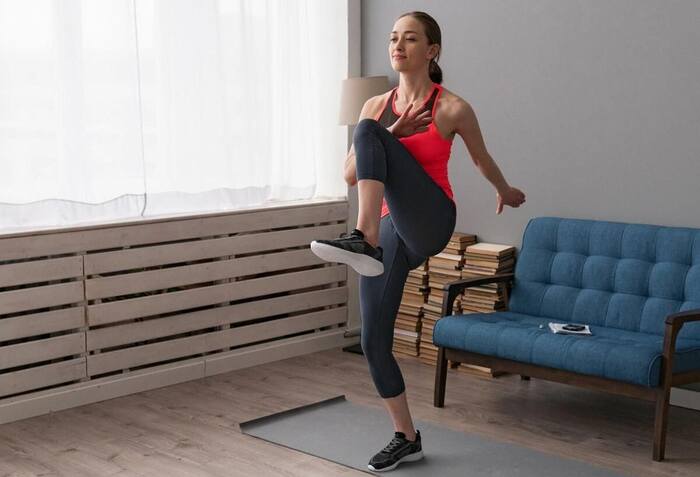
High knees compare favorably to many other bodyweight cardio moves. Jumping jacks work a similar range of muscles but add more impact on the joints. Mountain climbers target the core more directly but work the shoulders less than high knees do. If you prefer equipment-based cardio, our guide on using a rowing machine to lose weight offers a lower-impact alternative that still builds cardiovascular fitness.
For a broader comparison of cardio equipment options, our roundup of the best exercise machines for weight loss can help you decide whether bodyweight moves like high knees or machine-based cardio fit your goals better.
Common Mistakes to Avoid
- Leaning too far back. This reduces core engagement and adds strain to your lower back.
- Only lifting your knees partway. Shallow knee drives cut down on the exercise’s cardio and strength benefits.
- Landing flat-footed. Landing hard on your heels increases joint impact with every step.
- Going too fast with poor form. Speed without control raises your risk of a misstep or a fall.
- Skipping the warm-up entirely. Jumping straight into a fast pace without easing in can strain cold muscles.
Modifications for Beginners and Advanced Athletes
Beginners can slow the pace and focus purely on form before adding speed. Marching in place with a controlled knee lift builds the same muscle memory with less impact. As strength and coordination improve, you can gradually increase your pace toward a full jogging rhythm.
Advanced athletes can add resistance bands around the ankles for extra hip flexor engagement. Others increase intensity by combining high knees with a jump or a small forward hop.
Weighted vests add another layer of challenge for experienced exercisers who have mastered standard form. Adding even light extra weight increases the cardio demand significantly, so start with a small amount and build up gradually. Anyone new to weighted training should master bodyweight high knees first before adding resistance of any kind.
Safety Tips
Warm up for a few minutes before starting any high-intensity interval, including high knees. Stop immediately if you feel sharp knee or hip pain rather than normal muscle fatigue. According to Harvard Health, low-impact alternatives may suit you better if you already manage chronic hip or knee pain. Always check with your doctor before starting a new exercise routine if you have an existing joint condition.
Frequently Asked Questions
What is high knee exercise good for?
High knees build cardiovascular fitness, strengthen your core and lower body, and improve coordination, all without any equipment.
How long should I do high knees for a good workout?
Most people start with twenty to thirty seconds per set. You can build up to longer intervals as your fitness improves.
Can beginners do high knees safely?
Yes. Beginners can slow the pace or march in place instead of jogging, which still builds the same fundamental movement pattern.
Do high knees help you lose weight?
High knees burn calories as part of an overall cardio routine. Combined with a balanced diet and consistent exercise, they can support weight loss goals.
Is it normal for my knees to hurt after doing high knees?
Mild muscle soreness is normal, but sharp joint pain is not. Stop the exercise and consult a doctor if you experience ongoing knee pain.
Can I do high knees every day?
Most people can perform high knees several times a week as part of a cardio routine. Give your body rest days if you notice unusual fatigue or soreness.
Do I need special shoes for high knees?
Any supportive athletic shoe works well for this exercise. Avoid doing high knees barefoot on hard surfaces, since cushioned shoes reduce joint impact with every landing.
What is a good alternative to high knees for people with knee pain?
Marching in place, seated knee lifts, or low-impact cardio machines can offer similar benefits with less joint stress. Ask a physical therapist for options tailored to your specific condition.
Bottom Line
Now that you know what is high knee exercise and how it benefits your body, you can add it to your routine with confidence. Focus on proper form, start at a pace that feels manageable, and build up intensity gradually. Paired with good knee support when needed and a balanced fitness plan, high knees can become a reliable part of your cardio training for years to come.


Hi, I’m Mamon, the content creator behind this blog. I share my experience in blogging, WordPress, SEO, and affiliate marketing through honest product reviews, in-depth buying guides, and practical how-to articles. Every piece of content is thoroughly researched and written to help readers make informed decisions.