

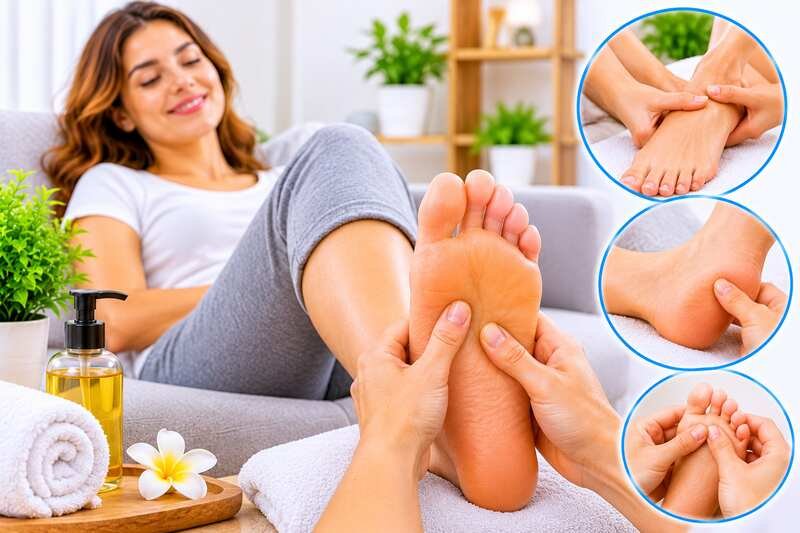
If your feet ache after a long shift, a workout, or a day in the wrong shoes, massage for feet pain is one of the simplest ways to feel better. A few minutes of rubbing, rolling, and stretching can ease tight muscles, loosen the tissue under your arch, and help you relax. You can do it with your hands, a tennis ball, a frozen water bottle, or an electric foot massager.
This guide covers the best massage techniques for common types of foot pain, a step-by-step self-massage routine, helpful tools, stretches to pair with massage, and the warning signs that mean you should see a doctor instead.

Key Takeaways
- Massage for feet pain can relieve muscle tension, tired arches, and mild heel pain.
- Use slow, firm pressure that feels good, never sharp pain.
- For plantar fasciitis, pair massage with calf and arch stretches. Orthopedic surgeons say stretching is the most effective way to relieve the pain.
- Rolling your foot over a cold water bottle combines massage with ice.
- See a doctor for sudden, severe, or worsening pain, numbness, swelling, or signs of infection.
Why Do Your Feet Hurt?
Each foot has 26 bones, 33 joints, and more than 100 muscles, tendons, and ligaments, all working to support your full body weight with every step. It’s no surprise they get sore.
Common causes of foot pain include:
| Cause | Where it hurts | Can massage help? |
|---|---|---|
| Tired, overworked feet | Arches and soles | Yes |
| Plantar fasciitis | Bottom of the heel, often worse with first steps | Yes, along with stretching |
| Tight calves | Heel and arch | Yes, massage the calves too |
| Poorly fitting shoes | Toes, balls of feet | Helps symptoms, but change shoes |
| Flat feet or high arches | Arch, heel | May ease soreness |
| Bunions | Base of the big toe | Gentle massage may ease discomfort |
| Metatarsalgia | Ball of the foot | Gentle massage may help |
| Stress fracture | Specific spot on a bone | No, see a doctor |
| Gout | Sudden, hot, swollen joint | No, see a doctor |
Massage works best for muscle and soft-tissue soreness. It isn’t a fix for broken bones, infections, or nerve problems.
How Massage Helps Foot Pain
Massage for feet pain may help in several ways:
- Loosens tight muscles in the arch and calf
- Improves comfort and flexibility in the plantar fascia, the thick band of tissue under your foot
- Increases blood flow to the area, which can feel soothing
- Calms the nervous system, which can lower how intense pain feels
- Helps you relax after a stressful day
The evidence is strongest when massage is part of a broader plan. A review of plantar fasciitis management describes conservative care that includes appropriate footwear, stretching, and massage. The review also notes that high-quality studies comparing treatments are limited.
Best Massage Techniques for Feet Pain
Try these simple techniques. Use a little lotion or oil to help your hands glide.
1. Thumb Stripping
Hold your foot with both hands. Press your thumbs into the sole near the heel and slide them slowly toward the toes. Repeat in lines across the sole. This helps release tension along the arch.
2. Arch Kneading
Make a loose fist and press your knuckles into the arch. Move in small circles, working from heel to ball of the foot.
3. Heel Squeeze
Cup your heel in your palm and squeeze gently, then use your thumb to make small circles around the heel pad.
4. Toe Pulls and Rolls
Gently pull each toe, then roll it between your thumb and finger. Spread your toes apart with your fingers to stretch the spaces between them.
5. Ball-of-Foot Press
Press your thumb into the ball of your foot just below each toe, holding for a few seconds.
6. Calf Massage
Tight calves pull on the heel and arch. Use both hands to knead your calf muscles from ankle to knee.
For more strokes, see our guide on how to give a massage.
A 10-Minute Self-Massage Routine for Foot Pain
Do this routine once or twice a day, especially in the evening or after exercise.
| Step | Time | Technique |
|---|---|---|
| 1. Warm up | 2 minutes | Soak feet in warm water or rub briskly with your hands |
| 2. Arch work | 2 minutes per foot | Thumb stripping and knuckle kneading |
| 3. Heel work | 1 minute per foot | Heel squeeze and circles |
| 4. Toes | 30 seconds per foot | Pulls, rolls, and spreads |
| 5. Roll | 1 minute per foot | Roll under a ball or bottle |
Tip: Warming your feet first makes massage more comfortable. A warm foot soak or foot spa is ideal. See our main guide to the best home foot spa.
Tools That Make Foot Massage Easier
You don’t always need your hands. These tools can do much of the work:
| Tool | How to use it | Best for |
|---|---|---|
| Tennis or lacrosse ball | Roll under the arch while seated | Arch pain, tight soles |
| Frozen water bottle | Roll under the arch and heel | Plantar fasciitis, inflammation |
| Spiky massage ball | Roll gently under the foot | Stimulating tired feet |
| Wooden foot roller | Roll back and forth | Arch tension |
| Electric shiatsu foot massager | Rest feet inside the machine | Hands-free kneading |
| Massage gun | Low setting on the arch and calf | Calf tightness, muscle soreness |
| Foot spa with rollers | Roll feet while soaking | Relaxation and gentle massage |
If you’re curious about percussion devices, our guide to what a percussion massager is explains how to use one safely. For warmth while you massage, see our guide to the heated personal massager.

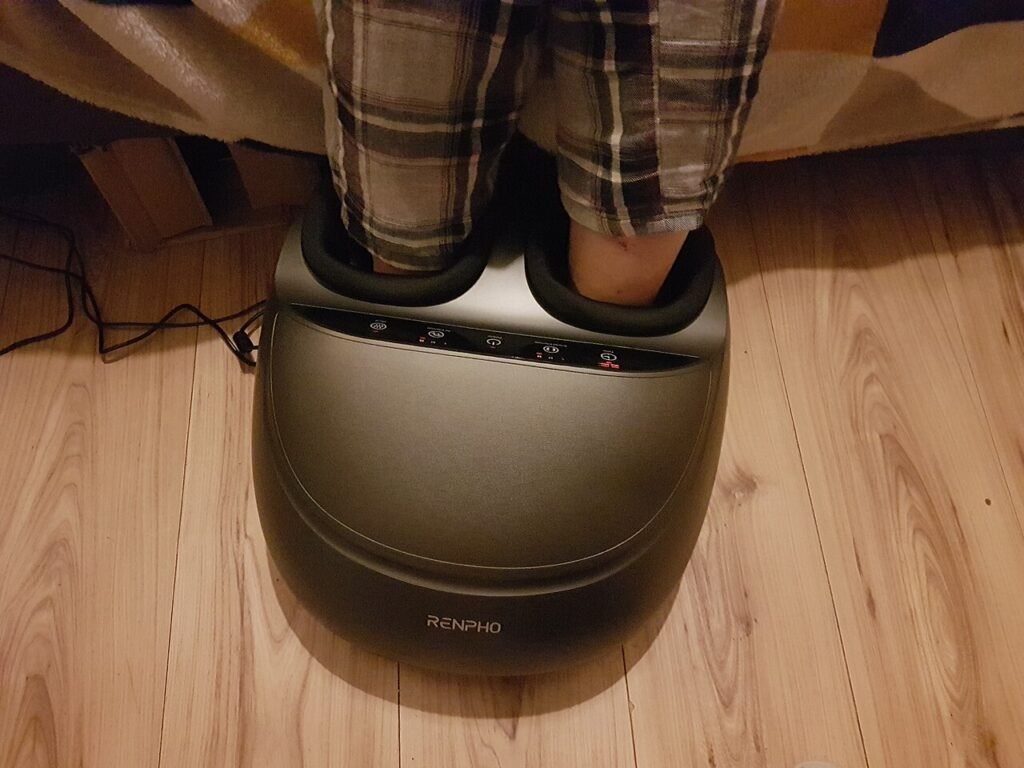
Photo: Best For My Feet / Wikimedia Commons (CC BY-SA 3.0)
Massage for Feet Pain From Plantar Fasciitis
Plantar fasciitis is one of the most common causes of heel pain. It often hurts most with the first steps in the morning or after sitting.
According to the American Academy of Orthopaedic Surgeons (OrthoInfo), stretching your calves and plantar fascia is the most effective way to relieve the pain. They also note that rolling your foot over a cold water bottle or ice for 20 minutes can help, and that more than 90% of patients improve within 10 months of starting simple treatment methods.
A plantar fasciitis routine might look like this:
- Before getting out of bed: Gently pull your toes back toward your shin for 30 seconds.
- Morning: Roll your foot over a tennis ball for 2 minutes.
- After activity: Roll your foot over a frozen water bottle.
- Evening: Do the 10-minute self-massage routine, then stretch your calves.
Calf and Arch Stretches to Pair With Massage
- Wall calf stretch: Stand facing a wall with one foot back, heel down, and lean forward until you feel a stretch. Hold 30 seconds, repeat 3 times per leg.
- Towel stretch: Sit with your leg straight, loop a towel around the ball of your foot, and gently pull toward you. Hold 30 seconds.
- Toe stretch: Cross one leg over the other and pull your toes back to stretch the arch.
Massage for Other Types of Foot Pain
Tired, Achy Feet From Standing
Warm soak plus 5 minutes of thumb stripping and arch kneading. A foot spa with rollers helps after long shifts. See our guide to the best heated foot spa.
Ball-of-Foot Pain
Use gentle thumb presses below the toes and avoid deep pressure on the bones. Check your shoes for enough room and cushioning.
Bunion Discomfort
Gently massage the muscles around the big toe and stretch it slowly. Avoid pressing directly on the bump.
Pain After Running
Roll your arch on a ball, massage your calves, and stretch. If pain is in one specific spot on a bone, stop running and see a doctor.
Massage for Feet Pain: Tips for Different People
Nurses, Teachers, and Retail Workers
Long hours on hard floors strain the arches. Keep a massage ball at work and roll each foot for a minute during breaks. At home, soak and do the full 10-minute routine.
Runners and Athletes
Focus on the calves and arches after training. Rolling and stretching after each run can help, but sharp, localized pain needs a doctor’s check.
Older Adults
Skin and fat pads on the feet thin with age, so use gentler pressure. A seated foot roller or a foot spa with rollers avoids bending over. If you have diabetes or circulation problems, ask your doctor first.
During Pregnancy
Swelling and extra weight can make feet ache. Gentle massage with feet elevated can feel soothing. Avoid deep pressure, and check with your doctor or midwife, especially if one leg is suddenly more swollen than the other.
How to Choose a Foot Massager for Pain
| Feature | Why it matters |
|---|---|
| Adjustable intensity | Lets you start gently |
| Heat | Warms and relaxes tight muscles |
| Fits your foot size | Larger feet need a roomier machine |
| Easy controls | Toe-touch buttons or a remote reduce bending |
| Auto shut-off | Prevents overuse |
| Removable, washable liners | Keeps it hygienic |
If you prefer a soak with your massage, a foot spa with rollers is a gentler option. Our guide to the types of massagers compares wet and dry options.
When Not to Massage Your Feet
Skip massage and see a healthcare provider if you have:
- Sudden, severe pain or pain after an injury
- Swelling, redness, or warmth, which could mean infection or gout
- Pain in one specific spot on a bone, which could be a stress fracture
- Numbness, tingling, or burning, especially if you have diabetes
- Calf pain with swelling, which could be a blood clot
- Open wounds, blisters, or skin infections
- Pain that doesn’t improve after two to three weeks of home care
People with diabetes should check with their doctor before using massage tools, especially frozen bottles or heated devices, since reduced feeling can make it hard to notice injury.

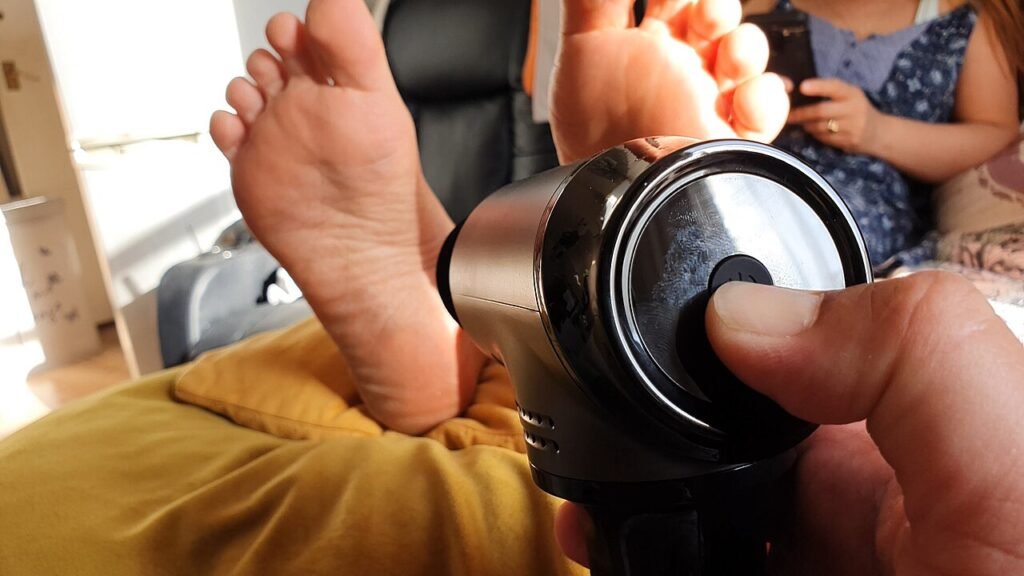
Photo: Best For My Feet / Wikimedia Commons (CC BY-SA 3.0)
Tips for Getting the Most From Foot Massage
- Warm up first. A warm soak or shower makes muscles more pliable.
- Go slow. Slow, steady pressure works better than fast rubbing.
- Stay in the comfort zone. A “good hurt” is fine; sharp pain is not.
- Be consistent. A few minutes daily beats one long session a week.
- Combine with stretching. Massage loosens tissue; stretching keeps it flexible.
- Check your shoes. Supportive, well-fitting shoes help prevent pain from coming back.
- Moisturize. Using lotion during massage keeps skin soft.
Professional Massage for Feet Pain
If home care isn’t enough, consider:
- A licensed massage therapist for deep tissue work on the feet and calves. Learn about what deep tissue massage is.
- A physical therapist for targeted soft-tissue work, stretching, and strengthening.
- A podiatrist for diagnosis, orthotics, and medical treatment.
- A reflexologist for relaxation. Read our guide to foot reflexology.
Shoes and Habits That Prevent Foot Pain
Massage relieves pain, but prevention keeps it from coming back:
- Wear shoes with good arch support and cushioning.
- Replace running shoes about every 300 to 500 miles.
- Avoid walking barefoot on hard floors for long periods.
- Stretch your calves daily.
- Maintain a healthy weight to reduce pressure on your feet.
Frequently Asked Questions
Is massage good for feet pain?
Yes, for muscle tension, tired feet, and mild heel pain. Massage for feet pain works best combined with stretching and supportive shoes.
How long should I massage my feet for pain relief?
About 5 to 10 minutes per session is enough for most people. You can do it once or twice a day.
Should foot massage hurt?
It can feel intense, but it shouldn’t cause sharp pain. Lighten the pressure if it hurts.
Is it better to use heat or ice with foot massage?
Warmth before massage helps muscles relax. For plantar fasciitis or inflammation, rolling on a cold water bottle combines massage and ice.
Can a foot massager help plantar fasciitis?
It may ease discomfort, but stretching is the most effective home treatment. Use a massager as part of a routine with stretches and good shoes.
When should I see a doctor for foot pain?
See a doctor for sudden or severe pain, swelling, numbness, pain on a specific spot of bone, or pain that doesn’t improve within a few weeks.
Can I massage my feet every day?
Yes. Gentle daily massage for feet pain is safe for most people. Keep the pressure comfortable and stop if pain gets worse.
Does massage help with swollen feet?
Gentle strokes from the toes toward the ankle, with your feet raised, may feel soothing. But sudden or one-sided swelling needs a doctor’s check, since it can signal a blood clot or other problem.
Conclusion
Massage for feet pain is a simple, low-cost way to ease tired, achy feet and mild heel pain. Warm your feet first, use slow and steady pressure on the arches, heels, and toes, and add rolling tools like a ball or frozen water bottle. For plantar fasciitis, pair massage with daily calf and arch stretches, since orthopedic experts say stretching is the most effective home treatment.
For a relaxing routine that combines warmth and massage, explore our main guide to the best home foot spa, and learn more about the wider benefits of massage.
Health note: This article is for general information only and is not medical advice. See a doctor or podiatrist for severe, sudden, or ongoing foot pain.


Hi, I’m Mamon, the content creator behind this blog. I share my experience in blogging, WordPress, SEO, and affiliate marketing through honest product reviews, in-depth buying guides, and practical how-to articles. Every piece of content is thoroughly researched and written to help readers make informed decisions.