

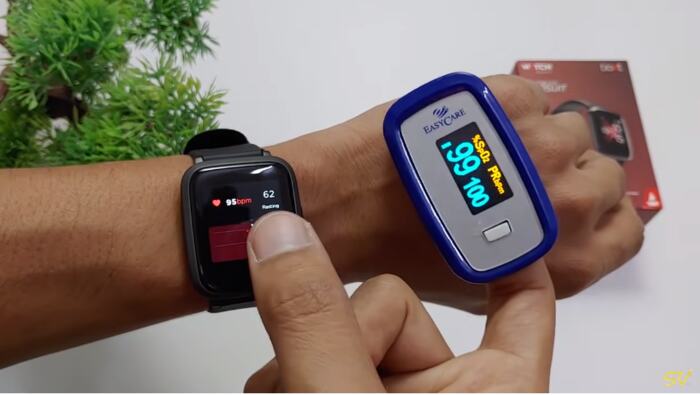

Nearly half of U.S. adults live with high blood pressure, according to the American Heart Association, and most of them only find out during an occasional doctor’s visit. A fitness tracker changes that equation. Instead of a once-a-year cuff reading, you get a device on your wrist that promises to track blood pressure alongside your steps, sleep, and heart rate, updating throughout the day instead of once a year in a waiting room.
So, how do fitness trackers measure blood pressure? In short, a fitness tracker can estimate blood pressure in three main ways: optical sensors, ECG paired with PPG, and inflation-based cuffs. Each method trades off convenience against accuracy, and none of them is a perfect substitute for the cuff and stethoscope your doctor uses.
This guide walks through exactly how each method works, how accurate the results really are, and how to get the most reliable numbers out of the tracker you already own.
Key Takeaways
- Fitness trackers estimate blood pressure using optical sensors, ECG/PPG combinations, or a built-in inflatable cuff
- Inflation-based trackers tend to be the most accurate, while optical-only sensors are the least accurate
- The American Heart Association notes that cuffless wearable technology shows promise but isn’t yet a replacement for a validated cuff device
- Skin tone, tracker fit, motion, and calibration all affect how close your reading lands to a clinical measurement
- Use a fitness tracker to spot trends over time, and confirm any concerning reading with a validated cuff or your doctor
The Basics of a Fitness Tracker: How It Functions
A fitness tracker is a wearable device, usually worn on the wrist, that monitors health and fitness metrics throughout the day. They’ve steadily replaced plain wristwatches for many U.S. consumers because of everything packed inside: sleep tracking, step counting, call and text notifications, GPS, and increasingly, blood pressure estimates.
Most trackers pair a small LCD or OLED display with a handful of sensors working together:
- A pedometer sensor counts the steps you’ve taken
- An accelerometer tracks distance traveled and calories burned
- A heart rate sensor uses optical light, ECG, or PPG technology to estimate heart rate and, on some models, blood pressure
- A sleep tracker uses movement sensors to log sleep duration and patterns
- A gyroscope helps with orientation and rotation tracking
- An altimeter measures elevation changes, useful for hikers
- A temperature sensor logs skin temperature trends
- An SpO2 sensor estimates blood oxygen levels on select models
Once paired with a companion app over Bluetooth, the tracker syncs its readings to your phone so you can review trends rather than a single isolated number.
How Do Fitness Trackers Measure Blood Pressure?
Blood pressure monitoring has become one of the most requested features in wearables, and manufacturers have taken three distinct approaches to deliver it.
Optical Sensors
Flip a fitness tracker over and you’ll usually find a small, bright light on the underside. That’s the optical sensor. It shines light into the skin and measures how much is reflected back, which changes as blood volume in your capillaries rises and falls with each heartbeat. From that pattern, the device estimates blood pressure.
Optical sensors are convenient and require no extra hardware, but accuracy can suffer from skin tone, ambient light, tattoos, and motion artifacts during measurement. Of the three methods, this is generally considered the least precise.
Electrocardiography (ECG) and Photoplethysmography (PPG)
ECG and PPG are the technologies behind most of today’s “smartwatch can detect Afib” headlines. ECG measures the electrical activity of your heart, while PPG (a more advanced version of the optical sensor) tracks blood volume changes in your arteries. Combined, the two methods produce a more complete picture than an optical sensor alone, since the device can cross-reference electrical timing against blood flow.
This combination requires more advanced hardware, which is why it typically appears on premium fitness trackers and smartwatches rather than budget models.
Inflation-Based Measurement
A smaller category of trackers uses a genuine inflatable cuff, usually wrapped around the upper arm rather than the wrist. As the cuff inflates and then slowly deflates, the device detects pressure changes the same way a traditional home blood pressure monitor does.
The American Heart Association has noted that cuff-based devices generally provide more reliable readings than wrist or finger sensors relying on optical or PPG technology alone. The tradeoff is convenience: an inflatable cuff is bulkier and less discreet than a slim wrist tracker.
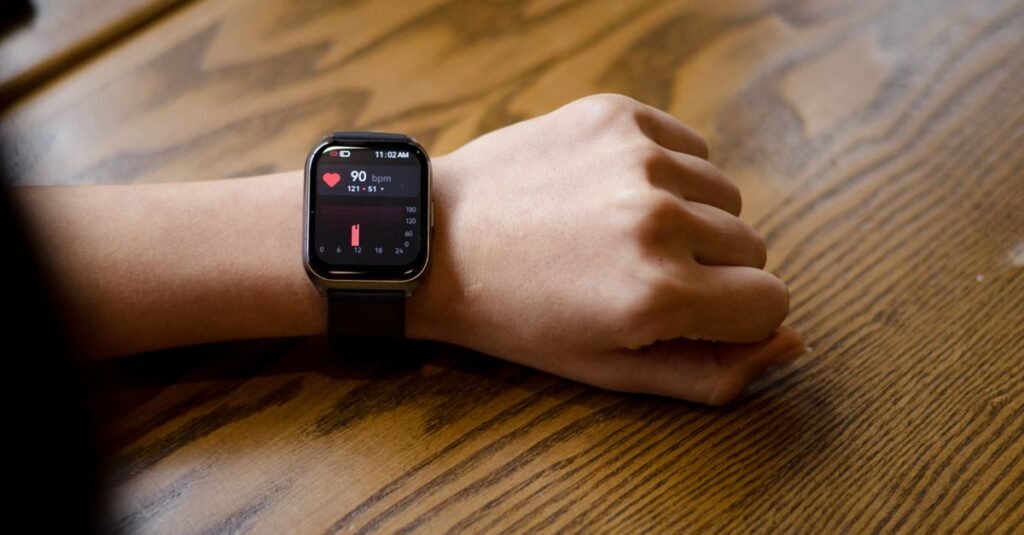

Accuracy of Fitness Tracker Blood Pressure Measurements
Accuracy matters here more than with step counts or sleep scores, because blood pressure readings inform real medical decisions. An inaccurate reading, trusted too literally, can lead to a missed diagnosis or unnecessary worry.
Several factors influence how close a tracker’s estimate lands to your true blood pressure:
- Fit: too loose or too tight, and the sensor can’t read consistently
- Movement: keeping your hand and wrist still improves accuracy substantially
- Skin tone: optical sensors can be less accurate on darker skin tones, a limitation documented across pulse-based wearable sensors generally
- Calibration: many trackers need to be calibrated against a validated cuff reading periodically to stay accurate
Fitness Tracker Measurements vs. Standard BP Measurements
Multiple independent studies have found that consumer fitness tracker blood pressure readings are typically less accurate than a standard cuff-and-stethoscope measurement. A widely cited 2019 study by Helmond et al. found that devices like the Everlast smartwatch and BodiMetrics Performance Monitor didn’t reliably match cuff-based readings closely enough to serve as standalone blood pressure monitors.
The gap has narrowed as sensor technology has improved, but it hasn’t closed. Optical-sensor-only trackers remain the least accurate category, ECG/PPG combinations land in the middle, and inflation-based cuffs come closest to clinical accuracy, for the simple reason that they use the same physical principle a doctor’s cuff does. None of this makes fitness trackers useless. It just means the number on your wrist should be read as an estimate and a trend indicator, not a lab-grade result.
What “FDA-Cleared” Actually Means for These Devices
You’ll see some trackers marketed as “FDA-cleared” for blood pressure. That claim is worth reading carefully. The FDA has issued draft guidance specifically on cuffless blood pressure measuring devices, reflecting how new and unsettled this category still is. A related American Heart Association scientific statement on cuffless blood pressure devices concludes that while the technology shows real promise, most consumer wearables have not yet been validated to the same standard as traditional cuff devices. In practice, that means a tracker can be a helpful screening tool without being a diagnostic one.
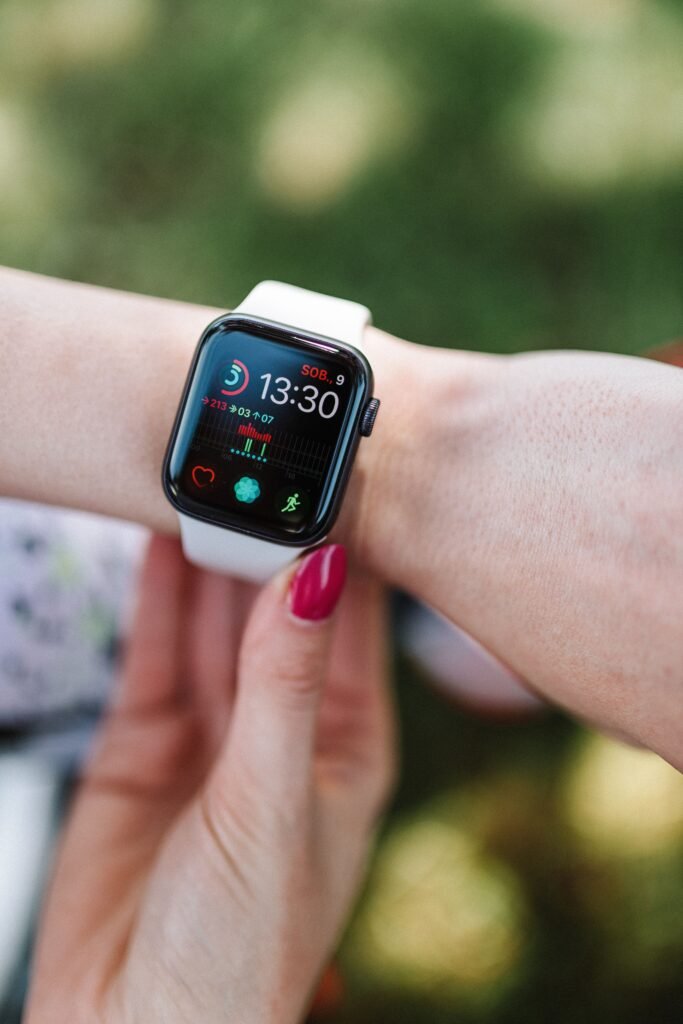

How to Get a More Accurate Blood Pressure Reading From a Fitness Tracker
Proper Tracker Placement
Wear the tracker snugly, not too tight and not loose enough to shift around. Make sure the sensor sits flush against your skin, ideally on the wrist closest to your heart, and stay still during the measurement to avoid motion artifacts.
Regular Calibration and Maintenance
Many trackers need periodic calibration against a validated cuff reading to stay accurate over time. Follow the manufacturer’s calibration instructions, and keep the sensor clean and free of dust, lotion, or sweat buildup.
Consistent Tracking Habits
Take readings at the same time each day, ideally in the morning before activity, caffeine, alcohol, or a large meal, all of which can temporarily raise your numbers. Logging results consistently over weeks gives you a trend line that’s far more useful than any single reading, and it’s something you can bring to your next appointment. For more on home monitoring devices generally, see our guide on how to read a pulse oximeter correctly at home.
When to Trust a Real Blood Pressure Cuff Instead
A fitness tracker is a screening tool, not a diagnostic device. If you have diagnosed hypertension, are adjusting blood pressure medication, or notice a reading that seems unusually high or low, confirm it with a validated upper-arm cuff monitor rather than relying on your wrist tracker alone. The Mayo Clinic notes that wrist-based blood pressure monitors in general are more prone to error than upper-arm cuffs, largely due to positioning. If you’re testing your blood pressure at home to manage a diagnosed condition, our article on strategies for accurate blood pressure readings covers the fundamentals that apply to any device, tracker or cuff. And if your numbers run high specifically in the morning, see our piece on why blood pressure runs higher in the morning.
Choosing a Fitness Tracker for Blood Pressure Monitoring
If blood pressure tracking is a priority, look past the marketing and check three things: which of the three measurement methods the device actually uses, whether it’s been through any independent validation or FDA review, and how it fits your wrist and routine. Inflation-based models sacrifice some convenience for accuracy, while optical and ECG/PPG trackers prioritize a slim, always-on wrist form factor.

Video: A closer look at today’s blood pressure-capable smartwatches and how they compare.
If you’re also interested in heart rate accuracy specifically, our accurate heart rate monitor review covers the sensor technology in more depth.
Frequently Asked Questions
Can fitness trackers accurately measure blood pressure?
Studies have found fitness trackers are generally less accurate than standard cuff-based blood pressure measurements, though modern devices have narrowed the gap. Sensor type and tracker placement both meaningfully affect accuracy.
How does measuring blood pressure happen using a fitness tracker?
Fitness trackers estimate blood pressure using optical sensors, ECG/PPG combinations, or a built-in inflatable cuff. Optical sensors tend to be the least accurate; inflation-based cuffs tend to be the most accurate.
What is the most accurate way to measure blood pressure?
An inflatable cuff and stethoscope, typically used by a healthcare professional or a validated home cuff monitor, remains the gold standard. Some modern fitness trackers with inflation-based cuffs can come close.
Is it safe to rely on a fitness tracker instead of seeing a doctor?
No. A fitness tracker is useful for spotting trends between checkups, but it shouldn’t replace regular blood pressure checks with a healthcare provider, especially if you have diagnosed hypertension or are on medication.
Why does my fitness tracker give a different reading than my arm cuff?
Wrist position relative to your heart, sensor technology, motion during the reading, and calibration all contribute to the difference. Readings from an upper-arm cuff are generally considered more reliable.
Conclusion
So, how do fitness trackers measure blood pressure? Through optical sensors, ECG paired with PPG, or an inflatable cuff, each with its own tradeoff between convenience and accuracy. None of them fully replace the cuff and stethoscope your doctor uses, but used consistently, a fitness tracker can help you spot trends worth discussing at your next appointment.
If your readings are consistently high, unusually low, or paired with symptoms like chest pain, shortness of breath, or dizziness, don’t wait on your tracker’s data. Confirm with a validated cuff and talk to your doctor. Used the right way, your fitness tracker becomes one more useful data point in a bigger picture of your cardiovascular health.


Hi, I’m Mamon, the content creator behind this blog. I share my experience in blogging, WordPress, SEO, and affiliate marketing through honest product reviews, in-depth buying guides, and practical how-to articles. Every piece of content is thoroughly researched and written to help readers make informed decisions.