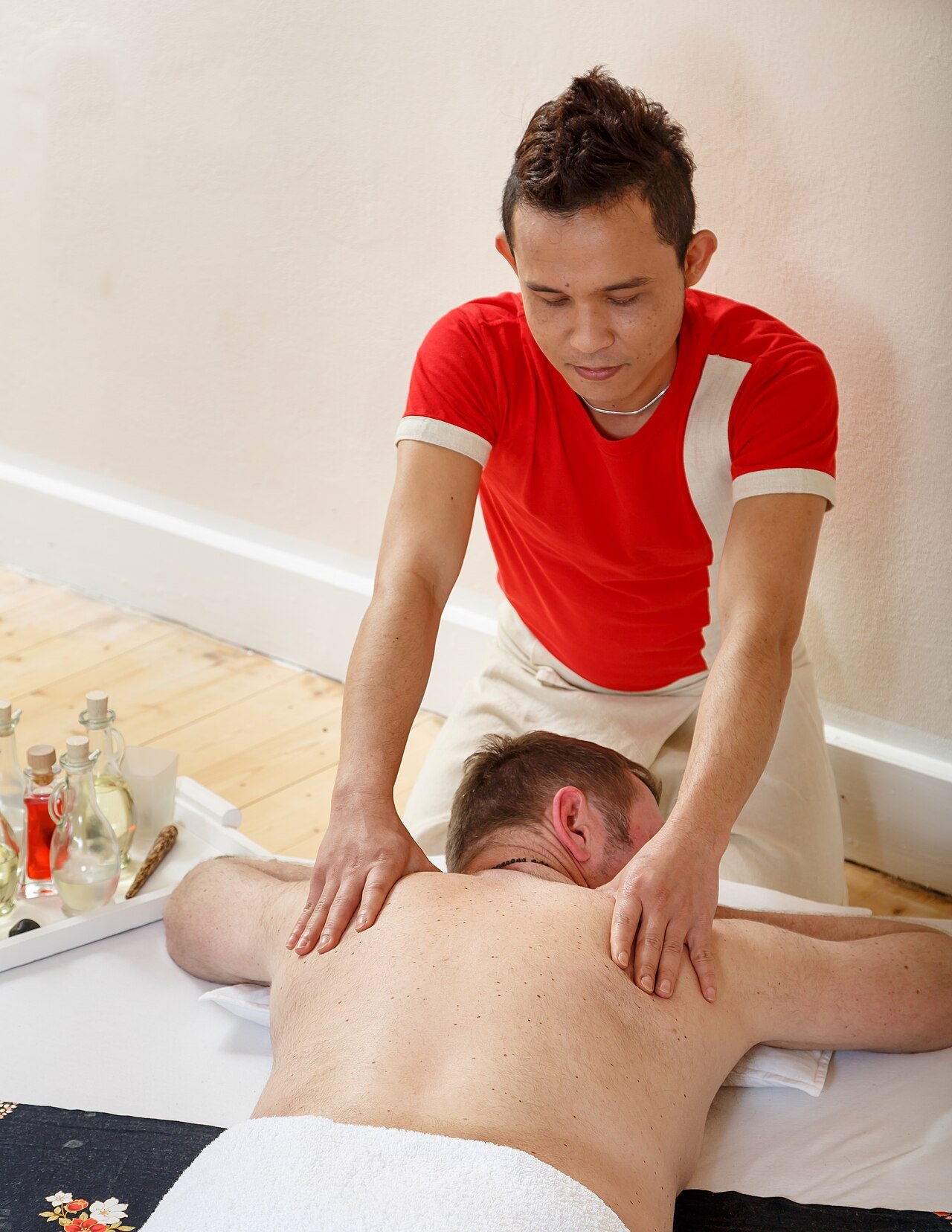
Photo: CEphoto, Uwe Aranas / Wikimedia Commons (CC BY-SA 3.0)
Massage is a mainstream habit in the U.S. The National Center for Complementary and Integrative Health (NCCIH) reports that 10.9% of U.S. adults used massage therapy in 2022, more than double the 4.8% rate in 2002. Home devices push that number even higher. Knowing how to use them well matters more than ever.
Key Takeaways
- Serious massage injuries are rare, but they do happen, mostly with heavy pressure, neck work, or people with health risks.
- Safe massage techniques use moderate pressure, steady communication, and short sessions.
- Never press hard on the front of the neck, the spine itself, the eyes, or behind the knee.
- With massage guns, keep to about 1 to 2 minutes per muscle and start on the lowest speed.
- Talk to a doctor first if you have blood clots, take blood thinners, are pregnant, or have nerve damage.
How Safe Is Massage? What the Data Shows
For most healthy adults, massage is low risk. NCCIH states that the risk of harmful effects appears to be low. Rare serious events, such as blood clots, nerve injury, and bone fractures, have been reported. Most were linked to vigorous techniques like deep tissue massage or to people at higher risk, such as older adults.
A 2014 systematic review of massage adverse events searched six databases for reports from 2003 to 2013. Over 11 years, researchers found just 40 reports describing 138 adverse events. The main problems were:
- Disc herniation
- Soft tissue trauma
- Nerve damage and spinal cord injury
- Tears in the vertebral arteries of the neck
The authors noted that spinal manipulation within massage was most often tied to serious events. Their conclusion was balanced: massage is not totally free of risk, but the rate of harm is low. The lesson for home use is clear. Most risk comes from too much force, especially around the neck and spine.
Who Should Check With a Doctor First
Some health conditions change what is safe. Ask your doctor or physical therapist before massage or device use if you:
- Have a history of blood clots or deep vein thrombosis (DVT)
- Take blood thinners or bruise easily
- Have osteoporosis or a recent fracture
- Had surgery in the past few weeks
- Are pregnant, especially when using heat or devices on the belly or lower back
- Have cancer or are in cancer treatment
- Have diabetes with reduced feeling in your feet or hands
- Have a pacemaker or other implanted device, before using any electrical stimulation
- Have a fever, infection, or a rash in the area
This list is not a ban on massage. Many people with these conditions still benefit from gentle work. It simply means a professional should help set the rules for your body.
Safe Massage Techniques You Can Use at Home
Licensed therapists use a handful of core strokes. All of them can be done safely at home with the right pressure. Here is how each one works and how to keep it safe:
| Technique | What it is | Safe use | Avoid |
|---|---|---|---|
| Effleurage | Long, gliding strokes | Warm up muscles first; use oil or lotion | Pressing hard over bones |
| Petrissage | Kneading and squeezing | Lift and roll muscle gently | Pinching skin or joints |
| Friction | Small, firm circles | Brief work on tight spots | Long sessions on one point |
| Tapotement | Light tapping or cupping | Fleshy areas like the upper back and thighs | The neck, kidneys, and spine |
| Compression | Steady pressing and release | Large muscles like the glutes | Soft areas such as the belly |
| Passive stretching | Gently moving a limb | Slow, within a pain-free range | Forcing a joint past its limit |
Use the Right Amount of Pressure
Pressure is the biggest factor in safe massage techniques. A common rule of thumb is to rate discomfort on a scale of 0 to 10 and stay in the middle. Firm pressure that feels like a “good hurt” is fine. Sharp, burning, or shooting pain is not.
Start light and build slowly. Muscles relax better when they are not braced against pain, so more force rarely means better results.
Keep Talking
When you massage someone else, ask about pressure every few minutes. People often stay quiet to be polite. A simple “Is this OK?” prevents most bruises and strains.
Warm Up Before Going Deep
Spend the first few minutes on light, gliding strokes. This warms the tissue and helps you find tender spots before you add pressure. Deep work on cold, tense muscle is more likely to cause soreness.
Keep Sessions Short
At home, 10 to 20 minutes is plenty for most people. Spend no more than a few minutes on any single knot. Long, heavy sessions on one area can leave bruising and lingering soreness.
Body Areas to Avoid or Treat Gently
Therapists call some areas “endangerment sites.” These spots have nerves, arteries, or organs close to the surface. Avoid heavy pressure, tapping, and devices here:
| Area | Why to be careful |
|---|---|
| Front and sides of the neck | Carotid and vertebral arteries, airway, and nerves |
| Directly on the spine | Bony processes and the spinal cord lie close to the skin |
| Eyes and around the eye socket | Delicate eye structures can be damaged |
| Armpit | Major nerves, blood vessels, and lymph nodes |
| Inside of the elbow | Nerves and blood vessels run near the surface |
| Back of the knee | Large vein and artery close to the skin |
| Groin and inner thigh | Major blood vessels and nerves |
| Lower back over the kidneys | Kidneys are less protected by bone here |
| Belly (with deep pressure) | Soft organs with no bony shield |
Safe Use of Massage Devices
Electric massagers do the work for you, which makes it easy to overdo it. Each type has its own rules.
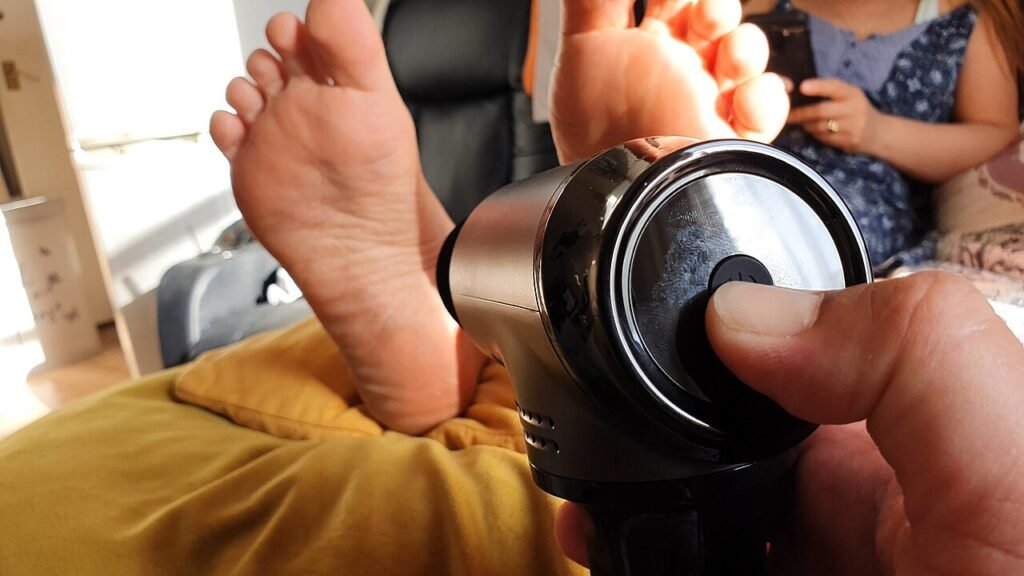
Photo: Best For My Feet / Wikimedia Commons (CC BY-SA 3.0)
Massage Guns
Massage guns are the most powerful home massagers, and they cause the most reported problems. Published case reports show what can go wrong when they are misused:
- Rhabdomyolysis: A 2021 case in Physical Therapy described severe muscle breakdown in a young woman after cycling and then a massage gun session on her thighs. She had untreated anemia and recovered after hospital care.
- Artery tear in the neck: A 2022 U.S. emergency medicine report described a 27-year-old woman with a vertebral artery dissection after repeated massage gun use on her neck.
- Eye injury: A 2026 BMJ Case Reports article described retinal tears in both eyes after a student used a massage gun around his eyes.
These cases are rare, but they share a theme: high force on the wrong body part. Follow these massage gun safety rules:
- Start on the lowest speed and the softest attachment.
- Keep to about 1 to 2 minutes per muscle group.
- Float the gun over the muscle instead of pressing hard.
- Use it only on muscle, never on bone, joints, the front of the neck, or the face.
- Skip it on bruises, swelling, or a fresh injury.
- Do not use it after a very hard workout if your muscles feel weak or your urine turns dark.
If you are shopping for one, our best massage gun guide compares models with gentle low speeds and soft heads.
Massage Chairs
Massage chairs are safe for most adults when used as directed. Keep sessions to the program length, usually 15 to 30 minutes. Choose a lighter intensity if you are older, small-framed, or have osteoporosis. If you use one at the gym, our guide on how to use massage chairs at Planet Fitness covers settings and etiquette.
Shiatsu and Heated Massagers
Shiatsu pillows and wraps knead with rotating nodes, and many add heat. Keep a layer of clothing between the device and your skin. Use the auto shut-off, and never fall asleep with a heated device running. Avoid heat on a fresh injury or skin with poor feeling.
Foot Massagers
Foot massagers are gentle, but people with diabetes need extra care. Nerve damage can hide the warning signs of too much pressure or heat. Check your feet for redness after each session. Our review of the best foot massagers lists models with adjustable intensity.
Air Compression Devices
Compression boots and sleeves squeeze the legs in waves. Never use them if you have, or might have, a blood clot. Squeezing can move a clot toward the lungs.
TENS Units
A TENS unit sends mild electrical current through skin pads. It is not a massager, and it has its own rules. Never place pads on the front of the neck, across the chest, or over the eyes. Ask your doctor first if you have a pacemaker, epilepsy, or a heart condition. See our guide to the best TENS machine for body pain relief for more details.
Device Safety at a Glance
| Device | Typical session | Key precautions |
|---|---|---|
| Massage gun | 1 to 2 min per muscle | Low speed first; no bones, neck, or face |
| Massage chair | 15 to 30 min | Lighter setting for older adults and frail bones |
| Shiatsu or heated wrap | 15 min, with auto shut-off | Use over clothing; never sleep with heat on |
| Foot massager | 15 min | Check feet afterward if you have diabetes |
| Compression boots | Per maker’s program | Never with a known or suspected clot |
| TENS unit | Per maker’s program | No pads on the neck or chest; ask about pacemakers |
| Foam roller or ball | 30 to 60 sec per spot | Roll muscle, not joints or the lower spine |
Watch: Areas to Avoid With a Massage Gun
In this video, a physiotherapist who works with adults over 50 explains which body areas you should never treat with a massage gun:
Safe Self-Massage With Manual Tools
Foam rollers, massage balls, and trigger point canes let you control pressure with your own body weight. They are a safe, low-cost way to ease tight muscles. Use these tips:
- Roll slowly. Move about an inch per second so the muscle can relax.
- Stay on muscle. Avoid rolling directly over the knee, hip bone, or lower spine.
- Limit time on knots. Hold a tender spot for 30 to 60 seconds, then move on.
- Choose the right density. Start with a soft roller and move to a firmer one only if needed.
- Breathe. Holding your breath tenses the muscle you are trying to relax.
For more on handheld devices, read our step-by-step guide on how to use a personal massager.
How to Give a Safe Massage to a Partner
The same safe massage techniques apply when you work on someone else. Follow these steps:
- Set up first: Use a firm surface, pillows for support, and a warm room.
- Ask about health issues: Check for injuries, recent surgery, or pregnancy before you begin.
- Use oil or lotion: It reduces friction and skin irritation. Test a small patch if they have sensitive skin or allergies.
- Use your body weight: Lean in with your body instead of squeezing with your thumbs. This protects your hands too.
- Work toward the heart: On the arms and legs, long strokes toward the heart feel natural and comfortable.
- Stay off the spine: Work the muscles on either side of it, not the bones.
Warning Signs: When to Stop
Stop the massage or device right away if you notice:
- Sharp, stabbing, or shooting pain
- Numbness, tingling, or weakness
- Dizziness, headache, or blurred vision, especially after neck work
- New swelling, warmth, or redness in a leg
- Bruising that appears during the session
Seek medical care urgently for sudden severe headache, neck pain with dizziness, or trouble speaking. These can signal a problem with an artery in the neck. Also get help for dark, tea-colored urine with muscle pain after a workout or a deep session. This can point to serious muscle breakdown.
When to See a Professional
Home massage is great for everyday tension, but some problems need trained hands. See a licensed massage therapist or physical therapist if pain lasts more than a couple of weeks, keeps coming back, or follows an injury. Most U.S. states regulate massage therapists through licensing, so ask to see a license before booking.
Tell the therapist about your health conditions and medications. A good therapist will adjust pressure and technique to fit you.
Common Massage Safety Mistakes
- Chasing pain: Pressing harder on a sore spot often makes it worse the next day.
- Using devices on the neck: The front and sides of the neck are high-risk areas for percussion.
- Ignoring health conditions: Clots, thin bones, and nerve damage all change the rules.
- Massaging fresh injuries: Give sprains and strains a few days before any deep work.
- Skipping the manual: Device makers list session limits and body areas to avoid for a reason.
Frequently Asked Questions
What is the safest type of massage?
The safest massage techniques are gentle ones. Swedish-style gliding and light kneading carry the lowest risk. Deep pressure, neck manipulation, and high-intensity percussion carry more.
How long should a massage gun be used on one area?
Most guidance suggests about 1 to 2 minutes per muscle group. Total sessions of 10 to 15 minutes are enough for most people.
Is it safe to massage a knot every day?
Light daily work is usually fine. If the spot feels bruised or more painful the next day, take a day or two off.
Can massage cause a blood clot to move?
Massage over a clot may cause it to break loose. If you have leg swelling, warmth, or pain that could be a clot, see a doctor before any massage.
Is it safe to massage the neck?
Gentle work on the back of the neck is generally safe. Avoid strong pressure, cracking, and massage guns on the front and sides of the neck.
Can I use a massage gun while pregnant?
Ask your doctor first. Most providers advise avoiding the belly and lower back and keeping intensity low.
Why do I feel sore after a massage?
Mild soreness for a day or so is common after deeper work. Drinking water, gentle movement, and lighter pressure next time can help.
Conclusion
Safe massage techniques come down to moderate pressure, short sessions, and respect for sensitive areas. Devices add power, so they need even more care. Start low, stay on muscle, and stop at the first sign of sharp pain or numbness.
Serious injuries from massage are rare, as the research shows. With a little knowledge, you can enjoy the benefits of massage at home and keep the risks low.
Health note: This article is for general information only and is not medical advice. Talk to your doctor before starting massage or using a massage device if you have a health condition, injury, or are pregnant.

Hi, I’m Mamon, the content creator behind this blog. I share my experience in blogging, WordPress, SEO, and affiliate marketing through honest product reviews, in-depth buying guides, and practical how-to articles. Every piece of content is thoroughly researched and written to help readers make informed decisions.
Leave a Reply