

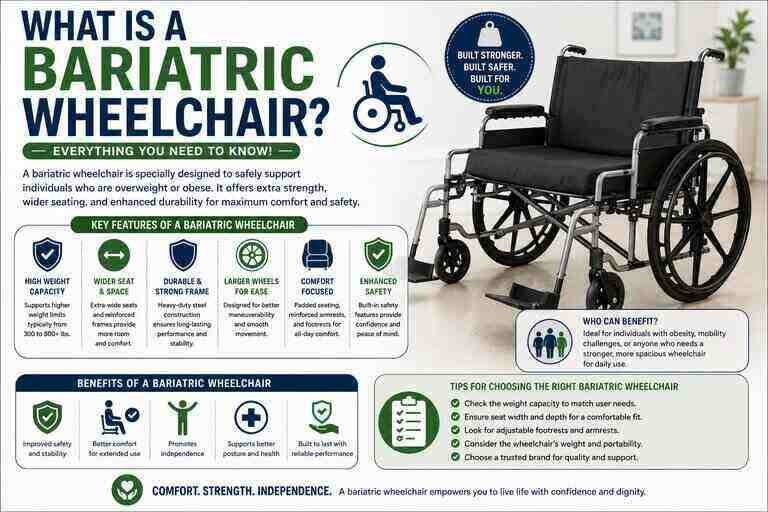

What is a bariatric wheelchair, and how is it different from the wheelchair you might picture in a hospital hallway? A bariatric wheelchair is a heavy-duty wheelchair built to safely support larger individuals. It offers a higher weight capacity, a wider seat, and a more reinforced frame than a standard model. This guide covers its features, who benefits most, and how to choose the right one for U.S. readers shopping for themselves or a loved one.
Key Takeaways
- Bariatric wheelchairs typically support 300 to 700 pounds or more, well above standard models.
- Seats generally measure 22 to 30 inches wide, compared to 16 to 20 inches on a standard chair.
- Reinforced frames, wheels, and brakes provide extra stability and safety.
- Choosing the right size involves more than weight capacity alone.
- Consult a physician or occupational therapist before buying for medical needs.
What Is a Bariatric Wheelchair?
A bariatric wheelchair is engineered to provide superior support and stability for people with a higher body weight or larger frame. Weight capacities on these chairs commonly start around 300 pounds and can reach 700 pounds or more on heavy-duty models.
These wheelchairs are generally wider, with more supportive seating than a standard chair. Many models offer adjustable seat widths and backrest heights for a more precise fit. These features make a real difference for larger individuals who find a standard-sized wheelchair uncomfortable or unsafe to use.


Features of a Bariatric Wheelchair
Weight capacity is the most important feature, but several other design elements set these chairs apart from standard models.
- Heavy-duty frame: Built with extra-durable materials designed to support individuals up to 700 pounds or more.
- Wide seat: Seats up to 30 inches wide offer greater comfort and stability for larger body types.
- Heavier wheels: Wider, more robust wheels help maintain balance while supporting more weight.
- Reinforced casters: Heavy-duty casters are built to bear more weight than standard wheelchair parts.
- Elevating leg rests: Adjustable leg rests help relieve swelling and add comfort during extended use.
- Tension-adjustable backrest: Supports proper posture, which helps reduce fatigue and discomfort.
- Adjustable footrest: Accommodates different user heights for a more comfortable fit.
- Enhanced brakes: Reinforced brakes provide extra stability and safer stopping.
Together, these features make bariatric wheelchairs comfortable, secure, and genuinely safe for people of larger body types.
Bariatric Wheelchairs vs. Standard Wheelchairs
Understanding what is a bariatric wheelchair becomes clearer when you compare it directly against a standard model.
| Bariatric Wheelchair | Standard Wheelchair | |
| Seat Width | 22 to 30 inches | 16 to 20 inches |
| Weight Capacity | 300 to 700 pounds or more | 250 to 300 pounds |
| Purpose of Usage | For plus-sized, heavy, or taller individuals | For individuals of average weight and height |
| Price | Typically more expensive | Generally more affordable |
Who Benefits From a Bariatric Wheelchair?
Bariatric wheelchairs are designed for people who need extra support and comfort due to their size. People with a BMI of 30 or higher often find these chairs necessary rather than optional.
These wheelchairs also benefit people managing chronic pain or limited mobility from a range of medical conditions, including the following.
- Cardiopulmonary disease
- Cardiovascular disorders
- Osteoarthritis
- Muscular dystrophy
- Multiple sclerosis
- Spinal cord trauma
Obesity and mobility limitations often overlap in ways that make everyday tasks harder. According to research on obesity among people with disabilities, mobility impairment and higher body weight frequently reinforce each other, which makes properly fitted equipment like a bariatric wheelchair especially important for maintaining independence.
How to Choose the Right Bariatric Wheelchair
Choosing the right chair takes more thought than just checking the weight limit. Consider each of these factors carefully.
Weight Capacity
Pick a wheelchair rated for at least 50 to 60 percent more than the user’s actual weight. This buffer protects against wear and unexpected shifts in weight over time.
Seat Size
Look for a seat at least 20 inches wide with a depth of 18 to 20 inches. Adequate padding matters just as much as the dimensions themselves for extended comfort.
Stability
A sturdy frame, large wheels, and a low center of gravity all work together to prevent tipping.
Maneuverability
Large, easy-turning wheels make a real difference navigating tight spaces or crowded rooms.
Adjustability
Adjustable seat height, armrests, and footrests help the chair fit the user’s specific body and needs.
Portability
Detachable parts and a lighter frame matter most for anyone who travels frequently or stores the chair in a car.
Comfort
Look for adequate cushioning, solid back support, and footrests that properly support the legs.
Durability and Price
Durability from high-quality materials pays off over years of daily use. Balance your budget against the features that matter most for the intended user.
Watch a Bariatric Wheelchair in Action
Watch this demonstration covering the build and features of a heavy-duty bariatric wheelchair.

Notice the wider seat, reinforced frame, and larger wheels that set this model apart from a standard wheelchair.
Getting the Right Fit
Getting accurate measurements before buying prevents a lot of frustration later. Measure hip width while seated, thigh length from hip to knee, and overall body weight before comparing models. A clinician or physical therapist can help take these measurements accurately if you are unsure how to do it yourself.
Benefits of a Bariatric Wheelchair
Once you understand what is a bariatric wheelchair and how to choose one, the benefits become clear.
Increased Comfort
Wider seats, higher backrests, and thicker cushions prevent the discomfort of sitting in an ill-fitting chair for extended periods.
Improved Stability
A robust frame and wide base provide security, even at higher weight capacities, reducing the risk of tipping.
Greater Mobility
These chairs are designed to maneuver well even in tight spaces or on uneven surfaces, which supports independence at home and in public.
Durability
Heavy-duty materials withstand the extra weight and daily wear, which can mean fewer replacements over time.
Improved Confidence
A properly fitted chair removes the discomfort and self-consciousness some people feel using equipment that does not fit their body well.
Popular Bariatric Wheelchair Options
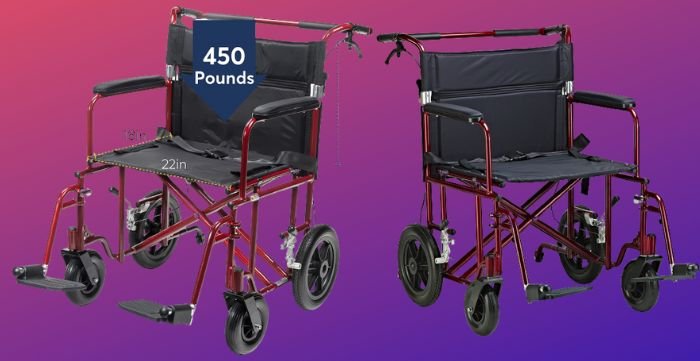
Several manufacturers build well-regarded bariatric models, including Drive Medical’s Bariatric Sentra EC line, which offers weight capacities of 450, 500, and 700 pounds across different frame heights. Users generally report sturdy construction and comfortable seating, though some note that wider models can be harder to maneuver through narrow doorways. Our Drive Medical wheelchair comparison guide covers specific models and pricing in more detail.

Renting vs. Buying a Bariatric Wheelchair
Deciding what is a bariatric wheelchair worth to you financially often comes down to how long you expect to need it. Renting makes sense for short-term needs, like recovery after surgery or a temporary injury. Medical supply companies and some pharmacies offer weekly or monthly rental rates that cost far less upfront than a purchase.
Buying makes more sense for long-term or permanent mobility needs. A purchased chair can also be customized more extensively with accessories like specialized cushions, trays, or oxygen tank holders. Weigh the expected duration of use against the cost difference before deciding which option fits your situation.
Common Myths About Bariatric Wheelchairs
Myth: Any Wide Wheelchair Counts as Bariatric
A wider seat alone does not make a wheelchair bariatric. True bariatric models also feature reinforced frames, heavier-duty wheels, and stronger brakes engineered specifically for higher weight loads.
Myth: Bariatric Wheelchairs Are Only for People Who Are Extremely Overweight
Many users need a bariatric wheelchair for reasons beyond body weight alone, including tall stature, certain medical conditions, or the need for a wider seat due to swelling or medical equipment.
Myth: All Bariatric Wheelchairs Are Difficult to Transport
Some models fold down and include removable parts specifically designed for easier transport, even at higher weight capacities.
Caring for a Bariatric Wheelchair
Regular maintenance extends the life of any bariatric wheelchair. Check tire pressure and brake function weekly, since these components see more stress under higher weight loads. Wipe down the frame and seating regularly to prevent buildup that can affect moving parts. Inspect the upholstery periodically for wear, since a torn or sagging seat reduces the support the chair is designed to provide.
Helpful Accessories to Consider
A few add-ons can meaningfully improve day-to-day comfort and function once you have the right base chair. A pressure-relief cushion reduces the risk of skin breakdown during long periods of sitting, which matters more for users with limited mobility. A tray attachment adds a stable surface for meals, reading, or a laptop without needing a separate table nearby.
Anti-tip bars add an extra layer of stability on uneven ground or ramps. Seatbelt or torso support straps help users who need additional positioning support stay secure and centered throughout the day. None of these accessories are strictly required, but they often make the difference between a chair that gets used consistently and one that ends up sitting unused.
Related Mobility Considerations
A bariatric wheelchair often works alongside other adaptive equipment for daily living. If bathing safety is also a concern, our bariatric shower chair guide covers similar heavy-duty options built for the bathroom. If you or a caregiver will be moving someone in and out of the chair regularly, our guide on safely transferring a person to or from a wheelchair covers the technique and tools that make transfers safer for everyone involved.
Frequently Asked Questions
How wide is a bariatric wheelchair?
Overall width typically ranges from 28 to 33 inches, compared to roughly 24 to 27 inches for a standard wheelchair.
What is considered a bariatric size for medical purposes?
A BMI above 30 is generally classified as obese, which is the threshold many providers use when recommending bariatric equipment.
What is a bariatric wheelchair’s typical weight limit?
Most models support 300 to 700 pounds, though some heavy-duty designs support even more.
Does insurance cover a bariatric wheelchair?
Coverage varies by provider and plan. A doctor’s documentation of medical necessity is usually required for reimbursement.
Can a bariatric wheelchair fit through standard doorways?
Many can, but wider models may need doorways of at least 32 to 36 inches. Measure your space before purchasing.
How often should a bariatric wheelchair be serviced?
Check tires, brakes, and upholstery weekly, with a more thorough inspection every few months for heavy daily use.
Is renting a bariatric wheelchair a good option?
Renting works well for short-term or recovery needs, while buying suits long-term or permanent mobility requirements.
What is a bariatric wheelchair best suited for beyond body weight?
It also helps taller individuals, people managing swelling, and anyone who needs a wider, more stable seat for medical reasons unrelated to weight alone.
Bottom Line
Now you know what is a bariatric wheelchair, including its features, benefits, and how to choose the right one. This wheelchair type offers real, practical benefits for individuals who need extra support and stability. From increased comfort and mobility to improved stability and durability, it meets the unique needs of larger body types. Choosing the right bariatric wheelchair helps individuals maintain independence and a higher quality of daily life.


Hi, I’m Mamon, the content creator behind this blog. I share my experience in blogging, WordPress, SEO, and affiliate marketing through honest product reviews, in-depth buying guides, and practical how-to articles. Every piece of content is thoroughly researched and written to help readers make informed decisions.