

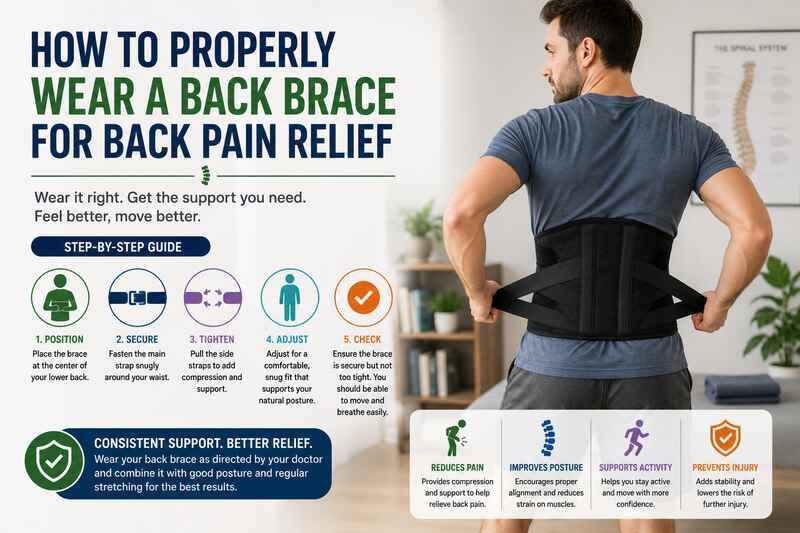

Knowing how to properly wear a back brace can make the difference between real relief and a device that just sits in a drawer. A brace that fits wrong, sits too high, or gets cinched too tight will not support your spine the way it should. U.S. physical therapists see this mistake often, especially in people trying a brace for the first time. This guide walks through fitting, wearing, and caring for a back brace so it actually helps your back pain instead of adding to it.
Key Takeaways
- A back brace should sit snugly over your lower back and abdomen, not just your hips.
- Wearing a brace over a thin shirt reduces skin irritation during long days.
- Over-tightening a brace can weaken your core muscles over time.
- Most people should limit brace use to a few hours at a stretch, not all day.
- Always follow your doctor’s specific guidance on wear time and brace style.
Why Proper Fit Matters So Much
A back brace works by limiting excess motion and adding external support to your spine. That support only helps if the brace sits in the right place. A brace worn too low rides on your hips instead of your lower back. A brace worn too loose barely does anything at all. Learning how to properly wear a back brace starts with understanding exactly what the device is supposed to do for your body.
Poor fit does more than reduce comfort. It can also mean you are not getting the stabilization your doctor intended when they recommended a brace in the first place. Taking a few extra minutes to fit the brace correctly each time pays off in real pain relief. Once you know how to properly wear a back brace, checking the fit becomes a quick daily habit rather than a chore.
How to Properly Wear a Back Brace: Step-by-Step
Follow these steps every time you put on your brace. A consistent routine helps you catch fit problems early, before they turn into skin irritation or reduced support.
Step 1: Start in a Natural Standing Position
Stand up straight with relaxed shoulders before applying the brace. Avoid arching or slouching, since either position changes where the brace lands once you tighten it. A natural, neutral posture gives you the most accurate fit.
Step 2: Position the Brace Over Your Lower Back and Abdomen
Center the brace so it covers your lower back and wraps around to your abdomen. The bottom edge should sit near your hip bones, not below them. The top edge should stay below your ribs so it does not restrict your breathing.
Step 3: Wrap and Secure the Straps Evenly
Pull both side panels forward at the same time so the brace tightens evenly. Uneven tightening pulls the brace off-center and reduces its support on one side. Secure the straps or closures according to the manufacturer’s instructions.
Step 4: Check the Fit Before Moving
You should be able to take a full breath comfortably once the brace is secured. Slide two fingers under the front panel to confirm it is snug but not restrictive. Adjust as needed before standing up straight and walking a few steps to test the fit.

Understanding Your Lower Back Pain
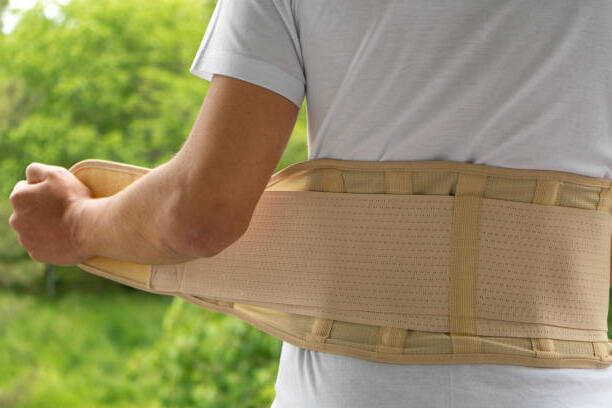
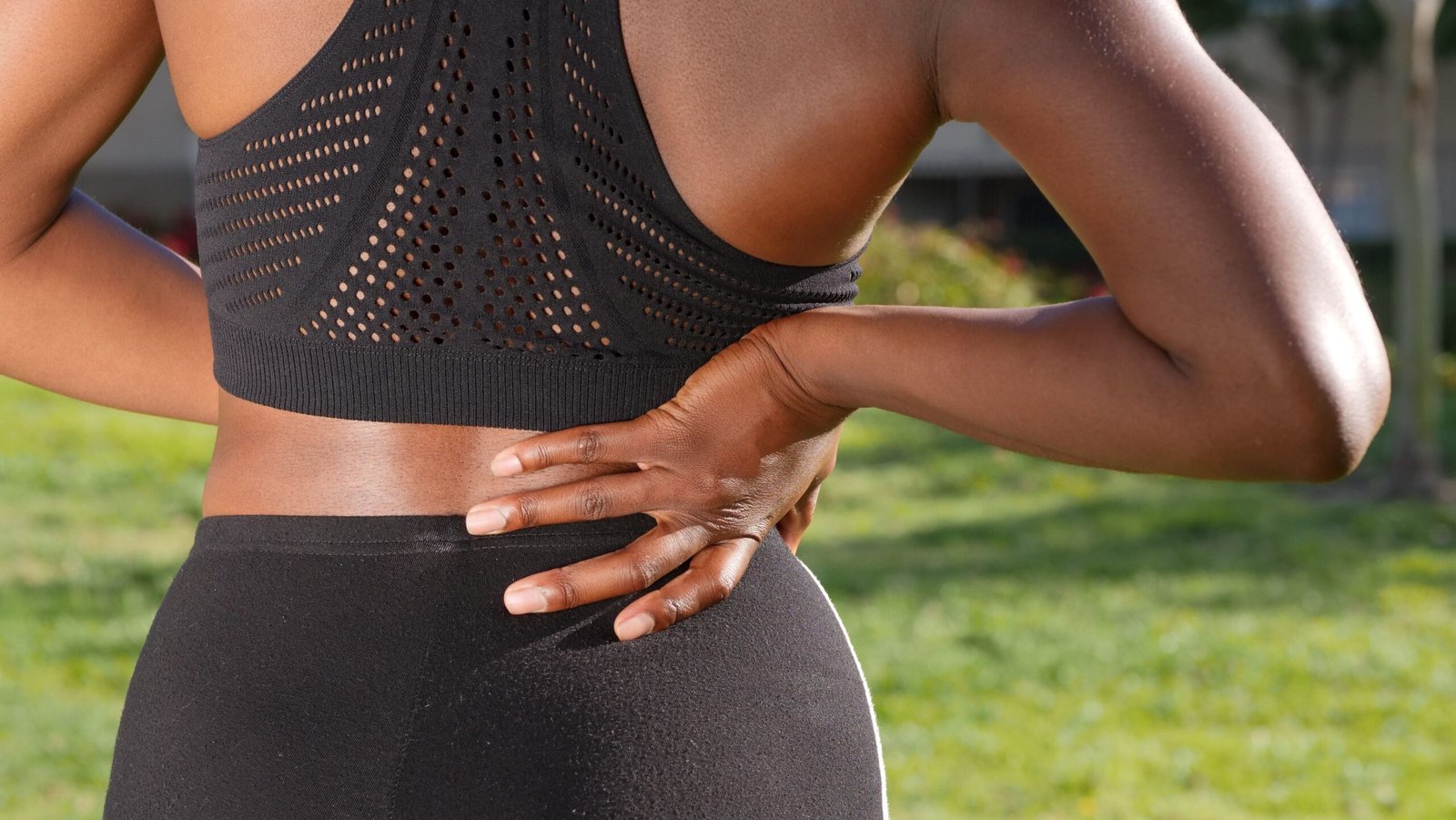
Lower back pain has many causes, from muscle strain to disc issues to poor posture built up over years. A brace addresses the symptom by adding support and limiting harmful motion, but it rarely fixes the underlying cause on its own. According to Spine-Health, a properly worn brace can reduce pain and improve function during flare-ups, especially when combined with other treatment.
Many people reach for a brace during an acute flare-up, then wonder how long they should continue wearing it as pain improves. That question matters because braces work best as a short-term support tool rather than a permanent fix for chronic pain.
Types of Back Braces and How They Differ
Elastic Support Belts
An elastic support belt offers light compression and a gentle reminder to maintain good posture. This style suits mild strain or general lower back support during work or light activity.
Rigid Back Braces
A rigid brace includes stiff panels or metal stays that limit bending and twisting significantly. Doctors often recommend this style after a more serious injury or during recovery from certain spine conditions.
Posture Correctors
A posture corrector focuses on the upper back and shoulders rather than the lower spine. It is not a substitute for a lower back brace, though some people use both together depending on their symptoms.
Choosing the right style depends on your specific diagnosis and daily activity level. Your doctor or physical therapist can help match a brace type to your exact situation.
Watch How to Wear a Back Brace Correctly
Watch this short demonstration to see proper back brace application from start to finish.

Notice how the brace gets centered over the lower back before either strap gets pulled tight. Following this same order every day makes proper brace use feel automatic instead of like a chore.
Tips for Wearing Your Back Brace
These extra habits round out the basics of how to properly wear a back brace and help you avoid the small mistakes that lead to discomfort or skin irritation over time.
Wear a Thin Shirt Underneath
A thin, moisture-wicking shirt between your skin and the brace helps prevent chafing and irritation. It also absorbs sweat, which keeps the brace material from sticking uncomfortably to your skin during a long day.
Do Not Over-Tighten the Brace
A brace pulled too tight can restrict your breathing and press uncomfortably on your abdomen. Over-tightening also encourages your core muscles to rely on the brace instead of doing their own work, which can leave you weaker over time.
Ask for Help With Placement
Getting a brace centered correctly on your own back can be tricky, especially with a rigid style. Ask a family member or partner to check the placement the first few times until you are confident doing it alone.
Watch Your Skin for Irritation
Check your skin each time you remove the brace. Redness that fades within a few minutes is normal. Persistent red marks, blisters, or broken skin mean the fit needs adjusting or the brace needs a break.
Choose Loose, Comfortable Clothing
Loose-fitting clothes worn over the brace reduce added pressure and bulk. Tight pants or shirts layered on top of a brace can bunch up and create pressure points that add to your discomfort.

How Long Should You Wear a Back Brace
Most doctors recommend limiting brace use to a few hours at a time rather than wearing it all day, every day. Extended, continuous wear can weaken your core muscles, since the brace takes over work your muscles would otherwise do. According to Cleveland Clinic, short, targeted use during activities that aggravate your pain tends to work better than constant, all-day wear.
Your specific timeline depends on why you are wearing the brace. Post-surgical recovery often calls for longer daily wear under a doctor’s direct guidance, while general strain relief usually needs only a few supported hours during demanding tasks.
Drawbacks of Incorrectly Wearing a Back Brace
Wearing a brace the wrong way can cause more harm than good. A brace positioned too high can press against your ribs and restrict normal breathing. A brace positioned too low provides almost no real spinal support at all.
Wearing a brace constantly, even when it fits correctly, can also lead to muscle weakness over time. Your core muscles adapt to relying on external support instead of doing their own stabilizing work. This dependence can leave your back feeling worse once you finally stop wearing the brace.
Skin problems are another common issue. Constant friction and trapped sweat under a poorly fitted brace can cause rashes, blisters, or worse skin breakdown, particularly in hot weather or during long shifts on your feet.
When to See a Doctor
Contact a doctor if your pain worsens despite wearing a brace correctly, if you notice numbness or tingling down your legs, or if you cannot find any comfortable position for the brace at all. A doctor can also confirm whether your specific injury calls for a different brace style entirely. If your back pain relates to a broader injury, our fitness program for recovering from a slip and fall injury can help you rebuild strength safely once your brace is providing steady support.
People managing more than one joint or muscle injury at once often have similar fitting questions. Our guides on how to wear a shoulder brace the right way and how do ankle braces work to support your ankles cover comparable fitting principles for other parts of the body.
Comparing Back Brace Options
Not every back brace suits every situation, and picking the wrong one is a common reason people give up on wearing one altogether. Our back brace comparison guide breaks down specific models by support level, breathability, and price, which makes it easier to find one you will actually wear consistently. A brace you tolerate for a full workday will always help more than a stronger brace that ends up back in the closet after one use.
Common Mistakes to Avoid
- Wearing the brace over thick clothing. Bulky layers prevent a snug, supportive fit and can bunch up uncomfortably.
- Skipping the doctor’s specific wear-time guidance. More hours is not always better, and overuse can weaken your core.
- Buying based on price alone. A brace that does not fit your body well will not provide real support no matter how affordable it is.
- Ignoring persistent skin irritation. Ongoing redness or discomfort is a sign the fit or wear schedule needs adjusting.
- Forgetting to loosen the brace before sitting for long periods. A seated position changes how the brace presses against your body.
Avoiding these mistakes makes it much easier to stick with proper brace use long enough to see real benefits.
Frequently Asked Questions
How tight should I wear my back brace?
Snug enough to feel supportive without restricting your breathing. Knowing how to properly wear a back brace means checking that you can still slide two fingers comfortably under the front panel.
Can I sleep in my back brace?
Most people should remove the brace at night unless a doctor specifically recommends wearing it while sleeping.
Should I wear a shirt under my back brace?
Yes, a thin shirt helps prevent skin irritation and absorbs sweat during long periods of wear.
How do I know if my back brace fits correctly?
It should sit snugly over your lower back and abdomen without sliding, and you should be able to breathe and move comfortably.
Will wearing a back brace weaken my core muscles?
Overuse can. Limiting wear time to the hours you actually need support helps your core stay active and strong.
Can I exercise while wearing a back brace?
Light activity is often fine, but check with your doctor before exercising in a brace, especially after surgery or a serious injury.
What is the correct way to properly wear a back brace at work?
Position it over your lower back and abdomen before starting physical tasks, and remove it during breaks to give your muscles rest.
How long does it take to get used to wearing a back brace?
Most people adjust within a few days of consistent use, though the fit should feel reasonably comfortable from the very first wear.
Not sure a back brace is even the right tool for your situation? Our guide on what a back brace actually does breaks down when it helps and when it does not.
Bottom Line
Learning how to properly wear a back brace takes a little practice, but it pays off in real pain relief and better support. Position the brace over your lower back and abdomen, secure it evenly, and avoid over-tightening. Pair brace use with your doctor’s guidance on wear time, and give your skin and core muscles regular breaks. These simple habits keep your brace working the way it is meant to while you recover.


Hi, I’m Mamon, the content creator behind this blog. I share my experience in blogging, WordPress, SEO, and affiliate marketing through honest product reviews, in-depth buying guides, and practical how-to articles. Every piece of content is thoroughly researched and written to help readers make informed decisions.