

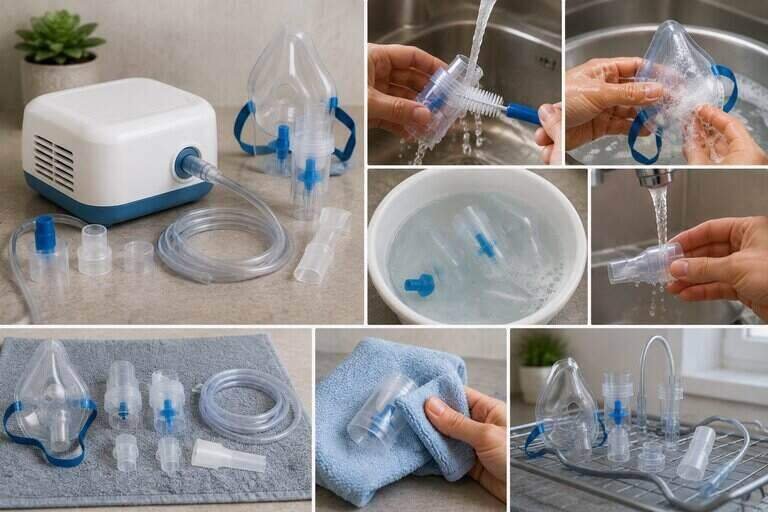

Taking care of your device can extend its lifespan and keep every session working the way it should. Knowing how to clean a nebulizer properly also protects your lungs. A dirty cup or mask can introduce the same bacteria you are trying to treat. This guide walks U.S. readers through the exact steps for daily, weekly, and deep cleaning, plus the mistakes worth avoiding along the way.
Key Takeaways
- Rinse and air-dry the mouthpiece and cup after every single session.
- Knowing how to clean a nebulizer weekly with a vinegar or disinfectant soak prevents bacterial buildup.
- Deep cleaning every three days is standard for frequent users.
- Never wash the compressor itself. Only wipe the outside with a dry cloth.
- Replace worn or discolored parts, since plastic degrades and can affect treatment quality over time.
Why Cleaning Your Nebulizer Matters
A nebulizer turns liquid medicine into a mist you breathe directly into your lungs. That direct path is exactly why hygiene matters so much here. Leftover moisture in the cup or mask creates a friendly environment for bacteria and mold. Inhaling those organisms can cause a respiratory infection instead of relieving one. Regular cleaning is not optional maintenance. It is part of using the device safely.
Primary Care and Maintenance
Start by following the manufacturer’s care instructions that came with your specific model. Never use nebulizer accessories longer than the recommended lifespan, which is often around six months. This holds true even if they still look usable.
Inspect parts regularly, even when they appear fine on the surface. Plastic components degrade over time in ways that are not always visible. That wear can still affect how well the device performs. Replace anything that looks cracked, discolored, or grayish.
Store the device somewhere free of dust, away from open windows, and ideally in a room you vacuum often. A clean, dry storage box works well. Keep a fresh towel on hand specifically for drying parts before they go back in storage.

How to Clean a Nebulizer After Every Session
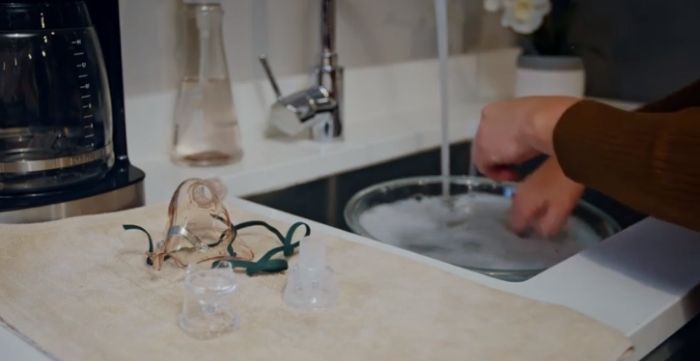
Daily upkeep takes only a few extra minutes and matters more than any other step in this guide. Cleaning routines vary slightly by brand, so always check your manufacturer’s instructions for model-specific guidance.
- Wash your hands thoroughly with soap and water, or use hand sanitizer if water is not available.
- Disassemble the removable parts: mouthpiece, mask, and cup. Leave anything not designed to be detached in place.
- Rinse the mouthpiece and cup with warm water for 30 to 60 seconds. Skip the soap for this step unless your manual says otherwise.
- Never wash the compressor itself. Wipe the outside casing with a dry or lightly damp cloth instead.
- Shake off excess water, then lay the parts on a clean towel to air dry completely.
- Once dry, reassemble everything and run the compressor for about a minute to clear any remaining moisture from the tubing.
How to Clean a Nebulizer Weekly
Beyond daily rinsing, most manufacturers recommend a deeper weekly clean. Check your owner’s manual first, since not every brand uses the same disinfecting solution or soak time.
A common approach uses a mix of white vinegar and warm water. Combine half a cup of white vinegar with one and a half cups of warm water in a clean container. Soak the parts in this mixture for about 20 minutes. Rinse everything under a steady stream of warm water afterward and shake off the excess. Let the pieces air dry fully on a clean towel before storing them.
Some brands instead recommend mild dish soap. If that applies to your model, wash each part for at least 30 seconds. Rinse thoroughly under running water to remove all soap residue, then shake off and air dry as usual.
Watch: How to Properly Clean a Nebulizer
This video from the American Lung Association demonstrates a full cleaning routine step by step.

How to Deep Clean and Disinfect a Nebulizer
Deep cleaning goes a step further than the weekly routine and targets bacteria that ordinary rinsing can miss. Frequent users typically do this every three days. According to a Rutgers Robert Wood Johnson Medical School patient education guide, consistent disinfection is especially important for anyone using nebulized therapy regularly. Residual moisture is where bacteria multiply fastest.
- Remove all connectors and detachable components.
- Submerge the parts completely in a commercial disinfecting solution, available at most pharmacies, or a properly diluted vinegar solution.
- Let everything soak for 20 minutes to an hour, depending on the solution’s instructions.
- Rinse each piece individually under warm running water for about 30 seconds.
- Shake off excess water and reassemble the parts. Run the compressor briefly to confirm it still works and to help clear residual moisture.
- Store the device in a clean, dust-proof bag or container once everything is fully dry.

How Cleaning Frequency Changes With Use
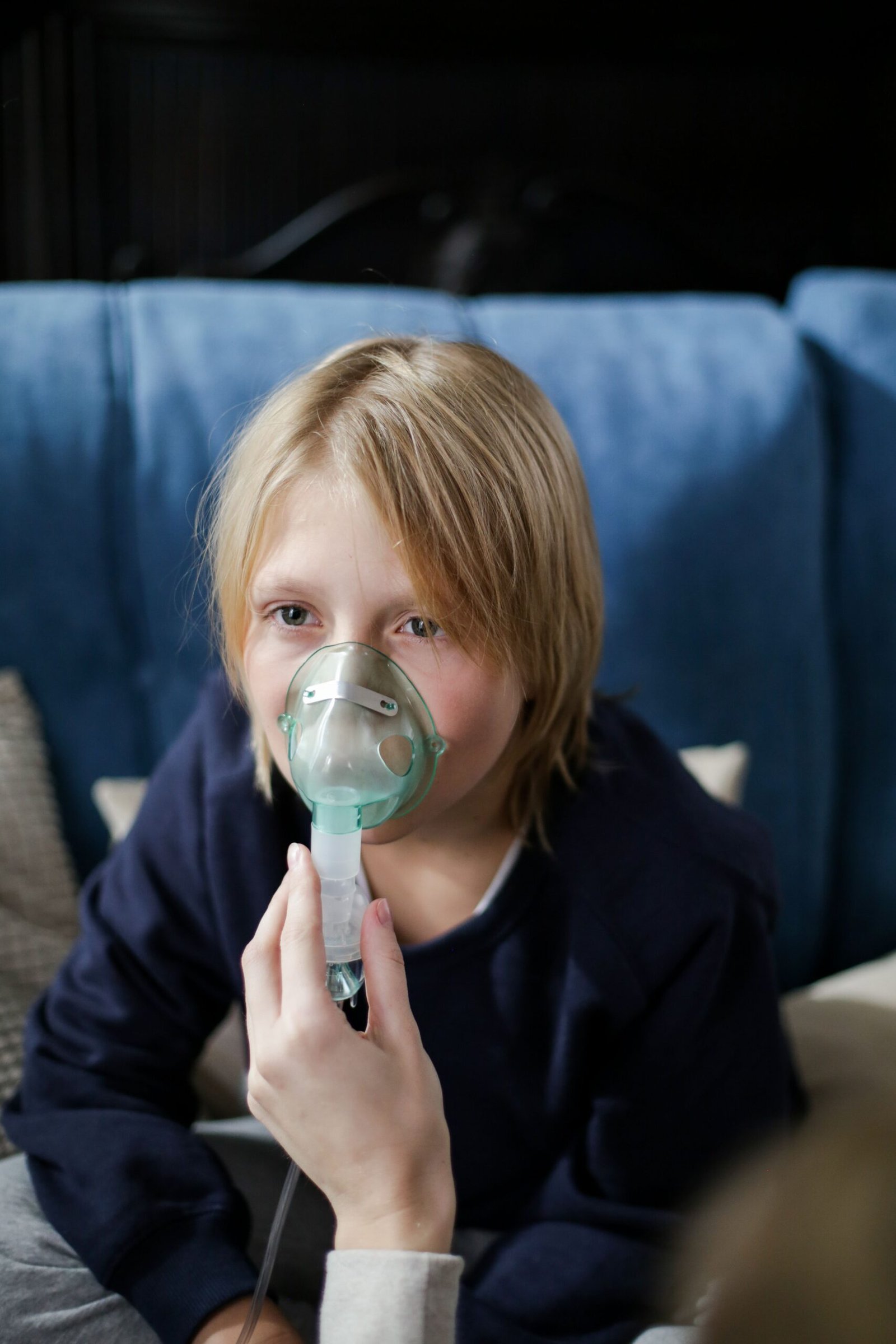
How to clean a nebulizer properly is not a one-size-fits-all answer, since the right routine depends partly on how often the device gets used. Someone taking a rescue bronchodilator only occasionally can often stick to the standard after-session rinse plus a weekly deeper clean. Someone using scheduled medication multiple times a day, or a child in daycare or school settings, benefits from more frequent deep cleaning, since more sessions mean more opportunities for moisture and residue to build up.
People with cystic fibrosis, bronchiectasis, or a weakened immune system are often advised by their care team to disinfect daily rather than every three days, according to the American Lung Association. If you fall into a higher-risk category, ask your doctor or respiratory therapist for a cleaning schedule tailored to your specific health needs rather than relying on general guidance alone.
Signs Your Nebulizer Parts Need Replacing
Even with perfect cleaning habits, parts eventually wear out. Watch for tubing that looks cloudy or discolored. A mask or mouthpiece with visible cracks, or a cup that no longer sits flush when reassembled, is also a red flag. Any of these can compromise the seal or let contaminants collect in places you cannot fully clean. Most manufacturers recommend replacing the cup, mask, and tubing every six months regardless of appearance. General wear is not always visible to the eye.
What You’ll Need on Hand
Having the right supplies ready makes it much easier to stick with a consistent routine. A small basin or bowl dedicated to soaking parts keeps the kitchen sink free for other uses. Distilled white vinegar, a mild unscented dish soap, and a supply of clean, lint-free towels cover most manufacturers’ recommendations. Some people also keep a small drying rack specifically for nebulizer parts, which speeds up air drying and keeps pieces from touching other surfaces while they dry.
A spare set of tubing, a mask, and a mouthpiece is worth keeping on hand too. Learning how to clean a nebulizer thoroughly sometimes means a part needs a full day to air dry, and having a backup set means you are never stuck skipping a scheduled treatment while you wait.
Common Cleaning Mistakes to Avoid
- Skipping the after-session rinse. Even a quick treatment leaves moisture behind that bacteria can use to multiply overnight.
- Washing the compressor itself. Water inside the motor housing can damage it permanently. Wipe the outside only.
- Using tap water for the final rinse in humid climates. Distilled or filtered water is a safer choice if your tap water quality is questionable.
- Storing parts while still damp. Trapped moisture in a sealed bag or box is exactly the environment bacteria need to grow.
- Sharing one mask or mouthpiece among multiple family members. Assign a separate set of parts to each person who uses the device.
Related Respiratory Health Guides
Once your cleaning routine is dialed in, a few other guides round out good nebulizer habits. See our guide on how often can you do a nebulizer treatment for safe dosing frequency. Our guide on how to use a nebulizer without medication is worth a look if you are ever without a prescription.
If you are still shopping for a device, our portable nebulizer machine reviews can help. Our handheld nebulizer review is another good comparison point.
Frequently Asked Questions
How often should I clean my nebulizer?
Rinse the mouthpiece and cup after every session. Add a deeper weekly clean with vinegar or mild soap, and deep clean or disinfect every three days if you use the device often.
Can I put nebulizer parts in the dishwasher?
Check your manufacturer’s manual first. Some parts tolerate top-rack dishwasher cycles, but many are not designed for the heat and pressure involved.
Is it safe to use tap water when I clean a nebulizer?
For rinsing, tap water is generally fine in most areas. Distilled water is a safer choice if your local water quality is uncertain. Never use tap water in the actual medication cup.
Why does my nebulizer smell musty even after cleaning?
This usually means moisture was trapped somewhere during storage. Make sure every part is fully air dried before reassembling and storing the device.
Can I clean the compressor with water?
No. Water can damage the internal motor. Wipe the outside casing only with a dry or barely damp cloth.
How do I know if my nebulizer tubing needs replacing?
Look for cloudiness, discoloration, or visible cracks. Most manufacturers recommend replacing tubing every six months even without obvious damage.
What should I do if I don’t have the manufacturer’s cleaning solution on hand?
A homemade mix of half a cup of white vinegar and one and a half cups of warm water works well as a substitute for most models.
Do I need to clean a nebulizer differently for a child versus an adult?
The cleaning steps themselves are the same. Keeping each child’s parts separate from other household members is especially important, since kids share germs easily.
How long does it take to properly clean a nebulizer?
The after-session rinse takes just a few minutes. A weekly or deep clean, including soak and dry time, generally takes 20 to 30 minutes from start to finish.
Can I speed up drying time with a hair dryer or towel rubbing?
Air drying is safest. Heat from a hair dryer can warp small plastic parts, and rubbing with a towel can leave lint or fibers behind in the mouthpiece or mask.
Bottom Line
Learning how to clean a nebulizer properly is a small routine that protects both your device and your lungs. Rinse and air-dry after every session. Add a deeper weekly soak, and disinfect every few days if you use the device regularly. Replace worn parts on schedule, avoid the common mistakes above, and always check your manufacturer’s manual for model-specific guidance. A little consistency here goes a long way toward keeping your treatment safe and effective.


Hi, I’m Mamon, the content creator behind this blog. I share my experience in blogging, WordPress, SEO, and affiliate marketing through honest product reviews, in-depth buying guides, and practical how-to articles. Every piece of content is thoroughly researched and written to help readers make informed decisions.