

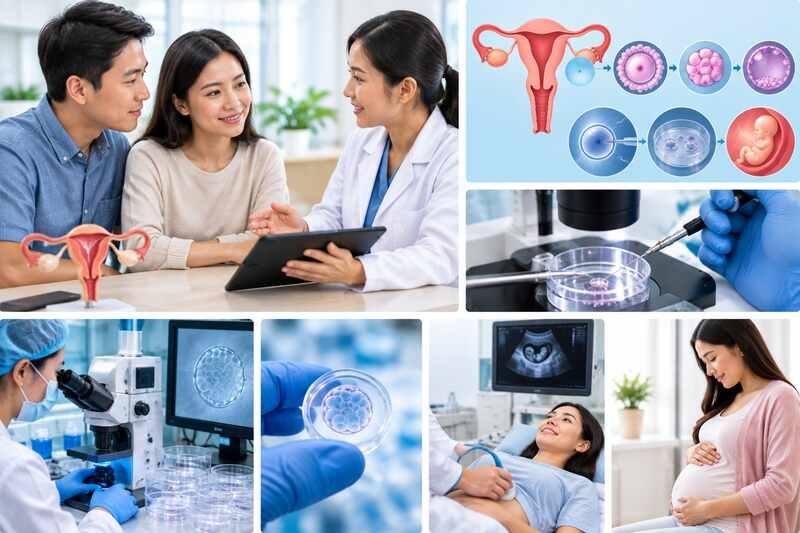

Starting IVF Singapore treatment raises a lot of questions at once. What actually happens during a cycle? How much does it cost? What are the real chances of success? This guide answers all three questions in plain language. It walks through what In Vitro Fertilization is and how a typical cycle works from start to finish. It also covers the government support available for couples pursuing IVF Singapore treatment today.
What Is IVF, Exactly?
IVF stands for In Vitro Fertilization and Embryo Transfer. The term “in vitro” means “in glass.” It refers to the laboratory dish where fertilization actually takes place. During IVF, a fertility specialist retrieves eggs from the ovaries. The specialist then combines those eggs with sperm outside the body. The resulting embryo transfers back into the uterus, where it can implant and grow into a pregnancy.
Couples turn to IVF Singapore clinics for many different reasons. Blocked or damaged fallopian tubes are one common cause. Endometriosis, low sperm count, and ovulation disorders are three more. Unexplained infertility, where no clear medical cause turns up despite testing, sends many couples toward IVF as well. Age also plays a major role in the decision. Egg quality and quantity decline more quickly after the mid-30s. That decline is why many clinics recommend earlier evaluation rather than waiting.

Popular Types of IVF Treatment
Not every IVF Singapore cycle looks the same. Fertility clinics offer a few different protocols depending on a patient’s age, hormone levels, and medical history.
Standard Stimulated Cycle IVF uses fertility medications to encourage the ovaries to produce multiple eggs in a single cycle. Retrieving more eggs generally improves the odds of getting at least one healthy embryo. Natural Cycle IVF takes the opposite approach. It uses little to no stimulation medication. Instead, it retrieves the single egg the body naturally produces each month. This route lowers medication costs substantially. It also appeals to patients who want to avoid the side effects of high-dose hormones. The trade-off is fewer eggs per attempt, which can mean needing more cycles overall.
Intracytoplasmic Sperm Injection, or ICSI, is a variation used alongside either protocol. An embryologist injects a single sperm directly into an egg rather than letting fertilization happen on its own. Clinics recommend ICSI most often for male-factor infertility. Low sperm count and poor sperm motility are the two most common reasons for choosing it. A related option, Intra-Uterine Insemination, places washed sperm directly into the uterus around ovulation. Clinics such as the Advanced Centre for Reproductive Medicine in Singapore offer IUI as a first step. Many couples try it before moving on to a full IVF cycle. It is generally less invasive and less expensive than IVF.
What Are The Advantages Of IVF?
- IVF helps women with blocked fallopian tubes, ovulation disorders, or endometriosis achieve pregnancy when natural conception has not worked.
- For many causes of infertility, IVF offers the best per-cycle chance of pregnancy among all available fertility treatments.
- Doctors control the timing of egg production and fertilization closely, which lets them monitor hormone levels and embryo development at every stage.
- Genetic testing of embryos before transfer is possible with IVF, which is not an option with less invasive fertility treatments.
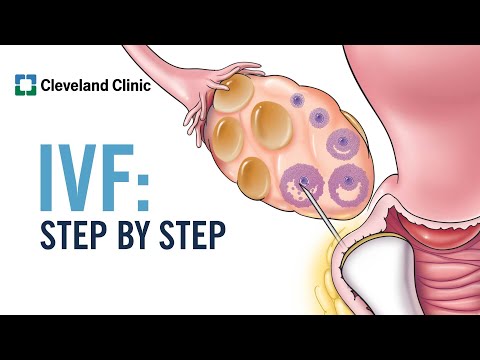
These advantages come with real trade-offs in cost, time, and physical demands. Understanding the full process matters before committing to it. The video below from Cleveland Clinic walks through each stage of a typical IVF cycle. It covers everything from ovarian stimulation through embryo transfer, in clear, plain-language terms that most patients find easy to follow.
Risks Involved With IVF Singapore Treatment
IVF is generally safe, but like any medical procedure it carries some risks worth understanding before you start.
Ovarian Hyperstimulation Syndrome, known as OHSS, is one of the more serious risks. It happens when the ovaries react too strongly to fertility medications and swell up with fluid. According to the Mayo Clinic, mild OHSS causes abdominal bloating, mild nausea, and diarrhea. Severe cases can bring on rapid weight gain, severe abdominal pain, and shortness of breath. Any of those severe symptoms need immediate medical attention. Clinics manage this risk by adjusting medication doses carefully. They also monitor follicle growth closely with ultrasound throughout the stimulation phase.
Fertility medications also bring a set of milder, more common side effects. Mood swings, cramping, hot flashes, fatigue, headaches, nausea, and vomiting are all fairly typical during the stimulation phase. Most of these symptoms fade once the medication course ends. Transferring more than one embryo raises the odds of a multiple pregnancy, such as twins or triplets. Carrying multiple babies brings added risks for both the mother and the babies. Higher rates of premature birth are one of the main concerns doctors watch for.


Minimizing the Risks of IVF Singapore Treatment
Choosing the right clinic and doctor makes a real difference in how safely and smoothly treatment goes. Look for a board-certified reproductive endocrinologist with specific experience managing IVF cycles. General obstetrics and gynecology training alone is not the same thing. An accredited fertility clinic follows established safety protocols for medication dosing, embryo handling, and lab quality control.
Ask direct questions before you commit to a clinic. How many embryos does the clinic typically transfer per cycle? What is their OHSS rate? How do they monitor patients during the stimulation phase? A clinic willing to answer these questions clearly and in detail is usually a good sign.
The waiting and uncertainty of fertility treatment can weigh heavily on your mental health. That stress is worth taking seriously rather than pushing aside. Our guide on how to break the cycle of health anxiety offers practical strategies for managing that worry. It is worth reading before treatment starts, not just once anxiety builds up.
How IVF Is Done: Step by Step
The IVF Singapore process generally follows the same core sequence, though exact timing varies by clinic and by patient.
Ovarian stimulation comes first. Daily hormone injections encourage the ovaries to develop multiple mature follicles. That is different from the single follicle a body typically produces each month. Doctors track follicle growth through regular ultrasounds and blood tests. This monitoring phase usually lasts ten to fourteen days. Egg retrieval follows once the follicles reach the right size. Doctors perform this quick procedure under sedation. They use a thin needle guided by ultrasound to collect eggs directly from the ovaries.
On the same day as egg retrieval, the male partner or a sperm donor provides a semen sample. A lab technician washes and prepares the sample to isolate the healthiest, most active sperm. Male-factor infertility sometimes overlaps with other conditions doctors treat separately. Erectile dysfunction is one example some men encounter alongside fertility challenges. Our article on how shockwave therapy can treat erectile dysfunction covers one treatment option some men explore alongside fertility care.
Fertilization happens next. It occurs either by mixing eggs and sperm together in a dish, or through ICSI. With ICSI, an embryologist injects a single sperm directly into each mature egg. The lab monitors the resulting embryos for three to six days. Technicians watch closely for signs of healthy cell division. The strongest embryo, or embryos, then transfer into the uterus using a thin catheter. This procedure typically requires no sedation at all.

A single IVF Singapore cycle typically spans about four to six weeks. That timeline runs from the first day of stimulation medication to the embryo transfer itself. Add the two-week wait for pregnancy test results on top of that. Most patients can then expect the full process to take roughly six to eight weeks from start to a confirmed outcome. Clinics build in extra time for monitoring appointments throughout. Patients should plan for several short visits each week during the stimulation phase.
The Cost of IVF Singapore and Government Support
Cost is one of the biggest factors couples weigh before starting IVF Singapore treatment. A single cycle can run into the thousands of dollars once medication, monitoring, and lab fees add up. Singapore’s Ministry of Health helps offset that cost for eligible couples. The government co-funds up to 75 percent of Assisted Reproduction Technology costs per cycle under the Marriage and Parenthood Package. That co-funding applies to women below 40 years old. MOH data shows success rates drop significantly beyond that age, which is part of the reasoning behind the cutoff.
MediSave also helps cover treatment costs. It comes with a lifetime cap of $15,000 per couple for assisted conception procedures. That amount does not replenish once exhausted, so couples need to plan cycles carefully. MOH ties these limits directly to encouraging couples to seek treatment earlier rather than later. Both success rates and available lifetime funds shrink the longer a couple waits to start.
Success also depends heavily on how many cycles a couple has already tried. Singapore data shows that success rates fall below five percent after the third IVF cycle. That statistic is part of why MediSave withdrawal limits taper down with each additional attempt. These figures make one thing clear. An honest, early conversation with a reproductive endocrinologist matters enormously. Discussing your age, diagnosis, and realistic odds upfront is one of the most valuable steps in the entire process.
What to Expect While Waiting for Results
The two weeks between embryo transfer and a pregnancy test are often the hardest part of the whole journey. Many patients call this stretch the “two-week wait.” Doctors typically schedule a blood test measuring hCG hormone levels roughly two weeks after transfer. This test is far more reliable than an at-home urine test taken too early. Lab results usually come back within twenty-four to forty-eight hours of the blood draw.
A positive result leads to a follow-up ultrasound a week or two later. That scan confirms the pregnancy is developing normally and checks for a heartbeat. A negative result is understandably difficult. It does not necessarily mean future cycles will fail, though. Your doctor will typically review the cycle in detail. They may adjust medication doses, timing, or protocol before trying again.

Preparing Your Body and Mind for Treatment
Good general health supports better outcomes throughout an IVF Singapore cycle. No supplement or lifestyle change can guarantee success on its own, though. A balanced diet and regular moderate exercise are two steps most reproductive endocrinologists recommend before starting treatment. Cutting back on alcohol and smoking is another common recommendation. Some patients also look into supplements for general wellness during this period. Our guide on the best supplements to take for overall health covers common options worth discussing with your doctor first.
Sleep and stress management matter just as much as physical health during a fertility journey. Poor sleep can disrupt the hormones that regulate ovulation and cycle timing. Our article on how naturopathy helps with sleep disorders looks at gentler, complementary approaches. Some patients use these alongside their medical treatment plan, not instead of it.
Partners can support each other through treatment in small, practical ways too. Attending appointments together, splitting the load of research and paperwork, and simply checking in emotionally each week all help. Fertility treatment tends to go better when both partners feel informed and included. It is much harder when one person carries the process alone.
Conclusion
IVF Singapore treatment can help couples overcome many of the most common causes of infertility. Blocked fallopian tubes, male-factor issues, and unexplained infertility are all conditions IVF regularly addresses. The process demands patience and a meaningful financial commitment. It also requires a willingness to work closely with a qualified reproductive endocrinologist. Government co-funding and MediSave support make treatment more accessible than many couples initially expect. The caps and age rules are still worth understanding upfront, though. They shape how many cycles you can realistically fund, and planning around them early can save real stress later.
Take time to research accredited clinics. Ask detailed questions about success rates and safety protocols before committing to one. Lean on your support system during the waiting periods, since that stretch of uncertainty is often the hardest part. If your journey does lead to a successful pregnancy, congratulations are well deserved after everything it took to get there. Once a newborn is on the way, planning for the next chapter can start.


Hi, I’m Mamon, the content creator behind this blog. I share my experience in blogging, WordPress, SEO, and affiliate marketing through honest product reviews, in-depth buying guides, and practical how-to articles. Every piece of content is thoroughly researched and written to help readers make informed decisions.