

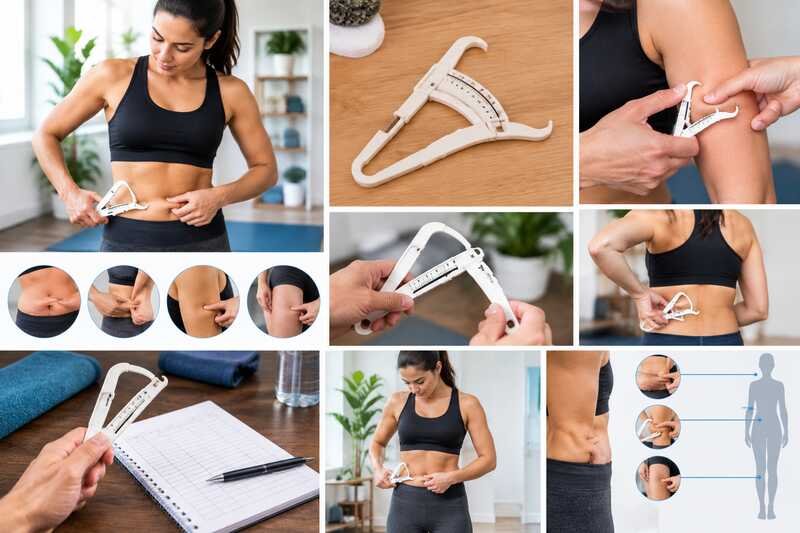

Measuring body fat is more than a number on the scale, it’s about understanding your body composition. Knowing your body fat percentage helps track fitness progress, check health risks, and set realistic goals. One of the most reliable and affordable ways to measure body fat at home is by using a caliper. But many people struggle with using calipers correctly, making mistakes that lead to wrong results. This guide will show you exactly how to use a caliper to measure body fat step by step, help you avoid common errors, and explain what your numbers really mean, and don’t mean.
What Is A Caliper And How Does It Work?
A caliper is a small tool that measures the thickness of skinfolds. It looks like a pair of tongs with a scale. By pinching the skin and fat (not muscle), you can check how much subcutaneous fat you have. The measurements are taken at certain points on your body. These numbers are then used in formulas to estimate your body fat percentage. Once you understand this basic mechanism, learning how to use a caliper to measure body fat accurately comes down to just two things: finding the right spots on your body, and being consistent every time you measure.
Unlike expensive machines or scans, calipers are portable and cheap, and they give useful results if you use them correctly. The often-cited “3 to 4 percent error” figure for skinfold formulas comes from controlled lab studies where a single, experienced tester measured people similar to the group the formula was originally validated on. It is not a guarantee for a beginner testing themselves at home for the first time. Published research on skinfold accuracy has found individual errors ranging from significant overprediction to significant underprediction depending on tester experience and technique consistency, so treat your first few sessions as a learning period, not a precise diagnostic.
Choosing The Right Body Fat Caliper
Calipers come in different types and price ranges. Some are plastic, others metal. The accuracy depends more on your technique than on the tool. However, quality matters. Here’s a quick comparison:
| Caliper Type | Accuracy | Durability | Cost |
|---|---|---|---|
| Plastic (Basic) | Good for beginners | Low | $10–$20 |
| Metal (Professional) | High | High | $30–$80 |
| Digital Caliper | Very accurate | Medium | $40–$100 |
Choose a metal caliper if you plan to measure often. For beginners, a plastic caliper works fine, and it is a reasonable way to start before investing in a pricier model. Check that the caliper has a clear scale and feels comfortable in your hand.

Preparing For Measurement
Before using the caliper, prepare your body and mind for accuracy.
- Measure at the same time of day (preferably morning)
- Avoid exercise right before measuring
- Wear minimal clothing (shorts, sports bra)
- Stand relaxed, not flexed
Wash your hands and the caliper to avoid slipping. If possible, ask a friend to help you measure. Self-measuring can be tricky, especially for spots like your back, where you physically can’t see or reach the fold well enough to pinch it consistently.
Identifying Skinfold Sites
Caliper measurements are taken at specific skinfold sites. The most common methods are:
- Three-site method: Fast, popular for beginners.
- Seven-site method: More detailed, used for athletes.
Let’s compare the two:
| Method | Sites | Accuracy | Time |
|---|---|---|---|
| Three-site | Men: Chest, Abdomen, Thigh Women: Triceps, Suprailiac, Thigh |
Good | Quick |
| Seven-site | Chest, Abdomen, Thigh, Triceps, Subscapular, Suprailiac, Midaxilla | Better | Longer |
If you’re just starting, use the three-site method. It balances speed and reliability. Remember, consistency is key, use the same sites every time.
Step-by-step: How To Use A Caliper
Follow these steps for accurate results:
- Find the site: Use a mirror or ask someone to help. For example, the triceps site is halfway between your shoulder and elbow on the back of your arm.
- Pinch the skinfold: Use your thumb and index finger. Grab about 2–3 cm of skin and fat, not muscle.
- Place the caliper: Put the caliper jaws about 1 cm below your fingers, perpendicular to the fold. Release the caliper slowly until it clicks or stops.
- Read the measurement: Wait 2 to 4 seconds for the needle to settle, then check the number on the scale (in millimeters).
- Record the number: Write it down right away. Repeat for each site.
- Take multiple readings: Measure each site twice or three times. Use the average for best accuracy.
Example: Measuring The Triceps Site
- Stand with your arm relaxed.
- Pinch a vertical fold on the back of your upper arm.
- Place the caliper below the pinch.
- Read the number (e.g., 12 mm).
- Record the result.
Pro Tip
Always measure on the right side of your body, unless told otherwise by a formula or coach.
Calculating Body Fat Percentage
Once you have your skinfold numbers, you need a formula to estimate body fat percentage. The most popular formulas are Jackson-Pollock (for three or seven sites) and Durnin-Womersley. You can use online calculators, but knowing how it works helps you trust the results.
Here’s a simplified example for the three-site method (Jackson-Pollock):
- Add up the three skinfold numbers (e.g., 12 mm + 18 mm + 20 mm = 50 mm)
- Enter the sum, age, and gender into the formula or calculator
- Get your body fat percentage (e.g., 17%)
You can find calculators on trusted fitness sites or use the equations directly. For a deeper look at formulas, see the Wikipedia Skinfold Test page.
Understanding Your Results
Body fat percentages vary by age, gender, and fitness level. This table follows the standard categorization used by the American Council on Exercise (ACE):
| Category | Men (%) | Women (%) |
|---|---|---|
| Essential Fat | 2–5 | 10–13 |
| Athletes | 6–13 | 14–20 |
| Fitness | 14–17 | 21–24 |
| Average | 18–24 | 25–31 |
| Obese | 25+ | 32+ |
Aim for the fitness or average range if you’re not an athlete. Very low body fat can be dangerous and is not recommended for most people, since dropping too far below the essential fat range can affect hormone production and long-term health.
Common Mistakes And How To Avoid Them
Many beginners make errors that lead to wrong results. Here are the most frequent mistakes:
- Pinching muscle instead of fat: Always pinch loose skin, not hard muscle.
- Measuring after exercise: Exercise increases blood flow and can change skin thickness.
- Inconsistent sites: Mark your sites with a washable marker for repeat accuracy.
- Not relaxing: Flexed muscles change the results.
- Not averaging: Always take multiple readings.
Non-obvious Tips
- Skin hydration affects readings: Dry skin can be harder to pinch, leading to lower numbers. Measure after a shower for best consistency.
- Age changes fat distribution: Older adults may have more fat in different areas. Use age-adjusted formulas for accuracy.
- Tester experience matters more than the caliper: A big share of the accuracy gap between “lab” and “home” measurements comes down to practice. If you have a friend or trainer measure you consistently over time rather than switching testers, your trend line will be far more trustworthy than any single reading.
- Body position and posture affect the pinch: Leaning, twisting, or shifting your weight to one leg between measurements changes how the skin and fat fold, even at the same site. Stand the same way, feet shoulder-width apart, arms relaxed, every time you measure.
How Often Should You Measure?
Tracking body fat is useful, but not every day. Changes happen slowly. Measure every 2–4 weeks for most people. Record your results, and look for trends, not single numbers. If you also track your weight, our guide on reading a digital body weight scale properly covers similar timing and consistency advice for that number.
Caliper Vs Other Methods
Calipers are simple, but how do they compare to other methods?
- Bioelectrical impedance: Built into many smart scales; easy to use, but readings shift with hydration, recent meals, and even time of day. Our review of an accurate bathroom scale covers this trade-off in more detail.
- DEXA scan: Very accurate, but expensive and not portable.
- Hydrostatic weighing: Gold standard, but hard to access.
Calipers are the best balance for home use. For more details on body fat methods, check the CDC’s body fat page.
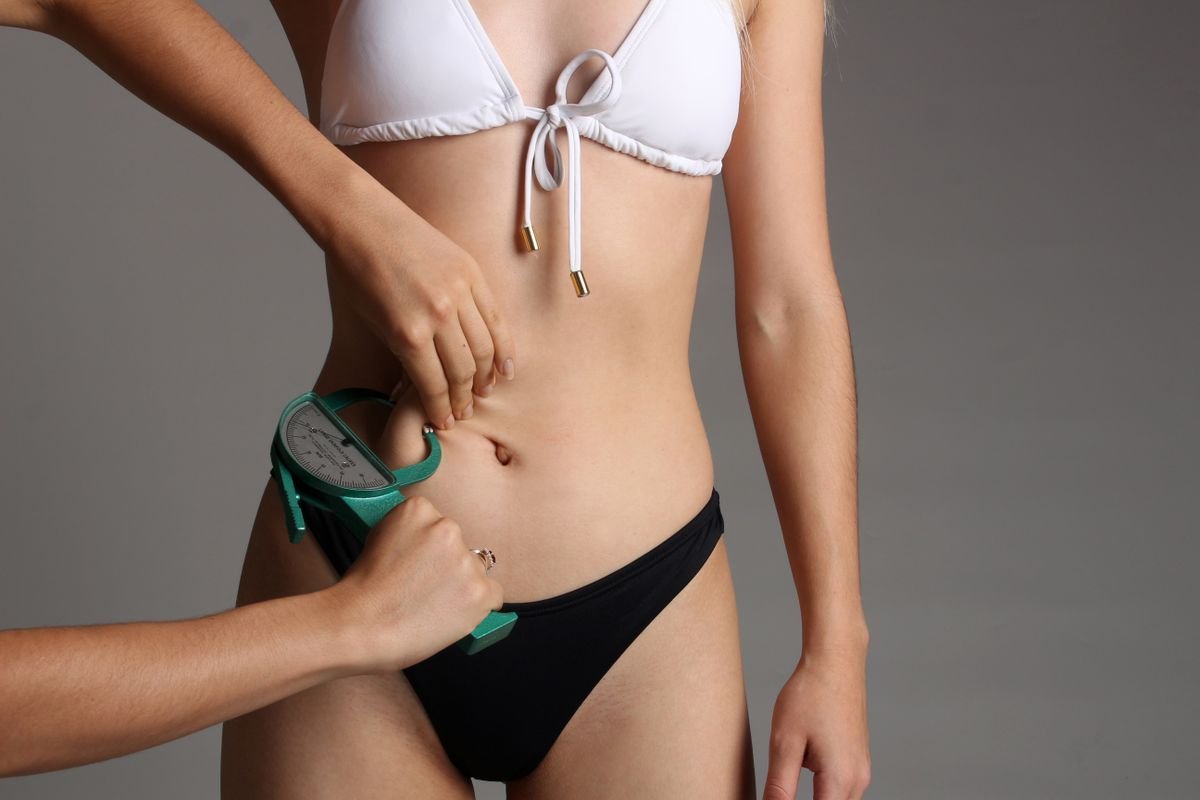

Practical Examples
Let’s look at two scenarios:
Example 1: Beginner
- Age: 25, Male
- Chest: 10 mm, Abdomen: 20 mm, Thigh: 15 mm
- Total: 45 mm
- Body fat: About 16% (using Jackson-Pollock formula)
Example 2: Fitness Enthusiast
- Age: 30, Female
- Triceps: 14 mm, Suprailiac: 18 mm, Thigh: 22 mm
- Total: 54 mm
- Body fat: About 22%
Both examples show how simple measurements give useful numbers for tracking progress, as long as you’re comparing your own readings over time rather than treating any single session as an exact diagnosis. Notice that neither example claims a precise, guaranteed body fat number; both are described as “about” a percentage, which is the honest way to present a skinfold estimate.
Improving Your Technique
The more you practice, the better your results. Here are ways to improve:
- Watch tutorial videos: See how experts pinch skin and use calipers.
- Get feedback: Ask a trainer or friend to check your technique.
- Mark sites: Use a washable marker to always measure the same spot.
- Stay consistent: Always measure under similar conditions, and ideally have the same person take your measurements each time.
Frequently Asked Questions
How Accurate Are Calipers For Measuring Body Fat?
Under ideal lab conditions with an experienced tester, skinfold formulas can come within roughly 3 to 4 percent of body fat measured by more precise methods. In everyday self-measurement, real error tends to run higher because technique, tester consistency, and site marking all affect the result. Calipers work best for tracking your own trend over weeks and months, not for a precise one-time number.
Can I Measure Body Fat With Calipers Alone?
Yes, you only need a caliper and a formula or calculator, along with a notebook or app to log your numbers over time. However, having a helper improves accuracy, especially for hard-to-reach spots. Some body sites are almost impossible to measure by yourself.
How Do I Know Which Formula To Use?
Most calipers come with instructions. The Jackson-Pollock formula is popular for the three-site and seven-site methods. For different age groups or body types, use age-adjusted formulas or consult a trainer, since a formula built for young athletes will not translate cleanly to an older adult with a different fat distribution pattern.
Should I Use Calipers Or Another Method?
Calipers are best for home use, cheap, portable, and reliable enough for tracking trends. Other methods like DEXA scans or hydrostatic weighing offer higher accuracy but cost more and usually require a visit to a lab or clinic rather than something you can do in your bedroom before breakfast. Calipers are perfect for tracking progress, not for medical diagnosis.
What’s The Best Time Of Day To Measure?
Morning is ideal. Your body is less hydrated and hasn’t been affected by food or exercise yet. Always measure at the same time for consistent results.
Why did my body fat percentage jump between two measurements taken close together?
A sudden swing is far more likely to be measurement noise than a real change in body composition, since meaningful fat loss or gain happens gradually. Check that the same person measured you, at the same sites, at the same time of day, before assuming the number itself is wrong. Hydration status alone can shift a reading by a noticeable margin, so a big swing right after a weekend of unusual eating or drinking is not cause for alarm. If the swing persists across two or three separate measurement sessions rather than one, it’s worth reviewing your technique against the steps above rather than chasing the number itself.
Learning how to use a caliper to measure body fat gives you control and insight into your health and fitness journey. With practice, you’ll get reliable numbers to guide your decisions, even if no single reading is perfectly precise. Remember, consistency is key. Use your caliper wisely, avoid common mistakes, and celebrate your progress.
Your body fat percentage is just one number, but it can tell you a lot about your body, and your efforts, especially when you track it consistently over time rather than reacting to any single reading. Pair it with how your clothes fit, your energy levels, and your strength in the gym for a fuller picture than any single measurement tool can give you on its own.


Hi, I’m Mamon, the content creator behind this blog. I share my experience in blogging, WordPress, SEO, and affiliate marketing through honest product reviews, in-depth buying guides, and practical how-to articles. Every piece of content is thoroughly researched and written to help readers make informed decisions.