

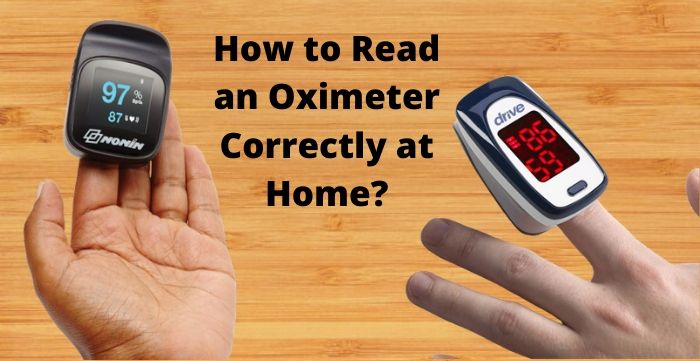

Pulse oximeters became a household name during the COVID-19 pandemic, and for good reason. This small, clip-on device gives you a quick window into how well your lungs are moving oxygen into your bloodstream, without a needle or a lab visit. Knowing how to read an oximeter correctly is what turns that window into trustworthy information instead of a confusing number on a screen.
Whether you’re managing a chronic lung condition, recovering from an illness, or just keeping tabs on your health at home, this guide covers what a pulse oximeter measures, how to use one step by step, what your numbers mean, and when a reading should send you to a doctor.
Key Takeaways
- A pulse oximeter measures two numbers at once: blood oxygen saturation (SpO2) and pulse rate (PR)
- Normal oxygen saturation for most healthy adults falls between 95% and 100%
- Warm hands, bare fingertips, and 5-10 minutes of rest before testing all improve accuracy
- A reading below 92%, or any reading paired with breathing trouble, warrants a call to your doctor
- Cold fingers, nail polish, poor circulation, and even skin pigmentation can all skew results, so one low reading is not automatically an emergency
Understanding Pulse Oximeters and Their Purpose
A pulse oximeter is a small, painless device that estimates the percentage of oxygen-saturated hemoglobin in your blood. Hospitals have relied on this technology for decades in surgery, the ICU, and the general ward. Today the same core technology sits inside an inexpensive clip sold at almost any U.S. pharmacy.
What is a Pulse Oximeter?
A pulse oximeter is a fingertip clip that uses light sensors to estimate how much oxygen your blood is carrying. You slide it over a fingertip (some models work on a toe or earlobe), and within seconds it displays two numbers: your SpO2 percentage and your pulse rate in beats per minute.
How Pulse Oximeters Work
The device works by shining two wavelengths of light, red and infrared, through your fingertip:
- Red and infrared light pass through the tissue and blood vessels in your finger
- A sensor on the other side measures how much of each wavelength is absorbed
- Oxygen-rich blood and oxygen-poor blood absorb light differently, so the device calculates your SpO2 from that difference
- The same light pulses let the device count your heartbeats, which is where the pulse rate reading comes from
Types of Pulse Oximeters Available
Not every oximeter is built for the same job. Here’s how the main categories compare:
| Type | Usage | Typical Accuracy |
|---|---|---|
| Medical-Grade | Hospitals, clinics, EMS | 99-100% |
| Consumer-Grade (Fingertip) | Home monitoring | 95-98% |
| Wearable (Smartwatch/Ring) | Continuous, passive tracking | 90-97% |
“Pulse oximetry provides a quick, painless method to assess your body’s oxygen levels in just seconds.” – American Medical Association
If you’re deciding which device to buy, our pulse oximeter buying guide compares the top-rated consumer models sold in the U.S., and our portable pulse oximeter guide covers travel-friendly options.

Video: How to Use a Pulse Oximeter Correctly (and Read the Results), courtesy of GoodRx.
How to Read an Oximeter: Step-by-Step Instructions
Learning how to read an oximeter is straightforward once you know what the display is actually telling you. It might look like a single number, but a quality device is reporting at least two, and sometimes three, separate pieces of data at once.
What the Display Actually Shows
- SpO2 – your blood oxygen saturation, shown as a percentage (for example, 97%)
- PR or PRbpm – your pulse rate, shown in beats per minute
- PI (Perfusion Index) – found on some higher-end models, this shows signal strength; a very low PI can mean the reading is less reliable
Before you start, warm your hands, remove any nail polish, and rest for a few minutes so your reading reflects your true baseline (the section below covers full preparation).
Here’s how to read an oximeter step by step:
- Turn on the pulse oximeter and let it complete its self-check
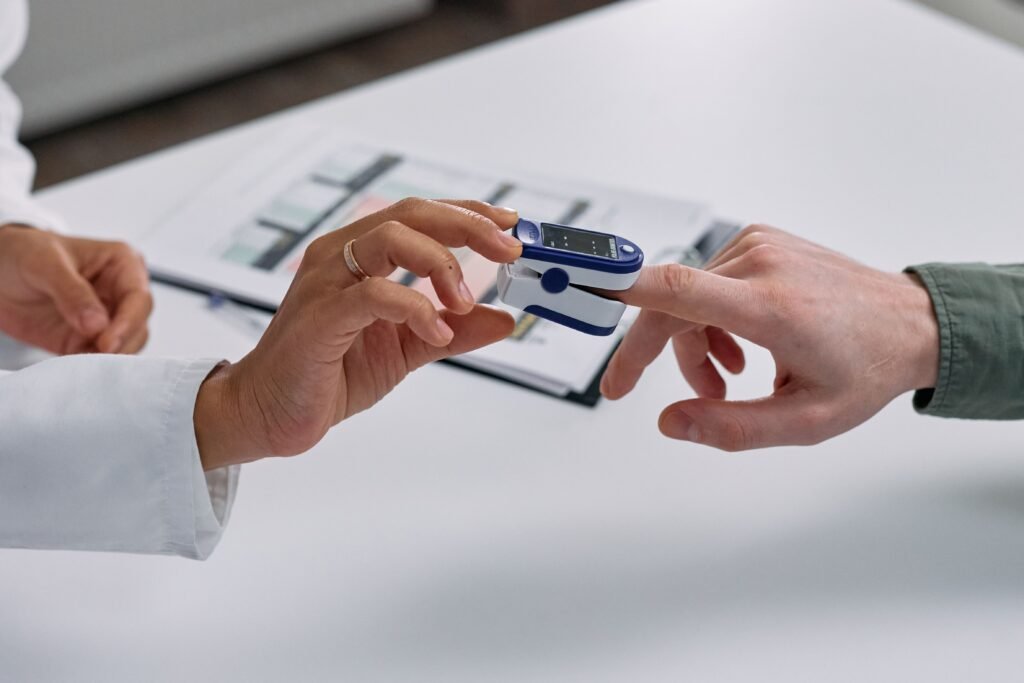
- Clip the device onto your fingertip, usually the index or middle finger, with the fingernail facing the light source
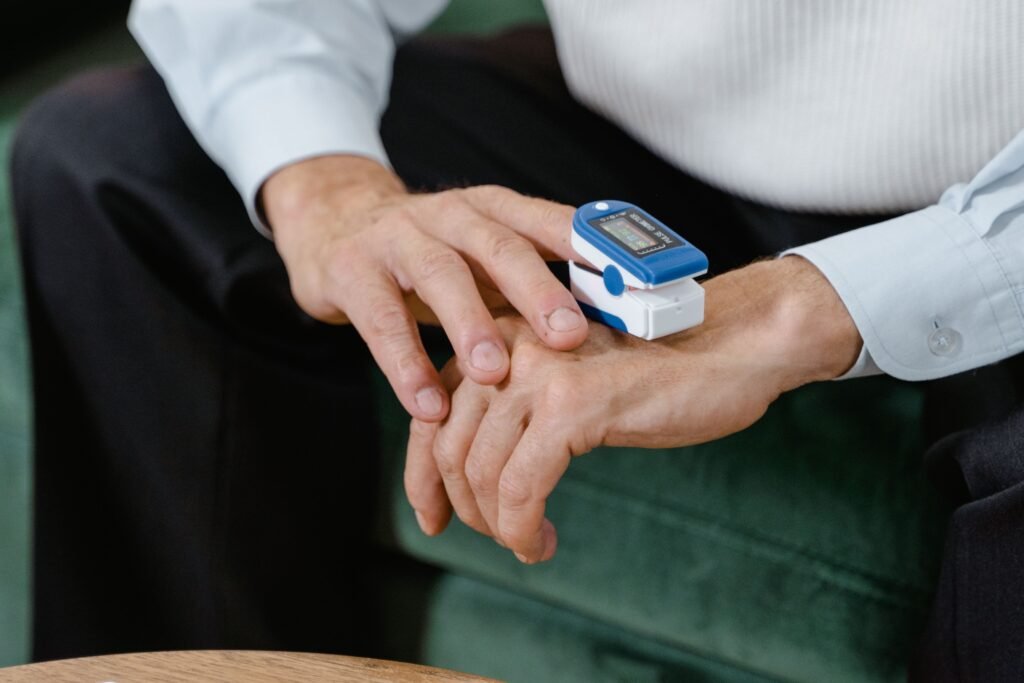
- Keep your hand still and rested at heart level, not dangling below your waist
- Wait for the numbers to stop fluctuating, typically 30-60 seconds
- Record the highest consistent SpO2 and pulse rate reading, not the very first number that flashes up
Once you have a stable number, here’s how to interpret it:
| SpO2 Level | Interpretation |
|---|---|
| 95%-100% | Normal, healthy range for most adults |
| 92%-94% | Mildly low; recheck and monitor closely |
| Below 92% | Contact a healthcare provider promptly |
“Accuracy is key when monitoring oxygen saturation levels at home.” – Medical Professionals
Consumer pulse oximeters are generally accurate within about 2-4% of a hospital-grade reading. If you consistently see low numbers, don’t rely on the device alone, call your doctor for a full evaluation. For a deeper look at which digit works best and why, see our guide on which finger gives the most accurate pulse oximeter reading.

Essential Preparation Steps for Accurate Readings
Getting a trustworthy number starts before you ever clip the device on. Your finger pulse oximeter can only be as reliable as the conditions you use it in.
Proper Finger Selection and Preparation
Choosing the right finger, and prepping it correctly, matters more than most people expect:
- Use your middle or index finger for the most consistent results
- Remove nail polish, gel color, or artificial nails, since they block light transmission
- Make sure your hands are warm; cold fingers restrict blood flow and can produce falsely low readings
- Avoid fingers with cuts, calluses, poor circulation, or Raynaud’s symptoms
Optimal Environmental Conditions
Your surroundings affect oximetry accuracy too:
- Keep the room temperature between roughly 70-75°F
- Avoid drafty spots, open windows, or air conditioning blowing directly on your hands
- Stay still and avoid talking while the device is taking a measurement
- If you’ve just come in from the cold, wait 10-15 minutes indoors before testing
Common Mistakes to Avoid
“Proper preparation is key to obtaining reliable pulse oximeter readings.” – Medical Professionals
Avoid these common mistakes:
- Moving your hand or talking during the measurement
- Testing with cold, damp, or shaking hands
- Wearing tight rings or bracelets on the testing hand
- Reading the number too early, before the device has stabilized
Consistent, careful use is what makes home monitoring genuinely useful rather than a source of false alarms.
Understanding Oxygen Saturation Levels and Their Meaning
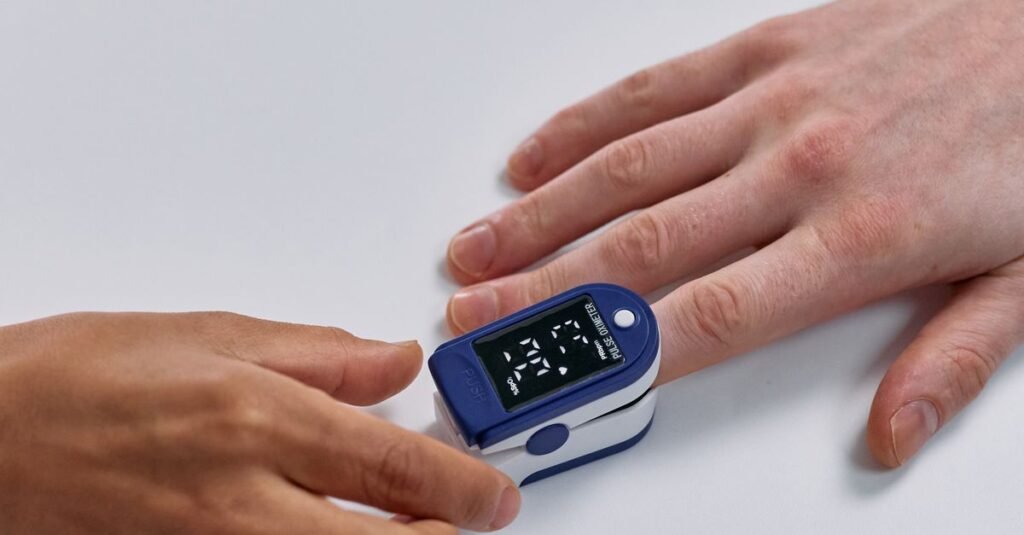

Understanding oxygen saturation levels is central to using this device for anything more than curiosity. Watching your SpO2 and pulse rate over time tells you far more than one reading ever could.
Healthy adults at sea level typically sit between 95% and 100%. People with chronic lung conditions such as COPD may have a doctor-approved “normal” baseline that runs lower, which is why it helps to know your own baseline before an illness hits.
“Oxygen saturation is your body’s vital report card on respiratory efficiency.”
Here’s a quick reference for what the numbers generally mean:
- Normal Range: 95-100% – Lungs and circulation are functioning well
- Borderline: 90-94% – Worth monitoring closely and mentioning to your doctor
- Low: 89% or below – Seek medical attention promptly
Several everyday factors can shift your oxygen levels, including:
- Age
- Underlying health status
- Altitude (readings run lower at elevation, which matters if you live in mountain states)
- Respiratory illness or asthma flare-ups
A single reading rarely tells the full story. Track your numbers over a few minutes, or over several days if you’re managing a condition, and share the pattern with a doctor rather than reacting to one isolated number.
When to Call a Doctor About Your Oximeter Reading
A pulse oximeter is a screening tool, not a diagnostic one. The National Institutes of Health’s MedlinePlus notes it’s meant to be used alongside, not instead of, a clinical exam. As a general guide for U.S. adults:
- 90-94%: Recheck the reading after resting and warming your hands. If it stays in this range, call your primary care provider or use telehealth the same day
- Below 90%: Contact your doctor or an urgent care clinic promptly, especially if paired with shortness of breath, chest pain, confusion, or bluish lips or fingertips
- Sudden drop with severe symptoms: Call 911 or go to the nearest emergency room; do not wait on a repeat oximeter reading
If you or a family member has a chronic condition like COPD, asthma, or sleep apnea, ask your doctor what SpO2 range is normal for you specifically, and keep it written down near your device.
Factors Affecting Oximeter Accuracy
Knowing the limits of your portable pulse oximeter matters as much as knowing how to use it. Both device-related and body-related factors can change how reliable a reading really is.
Physical Factors Impacting Readings
Your body’s own characteristics can meaningfully affect accuracy:
- Darker skin pigmentation has been shown in FDA-reviewed studies to be associated with less accurate readings in some devices, particularly around the clinically important 90% threshold
- Nail polish, gel manicures, or artificial nails can block light transmission
- Poor circulation or low blood pressure can weaken the signal
- Cold hands or Raynaud’s phenomenon can lower readings artificially
Environmental Conditions
External factors can also throw off a pulse oximeter’s accuracy:
- Higher altitude naturally lowers baseline oxygen readings
- Cold temperatures can weaken the pulse signal significantly
- Bright ambient light or direct sunlight on the sensor can interfere with results
- Excess motion, even a slight tremor, can prevent the device from stabilizing
Device-Related Accuracy Issues
Not all pulse oximeters perform the same. Device quality changes how much you should trust a borderline reading:
| Device Type | Accuracy Range | Potential Limitations |
|---|---|---|
| Medical-Grade Devices | ±2% SpO2 | Minimal variability, FDA-cleared for clinical use |
| Consumer-Grade Devices | ±2-4% SpO2 | Wider margin of error; quality varies by brand |
“Pulse oximeter accuracy isn’t absolute, it’s a nuanced measurement influenced by multiple variables.”
The FDA has publicly addressed these limitations, recommending readings be treated as one data point among several, especially for people with darker skin tones, rather than the sole basis for a decision. If your device disagrees with how you feel, trust your symptoms and check in with a healthcare professional. See our how to naturally support healthy oxygen levels for more.

Frequently Asked Questions
What is a normal pulse oximeter reading?
95% to 100% SpO2, with a resting pulse rate of roughly 60-100 bpm. Some chronic lung conditions come with a different doctor-approved baseline.
What does “PR” mean on a pulse oximeter?
Pulse rate, your heartbeats per minute. It’s a useful cross-check; an unusually high or low number can mean the reading needs a repeat.
Can a pulse oximeter be wrong?
Yes. Cold hands, nail polish, movement, poor circulation, and skin pigmentation can all shift results by a few percentage points. If a number seems off, warm up, remove polish, sit still, and retest.
How long should I wait before reading the number?
Give it 30 to 60 seconds. Wait for the display to hold steady rather than recording the first value that flashes up.
Where can I buy a reliable pulse oximeter in the U.S.?
Look for an FDA-cleared device from a reputable pharmacy or retailer. Our fingertip pulse oximeter reviews compare accuracy and price across popular U.S. models.
Conclusion
Learning how to read an oximeter correctly gives you a genuinely useful window into your respiratory health, right from your living room. These devices report your blood oxygen saturation and pulse rate in seconds, but they work best as one piece of a bigger picture, not a replacement for medical judgment. The FDA advises watching for other signs and symptoms too, not just the number on the screen, since no device captures everything.
Accurate readings come down to technique: warm hands, bare fingertips, a few minutes of stillness, and an understanding of what can throw the number off. Skin tone, circulation, temperature, and device quality can all shift the result, so use your oximeter as a helpful guide, not a verdict.
If you’re ever concerned about your oxygen levels or have ongoing symptoms like shortness of breath, chest tightness, or persistent fatigue, talk to a doctor. Your pulse oximeter is a valuable home health tool, but a licensed clinician is what turns a number into the right next step.


Hi, I’m Mamon, the content creator behind this blog. I share my experience in blogging, WordPress, SEO, and affiliate marketing through honest product reviews, in-depth buying guides, and practical how-to articles. Every piece of content is thoroughly researched and written to help readers make informed decisions.