

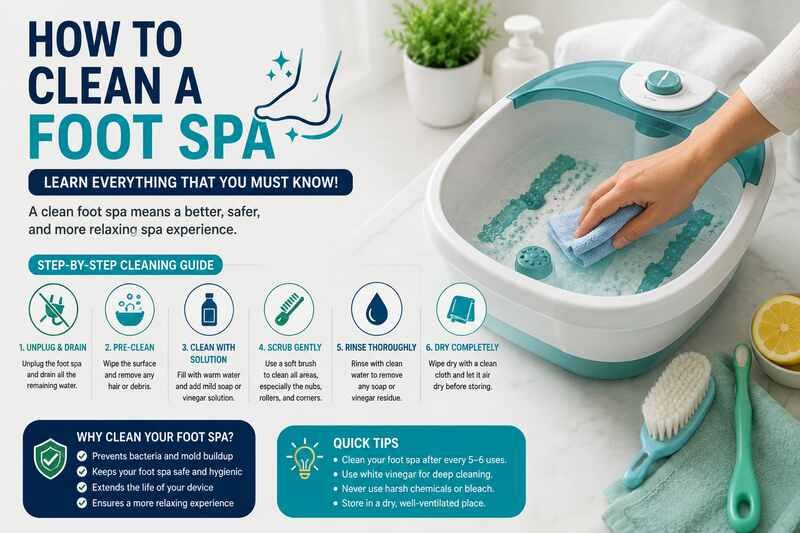

Learning how to clean a foot spa properly protects you from a real health risk, not just a cosmetic one. Outbreaks of non-tuberculous mycobacteria linked to dirty foot spas have been documented in U.S. nail salons for years. Leftover dirt, dead skin, and moisture on the basin surface create the perfect environment for bacteria to grow. This guide covers exactly how to clean and disinfect your foot spa, how often to do it, and what disinfectant to choose.
Key Takeaways
- Wash the basin with soapy water after every use, then disinfect it.
- Clean all removable parts separately at the end of each day.
- Home foot spas need weekly cleaning; salon foot spas need cleaning after every client.
- Use an EPA-registered hospital-grade disinfectant for the best protection.
- Never mix chlorine bleach with ammonia products, since this creates toxic gas.
How to Clean a Foot Spa: The Basics
The exact process for how to clean a foot spa depends on whether your machine circulates water or not. Most manufacturers include cleaning instructions in the manual. If you cannot find that manual, the general steps below will still get the job done safely.
In short, you need to wash the basin with soapy water after each use, then disinfect it. At the end of the day, remove and clean every removable part before disinfecting the whole appliance one more time.
Cleaning a Normal Non-Circulating Foot Basin
This simpler style of foot bath has no pump or circulation system. Follow these steps after each use.
After Each Use
- Step 1: Drain the basin right after use.
- Step 2: Remove any visible debris from the surface.
- Step 3: Scrub the basin with soapy water using a soft cloth.
- Step 4: Rinse thoroughly with clean water.
- Step 5: Fill the basin with water and add an intermediate disinfectant. Let it sit for about 10 minutes.
- Step 6: Drain the basin and rinse once more with clean water.
At the End of the Day
- Remove any disposable liners and give the basin a final clean.
- Dry the basin completely before storing it.
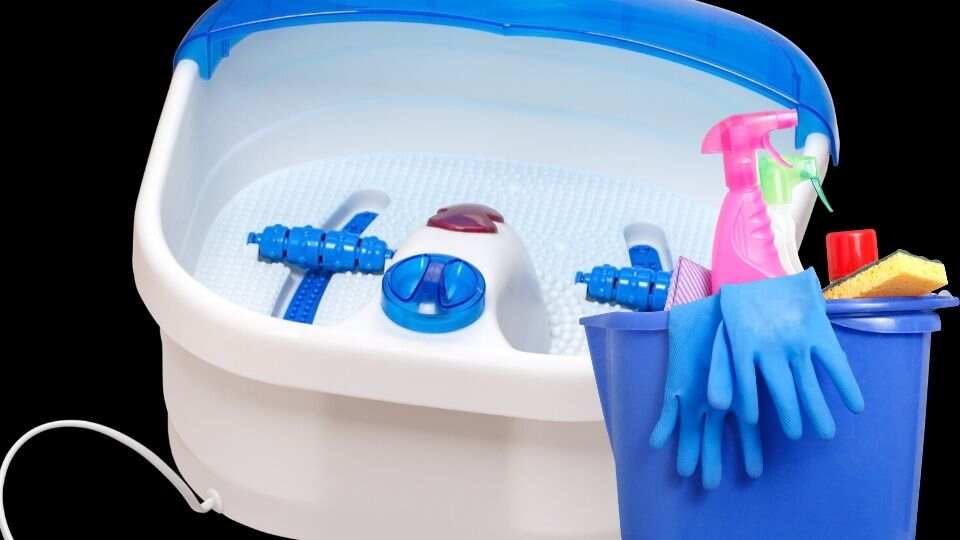

Cleaning a Circulating Foot Spa
A circulating foot spa has a pump system and several removable parts, so the process takes a few extra steps. Knowing how to clean a foot spa with a pump system matters most in salon settings, where these machines see heavy daily use.
After Each Use
- Step 1: Drain the basin and clear away visible debris.
- Step 2: Scrub the basin surface with detergent and water.
- Step 3: Rinse the surface thoroughly.
- Step 4: Fill the basin with water until it reaches the jet.
- Step 5: Add the correct amount of disinfectant to the water.
- Step 6: Run the circulation system for 10 minutes.
- Step 7: Turn off the machine and drain the basin again.
- Step 8: Dry the surface completely.
At the End of the Day
- Step 1: Remove all removable parts from the basin.
- Step 2: Soak those parts in hot soapy water.
- Step 3: Scrub each part with a brush to remove dirt.
- Step 4: Rinse everything with clean water.
- Step 5: Reattach all parts to the basin.
- Step 6: Fill the basin with hot water and detergent.
- Step 7: Circulate for 5 minutes, then rinse with clean water.
- Step 8: Refill with warm water and the correct amount of disinfectant.
- Step 9: Circulate for 10 minutes, then drain and rinse again.
- Step 10: Dry the surface completely before storing or reusing the machine.
Watch the Cleaning Process
Watch this official demonstration covering the full foot spa cleaning and disinfecting process from start to finish.

This video, produced by a state consumer affairs agency, breaks down the exact order salons follow for both whirlpool and non-whirlpool basins.
Why Cleaning a Foot Spa Matters So Much
Skipping regular cleaning creates a real infection risk, not just an unpleasant one. Dirt and dead skin cells left in a warm, moist basin give bacteria exactly what they need to multiply. A documented outbreak of nail salon whirlpool footbath infections in California traced dozens of skin infections directly back to poorly maintained foot spas.
Bacterial infections picked up this way can cause painful boils and sores. People with an existing skin infection can also spread it to others through a shared, unclean foot spa. Leftover Epsom salt, oils, and debris can also build up as scales on the basin walls, which can clog ventilation pores and reduce the machine’s performance over time.
How Often Should You Clean a Foot Spa?
How often you need to clean a foot spa depends heavily on how many people use it.
Foot Spas in a Salon
Clean the machine after every single client, without exception. At the end of the day, disinfect it again. Most salons also run a deeper weekly disinfection to keep bacteria levels low.
Home Foot Spas
If you are the only person using your home machine, cleaning it once a week is generally enough. Microorganisms can still grow inside the machine over time, even with just one user. If multiple family members share the same machine, clean it after every use instead.
Choosing the Right Disinfectant
Not every disinfectant is safe or effective for a foot basin. Some products are too harsh for skin contact, and any leftover residue can cause irritation for the next user. Look for these qualities when choosing a disinfectant.
- An EPA registration number printed clearly on the label.
- Hospital-grade effectiveness against organisms like Staphylococcus aureus, Salmonella enterica, and Pseudomonas aeruginosa.
- A label that specifically lists healthcare-related or salon-related uses.
- For single-user home machines, 5% chlorine bleach is an acceptable alternative.
The EPA’s guidance on preventing pedicure foot spa infections outlines these same standards in more detail and is a reliable source for salon owners and home users alike.

Tips for Better Cleaning Results
A few extra habits make the entire process more effective and easier to maintain over time.
- Read the disinfectant label carefully. Some products need a longer overnight soak once a week for full effectiveness.
- Check your foot spa’s manual. Ignoring manufacturer instructions can damage certain machines.
- Never mix chlorine bleach with ammonia. This combination produces toxic chloramine gas.
- Use hot water when rinsing. It typically produces better cleaning results than cold water.
- Clean promptly after each use. Waiting too long makes buildup much harder to remove later.
- Dry the basin fully. Leftover moisture increases the risk of water spots and rust.
Foot Spa Materials and How They Affect Cleaning
The material your foot spa is made from changes how easy the cleaning process actually is. Acrylic and hard plastic basins resist staining and scrubbing well, which makes daily cleaning faster. Basins with textured surfaces or hard-to-reach jets take longer to clean thoroughly, since dirt and residue can hide in small crevices.
If you are shopping for a new machine, consider how it holds up to frequent scrubbing and disinfecting before buying. A smooth, simple basin design with minimal seams generally makes learning how to clean a foot spa far less time-consuming, especially if you plan to use it daily or share it among multiple household members.
How Professional Salons Approach Foot Spa Hygiene
Licensed nail salons in the U.S. follow strict state board regulations for foot spa sanitation, and these rules exist for good reason. Inspectors regularly check that salons document their cleaning logs and use EPA-registered disinfectants correctly. Many states require salons to keep a written record showing exactly when each machine was cleaned and disinfected.
Home users are not held to the same regulatory standard, but following a similar routine offers real protection. Treating your home machine with the same seriousness a licensed salon applies to its equipment is one of the simplest ways to avoid the infection risks tied to poor foot spa hygiene.
Foot Care Beyond the Spa Itself
A clean foot spa is only part of a healthy pedicure routine. Choosing the right equipment matters too, since a well-designed machine is often easier to clean thoroughly. Our home foot spa buying guide compares models that balance relaxation features with easy-to-clean surfaces.
Healthy skin care after your foot soak also matters for keeping your feet in good condition. Our handheld back massager guide is worth a look if you want to extend that same relaxation routine beyond just your feet.
Common Mistakes to Avoid
- Only wiping the basin down. Wiping alone leaves behind dirt and microorganisms that only a full wash and disinfect cycle can remove.
- Using regular soap instead of proper cleaning products. Soap residue can clog the ventilation holes on machines that use a jet system.
- Skipping the drying step. A damp basin left in storage encourages bacterial and mold growth.
- Forgetting removable parts. Jets, liners, and filters need their own separate cleaning cycle.
- Reusing an old, cracked basin. Cracks and worn surfaces trap bacteria that regular cleaning cannot fully reach.
Frequently Asked Questions
Is wiping enough when learning how to clean a foot spa?
No. Wiping alone leaves behind dirt and bacteria. A full wash with detergent followed by disinfectant is necessary for real cleanliness.
Can I use regular soap to clean my foot spa?
You can, but it is not recommended for machines with a ventilation pipe, since soap residue can clog the jets and reduce performance.
Which is easier to clean, a normal or circulating foot spa?
A normal, non-circulating basin is generally simpler to clean. A circulating model takes more steps but often provides more even, thorough cleaning throughout the unit.
How do I know if my foot spa disinfectant is safe?
Check that it carries an EPA registration number and is labeled for hospital or healthcare-related use, which confirms it meets safety and effectiveness standards.
Can dirty foot spas really cause infections?
Yes. Documented outbreaks linked to poorly maintained salon foot spas have caused skin infections in multiple U.S. states, which is why proper cleaning matters so much.
How long should I let the disinfectant sit in the basin?
Most instructions call for about 10 minutes of contact time, though you should always follow the specific product label for exact timing.
Does the material of my foot spa affect how to clean a foot spa properly?
Yes. Smooth, seamless basins are generally easier to scrub thoroughly, while textured surfaces and tight jet openings can trap residue and require extra attention.
Do salons follow different rules than home users for foot spa cleaning?
Yes. Licensed salons must follow state board sanitation regulations and often keep cleaning logs, while home users can follow similar habits voluntarily for the same protection.
Bottom Line
Understanding how to clean a foot spa properly protects your health and keeps your equipment working well for years. Wash and disinfect the basin after every use, deep-clean removable parts daily, and choose an EPA-registered disinfectant. These habits take just a few extra minutes but make a real difference in preventing infection and extending the life of your machine.


Hi, I’m Mamon, the content creator behind this blog. I share my experience in blogging, WordPress, SEO, and affiliate marketing through honest product reviews, in-depth buying guides, and practical how-to articles. Every piece of content is thoroughly researched and written to help readers make informed decisions.