

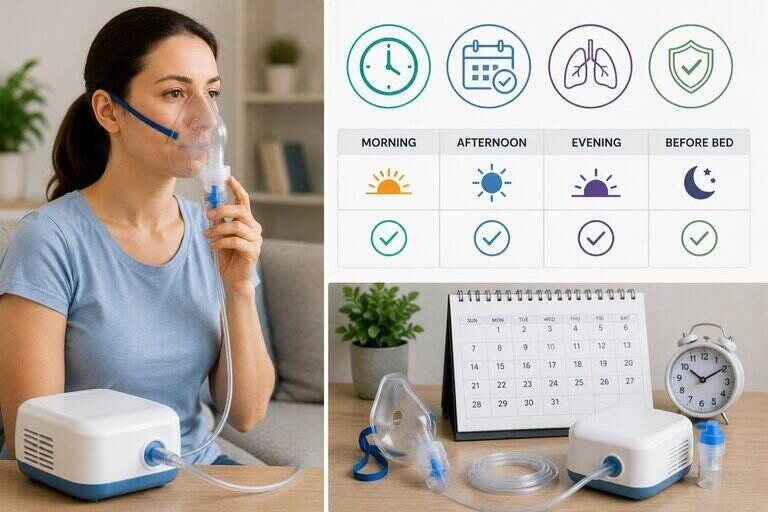

Patients managing asthma, COPD, and other respiratory conditions often rely on a nebulizer to deliver medicine straight to the lungs. But how often can you do a nebulizer treatment without risking side effects or an overdose? The honest answer depends heavily on which medication is in the cup. This guide breaks down typical frequency by medication type. It also covers the warning signs of overuse and when to call your doctor instead of reaching for another dose.
Key Takeaways
- Most rescue bronchodilators are used 3 to 4 times daily as needed, not on a fixed schedule.
- How often can you do a nebulizer treatment depends on the specific drug, your age, and your doctor’s instructions.
- Needing more sessions than prescribed is a sign your condition may be worsening. It is not a reason to self-increase your dose.
- Sterile saline sessions are generally more flexible than medicated ones.
- Jitteriness, a racing heart, or dizziness can signal you are using a bronchodilator too often.
Who Needs Nebulizer Treatment?
Before frequency even comes up, it helps to know who typically needs this kind of therapy. Doctors commonly prescribe it for:
- People living with asthma
- People with chronic obstructive pulmonary disease (COPD)
- People with bronchiectasis
- People with cystic fibrosis
Children with respiratory infections are also frequently prescribed nebulizer sessions. The mist form is often easier for a young child to use correctly than an inhaler.
Do You Need a Prescription to Use a Nebulizer?
The device itself is sometimes available without a prescription, but the medication that goes in it usually is not. A pharmacist can sell you the compressor and cup. A prescription is what determines what liquid goes inside and how often you use it. Different medications also pair with different nebulizer types. It is worth confirming compatibility with your doctor or pharmacist before you buy anything.


How Often Can You Do a Nebulizer Treatment?
This is the question that matters most, and the answer varies by medication class.
Rescue Bronchodilators
Short-acting bronchodilators like albuterol are typically used as needed, up to 3 to 4 times per day. According to Drugs.com, a standard adult dose is 2.5 mg delivered every 4 to 8 hours as needed. You should never exceed the frequency your prescription specifies. Each session usually takes 5 to 15 minutes to fully deliver the dose.
Scheduled Maintenance Medications
Some corticosteroids and long-term controller medications follow a fixed twice-daily schedule instead of an as-needed pattern. These are meant to prevent flare-ups over time. Skipping doses can reduce their effectiveness even if you feel fine that day.
Sterile Saline
Saline-only sessions are used to loosen mucus or add humidity. They are generally more flexible and can be used more often under a doctor’s guidance, since there is no active drug dose to track.
Antibiotics
Nebulized antibiotics follow whatever schedule your prescribing doctor sets, often once or twice daily for a defined course. These require strict adherence to the full course, not just until symptoms improve.
Why Frequency Depends So Much on the Drug
It helps to understand why there is no single answer to how often can you do a nebulizer treatment across every medication. A rescue bronchodilator works quickly and wears off within a few hours, which is exactly why it is dosed on an as-needed basis throughout the day. A maintenance corticosteroid works differently. It builds a protective effect over days and weeks of consistent use, so its dosing schedule is fixed rather than symptom-driven.
Antibiotics follow yet another logic. Stopping early, even if you feel better, can allow an infection to return or contribute to antibiotic resistance, so the full prescribed course matters more than how you feel on any given day. Saline sits at the opposite end of the spectrum, since it carries no drug dose to track and mainly affects comfort and mucus clearance rather than a measurable blood level. Keeping these differences straight is the real key to answering how often can you do a nebulizer treatment safely for your specific situation.
What Medications Are Used With a Nebulizer?
A few categories show up most often in nebulizer prescriptions.
- Bronchodilators: Open the airways to ease breathing. Commonly prescribed for asthma, COPD, and other respiratory conditions.
- Sterile saline solution: Helps loosen mucus and open airways so it is easier to cough up secretions.
- Antibiotics: Delivered directly to the lungs for severe respiratory infections that need targeted treatment.
- Corticosteroids: Reduce airway inflammation, often as part of a long-term management plan.
Your doctor may prescribe other medications depending on your specific diagnosis and how you respond to treatment.
Watch: How Nebulizers Work for COPD
This video from the American Thoracic Society explains how nebulized therapy fits into COPD management and what patients should expect.

Does a Nebulizer Work Like an Inhaler?
Both devices deliver medicine directly to the lungs, so the underlying goal is the same. A metered-dose inhaler releases a set amount of medication in a single puff. It is often paired with a spacer to help you inhale it correctly. A nebulizer instead turns liquid medicine into a mist over several minutes of normal breathing.
Many people find a nebulizer easier to use correctly. It does not require the same coordinated inhale-and-press timing an inhaler does. According to the American Lung Association, this makes nebulizers especially useful for young children and older adults who struggle with inhaler technique. The tradeoff is time. You need to sit still for 5 to 15 minutes per session, while an inhaler dose takes only seconds. Portable nebulizers exist, but they are still bulkier than a pocket-sized inhaler, so most people keep one at home and use an inhaler when they are out and about.
Signs You May Be Using Your Nebulizer Too Often
Needing your rescue bronchodilator more than the frequency your doctor prescribed is not a cue to simply add more sessions. It is a signal that your underlying condition may not be well controlled. Watch for these signs of overuse specifically:
- A racing or pounding heartbeat after a session
- Noticeable jitteriness, shakiness, or restlessness
- Headache or dizziness following treatment
- Needing relief more often than your prescribed schedule allows
Any of these warrant a call to your doctor rather than simply pushing through with extra sessions. Overusing a bronchodilator can mask a worsening flare-up while also raising your risk of side effects.


Dosage and Side Effects
Sticking to your prescribed dosage matters more than it might seem, especially because nebulizer treatment often brings fast, noticeable relief. That relief can make it tempting to reach for another session too soon. Most doctors advise against using a rescue bronchodilator more than 4 times a day without medical guidance.
Your exact dosage depends on your condition, age, weight, and how your body responds to the medication. Staying under a doctor’s supervision matters throughout treatment. Overuse raises the risk of side effects tied to whatever drug you are using. In rare cases, exceeding the recommended dose of certain medications can be serious. Never adjust your own dosage without checking with your doctor or pharmacist first.
What to Expect During Your First Few Treatments
If you are new to nebulizer therapy, your first sessions should happen under a doctor’s or pharmacist’s observation. This lets them confirm you are responding to the medication as expected and using the device correctly. Contact your doctor promptly if a treatment does not seem to be working. The same goes if your symptoms are not improving over the days following your first doses. This early check-in period is a good time to ask any lingering questions about technique, timing, or side effects.
Related Respiratory Health Guides
If you sometimes run out of medication between refills, our guide on how to use a nebulizer without medication covers safe alternatives. Keeping your equipment clean matters just as much as dosage. See our guide on how to clean a nebulizer like a pro for the full routine.
If you are still shopping for a device, our portable nebulizer machine reviews and handheld nebulizer review can help you compare options.
Frequently Asked Questions
How often can you do a nebulizer treatment for a child?
This depends entirely on the medication and your pediatrician’s instructions. Never increase a child’s dosage or frequency without checking with their doctor first.
What happens if I use my nebulizer more than prescribed?
You raise your risk of side effects like a racing heart, jitteriness, or headache. It can also mask a worsening condition that actually needs a different treatment plan.
Can I use saline in my nebulizer as often as I want?
Sterile saline is generally more flexible than medicated sessions. You should still confirm frequency with your doctor, especially if you are using it alongside other medications.
Is it safe to skip a scheduled nebulizer dose if I feel fine?
Not for maintenance or controller medications. These work best with consistent use, even on days you feel well. They help prevent flare-ups rather than treat them after the fact.
How long does a typical nebulizer session take?
Most sessions run 5 to 15 minutes, depending on the medication and how deeply you breathe during the treatment.
Can I do a nebulizer treatment right before bed?
Generally yes, as long as it fits your prescribed schedule. Ask your doctor if a specific medication is better taken earlier in the day due to its side effect profile.
What should I do if my nebulizer treatment isn’t relieving my symptoms?
Contact your doctor promptly. A treatment that stops working as expected can signal a worsening condition that needs a different approach.
Is there a maximum number of nebulizer treatments allowed per day?
It depends on the medication, but many rescue bronchodilators cap out around 4 times daily without further medical guidance. Always follow your specific prescription.
Does age change how often can you do a nebulizer treatment?
Yes. Dosing and frequency for children often differ from adult guidelines, even for the same medication. A pediatrician should set the schedule for any child using a nebulizer.
Can I switch between an inhaler and a nebulizer for the same medication?
Sometimes, but the dosing is not always identical between the two delivery methods. Confirm with your doctor before switching, since a straight one-to-one swap is not always safe.
Bottom Line
So, how often can you do a nebulizer treatment? For most rescue bronchodilators, the answer is 3 to 4 times daily as needed. Maintenance medications, saline, and antibiotics each follow their own schedule. Stick to what your doctor prescribes and watch for signs of overuse like a racing heart or jitteriness. Call your doctor if you find yourself needing relief more often than expected. Nebulizer therapy can be genuinely life-changing when used correctly. Staying within your prescribed frequency is what keeps it safe.


Hi, I’m Mamon, the content creator behind this blog. I share my experience in blogging, WordPress, SEO, and affiliate marketing through honest product reviews, in-depth buying guides, and practical how-to articles. Every piece of content is thoroughly researched and written to help readers make informed decisions.