


Why is your blood pressure higher in the morning? If you’ve checked your numbers right after waking up and noticed they run higher than they do later in the day, you’re not imagining it. For most people, this is a normal, predictable pattern, not a sign that something is wrong.

Your blood pressure isn’t a fixed number. It follows a daily rhythm tied to your body’s internal clock, and mornings are when that rhythm naturally pushes readings upward. Understanding why that happens, and when it crosses into something worth mentioning to your doctor, can save you a lot of unnecessary worry.
A lot of people search for why is your blood pressure higher in the morning after a single alarming reading, then never find a clear, sourced answer beyond generic reassurance. This guide walks through the actual physiology, what the research says about when a morning rise becomes a concern, and what you can realistically do about it.
Key Takeaways
- Blood pressure follows a natural daily rhythm and typically starts rising a few hours before you wake up, which is why morning readings are often higher
- A sharp “morning surge” is different from the normal rise, and research has linked a large surge to a meaningfully higher stroke risk in older hypertensive patients
- Normal blood pressure is below 120/80 mmHg; readings of 130/80 mmHg or higher are classified as high, per the American Heart Association
- Lifestyle factors like poor sleep, high salt intake, stress, and skipped medication doses can all make the morning rise more pronounced
Why is Your Blood Pressure Higher in the Morning?

Blood pressure follows a circadian rhythm, the same internal 24-hour clock that governs your sleep and wake cycle. According to Mayo Clinic, blood pressure “starts to rise a few hours before a person wakes up.” It continues climbing during the day and peaks around midday. Then it gradually drops in the late afternoon and evening, reaching its lowest point overnight while you sleep.

That pre-waking rise is your body preparing for activity. It isn’t a malfunction. It’s a built-in mechanism that primes your cardiovascular system before you even open your eyes.
The Science Behind the Morning Rise
As you transition from sleep toward waking, your body releases a cascade of hormones, including cortisol and adrenaline. Your sympathetic nervous system also becomes more active. These changes increase your heart rate and constrict blood vessels slightly, both of which raise blood pressure. This is a normal, expected part of waking up, and it happens to nearly everyone to some degree. Understanding why is your blood pressure higher in the morning starts with recognizing that your body is essentially arming itself for the demands of the day ahead, hours before you’re consciously aware of it.
The key word is “degree.” A modest morning rise is healthy and expected. A much steeper spike, known as a morning surge, is a different matter, and it’s one of the more well-studied patterns in cardiovascular research.

Morning Surge and Nondipping: When the Pattern Isn’t Normal
Doctors watch for two patterns beyond the normal morning rise. The first is nondipping, where blood pressure fails to drop by at least 10 percent overnight the way it should. The second is an early morning surge, a sharp jump in the two hours after waking. Both patterns matter. According to Mayo Clinic, “a rise in blood pressure overnight to early morning has been linked to an increased risk of heart disease.”
A well-known study led by Dr. Kazuomi Kario at Jichi Medical School followed 519 older hypertensive patients in Japan for an average of 41 months. Researchers calculated each patient’s morning surge by measuring average systolic pressure in the two hours after waking, then subtracting the lowest overnight reading. Patients with an excessive surge, defined as a jump of 55 mmHg or more, had a stroke rate of 19 percent during the study period. That compares to 7.3 percent among patients without a large surge, a stroke risk nearly three times higher for the high-surge group. The study also found a dose-response relationship: every additional 10 mmHg of morning surge raised stroke risk by about 22 percent.
That kind of finding is exactly why “why is your blood pressure higher in the morning” isn’t just a curiosity question for researchers. For most healthy adults, the everyday version of that rise is harmless. For people with poorly controlled hypertension, an exaggerated version of the same rise carries measurable risk.
Other Contributors to an Elevated Morning Reading
A large surge isn’t the only thing that can push your morning numbers up. Nocturnal hypertension, meaning blood pressure that stays elevated overnight instead of dipping, is often connected to conditions like obstructive sleep apnea, kidney disease, diabetes, or thyroid dysfunction. Shift work, heavy alcohol use, smoking, high salt intake, and chronic stress can all make mornings worse too. Medication timing plays a role as well. If a blood pressure medication wears off overnight, its effect can fade right around the time your body’s natural morning rise kicks in. The two effects stack on top of each other, which is one reason some people see a noticeably bigger jump than others.
Age is a factor too. Arteries naturally stiffen over time, and stiffer arteries tend to amplify pressure swings rather than absorb them smoothly. That’s part of why morning surge research, including the Kario study above, has focused heavily on older adults, even though the underlying circadian pattern is present at every age.
Does Morning Blood Pressure Affect Everyone the Same Way?
Not entirely. Younger, healthy adults with flexible arteries generally handle the normal pre-waking rise without any issue, and their overnight dip tends to be robust. Older adults, people with existing hypertension, and people with conditions like diabetes or chronic kidney disease are more likely to show a blunted overnight dip or an exaggerated morning surge. This is one reason doctors are more likely to recommend ambulatory blood pressure monitoring, a device worn for 24 hours that tracks the full daily pattern, for patients in these higher-risk groups rather than for every patient who asks why is your blood pressure higher in the morning.
What May Cause an Increase in Blood Pressure Overall?
Beyond the morning-specific factors, a few broader issues tend to show up again and again in people who notice consistently higher readings, morning or otherwise.
- Carrying excess weight puts extra strain on the cardiovascular system, and working toward a healthy BMI with your doctor’s guidance is one of the most effective long-term changes you can make
- Ongoing stress, whether from work, caregiving, or other pressures, keeps stress hormones elevated in ways that add to blood pressure over time
- Missed doses or inconsistent timing of blood pressure medication is one of the most common, and most fixable, reasons for unexplained spikes
- Diabetes and high blood pressure frequently occur together, and each one tends to make the other harder to manage
If you notice a consistent change in your numbers, the most useful first step is finding the underlying cause rather than guessing. Your doctor can help you sort through which of these factors, if any, applies to you.
Understanding Your Blood Pressure Numbers
It helps to know what the numbers actually mean once you’re tracking them. The American Heart Association defines normal blood pressure as below 120/80 mmHg. Elevated is 120 to 129 systolic with diastolic still under 80. Stage 1 hypertension starts at 130/80 mmHg. Stage 2 hypertension is 140/90 mmHg or higher. A reading above 180/120 mmHg is considered a hypertensive emergency. It warrants immediate medical attention, especially if it comes with chest pain, shortness of breath, or neurological symptoms like confusion or vision changes.
Knowing these categories makes your own morning readings far more meaningful. A morning number that’s a little higher than your midday number, but still under 130/80 mmHg, is very different from one that regularly crosses into Stage 2 territory.
How to Take an Accurate Morning Reading
A lot of unnecessary alarm comes from measurement technique rather than an actual health change. To get a reading that reflects your true morning number, sit quietly for about five minutes before measuring, with your back supported and feet flat on the floor. Keep your arm at heart level, resting on a table rather than held up in the air. Take your reading before coffee, exercise, or medication, since caffeine and physical activity both cause temporary spikes that have nothing to do with your circadian pattern. Measuring at roughly the same time each morning, and taking two readings a minute apart, gives you a far more reliable picture than a single number.
This matters because a single unusually high reading, taken with poor technique, can look like a dangerous surge when it’s actually a measurement artifact. A consistent pattern over several mornings, measured the same careful way, is what your doctor actually needs to see.
Tips to Manage Elevated Blood Pressure in the Morning
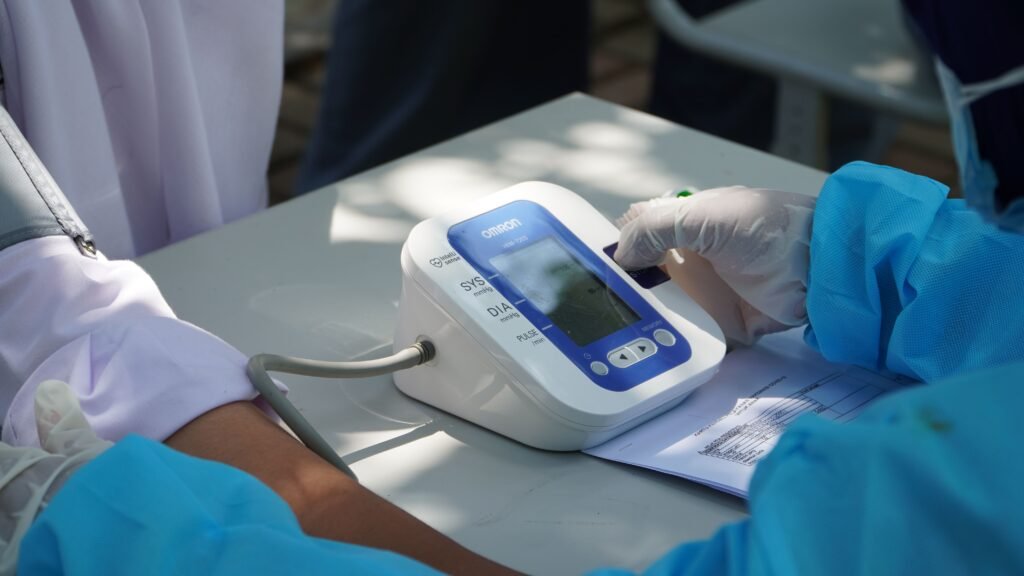
If your morning readings are consistently high, a few practical steps can help, alongside your doctor’s guidance rather than in place of it.

Track your numbers with a reliable home blood pressure monitor, using the same measuring routine each morning so you build a real pattern instead of a single snapshot. Pay attention to how you sleep, too. Your sleeping position can affect your blood pressure, and poor sleep quality in general tends to make morning readings worse. Cut back on sodium, particularly in the evening, and limit alcohol, which can disrupt the normal overnight dip.
Stay consistent with any prescribed medication. Ask your doctor whether the timing of your dose could be adjusted to cover the early morning hours better, since this alone resolves a meaningful share of unexplained morning spikes. Manage stress where you can, through exercise, breathing techniques, or simply talking to someone. Chronic stress compounds nearly every other factor on this list, so addressing it tends to help across the board rather than in isolation.
Between accurate measurement, consistent medication timing, and the lifestyle factors above, most people can meaningfully soften their morning numbers within a few weeks.
When to Talk to Your Doctor
Not every high morning reading needs an emergency response, but a few situations deserve a call to your doctor rather than a wait-and-see approach. Bring it up if your morning readings are consistently in Stage 2 territory, or if you notice a pattern of a very large jump right after waking. The same goes for high readings that come with symptoms like headache, chest discomfort, shortness of breath, or vision changes. A single high reading is rarely an emergency on its own, but a pattern is information your doctor needs to see.
Mention any change in your sleep, snoring, or daytime fatigue as well. These can point toward sleep apnea, one of the more common and treatable causes of an abnormal morning pattern, and treating it often improves morning blood pressure numbers directly.
Low readings can be just as important to understand as high ones. If you or someone you know has experienced a drop after a procedure, see our guide on what causes low blood pressure after surgery.
Conclusion
So, why is your blood pressure higher in the morning? For most people, it comes down to a normal circadian rhythm. Hormones and nervous system activity rise before you wake to prepare your body for the day, and blood pressure rises along with them. That’s expected and generally nothing to worry about. What matters more is whether that rise is modest, or whether it’s part of a sharper morning surge or a nondipping pattern overnight. Both of those patterns are linked to higher cardiovascular risk over time.
The most useful thing you can do is track your numbers consistently and understand where they fall against the American Heart Association’s categories. Bring any real pattern, not just a single reading, to your doctor. Your healthcare provider remains the best source of guidance for your specific situation, and a conversation now is a lot easier than dealing with a complication later.


Hi, I’m Mamon, the content creator behind this blog. I share my experience in blogging, WordPress, SEO, and affiliate marketing through honest product reviews, in-depth buying guides, and practical how-to articles. Every piece of content is thoroughly researched and written to help readers make informed decisions.