

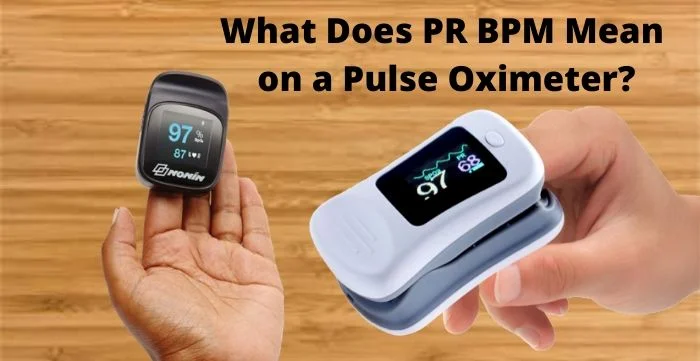

A pulse oximeter shows two numbers: SpO2, your blood oxygen saturation, and PR BPM, your pulse rate in beats per minute. Both matter, but they measure different things, and mixing them up is where a lot of confusion starts. This guide breaks down what PR BPM actually means, what counts as a normal range, and when a number outside that range is worth a call to your doctor rather than a moment of panic.
Key takeaways
- PR BPM stands for pulse rate in beats per minute — the number of times your heart beats each minute, as read by the oximeter’s light sensor.
- A normal resting heart rate for most adults is 60-100 bpm, per the American Heart Association; well-trained athletes often run lower, around 40-60 bpm.
- Normal SpO2 (blood oxygen saturation) is 95-100%; below 92% warrants a call to your provider, and below 88% needs immediate medical attention.
- Early signs of low blood oxygen include headache, shortness of breath, and bluish or grayish skin — these are worth acting on, not waiting out.
- A pulse oximeter is a screening tool, not a diagnostic one — get a still, warm fingertip and a few seconds for the reading to settle before trusting the number.
What does PR BPM mean on a pulse oximeter?
PR stands for pulse rate, and BPM stands for beats per minute — together, PR BPM is simply how many times your heart beats in one minute, as detected by the oximeter clipped to your fingertip. It’s the same measurement as your heart rate; a pulse oximeter just reads it optically alongside your oxygen saturation, using a light sensor rather than a stethoscope or an EKG lead.
According to the American Heart Association, a normal resting heart rate for most adults falls between 60 and 100 beats per minute. Within that range, lower is generally a sign of good cardiovascular fitness — well-trained athletes often sit at 40-60 bpm at rest, which is normal for them and not a cause for concern on its own.
- Below 60 bpm (bradycardia): Can be completely normal in fit, active people; in others it’s worth mentioning to a doctor, especially alongside dizziness or fatigue.
- 60-100 bpm: The typical resting range for most healthy adults.
- Above 100 bpm (tachycardia): Worth discussing with a doctor if it happens at rest and isn’t explained by stress, caffeine, fever, or activity.
Your pulse naturally shifts with body size, age, medication, temperature, and emotional state — a scare or a jolt of excitement will raise it briefly, and that’s expected. What matters more than any single reading is what’s typical for you: if your resting rate usually sits in the 60s and suddenly reads 95 at rest for no clear reason, that pattern change is more informative than the number itself.
Blood oxygen saturation (SpO2): the other number on the screen
SpO2 is the percentage of hemoglobin in your blood that’s carrying oxygen. For a healthy adult at sea level, a normal reading is 95-100%. Contact your healthcare provider if a reading is consistently 92% or lower, and seek immediate medical attention at 88% or lower — these thresholds hold regardless of what your pulse rate is doing at the same time, since the two numbers reflect different things happening in your body.
People with chronic lung conditions like COPD may run a somewhat lower baseline SpO2 and still be considered stable by their doctor — that’s a case where knowing your own normal matters more than the general range. For more detail on raising a low reading through breathing technique, posture, and lifestyle changes, see our guide on how to increase oxygen saturation levels.
Signs and symptoms of low blood oxygen
Low blood oxygen (hypoxemia) doesn’t always feel dramatic at first, and Cleveland Clinic notes that symptoms can appear suddenly or build gradually over weeks. Early signs to watch for include:
- Headache
- Shortness of breath, or a feeling of not getting a full breath
- Bluish or grayish tint to the skin, lips, or fingertips (cyanosis)
- Rapid heart rate as the body compensates
- Confusion or restlessness
- Unusual fatigue or lightheadedness
If you notice several of these together, or a pulse oximeter reading that’s dropped and stayed down, that’s a reason to contact a healthcare provider — and if breathing difficulty is severe, skin looks blue or gray, or someone becomes confused or unresponsive, treat it as an emergency and call for help right away.
Personal finger pulse oximeters
Fingertip pulse oximeters brought a technology once mostly confined to hospitals and clinics into everyday home use, making it easy for people managing heart or lung conditions — including COPD and asthma — to check their own readings without a clinic visit. They’re a genuinely useful screening tool, but the emphasis is on screening: a home reading is a starting point for a conversation with your doctor, not a diagnosis on its own.
Limitations of pulse oximeters
Pulse oximeters are useful, but they have real limits worth knowing before you rely on one. Cold fingers, movement, poor circulation, nail polish, and even skin tone can all affect accuracy, and consumer devices are not held to the same validation standard as hospital-grade equipment. If you have ongoing breathing difficulty, chest pain, or a reading that doesn’t match how you feel, a pulse oximeter reading isn’t a substitute for an in-person evaluation — talk to a doctor rather than waiting on the device.
What is an irregular pulse?
An irregular pulse — sometimes noticeable as skipped beats, fluttering, or an uneven rhythm — is broadly called an arrhythmia. It’s sometimes felt right after exercise or during recovery from illness, and an occasional irregular beat isn’t automatically dangerous. That said, a persistent irregular pulse, especially alongside dizziness, chest discomfort, or shortness of breath, needs evaluation by a doctor; a pulse oximeter can flag that something feels off, but it can’t diagnose the cause.
Factors affecting your PR BPM reading
A number of everyday factors shift your pulse rate reading, and most are completely normal:
- Activity level: Rates rise during and shortly after exercise or exertion.
- Emotional state: Stress, excitement, or anxiety can temporarily raise pulse rate.
- Temperature: Heat and fever both tend to increase heart rate.
- Medications: Beta-blockers and some other medications lower resting heart rate; stimulants can raise it.
- Fitness level: A more efficient, well-conditioned heart often beats slower at rest.
- Body position: Standing up quickly can briefly raise your reading compared to sitting or lying down.
If your blood pressure runs persistently high, that’s a separate concern from your pulse rate and is worth its own conversation with a doctor — the two numbers are related but not interchangeable, and neither one substitutes for the other.
How to use a pulse oximeter at home
- Sit down and rest for a few minutes before taking a reading — a reading taken right after moving around will run high.
- Warm your hands if they’re cold; poor circulation in cold fingers can throw off the reading.
- Remove nail polish or artificial nails if possible, since they can interfere with the sensor’s light signal.
- Clip the sensor onto your fingertip and hold still, keeping your hand at heart level.
- Wait 10-30 seconds for the reading to stabilize before recording the number.
- Take a few readings across the day rather than relying on a single one, and note any pattern change from your usual baseline.
Target heart rate vs. maximum heart rate
Your target heart rate is the zone you aim for during exercise to get a cardiovascular benefit without overexertion — the American Heart Association recommends roughly 50-85% of your maximum heart rate, depending on your fitness goals and how hard you want to work.
Your maximum heart rate is commonly estimated as 220 minus your age, though this is a population-level formula and can vary meaningfully between individuals. For example, a 40-year-old’s estimated maximum would be about 180 bpm, putting their moderate-intensity target zone at roughly 90-153 bpm.
Pulse rate and blood pressure: what’s the difference?
These two terms get used interchangeably, but they measure different things. Blood pressure is the force of blood pushing against your artery walls, expressed as two numbers (like 120/80 mmHg). Pulse rate is simply how many times your heart beats per minute. A high pulse rate doesn’t necessarily mean high blood pressure, and vice versa — pulse tends to rise with excitement or exertion, while blood pressure is influenced by a broader set of factors and doesn’t always move in step with it.
How to check your pulse rate at home without a device
You don’t need an oximeter to check your pulse. Common pulse points include the wrist (radial pulse), the side of the neck (carotid pulse), the inside of the elbow, and the top of the foot. To check manually: place two fingers (not your thumb, which has its own pulse) over one of these points, count the beats for 30 seconds, and multiply by two to get your beats per minute.
When to seek medical care
Most pulse and oxygen readings outside the “typical” range are not emergencies, but a few situations do call for prompt medical attention:
- SpO2 reading of 88% or lower
- SpO2 consistently at or below 92%, even without other symptoms
- Shortness of breath that’s new, severe, or getting worse
- Chest pain or pressure
- Confusion, fainting, or bluish/grayish skin, lips, or fingertips
- A resting pulse consistently above 100 bpm or below 60 bpm with no clear explanation (not an athlete, no medication that would explain it)
If you’re experiencing any of the more severe symptoms above — especially trouble breathing, chest pain, or confusion — treat it as an emergency and call for help rather than waiting to see if it passes.
Conclusion
PR BPM is simply your pulse rate in beats per minute, one of two numbers your pulse oximeter shows alongside your blood oxygen saturation (SpO2). For most healthy adults, a normal resting pulse falls between 60 and 100 bpm, and a normal SpO2 sits between 95 and 100%. Knowing your own typical baseline, understanding what the numbers mean, and recognizing the real warning signs of low oxygen — headache, breathlessness, bluish skin, confusion — will serve you far better than memorizing a single “normal” number. If you’re monitoring regularly, our pulse oximeter buying guide and guide to reading your device correctly cover the practical side in more depth.
This article is for general educational purposes and isn’t a substitute for individualized medical advice. If you have concerns about your pulse rate, oxygen saturation, or any symptoms discussed here, talk to a healthcare provider. If you experience severe shortness of breath, chest pain, confusion, or bluish lips or skin, seek immediate medical attention.
Sources
- American Heart Association — Target Heart Rates and normal resting heart rate guidance
- Cleveland Clinic — Hypoxemia: Causes, Symptoms, Diagnosis and Treatment
- MedlinePlus (NIH) — Pulse Oximetry: Medical Test overview and reference ranges


Hi, I’m Mamon, the content creator behind this blog. I share my experience in blogging, WordPress, SEO, and affiliate marketing through honest product reviews, in-depth buying guides, and practical how-to articles. Every piece of content is thoroughly researched and written to help readers make informed decisions.