


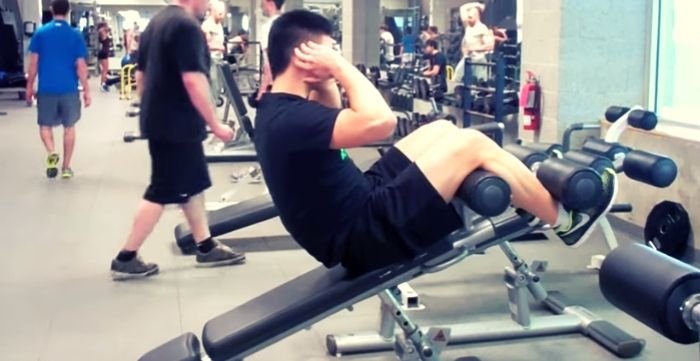
So, what does decline bench work that a flat or incline bench doesn’t? Mainly your lower pectoral fibers, plus your triceps and front shoulders as stabilizers. The decline angle, typically 15 to 30 degrees head-down, shifts the resistance curve so your lower chest takes on more of the load. It’s one of the most overlooked pieces of equipment in a home gym, but it fills a real gap that flat and incline benches leave open. Many lifters own a flat bench and stop there, assuming one angle covers “chest day” completely. This guide covers exactly which muscles the decline bench targets, how to set it up safely, and the mistakes that turn a good exercise into an injury risk.
Key Takeaways
- A decline bench primarily works the lower (sternal) head of the pectoralis major, with triceps and anterior deltoids assisting.
- Set the bench between 15 and 30 degrees decline; steeper angles add little extra benefit and increase blood-pressure strain on your head.
- ACE Fitness research found barbell bench press variations produce the highest pec activation among common chest exercises.
- Always use a spotter or safety arms your first few sessions on a decline bench, since re-racking from a head-down position is harder to bail out of.

What Muscles Does the Decline Bench Work?
1. Pectoralis Major (Lower Chest)
The pectoralis major is the large fan-shaped muscle covering your chest, made up of a clavicular (upper) head and a sternal (lower) head. Both heads pull your arms toward the midline of your body, but the decline angle biases the load toward the sternal head specifically, since gravity pulls the resistance down and across your lower ribcage rather than straight down onto your upper chest the way a flat or incline press does.
2. Triceps
Your triceps sit on the back of your upper arm and get their name from their three heads, one connecting to the shoulder blade and two to the upper arm bone. They’re responsible for straightening your elbow during the press, so a narrower grip on the decline bench recruits more triceps and less chest.
3. Anterior Deltoids
The deltoid muscle wraps around your shoulder in three heads: front, middle, and rear. During a decline press, the anterior (front) head works as a stabilizer, helping control the bar path even though the chest and triceps do most of the pushing.
4. Serratus Anterior
Often overlooked, the serratus anterior runs along your ribs beneath your armpit and helps stabilize your shoulder blade against the bench throughout the lift. A weak serratus anterior is a common reason lifters feel unstable on a decline bench even when their chest strength is otherwise solid.
Decline vs. Flat vs. Incline: Which Should You Use?
| Bench Angle | Primary Emphasis | Best For |
|---|---|---|
| Decline (15-30°) | Lower (sternal) pec | Lower-chest definition, pressing power off the chest |
| Flat (0°) | Overall pec, most total muscle activation | General chest strength, the “gold standard” compound lift |
| Incline (30-45°) | Upper (clavicular) pec, front delts | Upper-chest development, shoulder involvement |
None of these benches replaces the others. Relying on only flat and incline work, as many lifters do, leaves the lower chest under-trained relative to the rest of the muscle. Rotating all three angles across your training week builds more balanced, complete chest development.
If you’re only going to own one adjustable bench, look for one that moves through all three positions rather than buying separate flat, incline, and decline units. That flexibility matters more for most home gyms than owning a single dedicated decline bench, since space is usually the limiting factor.
How to Perform a Decline Bench Press
Set the bench to a 15 to 30-degree decline and hook your legs securely under the padded rollers before you touch the bar. If this is your first time using a decline bench, use a Smith machine or bring a spotter, since bailing out of a failed rep is harder from a head-down position than from flat or incline.
Load the bar with a weight you can control for the full set, and make sure it sits within easy reach once you’re lying back. Position your back in the middle of the padding and your head at the top, with your shoulder blades pulled down and back to create a stable base against the bench.
Grip the bar just outside shoulder width, a few inches narrower than you might use for a flat bench press. Unrack the bar, take a deep breath, and lower it under control to your lower chest. If you’re new to the decline position, have a spotter help you unrack and guide the first rep down.
Drive the bar back up while exhaling, keeping your elbows tracking over your wrists rather than flaring out wide. Repeat for your target reps, then ask your spotter to help re-rack the bar rather than trying to muscle it back yourself if you’re fatigued.


Watch: Decline Bench Press Form Breakdown
Seeing the setup, grip width, and bar path in real time makes the head-down positioning far less intimidating than it looks on paper.

How to PROPERLY Decline Bench Press (DO THIS)
Why Add Decline Bench Training to Your Routine?
The decline bench earns its place because of what it isolates, not because it replaces other angles. Your lower pecs respond to the downward bar path in a way that flat and incline pressing simply can’t replicate as efficiently. For lifters chasing a fuller, more defined chest rather than just raw pressing numbers, skipping the decline angle leaves visible development on the table. It also carries over to sport-specific pushing movements that involve pressing downward and away from the body, which flat pressing alone doesn’t train as directly. Because the decline angle shortens the range of motion slightly compared to flat bench, many lifters can also handle marginally heavier loads on decline presses, which some use as a confidence-building or overload variation within a broader pressing program.
Decline Bench Press: Sets, Reps, and Programming
For general strength and hypertrophy, 3 sets of 8 to 12 reps with a controlled tempo works well for most lifters, similar to standard chest-press programming. If you’re using decline bench press as an accessory to your main flat bench work, place it after your primary lift while you still have the technical focus to control the movement safely. Beginners should spend their first few weeks with lighter weight to groove the setup, the leg hook, the grip width, and the unrack, before adding significant load. As with any pressing variation, progressive overload (small, consistent weight or rep increases over weeks) drives most of the long-term strength and size gains, not any single “perfect” rep scheme.
Common Decline Bench Mistakes to Avoid
Skipping a spotter for your first few sessions is the most common and most dangerous mistake. If you’re not using a Smith machine or safety arms, improper lifting can cause real injury to your arms, shoulders, or chest, since bailing out from a decline position is mechanically harder than from flat or incline.
Rushing the bar off your chest, especially with heavier loads, raises your risk of injuring the sternum and shoulder joints. Slow, controlled lifting on both the way down and the way up protects your joints far better than a fast, bouncy rep does.
Loading more weight than your form can handle is another frequent error. Match the resistance to your current strength level so you keep full range of motion rather than cutting reps short to move heavier plates.
Poor breathing technique adds unnecessary strain. Mayo Clinic’s weight training guidance recommends inhaling as you lower the weight and exhaling as you lift, which helps regulate the pressure changes that come with an inverted position.
Finally, staying on the decline bench too long without adjusting rest between sets can spike blood pressure to your head uncomfortably. If you feel lightheaded, sit up slowly and rest before your next set.
Decline Bench FAQs
What is the ideal decline bench angle?
Most lifters get the full benefit at 15 to 30 degrees. Steeper angles add discomfort and blood-pressure strain without meaningfully increasing lower-chest activation.
Is decline bench press harder than flat bench?
Not inherently harder, but it feels different since gravity pulls the bar toward your lower ribcage instead of straight down, and unracking or bailing from a head-down position takes more coordination.
Do I need a spotter for decline bench press?
Yes, especially for your first several sessions or when lifting near your max. A Smith machine with safety catches is a reasonable substitute if a spotter isn’t available.
Can beginners do decline bench press safely?
Yes, as long as you start with a manageable weight, keep a spotter nearby, and focus on control rather than load. Check out our best workout bench guide if you’re deciding which bench to buy.
How often should I train decline bench press?
Once or twice a week is enough for most lifters, rotated with flat and incline pressing so your whole chest develops evenly rather than overloading one angle.
Does decline bench press build a bigger chest than flat bench?
Not by itself. It builds the lower chest specifically, so combined with flat and incline work it contributes to a fuller-looking chest overall, rather than outperforming flat bench as a standalone exercise.
Final Thoughts
What does decline bench work help you achieve, ultimately? A more complete chest, better lower-pec development, and a pressing angle that flat and incline benches simply don’t cover. Used alongside flat and incline work, it rounds out a strength program that would otherwise leave part of your chest undertrained. Just respect the setup: use a spotter early on, control your reps, and match the weight to your level.


Hi, I’m Mamon, the content creator behind this blog. I share my experience in blogging, WordPress, SEO, and affiliate marketing through honest product reviews, in-depth buying guides, and practical how-to articles. Every piece of content is thoroughly researched and written to help readers make informed decisions.