

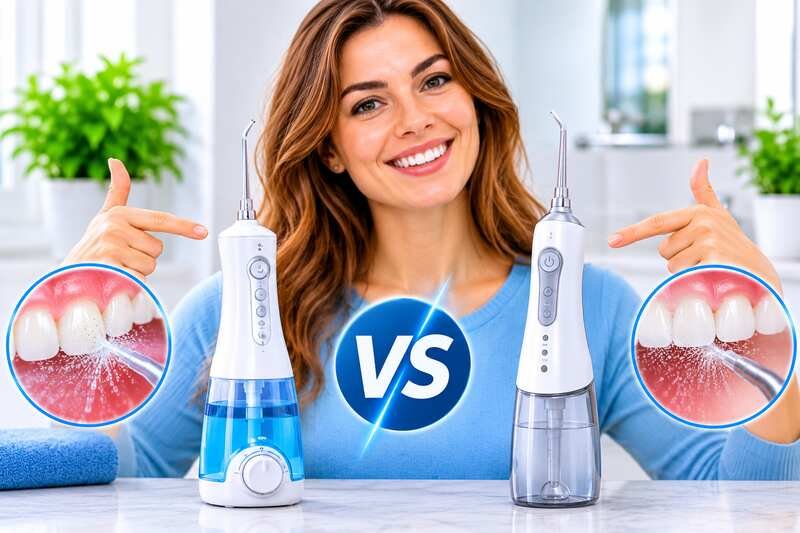
Waterpik and Philips Sonicare are the two biggest names in home water flossing in the U.S. Waterpik has been making oral irrigators since the 1960s. Philips Sonicare entered the category much later with its Power Flosser line and a different idea, Quad Stream technology. If you are deciding between them, the Waterpik vs Sonicare Power Flosser choice comes down to pressure control, tips, design, price, and the research behind each brand.
This comparison looks at the countertop and cordless models from both brands side by side, using published specs and clinical data, so you can pick the right one for your mouth and budget.
Key Takeaways
- In the Waterpik vs Sonicare Power Flosser comparison, both brands make effective countertop and cordless water flossers.
- Waterpik offers more tip types, a published 10 to 100 PSI pressure range on its countertop models, and decades of clinical research.
- Sonicare’s Quad Stream nozzle spreads water into four streams, which many people find gentler and faster.
- Countertop models from both brands have 10 pressure settings. Sonicare’s cordless 3000 has 3 intensities and a 250 ml reservoir.
- Choose Waterpik for braces, implants, and specialty tips. Choose Sonicare if you want a gentler wide stream and already use Sonicare products.
Waterpik vs Sonicare Power Flosser at a Glance
Here is a quick look at the flagship countertop models from each brand: the Waterpik Aquarius and the Sonicare Countertop Power Flosser 7000.
| Feature | Waterpik Aquarius (WP-660) | Sonicare Power Flosser 7000 (HX3911) |
|---|---|---|
| Type | Countertop | Countertop |
| Pressure settings | 10 | 10 |
| Published pressure range | About 10 to 100 PSI | Not disclosed |
| Modes | Floss and Hydro Pulse massage | 4 modes: Clean, Deep Clean, Sensitive, Massage |
| Reservoir | 22 oz, about 90 seconds | 600 ml (about 20 oz) |
| Tips included | 7 | 3 to 4, depending on the bundle |
| Signature tech | Pulsing jet, 1,400 pulses per minute | Quad Stream X-shaped nozzle |
| Timer | 1-minute timer with 30-second pacer | Built-in pacer |
| ADA Seal | Yes | Check current listing |
Specs come from manufacturer and retailer listings. Philips lists the Power Flosser 7000 with 4 modes, 10 pressure settings, and a 600 ml tank. Model numbers and bundles change, so confirm the details before you buy.

Pressure and Power
Pressure is where the Waterpik vs Sonicare Power Flosser comparison gets interesting.
Waterpik publishes its pressure range. The Aquarius and similar countertop units offer 10 settings from about 10 to 100 PSI. That gives you a gentle low end for sensitive gums and enough power for braces and implants.
Philips does not publish PSI figures for the Power Flosser. Instead, it uses 10 intensity levels and focuses on how the water is delivered. Independent reviewers have noted that the lowest and highest settings feel broadly similar to other countertop flossers.
In practice, both brands give you enough range for most users. If you want to know exact numbers, Waterpik is more transparent. For more on choosing a level, see our guide to water flosser pressure settings.
Quad Stream vs Single Jet: How the Water Is Delivered
The biggest design difference is the nozzle.
Waterpik uses a single, focused jet that pulses about 1,400 times per minute. It concentrates water in one spot, which is ideal for flushing between tight teeth, around brackets, and into specific problem areas.
Sonicare offers an F1 Standard nozzle and its signature F3 Quad Stream nozzle. The Quad Stream nozzle splits water into four streams in an X shape. Philips says this covers more surface area with each pass, so you can clean faster with less precise aiming.
| Factor | Waterpik single jet | Sonicare Quad Stream |
|---|---|---|
| Stream shape | One focused jet | Four wide streams in an X |
| Feel | More concentrated | Softer, more spread out |
| Aiming | Requires more precision | More forgiving |
| Best for | Braces, implants, tight spots | Beginners, sensitive gums, speed |
If you are new to water flossing or have tender gums, Quad Stream can feel gentler. If you have braces or complex dental work, a focused jet and specialty tips usually give you more control.
Tips and Attachments
Waterpik clearly wins on tip variety. The Aquarius comes with seven tips, and the brand sells many more, including:
- Classic Jet tips for everyday use
- Orthodontic tips for braces
- Plaque Seeker tips for implants, crowns, and bridges
- Pik Pocket tips for periodontal pockets
- Toothbrush tips and a Tongue Cleaner
Sonicare keeps things simpler, with F1 Standard, F2 Comfort, and F3 Quad Stream nozzles on the countertop model. That covers most everyday needs but offers fewer specialty options.
If you need a specific tip for braces or implants, Waterpik is the safer choice. Read our guide to water flosser tips to see which ones you might need.
Clinical Evidence and ADA Acceptance
Both brands make claims backed by their own studies, but Waterpik has a much longer research record.
Waterpik water flossers have been studied in dozens of clinical trials. A 2013 study found that a Waterpik removed 74.4% of plaque compared with 57.7% for string floss. A 2008 study of teens with braces found that a Waterpik with an orthodontic tip removed about three times more plaque than string floss. Note that many of these studies were funded by Waterpik.
Waterpik also holds the American Dental Association Seal of Acceptance on several models, including its cordless water flossers.
Philips says the Sonicare Countertop Power Flosser 7000 is up to three times as effective as floss at removing plaque along the gumline, and up to 180% more effective than floss at improving gum health in two weeks, based on its own studies. These results are promising but come from a shorter research history.
For a broader look at the evidence, read our guide on whether water flossers work.

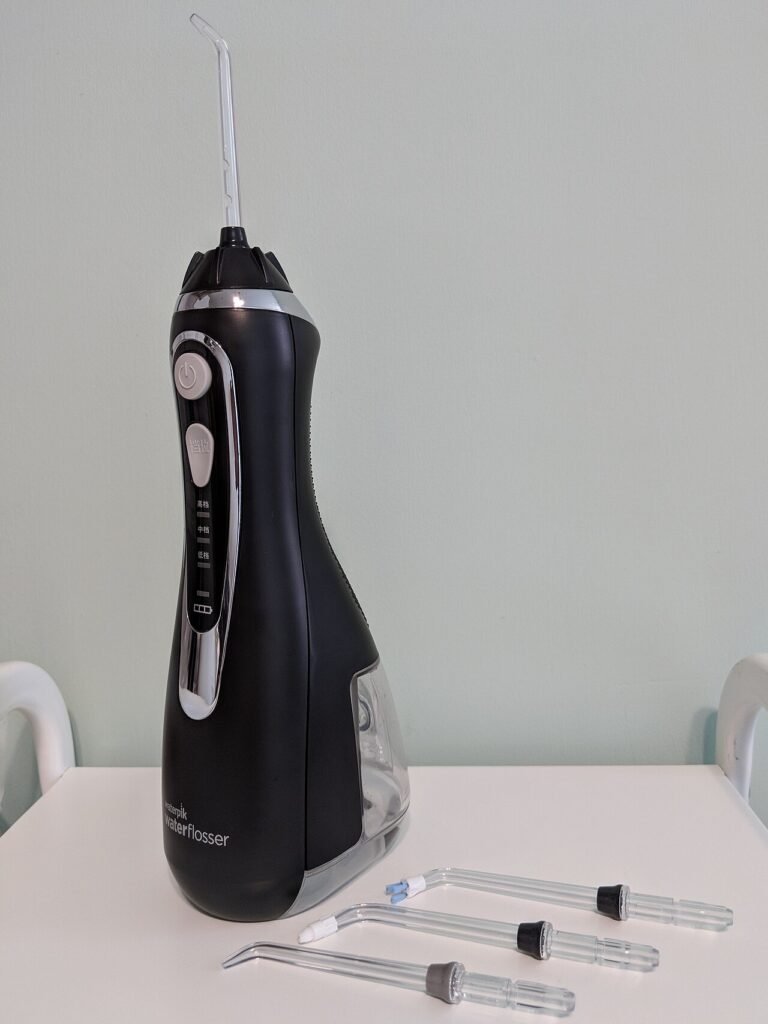
Photo: Hal 0005 / Wikimedia Commons (CC BY-SA 4.0)
Cordless Models Compared
The Waterpik vs Sonicare Power Flosser matchup also extends to cordless models, which are popular for small bathrooms and travel.
| Feature | Waterpik Cordless (e.g., Cordless Advanced) | Sonicare Cordless Power Flosser 3000 |
|---|---|---|
| Pressure settings | 3 on most models | 3 intensities |
| Modes | Varies by model | 2 modes: Clean and Deep Clean |
| Reservoir | Smaller, varies by model | 250 ml, about 60 seconds |
| Nozzles | Multiple Waterpik tips | F1 Standard and F3 Quad Stream |
| Charging | Varies, some magnetic | USB charging |
| Battery life | Varies by model | Up to about 14 days per charge |
| ADA Seal | Yes, on Waterpik cordless models | Check current listing |
The Sonicare cordless model’s 250 ml reservoir is enough for a full 60-second clean without stopping to refill, which is a common complaint with smaller cordless tanks. Waterpik’s cordless lineup offers more tip compatibility and, on some models, ADA acceptance.
See our full list of the best water flosser cordless models for more options.
Design, Noise, and Ease of Use
Waterpik Aquarius has a classic look with a large dial, a removable, top-rack dishwasher-safe reservoir, and tip storage. It works well but takes up some counter space and can be fairly loud.
Sonicare Power Flosser 7000 has a modern, compact design with a magnetic handle dock and auto shut-off. Philips designed it to look tidy on the counter. Many users say it is easier to handle without making a mess.
Both require you to lean over the sink and close your lips around the tip. Neither is completely quiet. If design and counter appearance matter to you, Sonicare has the edge. If you want simple, proven controls, Waterpik is easy to learn.
Price and Ongoing Costs
Prices change often, so treat these as general patterns rather than exact figures:
- Countertop Waterpik models usually cost less than the Sonicare Power Flosser 7000.
- Sonicare’s cordless 3000 and Waterpik’s cordless models are often similarly priced.
- Replacement tips from both brands cost a few dollars each. Waterpik tips are widely available, while Sonicare nozzles are sometimes described as more expensive.
Remember to factor in tip replacement. Waterpik recommends replacing bristle tips every three months and jet tips every six months. Plan on similar replacement schedules for Sonicare nozzles.

Photo: electricteeth / Wikimedia Commons (CC BY 2.0)
Modes Compared: What Each Setting Does
Beyond pressure, both brands offer different modes that change how the water pulses.
| Brand and model | Mode | What it does |
|---|---|---|
| Waterpik Aquarius | Floss | Standard pulsing jet for daily cleaning |
| Waterpik Aquarius | Hydro Pulse massage | Alternates pulses to stimulate gums |
| Sonicare 7000 | Clean | Constant flow for everyday cleaning |
| Sonicare 7000 | Deep Clean | Pulse Wave pattern that pauses between teeth |
| Sonicare 7000 | Sensitive | Gentler flow for tender gums |
| Sonicare 7000 | Massage | Pulsing flow to stimulate gums |
| Sonicare 3000 cordless | Clean and Deep Clean | Two modes with three intensities |
Sonicare’s dedicated Sensitive mode is a plus if your gums are tender. Waterpik covers the same need with its very low 10 PSI starting point and a massage mode.
Maintenance and Cleaning
Both brands need similar care to keep working well:
- Empty the reservoir after each use so water does not sit and grow bacteria.
- Rinse tips and nozzles under warm water and let them air-dry.
- Descale monthly if you have hard water. Run a mix of warm water and white vinegar through the unit, then flush with plain water.
- Clean the reservoir weekly. The Waterpik Aquarius reservoir is top-rack dishwasher safe. Check your Sonicare manual before using a dishwasher.
- Replace tips on schedule. Worn tips spray unevenly and clean less well.
Warranty and Support
Warranty terms vary by model and retailer. Philips lists a 2-year limited warranty on the Cordless Power Flosser 3000. Waterpik warranties typically range from one to two years, depending on the model. Register your product after purchase and keep your receipt, since warranty claims often require proof of purchase. Buying from an authorized U.S. retailer also helps make sure your warranty is valid.
Waterpik vs Sonicare Power Flosser: Pros and Cons
| Brand | Pros | Cons |
|---|---|---|
| Waterpik | More tips, published PSI range, long research record, ADA Seal on several models, usually cheaper | Louder, bulkier design, single jet needs more precise aiming |
| Sonicare | Quad Stream covers more area, dedicated Sensitive mode, sleek design, magnetic dock | Fewer tip options, PSI not disclosed, shorter research history, often pricier |
How We Compared Them
To keep this Waterpik vs Sonicare Power Flosser comparison fair, we focused on factors that affect daily use and results:
- Published specs from manufacturer and major U.S. retailer listings
- Number of pressure settings and whether pressure is disclosed
- Tip and nozzle options for different dental needs
- Clinical research and ADA Seal of Acceptance status
- Reservoir size and flossing time per fill
- Design, ease of use, and ongoing costs
We did not accept payment from either brand, and this article contains no affiliate links.
Which One Should You Choose?
Use this guide to settle the Waterpik vs Sonicare Power Flosser decision for your situation.
| Your situation | Better pick | Why |
|---|---|---|
| Braces | Waterpik | Orthodontic tip and focused jet |
| Dental implants or bridges | Waterpik | Plaque Seeker tip |
| Gum pockets or periodontal care | Waterpik | Pik Pocket tip |
| Sensitive gums or beginners | Sonicare | Wider, gentler Quad Stream |
| Want the fastest clean | Sonicare | Quad Stream covers more area |
| Family with different needs | Waterpik | Seven color-coded tips |
| Already use a Sonicare toothbrush | Sonicare | Matching ecosystem and design |
| Want the strongest research record | Waterpik | Longer history of clinical studies |
| Tight budget | Waterpik | Usually lower price |
If you have braces, start with our main guide to the best water flosser for braces. For a broader list, see our roundup of water flossers recommended by dentists.
Philips Water Flosser vs Waterpik: Common Questions From Buyers
Many shoppers phrase this comparison as Philips water flosser vs Waterpik. The answers are the same, since Sonicare is Philips’ oral care brand. Here are the questions buyers ask most often.
Is Sonicare Power Flosser as good as Waterpik?
For most people, yes. Both clean effectively when used daily with good technique. Waterpik offers more tips and more published research. Sonicare offers a gentler wide stream and a sleeker design.
Which is gentler on gums?
Many users find the Sonicare Quad Stream nozzle gentler because it spreads the water over a wider area. Both brands offer low settings for sensitive gums. See our guide to the water flosser for sensitive gums.
Can I use Waterpik tips on a Sonicare Power Flosser?
No. Tips are not interchangeable between brands. Always buy nozzles made for your model.
Which is better for braces?
Waterpik is usually the better pick for braces because of its orthodontic tip and strong research in orthodontic patients. Learn more in our guide on using a water flosser with braces.
Can I use mouthwash in either one?
Waterpik says its countertop models can be used with mouthwash, but check your manual. Always rinse with plain water afterward. Read our guide on using mouthwash in a water flosser.
Do I still need to brush?
Yes. Both are meant to clean between teeth and along the gumline, not to replace brushing. Use one alongside twice-daily brushing.
Conclusion
In the Waterpik vs Sonicare Power Flosser comparison, there is no wrong choice for everyday cleaning. Waterpik wins on tip variety, transparent pressure specs, price, and research history, which makes it the better pick for braces, implants, and gum pockets. Sonicare wins on design and its gentle Quad Stream nozzle, which suits beginners, sensitive gums, and anyone who already uses a Sonicare toothbrush.
Whichever you choose, the most important factor is using it every day. Learn the right technique in our guide on how to use a water flosser.
Disclosure: Prices and specs change frequently. Check the manufacturer’s site for current details. This article is for general information only and is not dental advice.


Hi, I’m Mamon, the content creator behind this blog. I share my experience in blogging, WordPress, SEO, and affiliate marketing through honest product reviews, in-depth buying guides, and practical how-to articles. Every piece of content is thoroughly researched and written to help readers make informed decisions.