

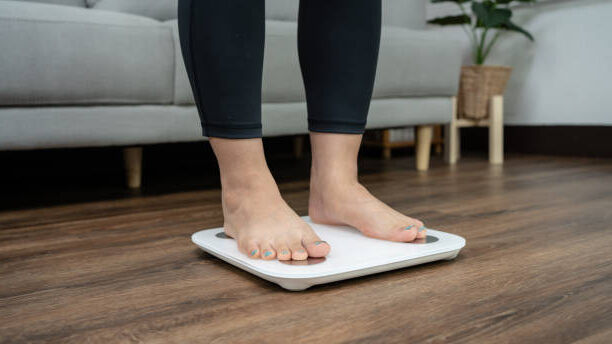

A digital body weight scale is a must-have tool if you’re on a journey to gain muscle or lose weight. Reading the number seems simple enough, step on, look down, done. But if you’ve ever seen your weight jump by a few pounds overnight with no obvious reason, the scale itself, not your body, might be the problem. Learning how to read a digital body weight scale properly takes about five minutes to master, and it’s the difference between numbers you can actually trust and numbers that send you on an emotional rollercoaster for no reason. Here’s exactly how to do it right, plus the small habits that keep your readings consistent day after day.
Key Takeaways
- Digital scales need to sit on a hard, flat surface and stay in one spot for the most consistent readings
- Moving or storing a scale between uses can throw off its internal calibration, adding or subtracting weight from your true number
- Weighing yourself at the same time each day, ideally first thing in the morning, gives you the most comparable readings
- A single reading matters less than your trend over days and weeks
- Smart scales that estimate body fat, muscle mass, or hydration are less precise than the weight number itself and should be read as estimates
How to Read a Digital Body Weight Scale
Most digital scales automatically recalibrate themselves each time they power off, but that only holds true if the scale stays in the same spot. If you keep yours permanently in the bathroom, reading it is as simple as stepping on and noting the number.
If you don’t have room to leave your scale out permanently and have to store it in a cabinet or closet, expect it to need recalibration each time you set it back down, since moving it can throw your reading off by a pound or more.
To get a clean reading:
- Place the scale on a hard, flat surface, never carpet or a cushioned mat
- Tap it once with one foot to wake the display, then step off
- Wait for the display to return to 0.0
- Step on with both feet, stand still, and let the number settle
- Read the final, stable number, not the first one that flashes
As with most devices in your home, a higher-quality scale is going to give you more consistent readings than a bargain-bin model. If you’re shopping for a new one, our accurate bathroom scale review and buyer’s guide compares the top-rated options.

Why Moving Your Scale Throws Off the Reading
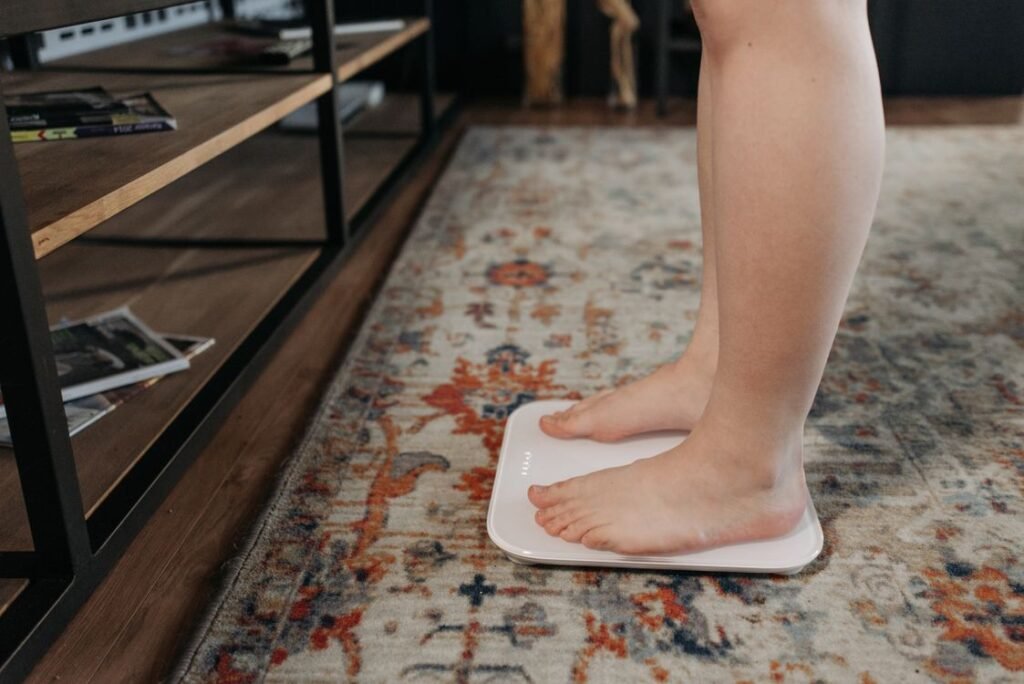
Part of learning how to read a digital body weight scale is understanding what happens inside it. Digital scales use load-cell sensors that establish a “zero point” baseline each time they power on. That baseline assumes the scale is sitting exactly as it was when it last calibrated. Move it to a different surface, even a slightly softer or uneven one, and that baseline shifts, which can add or subtract weight from your actual number until it recalibrates.
This is why the one-foot tap-and-wait method matters: stepping on briefly, then waiting for the display to return to 0.0 before stepping on fully, forces the scale to reset its baseline on the current surface before it takes your real reading. Skipping this step is one of the most common reasons people see inconsistent numbers from the same scale in the same room.

Video: A simple way to check whether your bathroom scale is reading accurately.
Tips for Getting Accurate Readings Every Time
Use a Hard, Flat Surface
Carpet, vinyl, and cushioned flooring all compress slightly under the scale’s feet, which throws off the reading. Tile, hardwood, and concrete give you the most reliable base. Avoid slippery flooring too, since a scale that shifts underfoot is a fall risk.
Weigh Yourself at the Same Time Each Day
Body weight naturally fluctuates by a few pounds over the course of a day due to food, fluids, and activity. The Cleveland Clinic recommends weighing yourself first thing in the morning, after using the bathroom and before eating or drinking, for the most consistent comparison day to day.
Recalibrate After Every Move
If you store your scale between uses, tap it on with one foot for a couple of seconds, let it power down, then wait for 0.0 before stepping on fully. Skipping this step is the single most common cause of unreliable readings.
Know Your Scale’s Age
Like any electronic device, digital scales wear out. Sensors drift over years of use, and a scale that once read accurately can slowly become less reliable. If your readings seem consistently off compared to how you look and feel, it may be time for a replacement.
Step On Barefoot
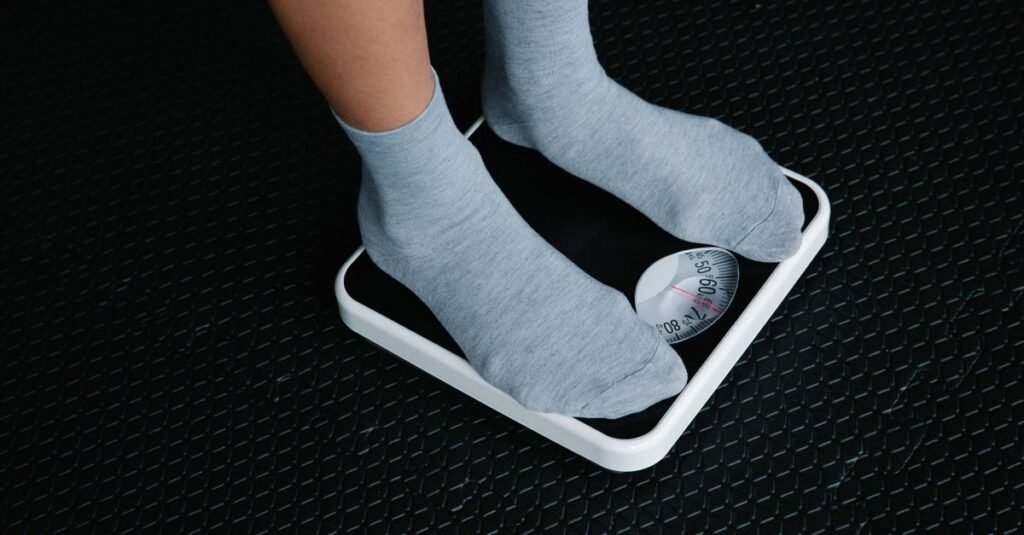
Shoes, socks, and heavy clothing all add extra ounces or pounds to your reading. Bathrooms are the traditional spot for scales for exactly this reason, easy to step on barefoot right after a shower.
Time It Around Meals and Exercise
Readings taken right after a big meal, an intense workout, or dehydration can be misleading in either direction. Morning, on an empty stomach, gives you the most representative number.

Reading More Than Just Weight
Many modern digital scales, like the YUNMAI Premium Smart Scale, also estimate body fat percentage, muscle mass, bone mass, and hydration using bioelectrical impedance, a tiny electrical signal sent through your feet. These extra numbers are useful for spotting trends, but they’re inherently less precise than the weight reading itself, since they’re estimates based on population averages rather than a direct measurement. Here’s what each one is actually telling you:
- BMI (Body Mass Index): a calculation from your height and weight, not a direct measurement, so it doesn’t account for muscle versus fat
- Body fat percentage: estimated from how electrical resistance moves through your tissue; fat resists the signal more than muscle does
- Muscle mass: estimated the same way, and can shift readings if you’re dehydrated or just finished exercising
- Bone mass: typically a rough estimate based on formulas, not an actual bone density scan
- Hydration/water percentage: among the most variable readings, since it changes with how much you’ve had to drink that day
If body composition is your priority, pairing your smart scale with a body fat caliper gives you a second data point to cross-check against. Our guides on the best body fat calipers and how to use a caliper to measure body fat accurately cover that method in detail.
Why the Trend Matters More Than Any Single Number
Your body weight naturally moves up and down by a few pounds from one day to the next, and none of it necessarily reflects fat gain or loss. Sodium intake, carbohydrate consumption, hormonal cycles, hydration, and even how much you slept can all shift the number on the scale overnight. A high-sodium meal, for example, can cause your body to hold onto extra water for a day or two, showing up as a temporary weight increase that has nothing to do with fat.
This is exactly why reading your scale correctly on any single day matters less than reading it consistently over weeks. Logging your weight at the same time each morning and looking at the weekly average, rather than reacting to daily swings, gives you a far more honest picture of whether you’re actually gaining, losing, or maintaining.
Are Digital Scales More Accurate Than Analog?
Generally, yes. Digital scales use electronic load cells that tend to hold their calibration more consistently than the mechanical springs inside analog scales, which can drift out of alignment over time and are harder to read precisely between gradations on the dial. That said, “more accurate” doesn’t mean “immune to user error.” A digital scale used incorrectly, on a soft surface, without recalibration, at inconsistent times of day, can still produce numbers just as unreliable as an old analog dial.
What matters most for tracking progress isn’t a single perfect number anyway. The National Institute of Diabetes and Digestive and Kidney Diseases (NIDDK) emphasizes tracking weight trends over time rather than reacting to any single reading, which is exactly why consistent technique matters more than which type of scale you own.
Common Digital Scale Reading Mistakes to Avoid
Even once you know how to read a digital body weight scale correctly, these small habits can still creep in and throw off your numbers:
- Reading the very first number that flashes instead of waiting for it to settle
- Weighing yourself at random times throughout the day and comparing those numbers directly
- Placing the scale on a rug, bath mat, or uneven tile
- Skipping recalibration after moving the scale, even a few inches
- Stepping on with shoes, socks, or a phone in your pocket
- Panicking over a single day’s fluctuation instead of watching the weekly trend
When to Replace Your Digital Scale
If your scale gives noticeably different readings for the same weight in the same spot, struggles to hold calibration, or its display is fading or glitching, it’s likely due for replacement. Most consumer digital scales have a useful life of several years with regular use, but sensor drift is a real, gradual process. If you weigh yourself daily and rely on the trend for health decisions, a scale that’s lost its accuracy is worth replacing sooner rather than later.
Frequently Asked Questions
Why does my digital scale give different readings each time?
Usually a calibration issue. Moving the scale, placing it on an uneven surface, or not waiting for the display to reset to 0.0 before stepping on are the most common culprits.
What is the best time of day to weigh yourself?
First thing in the morning, after using the bathroom and before eating or drinking, gives the most consistent, comparable reading day to day.
Do digital scales need to be calibrated every time?
Only after they’ve been moved. A scale left in the same spot generally holds its calibration between uses.
Are smart scale body fat readings accurate?
They’re useful for tracking trends but shouldn’t be treated as precise. Bioelectrical impedance estimates can shift with hydration levels and aren’t as exact as the weight number itself.
How much can an uncalibrated scale throw off my weight?
It varies by scale and surface, but even a pound or two of error is enough to cause confusing, misleading day-to-day comparisons, which is why the calibration step matters.
Why did my weight jump overnight even though I ate well?
Sodium, carbohydrates, hormonal cycles, and hydration can all shift your number by a pound or two overnight without any real change in body fat. Look at your weekly trend rather than any single day.
Should I weigh myself every day or just once a week?
Either can work, but daily weighing at the same time, tracked as a weekly average, tends to give the clearest picture of your actual trend without overreacting to normal day-to-day fluctuation.
Final Thoughts
Knowing how to read a digital body weight scale correctly isn’t complicated, but the small details, a hard flat surface, proper recalibration, a consistent time of day, and bare feet, are what separate a trustworthy number from a confusing one. Get those basics right, and your scale becomes a genuinely useful tool for tracking progress rather than a source of daily frustration.


Hi, I’m Mamon, the content creator behind this blog. I share my experience in blogging, WordPress, SEO, and affiliate marketing through honest product reviews, in-depth buying guides, and practical how-to articles. Every piece of content is thoroughly researched and written to help readers make informed decisions.